• Welcome to Photrio!
    Registration is fast and free. Join today to unlock search, see fewer ads, and access all forum features.
    Click here to sign up

Portable used light meter recommendations - affordable, neck lanyard friendly, reflected light

Recent Classifieds

Forum statistics

Threads
203,301
Messages
2,852,676
Members
101,770
Latest member
geoffreynt
Recent bookmarks
0
View attachment 256313

Just bought a Weston Ranger 9. A bit older than what everyone else is suggesting, but I figure even if it needs calibration, it should be a useful reflected/incident meter. Ansel Adams thought so! :wink:

Ranger 9 can still be serviced in a lab in LA, don't remember their name, but apparently they are THE light meter lab out there.
 
Ranger 9 can still be serviced in a lab in LA, don't remember their name, but apparently they are THE light meter lab out there.
Quality Light Metric. That's where it is headed...
 
Adorama lists the Gossen Digisix accessory shoe thingy for $8.89 ???
Could be -- at the time I bought one, at least a half dozen years ago I recall the price was more like $14 or so. Maybe competition from items like that monitor mount has pushed the price down. I'm sure light meters and anything to do with them are probably a low production item these days, but I feel if it were a more popular item it would fall in the $5 range. And yes, realistically, given the cost of film and processing, $150-200 for a meter and mount adapter that might last a decade or more isn't a big deal, but the OP was looking for something sub-50 dollars used.
 
With not too much diligence, a clean Gossen LunaSix or Luna Pro can be had for $25 on Ebay.

Used light meters are quite cheap, but if I were just starting out, I'd avoid the selenium cell meters for obvious reasons.

If you want new and cheap, I have no suggestions.
 
With not too much diligence, a clean Gossen LunaSix or Luna Pro can be had for $25 on Ebay.

Used light meters are quite cheap, but if I were just starting out, I'd avoid the selenium cell meters for obvious reasons.

If you want new and cheap, I have no suggestions.
Except Sekonic Studio Deluxe is still THE choice in selenium. Even ones from decades ago are often as good. Of course with old selenium meters part of equation is actual amount of time cell was exposed to light, and that is near impossible to tell juts by looking at the meter.

I even have Studio Deluxe's predecessor L-28 under the Brockway S name, and that one is showing me nearly same readings as Studio Deluxe from the 80's, both of course matching current meters. Not all of these are working fine today, but a lot them do. However, with exception of the much older Brockway which can be had for reasonably small dough (still hardly under $50), Studio Deluxe, even one from 30 years ago, is not easy to score at a bargain point. And the current model, well ... easy to see how it much it goes for.
 
Not too long ago I bought an unused, in the box with all accessories latest model 398A, the one with the amorphous sensor, for fifty usd. I just sold it recently because between the 308 and the Reveni, it was just sitting.
 
Not too long ago I bought an unused, in the box with all accessories latest model 398A, the one with the amorphous sensor, for fifty usd. I just sold it recently because between the 308 and the Reveni, it was just sitting.
That is NOT a going price. For fifty must have gone pretty quick.
 
I have had good results with the older versions of the Luna Pro meters and the physical adapters that permit use of hearing aid batteries. They have given readings that coincide with my Lunasix F and my Digiflash meters.
I've also used the voltage modification adapters and silver oxide batteries in an older Luna Pro.
If you use the hearing aid battery adapters, make sure you have extra batteries and a toothpick - the little 675 batteries are small and sometimes a challenge to pop out of the adapter.
Or, buy one Wein battery and when it expires, pop the battery out of the fitted washer and use the washer with the 675 hearing aid batteries from Costco. Easy, cheap solution.
 
Have you found any advantages to using a spot meter? I know henri cartier-bresson used one ;p some people seemed obsessed with them. I'm wondering if they'd be good for isolating the exposure on a subject or getting good contrast for skin tones.
I 'updated' that L206 to a L558 one-degree and I kind of miss the larger field of the six-degree L206. Since I don't do "abstracts" most of my subjects are unlikely to have a continuous tone that falls within the one-degree spot. So it is really just a more limiting average meter.
The advantage of the six-degree viewmeter was that I could average the low values and set that averaged value at III or IV by 'eyeballing' an appropriate six-degree field through the meter's viewfinder. Worked well for 25 years.
 
However I have come across some on ebay that have been calibrated for "one stop under" which I suppose means it would be better for 1.5 volt batteries.
Sorry, Brain, avoid this if the "calibration" was for a meter that once used a mercury battery. The voltage output from the mercury was about 1.35 volts and was amazingly stable until the cell had just about failed. A mercury battery was often used as a voltage standard in 1960s electronics. Almost all newer silver, alkaline, whatever cells exhibit varying voltage as they age. Therefore, there is no one calibration that makes the meter correct over time as the battery ages. If you use a Wein cell, hearing aide battery, or the Gossen adapter device, that is a different matter.
 
Or, buy one Wein battery and when it expires, pop the battery out of the fitted washer and use the washer with the 675 hearing aid batteries from Costco. Easy, cheap solution.
My adapter was priced similar to the Wein battery :smile:
 
Spot meters have real advantages, for certain things. I bought my first one a couple of years ago after more than 40 years of using hand meters. I use it for particular purposes rather than generally.
With one essentially unobtainable exception though, they are relatively big.
And they don't do incident, which for me is a major shortfall.
 
The Weston Ranger 9 has a 18 degree spot function and does incident and reflected; provided you don't lose that tiny Invercone adapter for incident.

Not perfect but better than not having a spot meter...

I am looking forward to trying it out and hope it lives up to its reputation.
 
With one essentially unobtainable exception though, they are relatively big.
The Weston Ranger 9 has a 18 degree spot function and does incident and reflected; provided you don't lose that tiny Invercone adapter for incident.

Not perfect but better than not having a spot meter...

I am looking forward to trying it out and hope it lives up to its reputation.
There are, indeed, meters with a relatively large acceptance angle and a "spot" viewing system. They have their advantages, but aren't as much "spot" as the one degree spot meters that most people think of when they hear the term.
I have a Gossen accessory for a couple of my meters - a Luna Pro and the Luna Pro F - that gives me the same sort of results - when I use it.
 
This is the one I've got--discontinued, but available used. It will fit in a shirt pocket, and it's pretty thin, and very light weight.

https://www.bhphotovideo.com/c/product/93222-REG/Shepherd_Polaris_SPD100_Polaris_Digital_Meter.html

My go-to meter as well. I particularly like that the dome is on the front face of the meter, so that when I hand-hold it in front of the subject to meter, the readout is facing me. I have a different small-ish meter by Gossen that has the dome on the narrow top of the meter, so to incident meter I have to turn around from the subject to point the mater at the light source, or point it back over my shoulder, and then shift holding it to see the read-out. Also, the Polaris made available a reflected-light attachment for the meter, so if needed it could convert.
 
My go-to meter as well. I particularly like that the dome is on the front face of the meter, so that when I hand-hold it in front of the subject to meter, the readout is facing me. I have a different small-ish meter by Gossen that has the dome on the narrow top of the meter, so to incident meter I have to turn around from the subject to point the mater at the light source, or point it back over my shoulder, and then shift holding it to see the read-out. Also, the Polaris made available a reflected-light attachment for the meter, so if needed it could convert.
To measure incident light, you position the dome so it points toward the camera from the subject's position. I don't think it matters if top of the dome is facing directly up or to the camera, unless there is a strong backlight--but the subject usually blocks that in most situations.
 
I've a Sekonic L-8, 68mm x 43mm x 24mm, Incidental and Reflective, with a small panel which defuses light, and hangs on a small chain with the original lanyard and its in good working kip.

With a quick google, these sell for 25$, or less on eBay, so its 50% under the OP budget.

My 1st choices for a meter in this question, are, Luna Pro SBC, (the Luna Pro F is no neck friendly), or a Weston IV or V.

Vivitar had a smallish analog years ago, but, I do no recall the model number, but it worked well, was a small, light neck carry and had a simple white face.
 
Luna Pro SBC, (the Luna Pro F is no neck friendly)
I don't get it. The Luna Pro SBC and the Luna Pro F (these are the USA model names) have the same casing. Why is only the F not neck friendly? The Luna Pro Digital models are thinner and lighter and more friendly on the neck.
Weston IV or V: you can find a used one on the 'Bay with a trustworthy selenium cell?
 
Luna Pro SBC, (the Luna Pro F is no neck friendly)

I don't get it. The Luna Pro SBC and the Luna Pro F (these are the USA model names) have the same casing. Why is only the F not neck friendly? The Luna Pro Digital models are thinner and lighter and more friendly on the neck.

Kodachromeguy is exactly correct. The Luna Pro SBC and Luna Pro F are identical in size and weight. The only real difference is the colors on the dial and the addition of a jack to connect the Luna Pro F to a strobe
 
Sekonic L308 is a good light meter with flash readings but it does not have the facilities to do Zone System corrections. I used the Gossen Luna Pro SBC for years and was happy with it.
 
Kodachromeguy is exactly correct. The Luna Pro SBC and Luna Pro F are identical in size and weight. The only real difference is the colors on the dial and the addition of a jack to connect the Luna Pro F to a strobe


Both of you are correct, my mistake.

The Luna Pro and Luna Pro F are two completely different meters!

The old Luna Pro uses a button battery, and is easily hacked with a diode for use with SR 44 batteries.

It is without flash function, and fits easily in a dress shirt pocket.

The Luna Pro F uses a 9 volt battery, can read flash, (F for Flash) but mine does no have a sync port.

It's large, at least 2.5 x the mass of the older meter, has a separate button for a battery check and comes in a heavy leather case.

Both can use the darkroom meter adapter, the 7/15° 'spot' adapter, and others originally were made for the Luna Pro, old style.

Both have screws that allow the user to tune the meter.

I hope this clears things up some, or at the least, inspires googling.

Thanks to all for giving the correct information, to my wrong reply post

Be Safe, Be Happy and Godspeed to all here and your Loved Ones.

 
Last edited:
The Luna Pro SBC and Luna Pro F are two completely different meters, thanks to the Gossen Team that named them different in The U.S. and Europa.

The American SBC uses a button battery, and is easily hacked with a diode for use with SR 44 batteries.

It is without flash function, and fits easily in a dress shirt pocket.

The American Luna Pro F uses a 9 volt battery, can read flash, (F for Flash) but mine does no have a sync port.

It's large, at least 2.5 x the mass of the SBC, has a separate button for a battery check and comes in a heavy leather case....


I think you are confusing the older Luna Pro with the Luna Pro SBC.
The older Luna Pro, which has a CdS cell not an SBC cell, uses the old mercury battery.
Both Luna Pro SBC and Luna Pro F take a 9v battery. They are virtually the same meter.
 
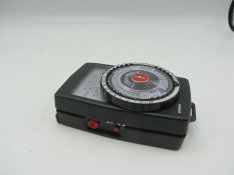
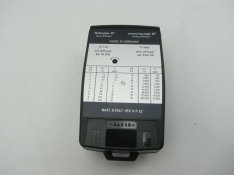
Here is the USA Luna Pro SBC with the rather bulky accessory big incident dome attached to the front. You can see the size and shape of the meter itself. This meter uses a 9-volt battery. The older Luna Pro measures via a CDS cell and requires the 1.35 mercury cells (except for a few late-production Luna-Pro S models). As I wrote before, The USA models of Luna Pro SBC and F use the same big rectangle casing.

_DSF5691_GossenLunaProSBC_resized.JPG
 
...and here are some photos of the nearly identical Luna Pro F
s-l1600.jpg s-l1601.jpg
 
Photrio.com contains affiliate links to products. We may receive a commission for purchases made through these links.
To read our full affiliate disclosure statement please click Here.

PHOTRIO PARTNERS EQUALLY FUNDING OUR COMMUNITY:


Ilford ADOX Freestyle Photographic Stearman Press Weldon Color Lab Blue Moon Camera & Machine
Top Bottom