

himself
Member
- Joined
- Apr 8, 2011
- Messages
- 513
- Format
- Multi Format
First of all I'll just say that I'm not sure in which sub forum to post this, so if needs to be moved then just let me know.
And so, someone just brought me a very oddly modified negative to ask my opinion on how, and or why it would have been done. It's been (very) physically altered for some reason, but for the life of me I can not figure out how or why.
It was brought to me by a local photographer who also collects images of the local town/area that we live in, and he recently bought this negative online. The seller doesn't know much about it's history other than it was taken by a family member who used to take images for the electricity board (back when it existed).
I've photographed the negative and before I describe it a little more, here are the images:
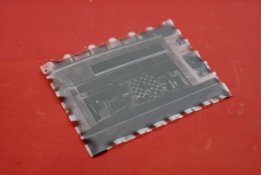
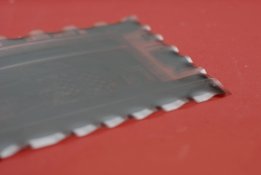
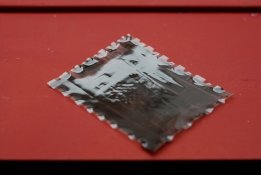
As you can see it looks like it's been crimped all around it's edge.
It's very evenly and precisely done, and must have taken quite a bit of force to do because the waves are quite high, but don't go very deep back into the negative itself (about 5mm).
But other than the crimping it seems otherwise normal, the non emulsion side is maybe a bit more shiny/plastic than normal, and has a little bit of a relief to it. It's a 9x12 b/w negative and the image was taken sometime in 60s, but on what camera is anyone's guess.
So has anyone seen anything similar to this before, and if so, how is it done and to what purpose?
thanks,
Dafydd
p.s.
My initial guess was that it had been laminated, but on inspection, it's quite clearly just a base plastic layer coated in emulsion.
And so, someone just brought me a very oddly modified negative to ask my opinion on how, and or why it would have been done. It's been (very) physically altered for some reason, but for the life of me I can not figure out how or why.
It was brought to me by a local photographer who also collects images of the local town/area that we live in, and he recently bought this negative online. The seller doesn't know much about it's history other than it was taken by a family member who used to take images for the electricity board (back when it existed).
I've photographed the negative and before I describe it a little more, here are the images:
As you can see it looks like it's been crimped all around it's edge.
It's very evenly and precisely done, and must have taken quite a bit of force to do because the waves are quite high, but don't go very deep back into the negative itself (about 5mm).
But other than the crimping it seems otherwise normal, the non emulsion side is maybe a bit more shiny/plastic than normal, and has a little bit of a relief to it. It's a 9x12 b/w negative and the image was taken sometime in 60s, but on what camera is anyone's guess.
So has anyone seen anything similar to this before, and if so, how is it done and to what purpose?
thanks,
Dafydd
p.s.
My initial guess was that it had been laminated, but on inspection, it's quite clearly just a base plastic layer coated in emulsion.


 On a more serious level I take it you mean nitro-cellulose? If the image dates from the 60s or later I'd doubt if the film is made of nitro.

