• Welcome to Photrio!
    Registration is fast and free. Join today to unlock search, see fewer ads, and access all forum features.
    Click here to sign up

Old glass plates

Valencia

A
Valencia

  • 1
  • 1
  • 55
Tied to the dock

D
Tied to the dock

  • 4
  • 0
  • 94

Recent Classifieds

Forum statistics

Threads
203,094
Messages
2,849,747
Members
101,661
Latest member
Rosiemst
Recent bookmarks
0
Really impressed with your results using vintage glass plates.
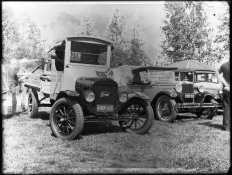
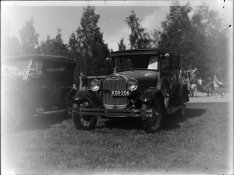
I am looking to do a session using the following plates (see attatched) I got from auction and thought I'd ask for any advice in using them in both the studio and outside.
Any advice in what best chemistry for developing, times of exposure and developments would be really useful as I'm a bit of a novice.
Also do you think i could use the kodak B40 plates in the rolleiflex holder?
Thanks
Cloudroot
View attachment 185848 View attachment 185849 View attachment 185850

Hi,

yes they should fit in the Rolleiflex plate holders, those were made for 6.5 cm x 9 cm what is practically the same as 2.5" x 3.5".
I've used many (over 120 yet) pre 1945 plates for a microscope project (https://www.flickr.com/photos/136145166@N02/albums/72157686135321996. I was surprised how well they worked. :smile:

When I get unknown plates, my starting point is exposing a single plate at ISO 0 and developing 4 minutes (for fine grained plates) to 7 minutes (for ultra rapid plates or somesuch) in Rodinal 1:50 at 18°C in a tray.
Note that even plates of that age are sometimes panchromatic and have to be developed in the dark (not in red savelight).

Have fun
Jens
 
Last edited:
Try developing one by inspection with a safe light, then the time won't be so critical. But as for timing, my homemade emulsion dry plates usually take on the order of 15 minutes with Dektol or D76 1:1.

Robert

hi robert

15 minutes in dektol 1:1 ?!
wow ..
i don't think i have ever developed any paper or plate emulsion for 15 minutes ..
 
15 minutes in dektol 1:1 ?!
wow ..
i don't think i have ever developed any paper or plate emulsion for 15 minutes ..

With the particular emulsion that GEM teaches, this is Mark Osterman's recommendation for a starting point. I develop by inspection, so some finish sooner, to be sure. But some don't.

And it's 15 minutes in straight Dektol, or D76 1:1. In straight D76, it's more like 10 minutes. For me, with this emulsion. The new emulsion they teach may require a bit less.

Robert
 
Love this work of yours it has as you say a lot of potential, manipulation should not be out of the question in my opinion.
I have taken the liberty of looking at the solarised image and fiddling with it out of curiosity...Manip_Crop.png
 
With the particular emulsion that GEM teaches, this is Mark Osterman's recommendation for a starting point. I develop by inspection, so some finish sooner, to be sure. But some don't.

And it's 15 minutes in straight Dektol, or D76 1:1. In straight D76, it's more like 10 minutes. For me, with this emulsion. The new emulsion they teach may require a bit less.

Robert

What ISO do you estimate your plates to be at?

-Jason
 
With the particular emulsion that GEM teaches, this is Mark Osterman's recommendation for a starting point. I develop by inspection, so some finish sooner, to be sure. But some don't.

And it's 15 minutes in straight Dektol, or D76 1:1. In straight D76, it's more like 10 minutes. For me, with this emulsion. The new emulsion they teach may require a bit less.

Robert

thanks for the info robert.
that's wild ...
while im no expert in anything - and don't play one on TV ...
i can't imagine anything taking 15mins to develop in straight dektol ...
IDK 25 years ago i exposed tmy way too many stops under exposed i eventually got an ok negative in less than 15mins
in straight film developer ( sprint which was usually used something like 1:9 @ about 7mins )
 
What ISO do you estimate your plates to be at?

-Jason

Originally, somewhere south of 1, probably around 1/2. The last batch I ripened longer and got closer to 1 or perhaps even a bit more.

The new emulsion they're teaching is a bit faster, maybe 3-4, and with sensitization, up to 3-4x faster, depending on light. Have only done that one in the workshop so far, though, and am very much looking to replicating it at home.

Robert
 
i can't imagine anything taking 15mins to develop in straight dektol ...
IDK 25 years ago i exposed tmy way too many stops under exposed i eventually got an ok negative in less than 15mins
in straight film developer ( sprint which was usually used something like 1:9 @ about 7mins )

Yep, I believe you. Just sharing my experience, and what is stated explicitly in the instructions from the workshop I took in 2014. I can't say why it is, just that it appears to be true. Perhaps I'm ending up overdeveloping some, but, aside from a few specific cases, the plates generally don't appear so. Thin, to be sure -- I think I was pouring off a bit too much "excess" gelatin when pouring the plates -- but not usually overly contrasty or muddy.

As I mentioned above, the newer emulsion (developed by Nick in conjunction with and based on one of PE's) has slightly different characteristics. Nick develops his in straight D76 at about 10 minutes for normal development. I'll start with that so as to compare with the behavior I saw at this year's workshop (where I saw some excellent plates produced) before branching out.

Here is the test plate that Denise was referring to:


TP-021, Clouds!
by Robert Brazile, on Flickr

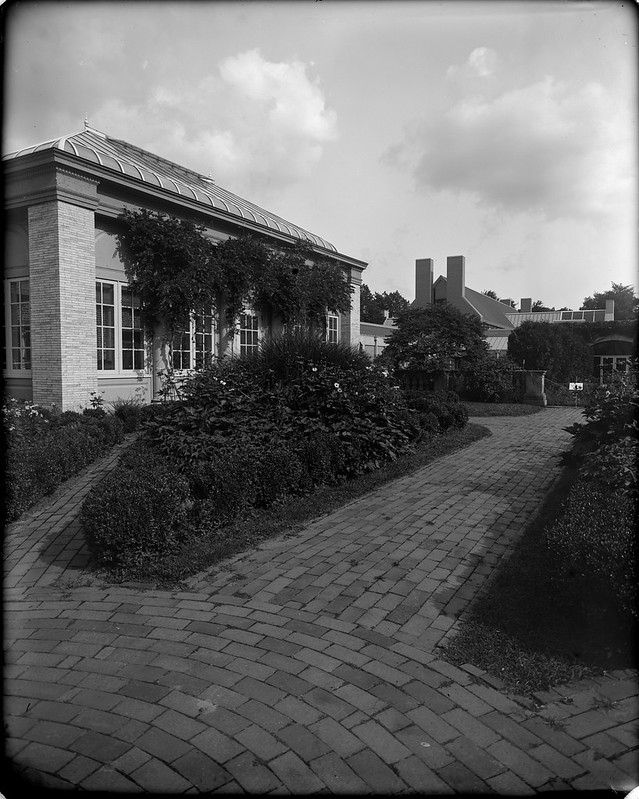
which was a gold- and sulfur- sensitized plate using the basic bromide emulsion they teach now. Also sensitized with erythrosine for some added green sensitivity. Shot in the museum gardens on a partly cloudy day, rated at ISO 12, and that seemed about right. Developed as described above (D76, might have pulled it a minute early or so, so maybe 9 minutes).

Robert
 
I participated in an Eastman Museum dry plate workshop earlier this year. We used 10 minutes in D-76 as the rough guideline for development by inspection. The water temperature was not controlled and probably on the cold side (this was out in the woods in a portable darkroom tent).
 
I've tested my latest batch to be about ISO 0.5, but with fast development times similar to that of paper. When I first started working with plates, my baseline Rule of Thumb was to double the time it takes for an image to form in my chosen developer -- usually HC-110 dil B. This led me to generally have plate development times of about 1 minute. While it provides great results (see my examples posted in the media section), I theorize that I could achieve higher useable ISO with longer development times while trading off contrast (ie the response curve). My guess is that I'll settle in at about ISO 2 or 3 before the contrast gets too flat or the dev times are unworkable. Note I'm not as interested in consistency (the traditional reason for film dev times > 4 minutes).

That's the focus of my current testing. I could just start with a recommended 10-minute development time, but I'm using my current approach to gain practical understanding of the relationship between development times, sensitivity, and contrast. In other words, I haven't yet read a satisfactory description in the literature as to how those are practically related.
 
robert, that's beautiful ..
i guess i have been processing my plates
for about 12 minutes - short :wink: and probably expose 10x what i should :smile:
 
I've tested my latest batch to be about ISO 0.5, but with fast development times similar to that of paper. When I first started working with plates, my baseline Rule of Thumb was to double the time it takes for an image to form in my chosen developer -- usually HC-110 dil B. This led me to generally have plate development times of about 1 minute. While it provides great results (see my examples posted in the media section), I theorize that I could achieve higher useable ISO with longer development times while trading off contrast (ie the response curve). My guess is that I'll settle in at about ISO 2 or 3 before the contrast gets too flat or the dev times are unworkable. Note I'm not as interested in consistency (the traditional reason for film dev times > 4 minutes).

That's the focus of my current testing. I could just start with a recommended 10-minute development time, but I'm using my current approach to gain practical understanding of the relationship between development times, sensitivity, and contrast. In other words, I haven't yet read a satisfactory description in the literature as to how those are practically related.

There's a bit of info here, pp 75-77: http://www.blurb.com/books/6465389-the-light-farm (free read in Blurb preview, full screen). The old emulsions are much more responsive to manipulation than modern emulsions. "Modern" is great. The engineers aim for fool-proof. Only problem is that sometimes this fool wants a little creative control! d
 
Thanks, John. Based on my experience, I sometimes think you almost can't expose these things 10x "what they should". It's more how much patience (and time) you have. :smile:

Robert
 
There's a bit of info here, pp 75-77: http://www.blurb.com/books/6465389-the-light-farm (free read in Blurb preview, full screen). The old emulsions are much more responsive to manipulation than modern emulsions. "Modern" is great. The engineers aim for fool-proof. Only problem is that sometimes this fool wants a little creative control! d


I have a hardcopy. I will check it out :smile:
 
Jason, I would very much like to hear if the information is useful, or at least interesting. Anything you think is seriously missing? Is there additional information that you think would make others more likely to want to try emulsion making? Any suggestions are most welcome. For anyone else reading this, especially folks who have never made an emulsion, but are considering it, what information would you like to have?
 
Hi Denise,

Yes absolutely. I'll look through again with the experience I've built up now doing plates. I could probably provide some feedback/input.
 
Fascinating! Threads like this one are what keep me checking in at APUG. Just knowing that there are photographers intrigued with and using antique equipment is a wonder.
 
I've been gone from forum for a while, but it's nice to see that people have been interested in the topic.

I ordered some color filters last week, and plan to try color pictures using three color separation technique. I still have those panchromatic Kodak plates, and I'm going to use those for at least some of the pictures.
 
Last edited:
Yesterday I developed three glass plates which I used last summer. First is one of those quite old Mimosa plates, and the other little newer Agfa Ortho plate.

Interestingly the Mimosa plate worked much better than the ones before! There's not much fogging. Plates are packed on two different paper wrappings inside cardboard box, and now I have used seven of them. This plate is from second paper wrapping. I think that box has been opened and the paper wrapping on the top taken out from time to time, but plates below haven't had so much light over the years. I overexposed the plate as I did before, but this time it wouldn't have been necessary.

Only five Mimosa plates left. I want more!

Vanhat autot_mimosa_pienempi.jpg
Vanha auto2_agfa_pieni.jpg
 
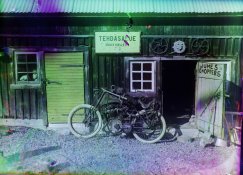
I was shooting olg glass plates last weekend. I haven't done that for a while.

My friend is making a motorcycle. He was casting parts of the motor in aluminum with another friend and I was watching, learning and photographing.
I took this tricolor of his motorcycle, which he made a few years ago. I used my Zeiss Ikon Ideal 225 and Kodak super Panchro-press plates.

He has been making the casting models for at least six months. Watching this process has been inspiring. One can accomplish many kinds of wonderful things.
Of course it requires eagerness, lots of thinking, deep concentration and time.

I hope this picture qualifies as analog enough. I merged the three pictures digitally, so it isn't exactly digital representation of analog image, but digitally made from
analog pictures.

Standard_värit_rajaamaton_erittäin_pieni.jpg
 
Last edited:
I like how you are using these plates - it's amazing that after 100 years the results are so good.

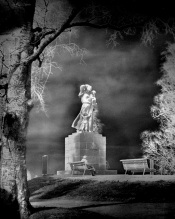
There is a person sitting on the park bench -

that must have been Aqualung...probably eying little girls with bad intent.
 
I was shooting olg glass plates last weekend. I haven't done that for a while.

My friend is making a motorcycle. He was casting parts of the motor in aluminum with another friend and I was watching, learning and photographing.
I took this tricolor of his motorcycle, which he made a few years ago. I used my Zeiss Ikon Ideal 225 and Kodak super Panchro-press plates.

He has been making the casting models for at least six months. Watching this process has been inspiring. One can accomplish many kinds of wonderful things.
Of course it requires eagerness, lots of thinking, deep concentration and time.

I hope this picture qualifies as analog enough. I merged the three pictures digitally, so it isn't exactly digital representation of analog image, but digitally made from
analog pictures.

View attachment 205040

Hi.
I have long suspected that you Finns have a creative wein - but this motorcycle knocked me out! Also a nice picture, by the way. I started my LF photography in ca. 1970 with Gevaert plates (I still have a few left in the freezer, I think). Some Portrait photographers still used plates in those days.
 
Yesterday I developed three glass plates which I used last summer. First is one of those quite old Mimosa plates, and the other little newer Agfa Ortho plate.

Interestingly the Mimosa plate worked much better than the ones before! There's not much fogging. Plates are packed on two different paper wrappings inside cardboard box, and now I have used seven of them. This plate is from second paper wrapping. I think that box has been opened and the paper wrapping on the top taken out from time to time, but plates below haven't had so much light over the years. I overexposed the plate as I did before, but this time it wouldn't have been necessary.

Only five Mimosa plates left. I want more!

View attachment 187095
View attachment 187094

I believe you. Compared to these glassplate pics digital b&w look like s**t!
 
Photrio.com contains affiliate links to products. We may receive a commission for purchases made through these links.
To read our full affiliate disclosure statement please click Here.

PHOTRIO PARTNERS EQUALLY FUNDING OUR COMMUNITY:


Ilford ADOX Freestyle Photographic Stearman Press Weldon Color Lab Blue Moon Camera & Machine
Top Bottom