


RalphLambrecht
Subscriber
Ijust purchsed a copy of thi iconic lens from the last non-AI run. I hope it won't be a problem to convert it to AI. Does anybody have experience with Fototechnik Hofmann in STUTTGART?


Conversion rings are gonna be hard to find, but in terms of just filing it down anybody should be able to do that
I wonder why you didn't get an AI lens to begin with? Some just grind off the aperture ring to make it works but I doubt if you hire someone then there is no saving except you consider the older lens is better?


This is best done with a milling machine. All that’s needed is to remove screws holding the lens mount and remove the aperture preset ring. The ring is secured in a the machine’s vice and the shoulder is milled into the rear skirt of the ring. Of course, the shoulder has to be cut at exactly the correct position relative to the aperture scale to form a true raius line for proper registration with the meter coupling lever.
I’ve had the aperture rings on several Nikon lenses machined to communicate with the meter lever on newer Nikon SLRs.
John White in Ann Arbor Michigan still offers this service in 2026. He converted a couple of lenses for me.
https://sites.google.com/view/aiconversions/home
There are a few Nikon AI kits available via eBay, but none for the 105/2.5 at this time.
Nikon Ai Conversion Kit for sale | eBay
Get the best deals for Nikon Ai Conversion Kit at eBay.com. We have a great online selection at the lowest prices with Fast & Free shipping on many items!www.ebay.com

Nothing to add other than I have both versions and they're both my favorite portrait lenses. I use the non AI version with my FE, F3, F and F2. Anything newer I pick up some other build.
Is your non-AI copy the Sonnar or Xenotar version? I only recently acquired a Sonnar copy, and do find it has a subtly different rendering than my AiS copy of the amazing 105/2.5
Is your non-AI copy the Sonnar or Xenotar version? I only recently acquired a Sonnar copy, and do find it has a subtly different rendering than my AiS copy of the amazing 105/2.5
I don't know how I would know. It's silver. The new one is black
I don't know how I would know. It's silver. The new one is black
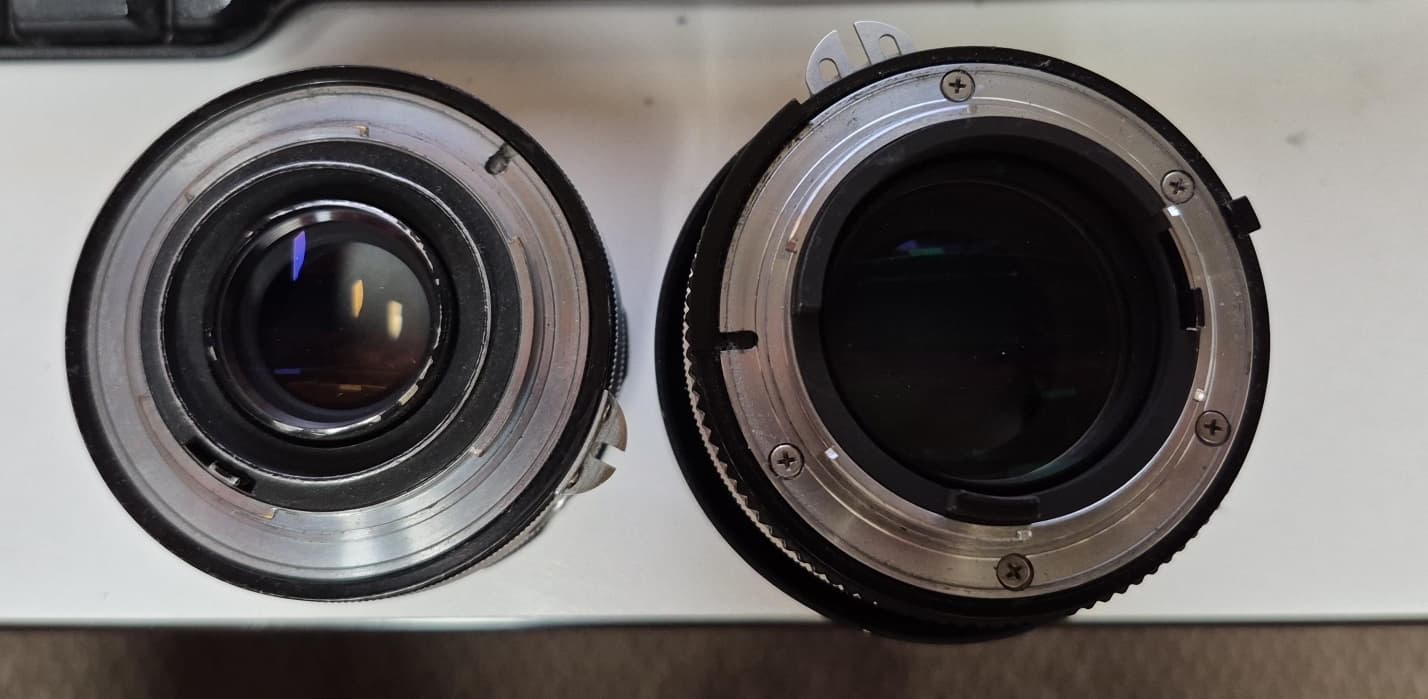
A link to the older Sonnar-derived version has been posted above. It can be identified by its smaller rear element and btw. they all have silver parts on them.
Large rear element = Xenotar
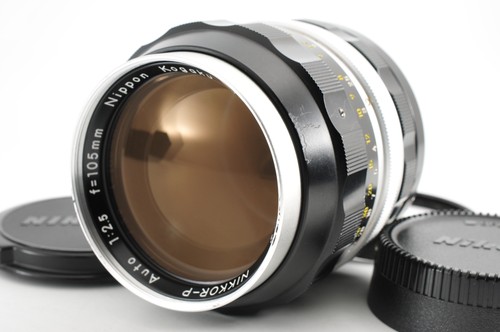
NIKKOR-P Auto 1:2.5 f=105mm 440551
This web site documents my Nikon F collection and is trying to show the evolution of the Nikon F System. The site is not finished (will never be) and I am continously adding subjects.www.destoutz.ch
Small rear element = Sonnar
NIKKOR-P Auto 1:2.5 f=105mm No.284543
This web site documents my Nikon F collection and is trying to show the evolution of the Nikon F System. The site is not finished (will never be) and I am continously adding subjects.www.destoutz.ch
All the Sonnar lenses had a silver-snout, but some Xenotar lenses also had the silver-snout, so that isn't definitive. The best visual indicator is the size of the rear-element: The Sonnar design is notably smaller and inset from the black light-baffle, while the Xenotar's rear element is the full size of the light-baffle.
Of course the lens' serial-number is an absolutely reliable way to tell, with the Xenotar starting in the 4xxxxx range (Sonnar is in the 1xxxxxx or 2xxxxxx range). For all this information, see Roland Vink's website.
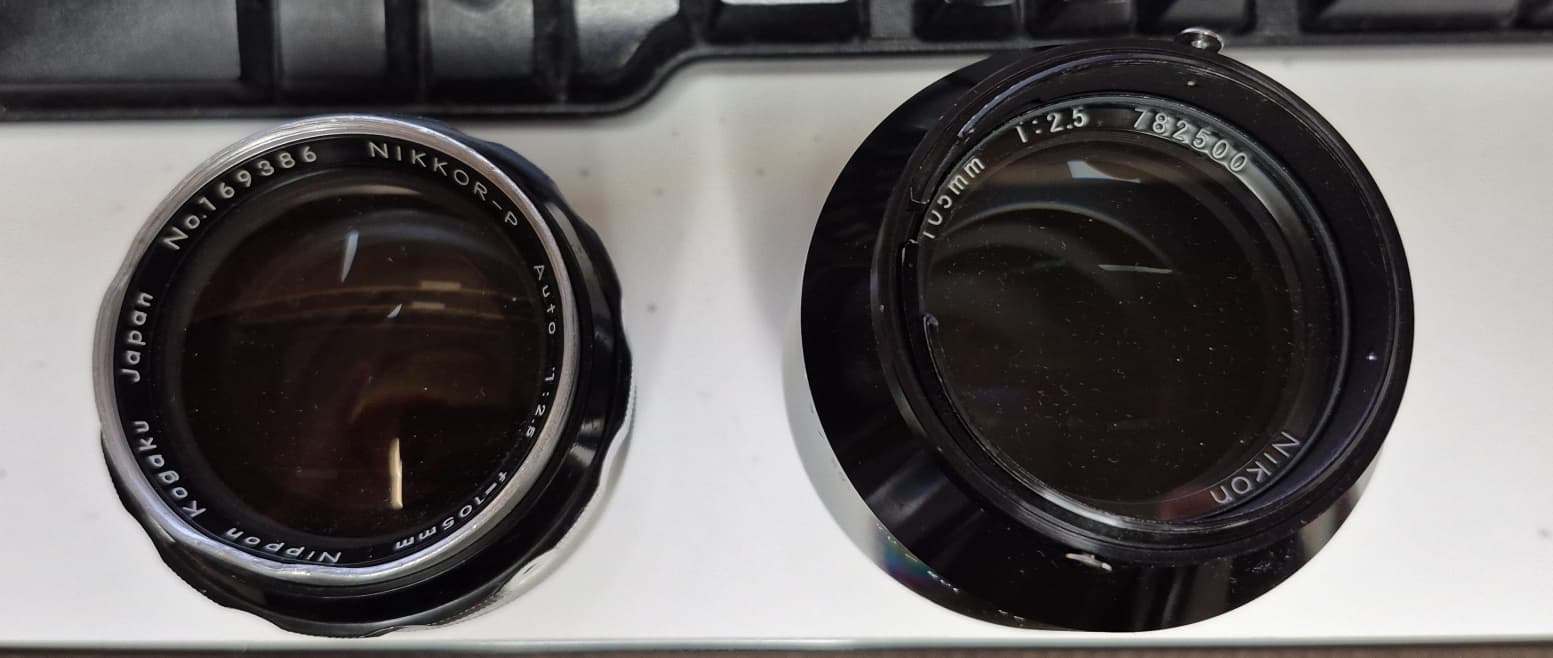
Thanks. Yep. I have a Sonnar.
No.169386
Can you explain to me in goofus terms why the Sonnar is more coveted? I'd like to brag about it at the next meetup. Where it'll be me meeting up with me.
Well, "coveted" might be an exaggeration! I would say that Nikkor-collectors like to celebrate the arcane history and lore of the more renowned lenses, into which category the 105/2.5 definitely falls. The fact that Nikon made the transition from the Sonnar to the Xenotar design (in 1971) while keeping the lens's mechanical design largely unchanged (the silver snout) means that if you are just casually looking through a selection of used 105's, you might not even realize that some of them were Sonnars unless you really knew what you were looking for. Clearly, Nikon updated the design to improve the lens's optical performance, so they felt the old Sonnar layout could be bettered, but better isn't always what you want, and some photographers preferred the rendering of the older design, and sought out copies of them and "told their friends". As noted above, the Sonnar is noteworthy for its Bokeh, and pleasing rendering wide-open at portrait distances.Thanks. Yep. I have a Sonnar.
Can you explain to me in goofus terms why the Sonnar is more coveted? I'd like to brag about it at the next meetup. Where it'll be me meeting up with me.
the Sonnar is said to render smoother with a more pleasing bokeh.
the Sonnar is said to render smoother with a more pleasing bokeh.
Well, "coveted" might be an exaggeration! I would say that Nikkor-collectors like to celebrate the arcane history and lore of the more renowned lenses, into which category the 105/2.5 definitely falls. The fact that Nikon made the transition from the Sonnar to the Xenotar design (in 1971) while keeping the lens's mechanical design largely unchanged (the silver snout) means that if you are just casually looking through a selection of used 105's, you might not even realize that some of them were Sonnars unless you really knew what you were looking for. Clearly, Nikon updated the design to improve the lens's optical performance, so they felt the old Sonnar layout could be bettered, but better isn't always what you want, and some photographers preferred the rendering of the older design, and sought out copies of them and "told their friends". As noted above, the Sonnar is noteworthy for its Bokeh, and pleasing rendering wide-open at portrait distances.
Of total non-AI production, approximately 130K copies were Sonnar design, and 190K were Xenotar, so the Sonnar certainly isn't uncommon (for that you would be talking the early 9-blade aperture version, or the super-rare "tick-mark" copies), but I think for sure any fan of the 105/2.5 should consider owning (and using!) a copy of the Sonnar.
I've also got a 100mm E lens which ain't too bad itself either.
| Photrio.com contains affiliate links to products. We may receive a commission for purchases made through these links. To read our full affiliate disclosure statement please click Here. |
PHOTRIO PARTNERS EQUALLY FUNDING OUR COMMUNITY:  |

