
Having been through this kind of thing in another industry that declined to nothing (I hung on until the year before it all died) I understand both sides. It is hard to listen to, but it is hard to ignore, and it is even harder to find the "good news" part of the situation because there may not be one. After my industry collapsed I continued to get Christmas calls from our former CEO... and all he had to talk about was how much money he made while the rest of us were laid off, etc... and to him that was the "good news" to share.
-
Welcome to Photrio!Registration is fast and free. Join today to unlock search, see fewer ads, and access all forum features.Click here to sign up
You are using an out of date browser. It may not display this or other websites correctly.
You should upgrade or use an alternative browser.
You should upgrade or use an alternative browser.
New Layoffs at Eastman Kodak
-
A
- Thread starter RattyMouse
- Start date

Recent Classifieds
-
Free GONE French lens probably early XIXcentury
- Started by Gaston 012
-
Sold Ilford 4x5 FP4+ (Expired June 2023)
- Started by CreationBear
-
Sold Beseler Audible/Repeating Enlarging Timer w/ foot switch
- Started by CreationBear
-
For Sale Tanks n hangers
- Started by CreationBear
-
For Sale 5x7 Fidelity Elite Film Holders
- Started by Jammoh
Forum statistics
- Status
- Not open for further replies.

They could'nt have bought Arri not really at the time Arri went digital Kodak didn't have the money. Arri isn't that small. The pro kodaks were good cameras with a big Stigma "Kodak". Nikon wasn't a Camera company but an optical company so it doesn't matter how many cameras they made. They as Canon are also part of a Keiretsu. Kodak buying either of them even then was not possible.
Regarding the firings maybe the will be reemployed unfortunately firing employees is tax deductible item in some countries.
Film isn't dying one could say that it even has a small renaissance, there are more film mfg. than two years ago and the choice of films isn't small either at least B/W film.
Regarding the firings maybe the will be reemployed unfortunately firing employees is tax deductible item in some countries.
Film isn't dying one could say that it even has a small renaissance, there are more film mfg. than two years ago and the choice of films isn't small either at least B/W film.
OP
OP

Of course it is considered, but the level it is presented here....my god it is exhausting to see it just swallow up every industry topic, and it does. Some of you just don't let up...it's like you never even take a vacation, just constant doom and gloom mortar rounds, "Boom, Boom, BOOM!"
But you don't see how it wears people down, drives them away and worst of all, it's in a public part of the forum and the site admin just does not seem to give a flying film canister about. I have a thread going on doing some form of ULF reversal output and it is hardly of any interest compared to this kind of battleground crap.....I mean, how sad is that?
You REALLY need to step away from the forum. You cannot control what other people talk about and it is doing ruinous things to your physche.
One day you must learn that YOU do not get to dictate what other people talk about. Not now, not ever.
WHAT did you expect to find in a topic clearly labeled NEW LAYOFFS AT KODAK? Happy talk about the industry?


In support of the sentiment expressed by PKM-25 in post #31:
APUG seems to have lost its mission (at least I thought it was its mission) to preserve the heritage of traditional silver gelatin photography. That's a huge heritage! It is embedded with art, history, and science. A hundred possible, substantive topics each and every day. No surprise, but I am puzzled and saddened by the complete drop-off in interest in silver gelatin emulsion making here. This is especially odd given that interest in the topic is booming elsewhere.
The topic will live on and grow, even without APUG and its photo geezer knowledge wealth, but this is where the renaissance started. It has already recorded a base of know-how, but this should be kept alive and expanded on here -- along with all the other fascinating and important topics. No other venue has the ability to do what I feel this venue can to keep traditional photography alive and vibrant -- the decisions of commercial interests be damned (or supported! as we all should with Ilford and the other players determined to stick around.)
One photo geezer's opinion,
d
p.s. It might help if visitors could access the gallery freely.
APUG seems to have lost its mission (at least I thought it was its mission) to preserve the heritage of traditional silver gelatin photography. That's a huge heritage! It is embedded with art, history, and science. A hundred possible, substantive topics each and every day. No surprise, but I am puzzled and saddened by the complete drop-off in interest in silver gelatin emulsion making here. This is especially odd given that interest in the topic is booming elsewhere.
The topic will live on and grow, even without APUG and its photo geezer knowledge wealth, but this is where the renaissance started. It has already recorded a base of know-how, but this should be kept alive and expanded on here -- along with all the other fascinating and important topics. No other venue has the ability to do what I feel this venue can to keep traditional photography alive and vibrant -- the decisions of commercial interests be damned (or supported! as we all should with Ilford and the other players determined to stick around.)
One photo geezer's opinion,
d
p.s. It might help if visitors could access the gallery freely.
OP
OP
Where is he "dictating" anything?
Yet again, RattyMouse, you appear to be making a personal attack on someone simply because they are disagreeing with you.
Abject nonsense. I never have called for ANYONE's views to be censored. It strains credibility well past the breaking point to suggest that it is ME here making a personal attack and calling for voices to be shut down.
Incredible!

Sirius Glass
Subscriber
I hope things turn around soon for the Kodak employees.
On a recent visit to the Eastman House museum it was sobering to see a Kodak 'Slice' touchscreen digital camera from the prehistoric year of 2010 on display in a glass case alongside 1963 Instamatics and Brownies from 1900. The overall theme of the exhibit was the "Disappearance of Darkness"... the vanishing large-scale photo industry, particularly Kodak, Ilford, Agfa and Polaroid.
In 1996 Kodak commanded two thirds of the global film market with revenues of $16 billion. Today, only 18 years later, film photography has been almost entirely eclipsed by digital imaging and Kodak is just a pale shadow of the giant it once was. The sudden change has been a terrible shock and loss to those of us who are invested in the old ways, but a welcome advance for just about everyone else. In another twenty years chemical photography will be a distant cultural memory to all but a few antiquarians, contrarians and artists.
The Kodak collapse has attracted a small crowd of curious onlookers and some observers seem to have taken a perverse pleasure in it, but once the dust clears there will be very little left to see. If you want to continue to take chemical photos, you'd better learn how to make your own emulsions or buy lots of film from the remaining suppliers to encourage them to stay in business.
Just yesterday I stopped by a local Vietnam Veterans second-hand store to look at old cameras and the young woman behind the counter cheerfully noted that her photography class had been the last ones in her high school to learn darkroom procedures. Too bad you can't buy film anymore, she lamented. She was genuinely surprised to hear from me that the local drugstore chains, big box retailers and two remaining local camera stores still sold film. I suggested that she pick up one of the old cameras in that display case and go buy some Kodak product to put in it.
Earlier this year I went out and bought several Instax Mini cameras for the teenage nieces. They were delighted to see the little prints pop out and develop before their eyes. How cool! Just doing my part to keep film alive. It's ironic that Kodak's instant photo process lives on as the Fuji Instax and may well be one of the last analog films to enjoy any popular commercial success into the 21st century.
In 1996 Kodak commanded two thirds of the global film market with revenues of $16 billion. Today, only 18 years later, film photography has been almost entirely eclipsed by digital imaging and Kodak is just a pale shadow of the giant it once was. The sudden change has been a terrible shock and loss to those of us who are invested in the old ways, but a welcome advance for just about everyone else. In another twenty years chemical photography will be a distant cultural memory to all but a few antiquarians, contrarians and artists.
The Kodak collapse has attracted a small crowd of curious onlookers and some observers seem to have taken a perverse pleasure in it, but once the dust clears there will be very little left to see. If you want to continue to take chemical photos, you'd better learn how to make your own emulsions or buy lots of film from the remaining suppliers to encourage them to stay in business.
Just yesterday I stopped by a local Vietnam Veterans second-hand store to look at old cameras and the young woman behind the counter cheerfully noted that her photography class had been the last ones in her high school to learn darkroom procedures. Too bad you can't buy film anymore, she lamented. She was genuinely surprised to hear from me that the local drugstore chains, big box retailers and two remaining local camera stores still sold film. I suggested that she pick up one of the old cameras in that display case and go buy some Kodak product to put in it.
Earlier this year I went out and bought several Instax Mini cameras for the teenage nieces. They were delighted to see the little prints pop out and develop before their eyes. How cool! Just doing my part to keep film alive. It's ironic that Kodak's instant photo process lives on as the Fuji Instax and may well be one of the last analog films to enjoy any popular commercial success into the 21st century.

On a recent visit to the Eastman House museum it was sobering to see a Kodak 'Slice' touchscreen digital camera from the prehistoric year of 2010 on display in a glass case alongside 1963 Instamatics and Brownies from 1900. The overall theme of the exhibit was the "Disappearance of Darkness"... the vanishing large-scale photo industry, particularly Kodak, Ilford, Agfa and Polaroid.
In 1996 Kodak commanded two thirds of the global film market with revenues of $16 billion. Today, only 18 years later, film photography has been almost entirely eclipsed by digital imaging and Kodak is just a pale shadow of the giant it once was. The sudden change has been a terrible shock and loss to those of us who are invested in the old ways, but a welcome advance for just about everyone else. In another twenty years chemical photography will be a distant cultural memory to all but a few antiquarians, contrarians and artists.
The Kodak collapse has attracted a small crowd of curious onlookers and some observers seem to have taken a perverse pleasure in it, but once the dust clears there will be very little left to see. If you want to continue to take chemical photos, you'd better learn how to make your own emulsions or buy lots of film from the remaining suppliers to encourage them to stay in business.
Just yesterday I stopped by a local Vietnam Veterans second-hand store to look at old cameras and the young woman behind the counter cheerfully noted that her photography class had been the last ones in her high school to learn darkroom procedures. Too bad you can't buy film anymore, she lamented. She was genuinely surprised to hear from me that the local drugstore chains, big box retailers and two remaining local camera stores still sold film. I suggested that she pick up one of the old cameras in that display case and go buy some Kodak product to put in it.
Earlier this year I went out and bought several Instax Mini cameras for the teenage nieces. They were delighted to see the little prints pop out and develop before their eyes. How cool! Just doing my part to keep film alive. It's ironic that Kodak's instant photo process lives on as the Fuji Instax and may well be one of the last analog films to enjoy any popular commercial success into the 21st century.
Not sure I agree with that GEH self-congratulatory exhibit theme. At least as it has been characterized by others here.
There seems to be, even among some otherwise straight-thinking APUG members, an unshakable belief that if the entire industry's name does not begin and end with a 'K', and that entity does not "command two thirds of the global film market", and that market share is not still worth $16 billion, then photographic film is by definition extinct. So let's put on a wake at GEH and pat ourselves on the back for everything that once was, but now sleeps with the dinosaurs.
Very large scale projects are under way as we speak in the continuing downsizing of this industry. Film Ferrania is only the most visible at the moment. Harman is also embarking on a huge effort to downsize their physical plant footprint in an effort to secure both their, and b&w film's, long-term future. And there are many others projects happening on smaller scales. Which is, of course, the whole point of the ongoing industry right-sizing exercise.
Wallowing in self-nostalgia as the GEH exhibit reportedly does only exacerbates the unfortunate viewpoint that if it doesn't start and end with a 'K', then it don't mean poop and doesn't merit a second thought. What we are witnessing is the agonizingly slow death of Kodak film. Not film in general. And the truth is that Kodak deliberately chose this path for their own strategic business reasons. Others have deliberately chosen different paths for their own reasons.
There is so much more to the world of film that just bookended 'K's. The rest of the world has more than just a few smart film people too...
Ken

lxdude
Member
90% of projected in a single fiscal year?
Calendar year.
Ken, it's only natural that "K" would mean more than poop in an exhibit that's literally in George Eastman's back yard. Wallowing in nostalgia is what museums are all about. Meanwhile, down a few flights of stairs you'll find a steady flow of students learning how to coat glass plates with silver emulsions, make their own photo paper, create digital negatives, etc. Photography will go on without "K".
the vanishing large-scale photo industry, particularly Kodak, Ilford, Agfa and Polaroid.
ILFORD have changed their name but most of the production facility is still there eg except for 220 finishing.
The sudden change has been a terrible shock and loss to those of us who are invested in the old ways, but a welcome advance for just about everyone else.
No all to predictable they have had a fatal hubris/death wish from 1965
If you want to continue to take chemical photos, you'd better learn how to make your own emulsions or buy lots of film from the remaining suppliers to encourage them to stay in
...
I suggested that she pick up one of the old cameras in that display case and go buy some Kodak product to put in it.
Why did you recommend Kodak? Silly stuffing grass into dead yellow dino, see sympathy in your previous para quoted.
. Photography will go on without "K".
Yes, it sure will. I feel real bad for all the affected employees and those who have gone before. I spent a good share of my career in various companies that ran smack into walls of disruptive technologies and really understand what is going on in their lives. It isn't a happy thing. The good things going on in Mobberly and Ferrania aren't helping them any, but photography will survive.
Meanwhile, down a few flights of stairs you'll find a steady flow of students learning how to coat glass plates with silver emulsions, make their own photo paper, create digital negatives, etc. Photography will go on without "K".
Lee, you left out film...
Film photography will go on without 'K' too. Not just in the form of DIY plates and papers made in a basement, but real photographic film from manufacturers who chose to stay in the business. And adjusted their production levels to match the new market demand levels.
That's what all of these current right-sizing projects are all about. Kodak for their own reasons simply lost interest in manufacturing film and chose a different long-term path. While that may constitute a reason to hold a nostalgic film wake, it's a wake for Kodak film only.
For example, the inclusion of Ilford in that wake ignores the reality of Harman's huge current long-term factory modernization project. As it does the already successful reincarnation of Polaroid-compatible integral film by TIP. Or the resurrection of the magnificent Agfa printing papers by Adox. Or the new upgraded film processing hardware offerings by Jobo. Or the impending reincarnation of Polaroid-compatible P/N 4x5 film by New55. Or... and the list goes on and on.
Now also including a reconstituted Film Ferrania effort in the color film arena.
The GEH exhibit appears to be lending a false sense of finality to the film industry as a whole. As if 'K' solely defined it, and could end it at will.
If true, that sense would be an enormous disservice indeed.
Ken
Last edited by a moderator:
I grew up in the 1970's and 1980's, when Kodak film was king in the US. I went to school in a town of 1,300 people, and could walk into the one grocery store we had in town and get Kodak Gold 100 thru Kodak Gold 1000. The local drug store carried that plus Kodachrome 64 for a slide film. If I wanted Ektachrome or anything faster, I could either go to the drug store in the next town over (15 miles away) and get Ektachrome 100, 160T, and maybe Ektachrome 200. Back then, the Wal-Mart 30 miles away had all of that except the 160T, but they also carried Ektachrome 200 and 400, and the prices were better than at the drug store too. I'd heard of Agfa, and I knew of nobody that shot Fuji. Ilford? What was that, some sort of off-breed film? I first heard of Ilford in 1985, and it was their B&W paper we used to make pictures in a pinhole camera for shop class.
Then, at least here in the US, if you were the average person off the street, and you took pictures, they were on film. And if they were on film, it was probably Kodak. Sure there was 3M (Scotch) film and some private label stuff, mostly made by Ferrania (though I didn't know it at the time), but most photos were made on Kodak film.
Now, I shoot Fuji and Agfa slide film, Ilford panchromatic B&W, and Rollei/Agfa B&W IR. I probably shoot more B&W than I do Color Negative film. I probably shoot Kodak the least of all the manufacturers. How far Kodak has fallen, but I'm so happy to have easy access to the other manufacturers' products now, which I certainly didn't have back then!
Then, at least here in the US, if you were the average person off the street, and you took pictures, they were on film. And if they were on film, it was probably Kodak. Sure there was 3M (Scotch) film and some private label stuff, mostly made by Ferrania (though I didn't know it at the time), but most photos were made on Kodak film.
Now, I shoot Fuji and Agfa slide film, Ilford panchromatic B&W, and Rollei/Agfa B&W IR. I probably shoot more B&W than I do Color Negative film. I probably shoot Kodak the least of all the manufacturers. How far Kodak has fallen, but I'm so happy to have easy access to the other manufacturers' products now, which I certainly didn't have back then!

I believe that the motion picture film and still film are separate entities, still film is with Kodak Alaris while Eastman Kodak makes the motion picture film.

I believe that the motion picture film and still film are separate entities, still film is with Kodak Alaris while Eastman Kodak makes the motion picture film.
Eastman Kodak makes all Kodak film. Kodak Alaris buys the still film from Eastman Kodak, and then markets it. Kodak Alaris also markets Kodak chemistry, and manufactures and markets Kodak colour photographic paper. Most likely, the colour paper is the largest part of their business.
Eastman Kodak has one, very large coating line where all Kodak film is made. Arguably, it would be uneconomic to keep it in operation if it was only used to manufacture Kodak film. And if that machine stops production, the fear is that Kodak Alaris will no longer be able to market film
Or, just to be perverse ...
It may make no business sense for Kodak Alaris to seek other sources for film manufacture, including trying to bring it all or part "in house".
Whereas if the current source will no longer be available, and sales are still consistent, .....
If you had worldwide exclusive rights to the current output of Kodak films, would you try changing your product?
OP
OP
If you had worldwide exclusive rights to the current output of Kodak films, would you try changing your product?
It's not clear if Kodak Alaris has any capability to change their film offerings. Do they have technical talent and facilities to produce new formulations?
Where would these be produced?
Without these, KA is nothing more but a marketing/sales office that can only offer up whatever Eastman Kodak gives them. When EK shuts down film production, KA will be unable to continue to sell film.
They (KA) seems to be stuck in a very hard situation.
They (KA) seems to be stuck in a very hard situation.
So if you are like me and love the film, what more can be said but keep buying it, using it and in my case impressing your customers with the finished images you make with it.
I imagine most actual photographers are like me and will worry about it when announcements of discontinued films or big price increases are made. Until then, viva-la-Kodak!
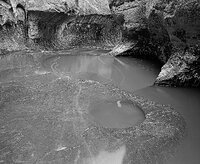
Attached shot last week on KODAK TMAX 100 4x5 film....
Attachments

Last edited by a moderator:
OP
OP
So if you are like me and love the film, what more can be said but keep buying it, using it and in my case impressing your customers with the finished images you make with it.
I imagine most actual photographers are like me and will worry about it when announcements of discontinued films or big price increases are made. Until then, viva-la-Kodak!
Attached shot last week on KODAK TMAX 100 4x5 film....
Modifying my original text to include a devilishly happy emoticon is a profound insult. I did NOT put that in my post and it shows how absolutely bankrupt your position is (and how unethical you are), that you simply MUST lie about me to make your "point".
As ALREADY mentioned earlier, I shot 40 some odd rolls of 120 film during my recent 7 day holiday. I DO shoot film. I try to shoot at least 5 rolls per week during a regular work week.
I am off to the film store today to restock, since this recent holiday completely depleted my supply. I will buy at least 50 rolls of film today.
It's not clear if Kodak Alaris has any capability to change their film offerings. Do they have technical talent and facilities to produce new formulations?
Where would these be produced?
Without these, KA is nothing more but a marketing/sales office that can only offer up whatever Eastman Kodak gives them. When EK shuts down film production, KA will be unable to continue to sell film.
They (KA) seems to be stuck in a very hard situation.
Kodak owed their UK ex and current staff money, the agreed settlement was the UK pension fund got the UK Harrow plant as a going concern as well as profit from still film sales. KA is the entity (a UK ltd company) that owns and administers the settlement.
They could do a Ferranni or rebadge eg a Harman product, but they are ex-EK staff so Id not lose sleep worrying. Think they coated film until 2004 but the 400 staff long gone.
The Eastman House exhibit of Kodak artifacts is shown in conjunction with a display of photos depicting the urban ruins associated with the abandonment and demolition of the large-scale photochemical infrastructure. It's not meant to be an epitaph for film photography as a whole. Here in Rochester, there's still a really big hole where Kodak used to be, but it is gradually filling in with new ventures.
Modifying my original text to include a devilishly happy emoticon is a profound insult. I did NOT put that in my post and it shows how absolutely bankrupt your position is (and how unethical you are), that you simply MUST lie about me to make your "point".
As ALREADY mentioned earlier, I shot 40 some odd rolls of 120 film during my recent 7 day holiday. I DO shoot film. I try to shoot at least 5 rolls per week during a regular work week.
I am off to the film store today to restock, since this recent holiday completely depleted my supply. I will buy at least 50 rolls of film today.
Well I only did about 360 frames last week, it was all Ilford and Foma. Not bought any Kodak since Sept13.
Too expensive here.
OP
OP
Kodak owed their UK ex and current staff money, the agreed settlement was the UK pension fund got the UK Harrow plant as a going concern as well as profit from still film sales. KA is the entity (a UK ltd company) that owns and administers the settlement.
They could do a Ferranni or rebadge eg a Harman product, but they are ex-EK staff so Id not lose sleep worrying. Think they coated film until 2004 but the 400 staff long gone.
Yes, bringing film back to Harrow is a pipe dream.
It is possible that Kodak Alaris could buy Ferrania or Fuji film and rebadge it. How successful that would be is undermined.
With Kodak motion film sales down 90% this year alone, we might not have to wait long to see how this story ends.
- Status
- Not open for further replies.
| Photrio.com contains affiliate links to products. We may receive a commission for purchases made through these links. To read our full affiliate disclosure statement please click Here. |
PHOTRIO PARTNERS EQUALLY FUNDING OUR COMMUNITY:  |