

• Welcome to Photrio!
    Registration is fast and free. Join today to unlock search, see fewer ads, and access all forum features.
    Click here to sign up

New FX-55 Developer

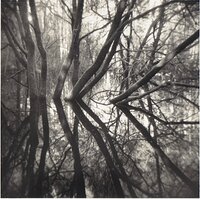
Flooded woodland

Flooded woodland

  • 6
  • 0
  • 59
Babylon

D
Babylon

  • 2
  • 1
  • 62

Recent Classifieds

Forum statistics

Threads
202,836
Messages
2,846,260
Members
101,558
Latest member
Pixelmerchant
Recent bookmarks
0
The roll is hung out to dry

One of the joys of Photrio is its international nature. 😉
For your information, this phrase in English implies that you betrayed your roll of film :smile:
If you had said "The roll is hung to dry", that simply tells us that the roll of film is drying.
The second example looks particularly good.
 
One of the joys of Photrio is its international nature. 😉
For your information, this phrase in English implies that you betrayed your roll of film :smile:
If you had said "The roll is hung to dry", that simply tells us that the roll of film is drying.
The second example looks particularly good.


🤪 🤪 i'm sorry !!! now it has dried without betrayal !😂

test2.jpg
 
It was completely obvious what you meant. Your English undoubtedly beats Matt's Italian senseless.

Without a doubt!
 
scan with epson V600, (2400dpi + scaling for posting: 1600X1029 jpg 1.4M) with active unsharp mask. No intervention in post (only slightly straightened).
i am very very satisfied. The camera is good, my Soviet lenses are perhaps not the best but I like them

View attachment 347954

Looks good.
 
Crawley felt that borates induced "sheen" or fog, and needed careful balancing with restrainer. So it is likely he avoided it for that reason. That being said, I personally have not found borates inducing fog with PC developers. My main developer is Phenidone, Ascorbic acid, and borax and produces very low/nearly no fog vs other developers of similar formulation.

Yes, I've read that other experts like Haist said they never observed the sheen Crawley described.
 
Mi sembra sovraesposto e sottosviluppato.

also for me it seems overexposed.
underdeveloped it doesn't seem to me.
If so, it means that I unknowingly used the "William Mortensen technique"🤣😃

John Finch predicted 8 minutes and 30 seconds for FP4 in his video.
I did 7 minutes and 30 seconds.
I will try the recommended time even if FP4 is not my favorite film.
 
If so, it means that I unknowingly used the "William Mortensen technique"🤣😃
That would be the other way around 😀


In a nutshell, Mortensen’s method is one of slightly underexposing a subject with a very low brightness range and giving very full development to the resulting negative.

AND

“The new rule of thumb for negatives for projection is almost the reverse of the old adage: EXPOSE FOR THE LIGHT AREA AND DEVELOP FOR THE SHADOWS.”


From: https://unblinkingeye.com/Articles/Mortensen/mortensen.html
 
also for me it seems overexposed.
underdeveloped it doesn't seem to me.
If so, it means that I unknowingly used the "William Mortensen technique"🤣😃

John Finch predicted 8 minutes and 30 seconds for FP4 in his video.
I did 7 minutes and 30 seconds.
I will try the recommended time even if FP4 is not my favorite film.
It is always tricky to evaluate a digital photo of a negative because the contrast is variable. The negs initially looked a bit flat to me, but when I copied them, inverted to positive, then increased the contrast they looked good.

We have to set exposure and development (=contrast) to suit our process. Those negatives would have suited my darkroom process.
 
That would be the other way around 😀


In a nutshell, Mortensen’s method is one of slightly underexposing a subject with a very low brightness range and giving very full development to the resulting negative.

AND

“The new rule of thumb for negatives for projection is almost the reverse of the old adage: EXPOSE FOR THE LIGHT AREA AND DEVELOP FOR THE SHADOWS.”


From: https://unblinkingeye.com/Articles/Mortensen/mortensen.html

true you are right !!! I used the usual method (AA)
 
It is always tricky to evaluate a digital photo of a negative because the contrast is variable. The negs initially looked a bit flat to me, but when I copied them, inverted to positive, then increased the contrast they looked good.

We have to set exposure and development (=contrast) to suit our process. Those negatives would have suited my darkroom process.

I'm not a great printer, let's say I get along. In my experience they are negatives not difficult to print even with my old equipment.
 
One thing: is there any reason to use potassium carbonate instead of sodium carbonate? There would be no problem getting the equivalent amount of sodium carbonate to dissolve in the stock A solution. Anyone?

I did find an interesting quote here.

John Finch suggested not. His words were: If you have sodium carbonate, that's OK just use 15.4 g instead) Maybe with as little sodium carbonate in 700ml of water there is no problem with it dissolving He makes no mention of there being a likely /possible alteration to the contrast curve

pentaxuser
 
Fomapan 200 @ 200 / 120 format / FX-55 .
The film is drying 😀 9 min. 30 sec. / 20 °C (Flexaret VI).

Soon I will do the usual illuminated film photography; then scan.
Again I think the FX-55 worked very well. Soon I should develop an Ilford Ortho Plus 80, but I don't have the slightest idea of the development time to start from. I think it's harmful to exceed 6 minutes and 30 seconds
 
I thought so, but the scans look good. And the negatives look fairly easy to enlarge.

Yes, certainly. I think those negatives will print like a breeze. The combination of overexposure and underdevelopment isn't always detrimental. Indeed, some people swear by it!
 
Photrio.com contains affiliate links to products. We may receive a commission for purchases made through these links.
To read our full affiliate disclosure statement please click Here.

PHOTRIO PARTNERS EQUALLY FUNDING OUR COMMUNITY:


Ilford ADOX Freestyle Photographic Stearman Press Weldon Color Lab Blue Moon Camera & Machine
Top Bottom
