

• Welcome to Photrio!
    Registration is fast and free. Join today to unlock search, see fewer ads, and access all forum features.
    Click here to sign up

New FX-55 Developer

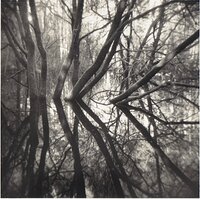
Flooded woodland

Flooded woodland

  • 0
  • 0
  • 0
Babylon

D
Babylon

  • 2
  • 1
  • 34

Recent Classifieds

Forum statistics

Threads
202,832
Messages
2,846,151
Members
101,554
Latest member
Stalk3r
Recent bookmarks
0
sorry ... but ... Now i'm very confused. 🤔 What would formula A and B be if I used Ascorbic Acid instead of Sodium Ascorbate?

(12gr. !!! of ascorbic acid in solution B seem excessive to me)

Ah, that should've been 1.2, not 12. I edited my post above.
 
I decided to recover the two correct components (sodium ascorbate and propylene glycol) of the original formula that I was missing, in order to correctly execute the recipe. I finished everything a few minutes ago running everything correctly.
Only one thing left me in doubt about the John Finch video (4:05 minute).
When I added the third element (sodium sulfite), the water didn't change color (maybe just imperceptibly cloudy). I am obviously certain that I have not inverted the insertion sequence or made the wrong doses; it's all so simple.
The only difference from the video is that I used demineralised water and John probably used tap water.

I hope that everything works the same; I'm trying to develop a roll of film tomorrow night

 
I'm trying to develop a roll of film tomorrow night

Since no one has bothered thus far, in spite of this thread being 4 pages, I think it would be nice if you posted a couple of photos of your developed negatives, if it's not too much trouble.
 
I decided to recover the two correct components (sodium ascorbate and propylene glycol) of the original formula that I was missing, in order to correctly execute the recipe. I finished everything a few minutes ago running everything correctly.
Only one thing left me in doubt about the John Finch video (4:05 minute).
When I added the third element (sodium sulfite), the water didn't change color (maybe just imperceptibly cloudy). I am obviously certain that I have not inverted the insertion sequence or made the wrong doses; it's all so simple.
The only difference from the video is that I used demineralised water and John probably used tap water.

I hope that everything works the same; I'm trying to develop a roll of film tomorrow night


If you look at the comments you will see that several others had the same experience. In response and after seeing símilar comments to your own, John Finch himself wondered if he rather than they had an issue with his sodium sulfite. His was only very slightly peach coloured for a short period

It would look as if there is not a problem if it does NOT change colour.


pentaxuser
 
I had this in my spreadsheet records and didn't record its source. An alternate B solution for FX-55.

Alternate Part B
Phenidone
1​
g
TEA
10​
g
Ascorbic Acid
12​
g
Propylene Glycol to
100​
ml

If Anchell and Troop are to be believed that TEA has an undesirable solvent effect, we might want to reformulate the B solution without TEA. It is a fairly small amount of TEA compared to PC-TEA, so perhaps doesn't matter. If one eliminated the TEA and increased the Alkali, or used Ascorbate instead of ascorbic acid would that work?
 
Adox has recently reformulated Xtol and D-76 sans borates. Anchell and Troop in the FDC 2nd, said "We cannot tell if Crawley was using the highly buffered carbonate [in FX 55] to avoid infringing on the Xtol patent, or if he would have preferred to use the Kodalk-bisulfate buffer. We are inclined to think that in this case, he preferred to avoid borates." Crawley may not have been thinking of environmental concerns, but his approach seems timely.
 
Adox has recently reformulated Xtol and D-76 sans borates. Anchell and Troop in the FDC 2nd, said "We cannot tell if Crawley was using the highly buffered carbonate [in FX 55] to avoid infringing on the Xtol patent, or if he would have preferred to use the Kodalk-bisulfate buffer. We are inclined to think that in this case, he preferred to avoid borates." Crawley may not have been thinking of environmental concerns, but his approach seems timely.
Crawley felt that borates induced "sheen" or fog, and needed careful balancing with restrainer. So it is likely he avoided it for that reason. That being said, I personally have not found borates inducing fog with PC developers. My main developer is Phenidone, Ascorbic acid, and borax and produces very low/nearly no fog vs other developers of similar formulation.
 
I thought it was vitamin C, but the “L” prefix had me ponder as to whether there was some dangling molecule making it incompatible with the formula. Not a chemist and there is no harm in asking. Thanks again!

Ascorbic acid is a chiral compound, which means it has two structural forms (enantiomers) that are mirror images of each other. The two forms are called L (for levo) and D (for dextro). The L enantiomer of ascorbic acid is the biologically active form and is commonly known as vitamin C. The D form has exactly the same chemical formula, but not the same 3D structure (it's the mirror image of the L form).

Since the L form is what's called for in the formula for FX-55, common ascorbic acid is indicated because it is the L form even though it's rarely written as L-ascorbic acid.

Chiral compounds are like gloves. There's a left-hand glove and a right-hand glove and you can't interchange them.

Chirality is important in biology. All amino acids that make up proteins are chiral (except for the simplest one, glycine) and all are of the L form. Naturally occurring sugars are all the D form. L-glucose can be synthesized, but when eaten it has no nutritional value.

It's slightly more complicated than that, but that's the basics.
 
Since the L form is what's called for in the formula for FX-55, common ascorbic acid is indicated because it is the L form even though it's rarely written as L-ascorbic acid.

It was actually Sodium L-ascorbate that was called for in the original formula, though.
 
It was actually Sodium L-ascorbate that was called for in the original formula, though.

Ah, I missed that. Everything else I said still applies though. Sodium ascorbate is a salt of ascorbic acid, and the ascorbate ion is chiral.

Here's an interesting tidbit: all mammals can synthesize vitamin C except for guinea pigs, capybaras, bats, and primates (which includes humans). That's why we have to eat foods, like citrus fruits, containing vitamin C or take it in the form of vitamin pills. Vitamin C deficiency causes scurvy.
 
The roll is hung out to dry.
36 shots (trivial) excellently developed. Perhaps overexposed (1/2 stop ?), but I'm not a great expert on wet negatives. If they were overexposed, Crawley's theory might be valid (sensitivity gain) because I exposed the FP4 as regularly do the Contax AX (reflected light), for box speed (125).
When they are dry I insert the photo of the negative on a light source. Photrio experts will be able to evaluate. I developed for 7 minutes 30 seconds at 20°C.

It has been fun and educational to make and use this development; not as complicated as it seems.
 
It was actually Sodium L-ascorbate that was called for in the original formula, though.

In my country, no dealer sells this chemical. At the same time, everyone offers ascorbic acid (L) for pennies. There are quite a few advertisements for the sale of ascorbate as a food supplement (so no licenses and permits are required), but when one reads the description, one understands that it is about ascorbic acid or some obscure mix, where it is not known what is in it and in what ratio... Anyway, if I am going to test, it will be with what I have - ascorbic acid. I won't think so :smile:
 
if I am going to test, it will be with what I have - ascorbic acid

Make sure to note the necessary increase in alkalinity to convert the ascorbic acid and preserve the activity of the developer.

I plan on trying this developer, also with ascorbic acid (which is what I have). I'm wondering how similar the results will be to the Mytol I've been using.

When they are dry I insert the photo of the negative on a light source.

I'm looking forward to seeing the result.
 
It's possible to convert ascorbic acid to sodium ascorbate by adding sodium hydroxide to a solution of the acid.

Another way is to use sodium bicarbonate as above. This method generate CO2, so be ready for that.
 
fp4
fx55.jpg
 

Are the edge markings not as dense as normal? The negative looks fairly low contrast (but the scenes look like subdued light) - and definitely capable of being enlarged. Also looks like zero base fog. Looks promising.
 
One thing: is there any reason to use potassium carbonate instead of sodium carbonate? There would be no problem getting the equivalent amount of sodium carbonate to dissolve in the stock A solution. Anyone?

I did find an interesting quote here.
 
scan with epson V600, (2400dpi + scaling for posting: 1600X1029 jpg 1.4M) with active unsharp mask. No intervention in post (only slightly straightened).
i am very very satisfied. The camera is good, my Soviet lenses are perhaps not the best but I like them

test.jpg
 
Photrio.com contains affiliate links to products. We may receive a commission for purchases made through these links.
To read our full affiliate disclosure statement please click Here.

PHOTRIO PARTNERS EQUALLY FUNDING OUR COMMUNITY:


Ilford ADOX Freestyle Photographic Stearman Press Weldon Color Lab Blue Moon Camera & Machine
Top Bottom
