

• Welcome to Photrio!
    Registration is fast and free. Join today to unlock search, see fewer ads, and access all forum features.
    Click here to sign up

Medium Format Resolution

Finis Lineae

H
Finis Lineae

  • 0
  • 0
  • 17
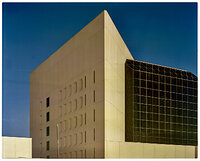
Angular building 6

A
Angular building 6

  • 4
  • 0
  • 39

Recent Classifieds

Forum statistics

Threads
202,556
Messages
2,842,271
Members
101,379
Latest member
deckeda
Recent bookmarks
0
My scanning experience is limited to old ASA 10 and 25 Kodachrome with a Nikon Coolscan, results are awesome . One thing to remember. A Contact print on glossy paper is as high resolution as you can get, with film printed on paper.
I can't remember the exact book name. There were very important negatives of President John F Kennedy destroyed in the 9/11 attack on NYC. An entire book was published scanning contact sheets, that fortunately, were stored elsewhere.
The idea of DSLR to shoot back lighted film makes sense. Back in the old days this is how color separations were made on film, from 8x10 Ektachrome etc.
 
But how does it do that with photos as opposed to text since each color can be slightly different than others? After all, that's what causes banding in jpeg.

Zip is basically the deflate compression algorithm. It’s lossless, and works on more than just text. JPEG compression is based on discrete cosine transform compression and as part of that throws away bits of,the image it doesn’t think you’ll see, which is why it’s lossy.

With deflate compression, it basically takes the image data in the file and zip compresses it as if it where actually just a binary file on disk, then puts that in the image file payload and sets the tags in the file so a viewer knows it has to unzip the image payload before trying to display it. You can do roughly the same thing by just zipping up an uncompressed tiff file into a zip file.

https://en.m.wikipedia.org/wiki/DEFLATE
 
Attached are the images. They were processed minimally in Apple "Photos". ( I wish Apeture was still around)
Neither image is focused on the eyes. The Canon image "V2C..." is focused on the lips and has better depth of field. The RB67 image is back-focused on the necklace and has less depth of field. It wouldn't take much sharpening to make the necklace on the RB67 image look as sharp as the lips on the Canon shot.
 
My scanning experience is limited to old ASA 10 and 25 Kodachrome with a Nikon Coolscan, results are awesome . One thing to remember. A Contact print on glossy paper is as high resolution as you can get, with film printed on paper.
I can't remember the exact book name. There were very important negatives of President John F Kennedy destroyed in the 9/11 attack on NYC. An entire book was published scanning contact sheets, that fortunately, were stored elsewhere.
The idea of DSLR to shoot back lighted film makes sense. Back in the old days this is how color separations were made on film, from 8x10 Ektachrome etc.

I saw an exhibit of those scanned contacts at the Booth Western Art Museum in Cartersville, GA. I remember wondering why these large - 20 x 20 and up - prints weren't sharper. When I saw their provenance I was surprised that their quality was as good as it was. Fortunate that the originals were 6 x 6, rather than 35 mm. What a loss....

Here is a link to the exhibition at the Booth. http://boothmuseum.org/creatingcamelot/ Should the exhibition arrive at a venue near you it is worth your time.
 
Last edited:
I saw an exhibit of those scanned contacts at the Booth Western Art Museum in Cartersville, GA. I remember wondering why these large - 20 x 20 and up - prints weren't sharper. When I saw their provenance I was surprised that their quality was as good as it was. Fortunate that the originals were 6 x 6, rather than 35 mm. What a loss....

Here is a link to the exhibition at the Booth. http://boothmuseum.org/creatingcamelot/ Should the exhibition arrive at a venue near you it is worth your time.
Can you imagine what it was like to hold those contact sheets? What a treasure. What will happen to today's images? There's too many to keep and the only good way to store is to make silver black and white separation negatives. My.
 
Photrio.com contains affiliate links to products. We may receive a commission for purchases made through these links.
To read our full affiliate disclosure statement please click Here.

PHOTRIO PARTNERS EQUALLY FUNDING OUR COMMUNITY:


Ilford ADOX Freestyle Photographic Stearman Press Weldon Color Lab Blue Moon Camera & Machine
Top Bottom
