

calebarchie
Subscriber
I recall not too long ago a light engine available out of China for a far more reasonable price.

I suspect Kirin use a commercial grade(not UV-grade) DMD chip with XPR technology, which explains its long lifespan at 405nm and not using 365nm. TI’s DLPDLCR471TPEVM evaluation module (native 1080p, 4K via XPR at 1/4 light intensity) retails for $999. I expect mass-produced UV engines based on this can eventually hit that $500–$1000 range. Hope in 5–10 years, DIYers can buy affordable DMD kits like the LCD kits here, for high-power DLP mods. Currently, high-power & large-area for some alt-process remains a challenge for these evaluation modules or light engines.
An example: Let's see a current $4000 (385nm, 4k via XPR, commercial grade DMD, 12mw/cm2 in 192x108 mm area) commercial light engine. It will give ~3.6mw/cm2 for a A4 photo, and need ~10 min for a 2000mJ/cm2 cyanotype process. It can offer some industrial advantages, such as low power dissipation (requiring only 120W of power input, as well as a long lifespan and output stability), but this exposure time doesn't offer much advantage, and they may not cost-effective enough at this moment (The OP's work likely cost less than $1,000?).
I recall not too long ago a light engine available out of China for a far more reasonable price.
Congratulations on solving the image persistence issue! Yes, indeed we're discussing replicating previous high-power industrial projectors similar to digital projection scene in cinemas around 2000 (with some UV issues), their cooling solutions should also be effective here. Like separate polarizers for LCD, one heat dissipation solution was to use a reflective liquid crystal display (LCOS) and water cooling. Also, stacking multiple device (3LCDs or DMDs for RGB) could help to solve the power bottleneck. Now the selling points of DLP are also stability, some industrial printing requires 24/7 operation like the digital cinemas in 2000 and later, making it worthwhile even if it's far more expensive overall. But for personal using it is not the main problem.One thing that might be interesting as a future development in the LCD space is separating the polarising films from the LCD itself.
Congratulations on solving the image persistence issue! Yes, indeed we're discussing replicating previous high-power industrial projectors similar to digital projection scene in cinemas around 2000 (with some UV issues), their cooling solutions should also be effective here. Like separate polarizers for LCD, one heat dissipation solution was to use a reflective liquid crystal display (LCOS) and water cooling. Also, stacking multiple device (3LCDs or DMDs for RGB) could help to solve the power bottleneck. Now the selling points of DLP are also stability, some industrial printing requires 24/7 operation like the digital cinemas in 2000 and later, making it worthwhile even if it's far more expensive overall. But for personal using it is not the main problem.
Regarding power loss, I'm curious if you've tested the UV intensity projected onto an target, e.g. A4 or A3 size? It should be within the testing range of your UV intensity meter. Furthermore, is significant lens heat here? The light intensity after the LCD screen and Fresnel lens should have been greatly reduced and the lens shouldn't block much light(in my case, lens is not much hot). Are there any optical factors causing much UV light to reach the inner wall of the lens without participating in image formation? Measuring the UV intensity before and after the lens might allow for further improvements.
Kirin claim a 405nm intensity of 110 W/m² and a lifespan of 18,000 hours, which, to my knowledge, is much higher than normal LCD range. They at least used some LCOS-based technology, similar to Sony's SXRD or Hamamatsu's LCOS-SLM X15213-05, as reflective liquid crystal displays facilitate heat dissipation. Alternatively, they may be deceptive charlatans who uses a monochrome LCD with fabricated specifications. As far as I know, unlike DLP which is all supplied by TI, LCOS has a wide variety of performance characteristics, and most are difficult to use in UV range (e.g., 10-30% reflectivity at 405nm). However, there may be some manufacturers making them.
I agree.The gains I'd imagine would be from significantly greater cooling of the liquid crystal layer and separate polarisers, allowing you to pump even more power in without damaging things.
I agree too. Those numbers seem too low. You might be able to calibrate this using sunlight UV data from the weather bureau.I'm not sure if I believe the actual intensity values it tells me in an absolute sense though as they seem absurdly low.
This is why I suspect large light loss in the projection lens. With a 100W UV light, passing through 87% + 5% + 87% leaves only 3.7W. A 25% lens loss means only about 1W. At that level, it shouldn't be heater than other components with losing over 10W. Typically, lens groups should transmit over 90% of light.I haven't measured the projection lens but I'd imagine it would be around 75% or better.
Just for fun, here is how some industrial systems are built. Since DLP projectors can be smaller than their projected image—unlike contact exposure (due to frames) or LCDs (hard to downsize)—multiple projector units can work in parallel. For example, using 8 light engines (like those in #77) to tile an A3 area, each covering 1/8th of the surface: ~14mW/cm² intensity, A3 cyanotype exposure in under a minute at 8~16K resolution. Stitching is less of an issue here since the seams receive the same exposure time as the rest of the image(No need to consider reciprocity) and the positions of all the light engines are fixed to each other(without high accuracy motion system). Just need a static mask to ensure uniform light intensity across the field, like the projection walls used in TV shows. But the cost is prohibitive, with the light engines alone totaling $32,000, it's not practical to us now.Maybe a similar system could be made by moving a small DLP/LCoS/LCD 'print head' around over the paper, making numerous very high intensity exposures that get tiled together, but my experience with tiling together multiple contact exposures showed that path is also very difficult to do correctly.
Just had a look at that, and from what I can tell that's an LCD-based unit rather than DMD, but it's really hard to tell?. They talk about it being "DLP-like" however they call it DSP (digital surface projection) which as far as I can tell is a term they invented to account for their ability to dynamically change focal point.
I would really love to have a system that could expose half-tone images at a high-enough resolution (at least 1000 dpi I think) and with enough energy to get reasonable exposure times and dmax with DAS carbon, but I think such a system would be very difficult and costly. Maybe the most likely option in my mind would be an array of powerful UV laser diodes on a moving head that scans back and forth across sensitised paper, like the head of an inkjet printer. There would be a lot of complexity in aligning and focusing all the laser spots and getting the necessary accuracy out of the motion systems however. Also DAS isn't really sensitive to 405nm light and I'm not aware of any 'cheap' laser options at shorter wavelengths.

 hackaday.io
Yeh no idea, I am not sure they even managed to make any units there was a kickstarter with no results. It looked promising at the time, in terms of costs coming down but not much progress since 2023 aside from your project of course.
I've probably posted this before, but this reminds me of a Hackaday project from 10 years ago...
Direct UV Printer for Alternative Photography
NOTE: Project has been re-booted, existing work will be largely recycled in development of the new project. This project is for the design of a prototype direct UV printer for use in Alternative Photography. The design aim is to achieve minimum of; - 256 levels exposure - circa 750 dpi...
Hopefully I can start messing around on my own version soon!
I've probably posted this before, but this reminds me of a Hackaday project from 10 years ago...
Direct UV Printer for Alternative Photography
NOTE: Project has been re-booted, existing work will be largely recycled in development of the new project. This project is for the design of a prototype direct UV printer for use in Alternative Photography. The design aim is to achieve minimum of; - 256 levels exposure - circa 750 dpi...
Hopefully I can start messing around on my own version soon!
Yeah I'm sure I've seen that before, looks like he never finished it though? I have exposed cyanotypes using a 405nm UV laser mounted on a moving X-Y gantry (modified a much larger laser cutter I have at home to see how it would work). It did work, however it was painfully slow and the motion systems had limited accuracy. The system also had throughput limits in terms of how fast I could scan the laser spot, I was only using an 8-bit microcontroller running grbl and it would max out at 50mm/sec or less running ~500 dpi so exposing an A5 sheet took two hours even with a halftone size coarse enough to see visibly. If I switched to a 32-bit controller the next limit would have been the power of the UV laser (which was only 500mW), probably limiting me to 100mm/sec so still way too slow. Going beyond that would require a lot more money, either in a more powerful laser or an array of similarly powerful lasers.
This is pretty cool. I had imagined something similar but using a dlp to make very large prints. You would expose all the pixels available, then move to the next spot and expose those pixels.
The galvo can solve the scanning speed problem, but the next problem is power—a 500mw laser is just 500mw. The work OP is doing will inevitably involve much higher total power to paper. So as mentioned earlier, a effective solution would be to first expose a large film using a projector (even visible light!), and then expose the target using the film (this could allow 100W UV power to paper). High-power 355nm lasers with a power output of 10-50W, are available, for example, the Talon from MKS Instruments, Inc., they will work well, but they also appear to be expensive(Industrial applications will need 40,000 hours or 5 years of operational life, but we don't want to pay for those performance that we don't need.).How about an F-theta lens system with a galvo.
a effective solution would be to first expose a large film using a projector (even visible light!), and then expose the target using the film (this could allow 100W UV power to paper).
Ah yes! Thats a good idea. I haven't tried this yet but I can and have created PVA/CMC chiba cyanotype negatives on plastic transparencies. Since the plastic is flat and I can spray the coating on it, I can make any size negatives I need. PVA and CMC is transparent to UV and New Cyanotype has a long tonal range. This probably has been done before....https://slyka.net/blog/2024/cyanotype-glass-plates/
Is Kodak Positive Film 7302 (4x5) still available? It was originally designed for those high-resolution print purposess.One option I'm seriously considering is putting one of these LCD screens in front of an LED panel, displaying the image I want to print, and then photographing it with my 4x5 camera onto B&W film.
Is Kodak Positive Film 7302 (4x5) still available? It was originally designed for those high-resolution print purposess.
I think it's an approach that will work quite well, for sure. It does add back the step of a silver gelatin negative, which of course is a pity in a way. But it depends on how you look at it.
You bet; I was looking at an inkjet printed negative the other day through a microscope and it was an enlightening experience.I'd guess you could enlarge a digital negative made with an inkjet printer but I don't think the resolution would be sufficient for much enlargement before ink droplets started becoming visible.
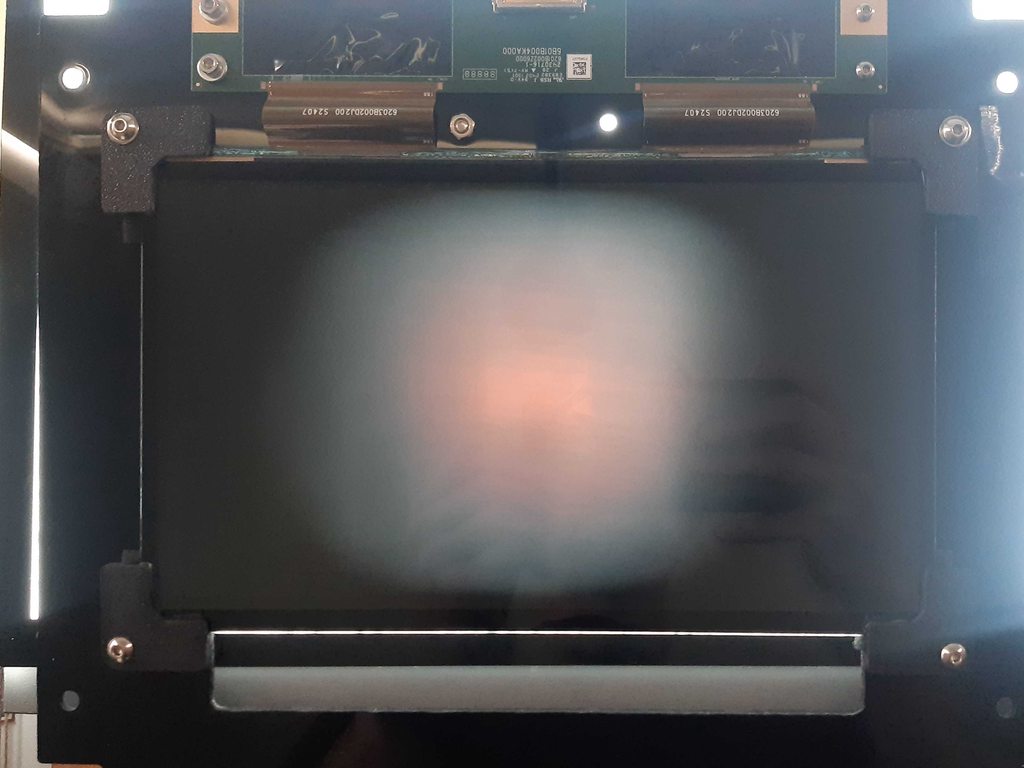
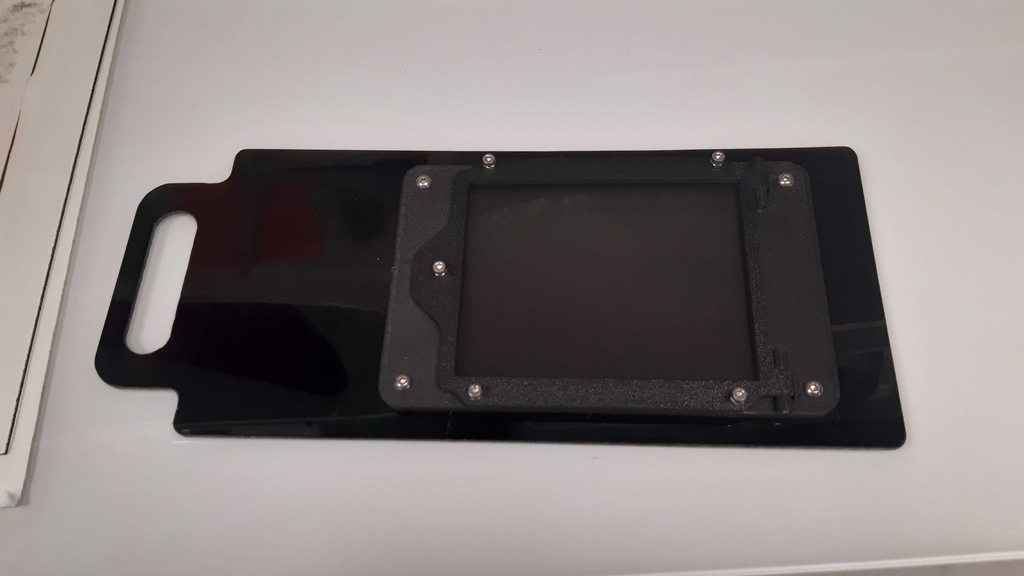
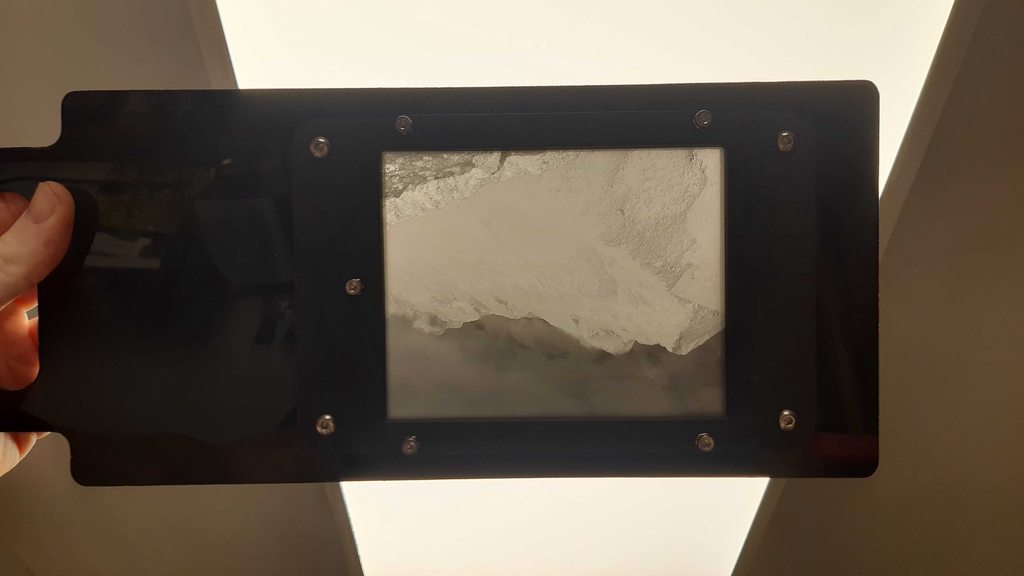
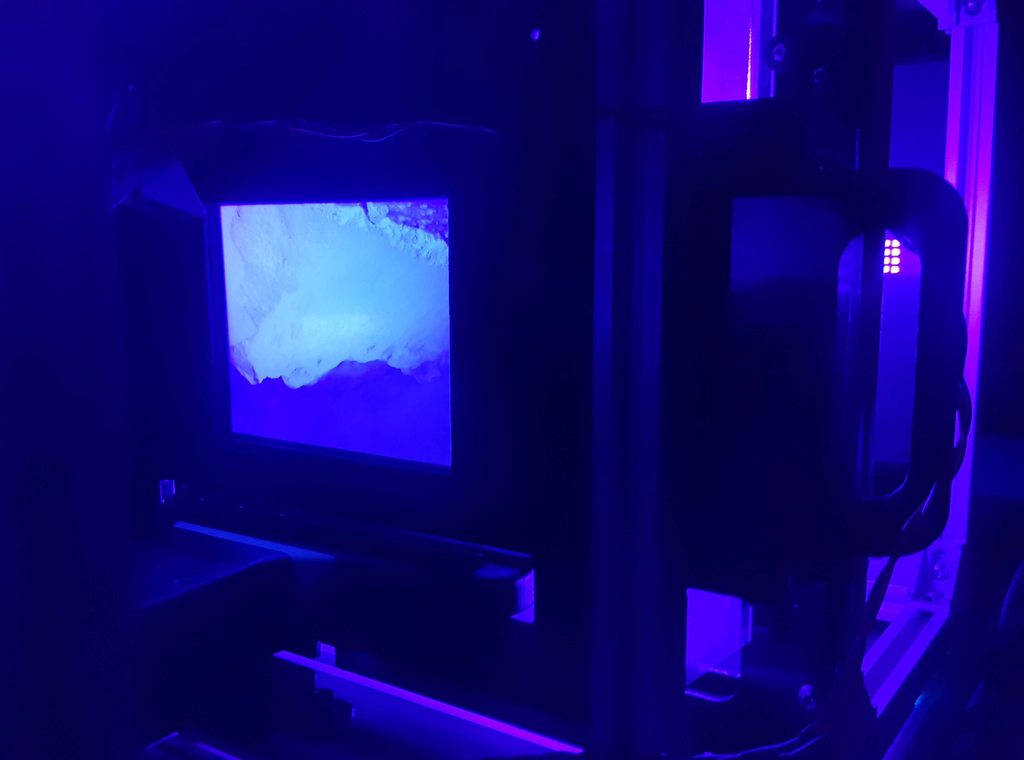
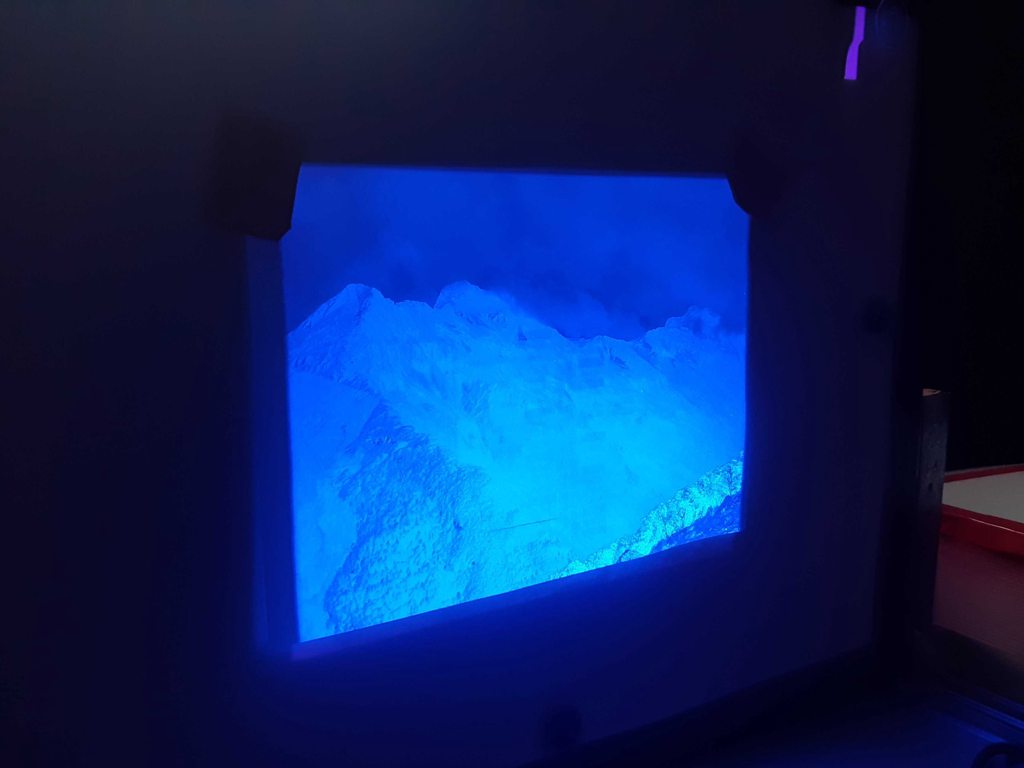
Ah,....I also thought the LCD should be in much better condition. Two questions:
May you check if the polarizer near the LED side is damaged? Normal iodine-PVA polarizers are relatively unstable compared to liquid crystals. A standalone polarizer or a dye polarizer might be better.
As only the center of LCD is damaged, does that suggest uneven light distribution or perhaps a lack of heat dissipation in the center?
| Photrio.com contains affiliate links to products. We may receive a commission for purchases made through these links. To read our full affiliate disclosure statement please click Here. |
PHOTRIO PARTNERS EQUALLY FUNDING OUR COMMUNITY:  |

