

• Welcome to Photrio!
    Registration is fast and free. Join today to unlock search, see fewer ads, and access all forum features.
    Click here to sign up

Kodachrome

Recent Classifieds

Forum statistics

Threads
202,831
Messages
2,846,119
Members
101,553
Latest member
SeattleMC
Recent bookmarks
1
Status
Not open for further replies.
The pH is the key as is a good antioxidant. The developers will turn cyan, magenta and yellow. That is the basic flaw in Kodachrome. The developers self destruct.

My answer to the above comments and questions is that I like to help, but knowing how messy Kodachrome is, and having seen it done and worked around the fringes, I have no desire to do it. I prefer to concentrate personally on basic emulsion making, preserving this essential part of analog photography for the future.

I have no objection to what other people want and will be glad to supply information.

PE
 
The pH is the key as is a good antioxidant. The developers will turn cyan, magenta and yellow. That is the basic flaw in Kodachrome. The developers self destruct.

My answer to the above comments and questions is that I like to help, but knowing how messy Kodachrome is, and having seen it done and worked around the fringes, I have no desire to do it. I prefer to concentrate personally on basic emulsion making, preserving this essential part of analog photography for the future.

I have no objection to what other people want and will be glad to supply information.

PE

Correct me if im wrong, but it appears to me that the couplers need to be somewhat reactive and oxidise in order for them to form dyes on the film (and as a result also form dye in the tank when mixed.)

This was very obvious when looking at the video of the machine at dwaynes, the cyan and magenta tanks were heavily stained, but I did not so so much with the yellow, which makes me think its less reactive.

It seems at first that Piratelogy has had trouble getting the yellow coupler to react at all and little dye forms on the film (and in the tank itself).
When he has tried raising the pH, that seems to make the couplers react much faster, but now this does the opposite and leads to them all oxidizing fast before the film gets a chance to develop.

As you say, adding an antioxidant is important, I believe Piratelogy has been doing so.

Since you worked on the yellow developer for Kodachrome, I guess you are able to be of some help! :wink:
 
Correct me if im wrong, but it appears to me that the couplers need to be somewhat reactive and oxidise in order for them to form dyes on the film (and as a result also form dye in the tank when mixed.)

This was very obvious when looking at the video of the machine at dwaynes, the cyan and magenta tanks were heavily stained, but I did not so so much with the yellow, which makes me think its less reactive.

It seems at first that Piratelogy has had trouble getting the yellow coupler to react at all and little dye forms on the film (and in the tank itself).
When he has tried raising the pH, that seems to make the couplers react much faster, but now this does the opposite and leads to them all oxidizing fast before the film gets a chance to develop.

As you say, adding an antioxidant is important, I believe Piratelogy has been doing so.

Since you worked on the yellow developer for Kodachrome, I guess you are able to be of some help! :wink:

I've actually NOT been adding any extra antioxidants. I believe I've got some Sodium Sulfite among my supplies so I'm going to try a recipe using that along with the higher PH for the next run.
 
I've actually NOT been adding any extra antioxidants. I believe I've got some Sodium Sulfite among my supplies so I'm going to try a recipe using that along with the higher PH for the next run.
OK, hopefully adding that makes a difference.
 
The use of antioxidants is essential in Kodachrome. We used Sodium Sulfite and Hydroxyl Amine Sulfate (HAS). The problem of self destruction is, as I said, a major flaw and the reason that such a process must run continuously with replenishment. To do this in the lab, we added the coupler at the very last moment.

The yellow is as reactive as the others, and it is essential to have a high pH. It is probably just harder to clearly see the yellow in the photo. I don't remember OTOMH how the photo looked.

PE
 
The use of antioxidants is essential in Kodachrome. We used Sodium Sulfite and Hydroxyl Amine Sulfate (HAS). The problem of self destruction is, as I said, a major flaw and the reason that such a process must run continuously with replenishment. To do this in the lab, we added the coupler at the very last moment.

The yellow is as reactive as the others, and it is essential to have a high pH. It is probably just harder to clearly see the yellow in the photo. I don't remember OTOMH how the photo looked.

PE

With the PH boost the developer turns a very deep urine color, its very obviously reacting. Before the PH boost all 3 devs only had a very light tint with yellow being nearly clear. Afterwards all three are nearly neon in their color.
 
What are you using for the yellow coupler?

Back in one of the other threads on this, I was messing about with couplers on some home made emulsion. Cyan and especially magenta worked well but yellow was more of a weak baby poop brown than yellow. I was using Ethyl Acetoacetate. I didn't try any pH changes. The other fellow using EAA on actual Kodachrome was having the same problem.

Jason
 
What are you using for the yellow coupler?

Back in one of the other threads on this, I was messing about with couplers on some home made emulsion. Cyan and especially magenta worked well but yellow was more of a weak baby poop brown than yellow. I was using Ethyl Acetoacetate. I didn't try any pH changes. The other fellow using EAA on actual Kodachrome was having the same problem.

Jason

P-Chloroacetoacetanilide. But yeah, before the PH boost browns were about all I'd get. After the boost I *CAN* get really nice yellows. But its not consistent at this point.
Also, couplers and home made emulsion sounds like a blast. I've only barely tried that yet, figured I'd get the developer working first :tongue:
 
P-Chloroacetoacetanilide

Thanks for the info. What I was trying was on some remaining scraps. I have this dream that in retirement I can make a 3+ layer coating and produce a color reversal film. Call it a stretch goal.

Best of luck in your work. I think your progress is awesome!
 
It also doesn't last. The brown color I got has now seriously faded over the past 6 or so months. The "cyan" (more blue really - I used 1-naphthol) and magenta (a pyrazalone) have not faded at all.
 
Yep, that is good, but the yellow is harder. A phenyl analog of Ethyl Aceto Acetate would do better. In the scheme of things, CH3-C-O= is bad, C6H5-C=O is better and we used (CH3)-C=O! For those interested, that is. It is the steric hindrance increases in this series that does some of it and it is the activity and hue that is part of it.

PE
 
And I almost understand what you said. :laugh: Been struggling through some of this notation with 10th grade biology. (Gotta love common core.)
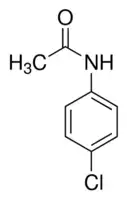

So does that mean 4′-Chloroacetanilide is good? (Note the (H3C)-C=O at the upper left of the picture.)

upload_2017-2-22_19-33-31.png

But I see that Ethyl Acetoacetate has the O-C-(CH3) on the right, but the same (H3C)-C=O on the left. In 15 words or less, what makes the difference, assuming the above would be good?

upload_2017-2-22_19-38-21.png
 
If there were an O-CH2- where the NH is, that would be better, but CH3-C=O-O-CH2-C=O-Phenyl-Cl Would be better. See the bottom figure, there is a CH2 sandwiched between two C=O groups.

PE
 
So, I only just found this post after beginning to work piratelogy on his Kodachrome processing project. Thank you to everyone for all your input and assistance in this. It's a dream come true for me even if he doesn't get it perfectly right.

And... with all this information in this forum I might just give it a shot myself on a few rolls. And... if I get it working... maybe try hand processing some K-40 Type A Super 8 I have in the freezer since the 2000s.

Can't wait to see more successful posts!
 
P-Chloroacetoacetanilide. But yeah, before the PH boost browns were about all I'd get. After the boost I *CAN* get really nice yellows. But its not consistent at this point.
Also, couplers and home made emulsion sounds like a blast. I've only barely tried that yet, figured I'd get the developer working first :tongue:
Update?
 
Kodachrome was a fantastic film, however for the few times that I shoot 35mm slide film Velvia does the job for me. To answer the question I'd buy just 1 roll to try it out then take it from there. 99% of my friends are happy with their DSLR's and doubt they would even care. That is probably why it isn't coming back.
 

Some family obligations have chewed up my time recently, so little progress has been made. Thats finally getting behind me, so I'm hoping to get back on track this week but we'll see :smile:
 
Kodachrome was a fantastic film, however for the few times that I shoot 35mm slide film Velvia does the job for me. To answer the question I'd buy just 1 roll to try it out then take it from there. 99% of my friends are happy with their DSLR's and doubt they would even care. That is probably why it isn't coming back.

Well its hard to load slide film into a DSLR.
 
I've now built an Arduino controlled device using LEDs and the glass filters specified in the K14M Theory Guide, using the exposure levels in the Guide. This week I switched to using the couplers and colour developers from the 1938 Mannes & Godowsky patent, and the first developer from the 1972 Bent & Mowrey patent. Here's the scan of the Super 8 Kodachrome 40 that I processed last week, using these methods:


here's the process I used:

Modified K14 process
- 05:00 remjet removal bath
- 04:00 wash
- 04:00 First development
- 02:00 wash
- 05:00 remove film from Lomo spiral
- 05:00 remove remjet - 04:00 Red exposure
- 1000 micro watt seconds per square centimetre through Kopp 2403 filter, 5mm thick
- 03:00 Reload onto Lomo spiral
- 01:00 Add Cyan coupler to developer (on magnetic stirrer)
- 12:00 cyan developer bath 20°C (constant mild agitation)
- 03:00 wash - 05:00 remove film from Lomo spiral
- 05:00 Blue exposure
- 230 micro watt seconds per cm2 through Schott BG25 glass filter, 5mm thick - 03:00 reload onto Lomo spiral
- 01:00 add yellow coupler to developer
- 10:00 yellow development bath 20°C (constant mild agitation)
- 03:00 wash
- 08:00 White light exposure
- 01:00 Add magenta coupler to developer
- 05:00 Magenta development bath 20°C (constant mild agitation)
- 03:00 wash - 08:00 Ferricyanide bleach bath 24°C - 01:00 wash
- 06:00 sodium thiosulphate fixer bath 24°C
- 06:00 wash
- 01:00 stabiliser bath 24°C
Formulas
Colour developers from Mannes and Godowsky Kodachrome patent 1938: https://patentimages.storage.googleapis.com/ed/13/21/8e8f88900704dc/US2252718.pdf
First developer from Bent and Mowrey Kodachrome patent 1972: https://patentimages.storage.googleapis.com/b6/0b/e3/fc2c18d455bfd3/US3658525.pdf
Re-exposure details from Kodachrome K14M Theory Guide: https://125px.com/docs/unsorted/kodak/tg2044_1_02mar99.pdf
 
Status
Not open for further replies.
Photrio.com contains affiliate links to products. We may receive a commission for purchases made through these links.
To read our full affiliate disclosure statement please click Here.

PHOTRIO PARTNERS EQUALLY FUNDING OUR COMMUNITY:


Ilford ADOX Freestyle Photographic Stearman Press Weldon Color Lab Blue Moon Camera & Machine
Top Bottom
