• Welcome to Photrio!
    Registration is fast and free. Join today to unlock search, see fewer ads, and access all forum features.
    Click here to sign up

Jobo Temperature Control

Horicon Marsh-5

A
Horicon Marsh-5

  • 2
  • 0
  • 55
Millstone, High Water

A
Millstone, High Water

  • sly
  • Dec 17, 2025
  • 7
  • 5
  • 121

Recent Classifieds

Forum statistics

Threads
201,246
Messages
2,821,192
Members
100,619
Latest member
Arghgee
Recent bookmarks
1

dkonigs

Subscriber
Joined
Sep 17, 2009
Messages
384
Location
Mountain View, CA
Format
Multi Format
Not sure in re-reading this thread if people understand how the Jobo works. Over one hour warmup is needed. The temp one sets on the knobs is the processing temp. The water bath temp is about one half degree centigrade higher if the Jobo is functioning correctly. This is all in the manual.

For example Page 25:

So the manual for my CPP-3 does not have any sort of chart like this. But I did double-check, and it apparently has a settings menu screen where you can actually configure the difference between "indicated" and "real" temperature. I'm curious what mine was set to out-of-the-box, but I should check it. Of course I also need a good thermometer for fine-tuning it.

(Almost all thermometers claim a margin of error greater than the range we're fiddling with, so I'm not sure I have anything good enough on-hand.)
 

ic-racer

Member
Joined
Feb 25, 2007
Messages
16,696
Location
USA
Format
Multi Format
So the manual for my CPP-3 does not have any sort of chart like this. But I did double-check, and it apparently has a settings menu screen where you can actually configure the difference between "indicated" and "real" temperature. I'm curious what mine was set to out-of-the-box, but I should check it. Of course I also need a good thermometer for fine-tuning it.

(Almost all thermometers claim a margin of error greater than the range we're fiddling with, so I'm not sure I have anything good enough on-hand.)

That chart was from the CPP2 service manual. Usually adjustment would only be needed if replacing the sensing probe or someone tampered with the settings.

Screen Shot 2023-02-07 at 7.02.58 AM.png
 

Steven Lee

Member
Allowing Ads
Joined
Jul 10, 2022
Messages
1,441
Location
USA
Format
Medium Format
Having developed 12 rolls of E-6 this weekend, I have (again) revisited my temperature control procedure. I was always curious why JOBO has been recommending the 5-minute dry warmup for so many years. I tested this a while ago and it absolutely did not work. The interior of a 1540 tank remains quite cold after riding dry in a machine for 10 minutes.

But now I understand, thank you @ic-racer. The water bath must be significantly hotter than the target process temperature. I only used CPE before, which did not explicitly mention this difference. So I followed the JOBO recommended method, except I settled on 10 minutes of warmup to minimize the effect of ambient variability between runs. This is for E-6 which requires 100.4F (38C)
  • Actual water bath temperature: 102.7F
  • Dry pre-heat for 10 minutes.
  • Developer temperature before pouring: 102.7F
  • Developer temperature inside the tank after pouring and shaking for 5 seconds: 100.8F (-1.9F drop)
  • Developer temperature inside the tank after 6:30: 100.4F
Basically there's a pretty big drop of -1.9F of pouring into a dry-heated tank, that's why the bigger JOBOs have the delta between actual and indicated.

I then also experimentally found steady state water bath temperatures by running a tank with 500ml of chemicals. To maintain 100F inside the tank forever, the water bath needs to be at 102.2F.

All of the above is for 70F ambient. I will re-test in the summer when my laundry room hits 75F.
 

sillo

Member
Allowing Ads
Joined
Nov 22, 2020
Messages
137
Location
NY
Format
35mm
I'd also guess some of the temp drop is happening in the funnel since no matter how long you heat up your tank the funnel is going to basically be at ambient temp.
 

Steven Lee

Member
Allowing Ads
Joined
Jul 10, 2022
Messages
1,441
Location
USA
Format
Medium Format
@sillo You are right. I do not have a lift though and I suspect this delta between operating temperature and bath temperature is unique to each setup, depending on tank size, ambient temp, thermometer calibration, and probably other factors. That's why grown up JOBOs have the configurable setting. In my case the numbers are slightly different between 1540 and 2521 tanks.

Also, the same water bath temperature cannot serve three functions equally well:
  • Provide extra energy to compensate for temperature drop during pouring
  • Provide extra energy to sustain a steady rotating tank temperature for a long time
  • Keep other chemicals (not the developer) at a target temperature
Having three baths would have been ideal:
  1. One for warming up the developer for pouring into a cold tank
  2. Another bath for other chemicals, in my case it needs to be 1.5F colder than the first
  3. The bath for the tank, capable of sustaining the same operating temperature indefinitely
Basically, the JOBO approach is a compromise. Midtone Machines' design is better. Do these variations in temperature really matter? Most would say no. Although I am now starting to question people's opinions on color accuracy of E100 vs Provia or similar topics. I want to know how tight their temperature controls are before considering their opinion :wink:
 

czygeorge

Member
Allowing Ads
Joined
Dec 18, 2020
Messages
145
Location
Beijing
Format
Medium Format
In my country some of our jobo user use this:smile:,sure it's not accurate,You need to compare it to a thermometer which can provide accuracy with 0.05+-,and then put this sense into the tanks through lift.

Got to say I worried about this problem for a long time ago and recently i've even regreted to use jobo since I really think its temperature control to C-41 is absurd.The model i use can only sink the tank to not even half of the tank high water which is highly fast rotating,And you need to count on this system to provide a chemical temperature within 0.01 for 3mins15s...

I have a friend run a lab and darkroom and he uses v30s for a long time.Now I even sent my films to him to process and scan though I run a lab too(use jobo).Will you know,If a Noritsu whose owner can clean its... roller(sry I don know how to say it in English)and use control strips from time to time,the result would be very reliable(like p2 shows)

A fun thing is Ektar processed by me and by himself had a difference is that the one Noritsu processed always had skin tone have slightly magenta

p3 was processed by me(also Ektar),I think this roll was mistake processed,because i didn't do temperature test when it comes to winter.Some other frame in this roll can't back to the color I saw when I shot them:sad:
 

Attachments

  • tb_image_share_1677091660009.jpg
    tb_image_share_1677091660009.jpg
    263.5 KB · Views: 68
  • mmexport1677092501017.jpg
    mmexport1677092501017.jpg
    291.4 KB · Views: 79
  • mmexport1677092502830.jpg
    mmexport1677092502830.jpg
    391.6 KB · Views: 68

pwadoc

Member
Allowing Ads
Joined
Mar 12, 2019
Messages
98
Location
Brooklyn
Format
Multi Format
So I'm just going to note here that none of the temperature instruments used in this thread have an accuracy high enough to verify the temperature of the developing process better than the Job does. They may have _precision_ close to 0.1C, but precision and accuracy are very different, and accuracy specifically doesn't come cheap. The Jobo CPP2/3 uses a PT1000 platinum RTD, likely of class A or above to achieve the target temperature accuracy. The cheaper Jobo processors (CPA/CPE) use a high end analog thermostat.

There are a few problems you are going to encounter when trying to validate the temperatures of your process. The first, as I mentioned, is that unless you spent a lot of money on a NIST-certified reference thermometer, your Jobo is going to be more accurate than your thermometer. The second is that if your Jobo is old, the calibrate has probably drifted, so both of your instruments are probably out of whack well beyond the precision required for C-41.

My recommendation if you care about the temperature accuracy of your C-41 process in your Jobo is to get yourself a good reference thermometer, use the calibration process in the service manuals, and then use test strips with a densitometer to verify the accuracy of the process. There aren't really any shortcuts to achieving temperature accuracy. Test strips need to be your benchmark for the process, not the measured temp inside the drum. The thing about accurate temperature measurements is that the more accurate they are, the slower they are. In order to measure the temperature of a moving liquid inside a rotating drum with the accuracy necessary to ensure your process is controlled over the timescale of a C-41 development step is... I don't want to say impossible, but very hard. Off the top of my head you'd probably need to embed an array of RTD film elements in something that is temperature permeable but waterproof, and then average the output during the cycle, and then do several repeat cycles.

You might have better luck using a reference thermometer to measure the temp of the liquid when you pour it in, and then again at the end of the process. But I still think the test strip is going to be your gold standard for determining at what start and end temp is best for controlling your process.
 

Steven Lee

Member
Allowing Ads
Joined
Jul 10, 2022
Messages
1,441
Location
USA
Format
Medium Format
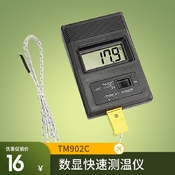
@pwadoc agreed. Here's the model I use and recommend (it requires a high-accuracy probe to work properly). And I also came to the same conclusion that ultimately I want to run control strips, but color densitometers are expensive and rare. So I created a related thread.
 

dkonigs

Subscriber
Joined
Sep 17, 2009
Messages
384
Location
Mountain View, CA
Format
Multi Format
@pwadoc agreed. Here's the model I use and recommend (it requires a high-accuracy probe to work properly). And I also came to the same conclusion that ultimately I want to run control strips, but color densitometers are expensive and rare. So I created a related thread.

What's frustrating is its just that color transmission densitometers are expensive and rare, and that's what you need for this.

Color reflection densitometers may be expensive, but they're actually quite common and still manufactured new. Probably because they're dual-purpose, in that they're useful for a wide variety of things unrelated to photography.
 

pwadoc

Member
Allowing Ads
Joined
Mar 12, 2019
Messages
98
Location
Brooklyn
Format
Multi Format
@pwadoc agreed. Here's the model I use and recommend (it requires a high-accuracy probe to work properly). And I also came to the same conclusion that ultimately I want to run control strips, but color densitometers are expensive and rare. So I created a related thread.

Yep, that's the one of the ones I have! Very solid and reliable. Interesting idea reinventing the densitometer, I'll give it a read!

What's frustrating is its just that color transmission densitometers are expensive and rare, and that's what you need for this.

Color reflection densitometers may be expensive, but they're actually quite common and still manufactured new. Probably because they're dual-purpose, in that they're useful for a wide variety of things unrelated to photography.

I managed to pick up an X-Rite 810 for $100 after watching eBay for a few weeks, so there are still deals to be had out there. But generally yes the price of transmission densitometers has been trending upward.
 

czygeorge

Member
Allowing Ads
Joined
Dec 18, 2020
Messages
145
Location
Beijing
Format
Medium Format
What's frustrating is its just that color transmission densitometers are expensive and rare, and that's what you need for this.

Color reflection densitometers may be expensive, but they're actually quite common and still manufactured new. Probably because they're dual-purpose, in that they're useful for a wide variety of things unrelated to photography.

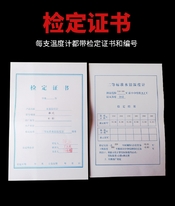
Yes definitely right,my jobo temperature probe in chemical bottle is very accurate.My here can buy a kind of thermometer which is very long and have certificate(picture),the accuracy is into ±0.02,it costs about 15 bucks per one here.I think there should have similar product in your country too

And i did a temperature test two weeks ago and find out I need to add developer which is at 38.9,and the water in sink is at 38.6 degrees,this will makes the chemical in tank always keeps at 37.8 in 3min15secs(As you balance the temperature loss of both in when pour in tank and three minutes fifty seconds of processing)
 

Attachments

  • 1677997268820.jpg
    1677997268820.jpg
    241.2 KB · Views: 74

mshchem

Subscriber
Allowing Ads
Joined
Nov 26, 2007
Messages
15,728
Location
Iowa City, Iowa USA
Format
Medium Format
Yes definitely right,my jobo temperature probe in chemical bottle is very accurate.My here can buy a kind of thermometer which is very long and have certificate(picture),the accuracy is into ±0.02,it costs about 15 bucks per one here.I think there should have similar product in your country too

And i did a temperature test two weeks ago and find out I need to add developer which is at 38.9,and the water in sink is at 38.6 degrees,this will makes the chemical in tank always keeps at 37.8 in 3min15secs(As you balance the temperature loss of both in when pour in tank and three minutes fifty seconds of processing)

The certificate shows a 250-300°C temperature range??
 

pwadoc

Member
Allowing Ads
Joined
Mar 12, 2019
Messages
98
Location
Brooklyn
Format
Multi Format
Yes definitely right,my jobo temperature probe in chemical bottle is very accurate.My here can buy a kind of thermometer which is very long and have certificate(picture),the accuracy is into ±0.02,it costs about 15 bucks per one here.I think there should have similar product in your country too

And i did a temperature test two weeks ago and find out I need to add developer which is at 38.9,and the water in sink is at 38.6 degrees,this will makes the chemical in tank always keeps at 37.8 in 3min15secs(As you balance the temperature loss of both in when pour in tank and three minutes fifty seconds of processing)

I'm going to go out on a limb here and say that it is very unlikely that a $15 thermometer has a ±0.02C accuracy. Thermometers with that level of accuracy usually cost a few hundred dollars. The economics of just the sensor alone tend to make these things very expensive. A class A RTD costs $20-30 alone, and that's not taking into account the rest of the circuitry and the calibration.
 

Steven Lee

Member
Allowing Ads
Joined
Jul 10, 2022
Messages
1,441
Location
USA
Format
Medium Format
I need to add developer which is at 38.9,and the water in sink is at 38.6 degrees,this will makes the chemical in tank always keeps at 37.8 in 3min15secs

Your numbers match mine perfectly!
 

czygeorge

Member
Allowing Ads
Joined
Dec 18, 2020
Messages
145
Location
Beijing
Format
Medium Format
I'm going to go out on a limb here and say that it is very unlikely that a $15 thermometer has a ±0.02C accuracy. Thermometers with that level of accuracy usually cost a few hundred dollars. The economics of just the sensor alone tend to make these things very expensive. A class A RTD costs $20-30 alone, and that's not taking into account the rest of the circuitry and the calibration.

Yes what I said is a mecury thermometer,what i do is when the chemical was pour into the tanks I stopped the machine and put thermometer into the it to measure and after three minutealso an.An electric thermometer in this accuracy would cost a lot:sad:
I once used CPA2 and find its mechanic temperature control system is harder to have a steady and controllable processing temperature for me
 

BMbikerider

Member
Allowing Ads
Joined
Jul 24, 2012
Messages
3,027
Location
UK
Format
35mm
Getting the tank up to temperature some say to pre-wash but personally I have never gone along with that, but what I have always done since first starting to use a JOBO is, when filling the tank with cold water I place the already loaded tank on the ledge, standing upright so the level of the water is just about the same height as the bottom of the lid. I switch on the heater and over the time it takes to get it up to 38c or 20c depending on what film I am processing, by internal convection the temp will rise to the working temperature at more or less the same rate as that outside in one of the measuring beakers. I have never had a failure yet.

Of course if your workspace is not efficiently temperature regulated like my present darkroom, it may well be advantageous to experiment by filling the tank with pain water and doing the pre run so that when the external temperature in the beaker reaches either 20c or 38c remove the lid and check.

I have found that the waterbath needs to be around 2-3 degrees above the one suggested for development to allow for the delay in the internal temperature to catch up.

Going back to the pre-wash, the reason I don't use one is, by introducing plain water before starting the development this could have the affect of slightly diluting the developer for the 1st 30seconds or so in effect you lose a small length of time during the initial development. Especially with C41 where the development is a standard 3 mins 15 seconds. The delay in this case could be quite significant. With B&W where development times can be quite lengthy this may not matter so much.
 

BMbikerider

Member
Allowing Ads
Joined
Jul 24, 2012
Messages
3,027
Location
UK
Format
35mm
I have a treasured mercury thermometer which came with a certificate stating it was accurate to within ,25 of a degree C. is now well in excess of 35-40 years old. Unlike electrical or dial thermometers they simply cannot go out of accuracy unless they are physically damaged where a portion of the mercury separates from the main body.
I also have an electrical thermometer which was also certified as being accurate to .5 of a degree and that corresponds very, very closely to the mercury one to a point where it does not matter. You just have to be careful that the measuring point is in exactly the same place every time.
 

mshchem

Subscriber
Allowing Ads
Joined
Nov 26, 2007
Messages
15,728
Location
Iowa City, Iowa USA
Format
Medium Format
I have a treasured mercury thermometer which came with a certificate stating it was accurate to within ,25 of a degree C. is now well in excess of 35-40 years old. Unlike electrical or dial thermometers they simply cannot go out of accuracy unless they are physically damaged where a portion of the mercury separates from the main body.
I also have an electrical thermometer which was also certified as being accurate to .5 of a degree and that corresponds very, very closely to the mercury one to a point where it does not matter. You just have to be careful that the measuring point is in exactly the same place every time.

My glass thermometers are the standard for me. I have some small digital aquarium thermometers, have an approximately 50-60 cm wire with a sensor on the end. I think I paid $4-5 each on Ebay. Given time to equilibrate, these little things were almost identical to my Kodak process thermometers.

Most of the time I use an oftened checked dial thermometer
 

sillo

Member
Allowing Ads
Joined
Nov 22, 2020
Messages
137
Location
NY
Format
35mm
I've been using a Thermoworks Therma K thermometer that I've been very happy with. Accuracy is +/- 0.5f, displays in 0.1 degree increments and reads quickly.
 

pwadoc

Member
Allowing Ads
Joined
Mar 12, 2019
Messages
98
Location
Brooklyn
Format
Multi Format
My glass thermometers are the standard for me. I have some small digital aquarium thermometers, have an approximately 50-60 cm wire with a sensor on the end. I think I paid $4-5 each on Ebay. Given time to equilibrate, these little things were almost identical to my Kodak process thermometers.

Most of the time I use an oftened checked dial thermometer

Just to provide some context to what I'm saying about thermometers, a few months back I went and tested all of the thermometers I have against my gold standards. I have two glass thermometers, one a NIST-certified alcohol model, and a mercury thermometer which is not NIST-certified because NIST won't certify mercury thermometers anymore, but is certified via an alternate authority and checked against the alcohol model. They match the two digital NIST-certified thermometers to within 0.2C. So even among these 4 extremely accurate thermometers, there is still some dispute and I get about 0.5C of range between them. Both glass thermometers have marks that allow 0.1C measurements, which means they're about half a meter long to allow 0-50C at that resolution. Each of the glass thermometers I have cost about $100. I went through and check the collection of about 35 digital and analog thermometers I have, including process thermometers from Kodak, Ilford and Paterson. Of those 35 thermometers, exactly five of them were accurate to under a degree, and only two of them were accurate to under 0.5C. So I suppose you could randomly end up with some accurate thermometers, but the odds are against you, and unless you have a certified accurate thermometer to compare it against, you'll never actually know how accurate the devices you own are.

To compound that, taking measurements from my Jobo in various places, I was getting 2C variations based on _where_ I placed the thermometer. Even in inside the developer bottle there is a far bit of variation from the bottom to the top of the bottle. The water outlet from the pump is generally a very different temperature from the water in and around the developer bottle. The actual Jobo temperature sensor is inside the pump housing, and that reading is hotter by a little more than a degree than the reading on the front of the process, as someone noted earlier in this thread. Add to that the fluid dynamics inside the spinning developer bottle, and the task of ensuring temperature uniformity just becomes insanely complex.

This is why I advocate test strips. Densitometry is several degrees easier and cheaper than getting accurate temperature readings, which is why test strips are the standard process control for professional labs. With test strips, it doesn't actually matter how accurate your thermometers are, as long as you make the measurements in the same place and the measurements are repeatable. Glass thermometers are better for this than digital, since even the best digital thermometers can drift, but the key is to find a temperature as measured on whatever thermometer you own that produces consistent test strips.

 

mshchem

Subscriber
Allowing Ads
Joined
Nov 26, 2007
Messages
15,728
Location
Iowa City, Iowa USA
Format
Medium Format
Just to provide some context to what I'm saying about thermometers, a few months back I went and tested all of the thermometers I have against my gold standards. I have two glass thermometers, one a NIST-certified alcohol model, and a mercury thermometer which is not NIST-certified because NIST won't certify mercury thermometers anymore, but is certified via an alternate authority and checked against the alcohol model. They match the two digital NIST-certified thermometers to within 0.2C. So even among these 4 extremely accurate thermometers, there is still some dispute and I get about 0.5C of range between them. Both glass thermometers have marks that allow 0.1C measurements, which means they're about half a meter long to allow 0-50C at that resolution. Each of the glass thermometers I have cost about $100. I went through and check the collection of about 35 digital and analog thermometers I have, including process thermometers from Kodak, Ilford and Paterson. Of those 35 thermometers, exactly five of them were accurate to under a degree, and only two of them were accurate to under 0.5C. So I suppose you could randomly end up with some accurate thermometers, but the odds are against you, and unless you have a certified accurate thermometer to compare it against, you'll never actually know how accurate the devices you own are.

To compound that, taking measurements from my Jobo in various places, I was getting 2C variations based on _where_ I placed the thermometer. Even in inside the developer bottle there is a far bit of variation from the bottom to the top of the bottle. The water outlet from the pump is generally a very different temperature from the water in and around the developer bottle. The actual Jobo temperature sensor is inside the pump housing, and that reading is hotter by a little more than a degree than the reading on the front of the process, as someone noted earlier in this thread. Add to that the fluid dynamics inside the spinning developer bottle, and the task of ensuring temperature uniformity just becomes insanely complex.

This is why I advocate test strips. Densitometry is several degrees easier and cheaper than getting accurate temperature readings, which is why test strips are the standard process control for professional labs. With test strips, it doesn't actually matter how accurate your thermometers are, as long as you make the measurements in the same place and the measurements are repeatable. Glass thermometers are better for this than digital, since even the best digital thermometers can drift, but the key is to find a temperature as measured on whatever thermometer you own that produces consistent test strips.

Test strips are the only way to go with reversal films, Test strips for everything would be great.
I mostly shoot black and white in terms of negative film, some color, I use stock XTOL, develop mostly at room temperature.

If you are developing some really important Ektachrome/Fujichrome, really a good idea to process a homemade test film or a test roll. If first developer is too warm or too active you may lose the film.

With slide film I bracket everything by either a third or half a stop.
 

czygeorge

Member
Allowing Ads
Joined
Dec 18, 2020
Messages
145
Location
Beijing
Format
Medium Format
Test strips are the only way to go with reversal films, Test strips for everything would be great.
I mostly shoot black and white in terms of negative film, some color, I use stock XTOL, develop mostly at room temperature.

If you are developing some really important Ektachrome/Fujichrome, really a good idea to process a homemade test film or a test roll. If first developer is too warm or too active you may lose the film.

With slide film I bracket everything by either a third or half a stop.

Kodak was saying they would redo e6 chemical and control strips in 2019,and of course after they sold chemical and paper businesses to sino,this target will have no hope to happen I think...

I have many friends process e6 with jobo(or osisris),I saw their work, if you use tetnal e6(disposable) and make sure the temperature is correct(With steps and thermometer I said above),the washing water is warm but not cold,the result would be great.but tetnal c41 can't do this since it doesn't have a clear working solution and replenishment rate as kodak do,and if you use it disposable the chemical's strength would be too strong
 

MattKing

Moderator
Moderator
Joined
Apr 24, 2005
Messages
54,743
Location
Delta, BC Canada
Format
Medium Format
Kodak was saying they would redo e6 chemical and control strips in 2019,and of course after they sold chemical and paper businesses to sino,this target will have no hope to happen I think...

My contacts indicate that Eastman Kodak is set up for and has agreed to manufacture film control strips for Sino Promise, to be marketed by Sino Promise.
 
Photrio.com contains affiliate links to products. We may receive a commission for purchases made through these links.
To read our full affiliate disclosure statement please click Here.

PHOTRIO PARTNERS EQUALLY FUNDING OUR COMMUNITY:


Ilford ADOX Freestyle Photographic Stearman Press Weldon Color Lab Blue Moon Camera & Machine
Top Bottom