• Welcome to Photrio!
    Registration is fast and free. Join today to unlock search, see fewer ads, and access all forum features.
    Click here to sign up

Is the K factor relevant to me or should I cancel it out?

Ferns

H
Ferns

  • 0
  • 0
  • 11
between takes

H
between takes

  • Tel
  • Mar 21, 2026
  • 2
  • 0
  • 34

Recent Classifieds

Forum statistics

Threads
202,864
Messages
2,846,753
Members
101,577
Latest member
tograp
Recent bookmarks
0
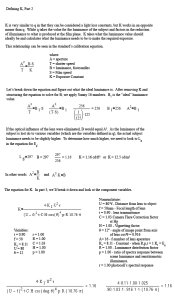
You introduce "K" in an equation, in which it is defined as 4*K (something over something else)???
 
It is K sub 1, not K. I know it's not entirely fair to present the equation without defining all the variables. My purpose wasn't to deal with K at this point. I just wanted to show how similar it is to the equation for q. Technically it's supposed to be K' sub 1 but ' is a function key in Mathcad and it wouldn't take. It's a small fudge, but I know it can be confusing. The standard uses a number of different variations of "K" and it's hard to keep them all straight.
 
It is K sub 1, not K. I know it's not entirely fair to present the equation without defining all the variables. My purpose wasn't to deal with K at this point. I just wanted to show how similar it is to the equation for q. Technically it's supposed to be K' sub 1 but ' is a function key in Mathcad and it wouldn't take. It's a small fudge, but I know it can be confusing. The standard uses a number of different variations of "K" and it's hard to keep them all straight.

How's K sub 1 different from K, that it can help explain to us what K is?
 
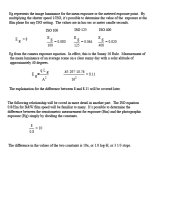
What makes all the math and numbers more than just math and numbers is how they connect it all together: exposure, film speed, and the meter. There are a few numbers to keep in mind because they keep coming up.

Eg = 8
Lg = 297
q = 0.65

And the camera exposure equation:

E = q * L / A^2
 
There are a few interesting concepts that can already be teased out of the information provided in part one. At first some of it might appear like circular reasoning but more proof will be available in the next few parts.
 

Attachments

  • Analyzing part 1.jpg
    Analyzing part 1.jpg
    124.6 KB · Views: 155
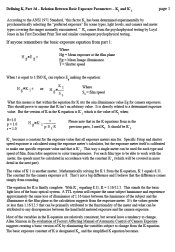
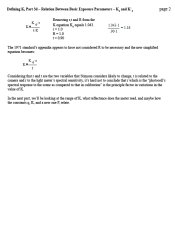
Defining K - Part 2

Part 2 introduces the constant K and shows how similar it's function is to the constant q.
 

Attachments

  • Defining K, part 2.jpg
    Defining K, part 2.jpg
    224.9 KB · Views: 145
Last edited by a moderator:
I like the way q and K stand in for so many variables.

I see C = 1.03 Camera Flare Correction factor

Does that mean if I shoot a black tin can and find my own Camera Flare is different than 1.03... then for me, the value of K would effectively change?

I hope this doesn't mean I have to get my lens calibrated in T-stops.
 
Bill,

As luck would have it, the next part answers your question about C. T-stops are a bit extreme for still work, but they are more accurate.

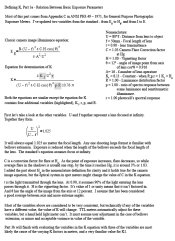
Part 3a begins to define the variables in the K equation. These cover the basic assumption on the optical system. Part 3b will look at the variables r, p, and R which have a more direct connection to the exposure meter and I believe the variance in K factors.

BTW, this is the first time I've made an attempt at a coherent explanation for the constants. I'm sure I have to missing steps, mistakenly assuming prior knowledge, or simply not explaining it well. Please keep up the questions.
 

Attachments

  • Defining K, part 3a.jpg
    Defining K, part 3a.jpg
    266.7 KB · Views: 146
Steve

When you're done, you should publish a single corrected document here on APUG. And, we should talk to Sean to open some kind of an APUG knowledge base library and add more articles like this to it. Maybe something like a photo wiki. I wish, I knew how to set up something like that.
 
Steve

When you're done, you should publish a single corrected document here on APUG. And, we should talk to Sean to open some kind of an APUG knowledge base library and add more articles like this to it. Maybe something like a photo wiki. I wish, I knew how to set up something like that.

Have you seen (there was a url link here which no longer exists)?
 
This is getting bigger and more involved than I had originally intended. Part 3b defines, as much as possible, the variable R. As I point out in this part, R, q, and p come under the domain of the meter manufacturers, and manufacturers tend to be very secretive.

I've yet to find only a few values for q, but haven't found anything on what the values for R and p are considered outside of the standard's values which all equal 1. Now this might represent the average conditions, or it could be zeroing the variables out of the overall equation of K in order to produce a universal version of K as these three variables tend to be specific to each individual meter's design. So, while it's possible to define the variables R, r, and p, we can only speculate what influence they have on the value of K.
 

Attachments

  • Defining K, part 3b p1.jpg
    Defining K, part 3b p1.jpg
    304.4 KB · Views: 130
  • Defining K, part 3b p2.jpg
    Defining K, part 3b p2.jpg
    200.8 KB · Views: 136
Sounds like R is a weighted average factor for a regular reflected light meter.

It makes sense that a spotmeter might set R = 1.
 
Or as it is meant for scene averages, it could be 1 for normal exposure meters and different for spot meters as they aren't designed to measure scene averages. It could go either way.

One point I've been trying to find a place to make is mostly one of semantics. Light meters and exposure meters are two different things. One measures the amount of illuminance present and one calculates how to produce a usable photographic exposure. While not exclusive, the two functions are definitely not inclusive.
 
Ah yes, we use exposure meters, I know.
 
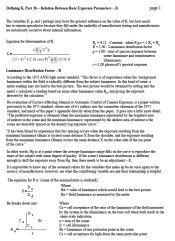
This part covers the variables r and p. I believe r is the major cause for different values of K for different meters. With the variables R, r, and p, it is now possible to define a basic constant K1 which excludes all variables except film speed and camera exposure due to measured field luminance. K1 will be defined in the next part.
 

Attachments

  • Defining K, part 3c p1.jpg
    Defining K, part 3c p1.jpg
    359.4 KB · Views: 135
  • Defining K, part 3c page 2.jpg
    Defining K, part 3c page 2.jpg
    338 KB · Views: 128
Last edited by a moderator:
One of the more confusing aspects of the exposure meter standard is that there are four different versions of the letter K each representing different variables. There’s, or course, the K-factor K. The other three are Ko, K1, and its derivative K`1. This part defines the confusing three Ks.

Bill, this part begins to answer your meter's K = 12.5.
 

Attachments

  • Defining K, part 3d p1.jpg
    Defining K, part 3d p1.jpg
    326.4 KB · Views: 116
  • Defining K, part 3d p2.jpg
    Defining K, part 3d p2.jpg
    128.8 KB · Views: 122
Last edited by a moderator:
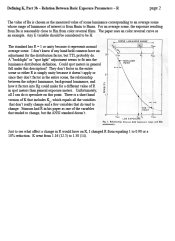
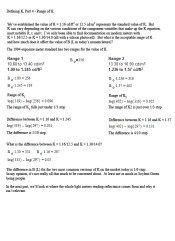
Part 4 deals with the Range of K. It might be surprising how little it really is.

Interesting point of fact: While reviewing the 1960 standard, I noticed that even though it introduced the change in the color temperature of the calibration luminance to 4700K, the K equation didn't contain the variables for R, r, or p. I was most surprised that it didn't have r as it is related to the difference between the color temperature of the calibration light source and the luminance of the subject.
 

Attachments

  • Defining K, part 4.jpg
    Defining K, part 4.jpg
    185.5 KB · Views: 130
Steve

I see you don't get a lot of responses, but rest assured, your effort is one of the more useful contributions to APUG in my opinion. I read it with interest and have collect your postings. Please go through the effort to finish this, and then, put it together to one technical paper.
 
Stephen may not have many responses, but with over 1,300 views it should be clear that quite a few of us are at least watching this with interest :smile:.
 
Hear, hear!
I look forward to the resulting, combined document.
 
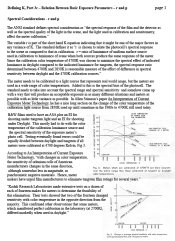
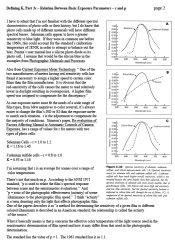
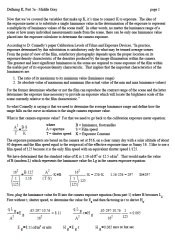
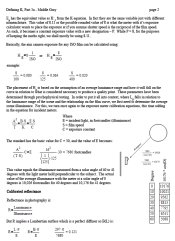
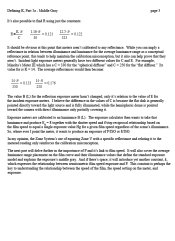
Part 5a finally deals with a subject that is usually one of the first issues raised on the topic of exposure meters - Middle Gray.

I'm hoping nobody is having difficulty with the awkward mix of older nomenclature mingling with current. My excuse is that most of the detailed equations for exposure meters come from older sources and I am more familiar with their symbols. I also didn't want to confuse myself having to do all the conversions. I'm now beginning to regret that decision. I hope this hasn't caused too much confusion for the four people still hanging on.
 

Attachments

  • Defining K, part 5a p1.jpg
    Defining K, part 5a p1.jpg
    329.4 KB · Views: 131
  • Defining K, part 5a p2.jpg
    Defining K, part 5a p2.jpg
    272.6 KB · Views: 122
  • Defining K, part 5a p3.jpg
    Defining K, part 5a p3.jpg
    248 KB · Views: 122
Thanks Stephen, lots to digest. Hard to believe in the end it all gets wrapped up into one number.
 
Photrio.com contains affiliate links to products. We may receive a commission for purchases made through these links.
To read our full affiliate disclosure statement please click Here.

PHOTRIO PARTNERS EQUALLY FUNDING OUR COMMUNITY:



Ilford ADOX Freestyle Photographic Stearman Press Weldon Color Lab Blue Moon Camera & Machine
Top Bottom