

• Welcome to Photrio!
    Registration is fast and free. Join today to unlock search, see fewer ads, and access all forum features.
    Click here to sign up

Ilford Film manufacturing defects: post here

Windows - Valencia

A
Windows - Valencia

  • 0
  • 0
  • 0
Tree of a kind

H
Tree of a kind

  • 4
  • 1
  • 25

Recent Classifieds

Forum statistics

Threads
202,808
Messages
2,845,757
Members
101,541
Latest member
ΦÆdon
Recent bookmarks
0

rolfehorn

Member
Allowing Ads
Joined
Mar 25, 2008
Messages
17
Location
Oakland, CA
Format
Medium Format
In the Ilford Partner forum, there is a thread about the SFX 200 film defects. However, it has become apparent that the defects are widespread, covering multiple films and speeds. If you have had an issue such as described or visually similar to what is posted below, please contribute.

We all love Ilford Film, they have been a backbone of black and white photography for countless years. We hope in all our might that they continue with quality products, Film, Paper, Chemicals, filters and everything traditionally related.

That being said, this is what people are finding:

First post (not me), the first image image in the thread. Ilford SFX 200

I have talked to a couple photo store reps, though they are not Ilford reps. They all thought this and that and the other, (as eluded to by other posters here) but after some discussion, it seems that they saw it from my point of view: manufacturing defiects. SFX 200, Delta 400 and PanF 50. Surely there are others as well.

I develop two rolls at a time, in stainless steel tanks, and use fresh diluted photo flow every 10 rolls. The "mottled" parts are not dirt, debris, etc., and they are there on the film before it goes into the photo flow. The mottled bits are in the film, the emultion.

I will try to upload some of my photos scanned from RC workprints. The prints are not necessarily excellent prints, but they do show the flaws in the film and the horror of the retouching job necessary in order to have the prints made in the traditional sense. I am thinking somewhere from 30-40 hours of retouching per print.

I have been using Ilford Delta 400 for about 28 years exclusively in Pyro PMK, and just began using Ilford PanF after my stock of Agfa 25 ran out (need a slow speed film of course). This is 120 format film film. When a photographer tests out a film, for exposure index, development time, latitude and grain structure, once they come up with something good, they tend to stick with it. It becomes predictable, reliable, especially in the long exposures where reciprocity comes into effect and when using the Zone System or Tone System (as I use).

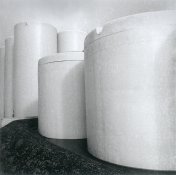
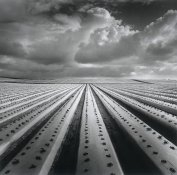
Photo 1 and 2 is Ilford Delta 400, same roll of film. The other roll developed at the same time was not affected.
Photo 3 is Ilford Pan F, printed a bit too contrasty, (awful print really) but shows the damage. the other roll I develop at the same time was not effected.

My bonafides: I have been doing traditional photography since 1986. Had my own darkroom since then and fortunately made a career of pursuing the black and white landscape. Graduated Honors Brooks Institute 1996 (before it became corporate), assisted Michael Kenna 1999-2001. Gallery represented since 1995.

 

Attachments

  • sfx200.jpg
    sfx200.jpg
    1.6 MB · Views: 1,307
  • d400 storage containers.jpg
    d400 storage containers.jpg
    1.8 MB · Views: 937
  • d400 strawberry fields.jpg
    d400 strawberry fields.jpg
    1.9 MB · Views: 902
  • strawberry detail.jpg
    strawberry detail.jpg
    257.9 KB · Views: 847
  • pan F kauai Salt marsh 2.jpg
    pan F kauai Salt marsh 2.jpg
    1.8 MB · Views: 872
Have you sent your complaints and scans to Ilford yet? I think you should, as should each person with similar problems. Ilford I imagine also need to know number on the film, where purchase and when etc in each case.

pentaxuser
 
I was about to order 100' of Ilford 120 backing paper from the ULF Purchase Program... now, I don't know if I will...
 
I was about to order 100' of Ilford 120 backing paper from the ULF Purchase Program... now, I don't know if I will...
You must do what you think fit but I doubt if we have another "Kodak backing paper " issue here with Ilford but Ilford need to know and deserve to know what each complainant problem is and enough details so that it can look into its own QC reports.

pentaxuser
 
I'll just re-emphasise what I posted in the other thread: none of the faults displayed are indicative of anything other than well known faults of 120 backing paper when exposed to significant & rapid temperature differences causing condensation or poor storage in humid conditions. The films listed as affected are slower moving products, thus likely to have spent longer on shelves/ in fridges/ freezers.

There is no evidence of wrapper offset like the issues Kodak was having. As much as I'm sure Ilford would like to know (if only to investigate poor storage habits downstream in the distribution chain), I suspect their response will be to the effect that the effects are characteristic of poor storage after leaving the factory.
 
I'll just re-emphasise what I posted in the other thread: none of the faults displayed are indicative of anything other than well known faults of 120 backing paper when exposed to significant & rapid temperature differences causing condensation or poor storage in humid conditions.

That is how I interpret the sample photos also. I've had it happen to my film at times, and it was always atmospheric conditions (fog, cold) that introduced the problem.
 
i didn't know about the tone system, came across roland miller's work using it ... then read your thread.

whoa... my first response is shock!!! i would think that given your expertise the first step would be to contact ilford... i don't think this is something they wouldn't want to look into... please do - for your sake and their's
 
I don't know anything about "the backing paper problem". I have photographed throughout the world with never an issue, only Xray damage. Kenna came home one time to have 81 rolls ruined by Xray damage. Awful stuff.

The Pan F film was dated to expire 05/19 and the Delta 400 was dated to expire in 2/2021 or 3/2021.

This is not a backing paper problem. There is no way it is. Period. End of that discussion in this thread. Please refrain, as it is an impossibility. We are discussing the faults in the manufacturing processes, ilford film in particular.

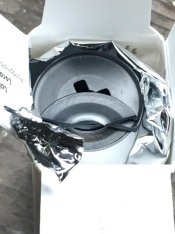
Question, when have you ever gotten a roll of 120 film that has a creased spool end cap? Hashtag never. Here is a roll I received as new. Quality control at Ilford has gone downhill, and I firmly believe changes in marketplace has lead them to cut corners in the traditional film marketplace. I have not found that with papers yet. Only film.

Check it out, sold as new! quality control issues? ummm, yes. And I believe it is running into the film coating lab too.....
 

Attachments

  • 0.jpg
    0.jpg
    58 KB · Views: 459
I agree, JVO, but I think it needs to come to light in a public forum, such as Photrio. I am not so much into social media, this is a social as I get. I have feelers out to the Iford reps, but I fear they are not as knowledgeable on such issues and do not know the intricacies of manufacturing films. It is sad, I have to admit, that I have lost my trust in Ilford, and I am a die hard film photographer, not of of those Pixelgraphers.
 
Hmmm .... I've been using a variety of Ilford films for several decades, in a wide range of formats, and have never run into a manufacturing glitch yet. Nor have I heard anyone else complaining prior to this. I have had a few minor issues with certain papers, affecting a few sheets per box. But you claim that ALL these various films have problems. If I was Sherlock Holmes, I'd strongly suspect the user rather than the product is at fault. So, despite your credentials, it might be wise to ask yourself if there has been any changes of routine that could be involved. Some of this mottling could be due to condensation; or it could very well be that some of your PMK solution A precipitated in the bottle during the cold of winter. I don't know. But blaming the manufacturer is the least logical answer, and frankly quite unfair to Ilford unless your allegation is proven credible. I'm not saying it's hypothetically impossible, just highly improbable. So you probably need to look somewhere in your own routine for the answer. But Pan F is a tad trickier than the others to develop evenly. Therefore, for PAN F 120 I use PMK 5:5:500 ml instead of the usual 5:10:500, and add just a drop or two of 1% EDTA to assist even flow. I also recommending exposure at ASA 25 and keeping "normal" development fairly short, like 6 or 7 min, depending on your agitation technique. But its symptom of squirrely development would be streaks. Mottling is something else.
 
I forgot to mention water quality. In the East Bay we tend to take our excellent water quality for granted. But in exceptionally rainy years like this past one, mineral sediment sometimes get into the lines. Then with old water heaters, sometimes calcium build-up can get into the hot water line. I obviously don't know if you use filters on both hot and cold lines or potentially use distilled water for more than just the developer. Just another possibility.
 
Hmmm .... I've been using a variety of Ilford films for several decades, in a wide range of formats, and have never run into a manufacturing glitch yet. Nor have I heard anyone else complaining prior to this. I have had a few minor issues with certain papers, affecting a few sheets per box. But you claim that ALL these various films have problems. If I was Sherlock Holmes, I'd strongly suspect the user rather than the product is at fault. So, despite your credentials, it might be wise to ask yourself if there has been any changes of routine that could be involved. Some of this mottling could be due to condensation; or it could very well be that some of your PMK solution A precipitated in the bottle during the cold of winter. I don't know. But blaming the manufacturer is the least logical answer, and frankly quite unfair to Ilford unless your allegation is proven credible. I'm not saying it's hypothetically impossible, just highly improbable. So you probably need to look somewhere in your own routine for the answer. But Pan F is a tad trickier than the others to develop evenly. Therefore, for PAN F 120 I use PMK 5:5:500 ml instead of the usual 5:10:500, and add just a drop or two of 1% EDTA to assist even flow. I also recommending exposure at ASA 25 and keeping "normal" development fairly short, like 6 or 7 min, depending on your agitation technique. But its symptom of squirrely development would be streaks. Mottling is something else.

I 2nd that comment... particularly because, like the OP, I've been doing b&w for 30 years - the whole process myself and have discovered to my horror that once when I had neglected to be careful with a step in my process, I ruined a few rolls of fine Kodak Tri-x because of chemical contamination/expiration. It happens to almost all of us at one time or another.
 
Hi Drew, thank you for your honest reply. Indeed, this is happening to different people, in different parts of the world. All my developing, (East Bay here as well) is with filtered water I think 1 micron. I hand mixed pyro from bulk, never a problem. I agree with Pan F being 1:1.25:100 at 6:45 at 70F. Ei 25. As I said, when I develop two rolls at a time, it only happened to one roll, not the other. The film came from the same ten pack brick. Why happen to one roll and not the other? QC issue from Ilford most likely.

I am as tech/lab oriented as they come when developing film. One doesn’t mess around when developing film. Film is everything at that point. There is nothing else.

There is no issues with developing film, no humidity issues, no freezer, or refrigerator issues, no A/C issues, no sediment in the rinse or chemical issues, etc.

Manufacturing defect. Plain and simple. I feel that it is happening during the coating process of the film base. The machines run thousands of rolls of film at a time, maybe tens of thousands. Only a small percentage of rolls are affected when the silver slurry becomes inconsistent and is applied unevenly to the film stock. But that small percentage can add up to many rolls.

I have proven their QC is not up to par by releasing a picture of a defective roll sold at market, damaged spindle. I wish it wasn’t true, but it is. I feel the QCextends through the process of making film too. They are letting substandard film out to the film buying public and it is not cool. Us, as photographers, not pixelographers, our livelihood depends on the film. And when we happen to get bad film we must speak up, contrary to what others think or experience, and let our voices be heard.

Anyone else ever experience this issue? That’s all.
 
With the almost complete contraction of sources for backing paper, there has been a marked increase in reports of problems, with Kodak having the biggest problem.
The film substrate, emulsion backing paper and ink sandwich is susceptible to environmental factors.
Your problems look like the sort of problem generally that plagued Kodak - an interaction between the emulsion, the backing paper and, particularly in the Kodak case, the ink on the backing paper.
Problems like this once were common, they diminished with technological advances and high volumes, and now seem to be on the rise again.
 
I feel that it is happening during the coating process of the film base. The machines run thousands of rolls of film at a time, maybe tens of thousands. Only a small percentage of rolls are affected when the silver slurry becomes inconsistent and is applied unevenly to the film stock.
The coating defects I see generally fall down into two categories:
1. Tiny spots of max or min density (usually the latter) as a result of particulate matter contaminating the emulsion. Not the case here, as the definition of the spots is not sharp enough and the size is too big and density is somewhere in-between min and max.
2. Longitudinal marks of lower or higher density as a result of coating thickness variations. Again, not the case here as the defects are not continuously longitudinal but more spotty, which does not align with a high-speed coating operation.
The defects that I do see in these images are remarkably similar (or even identical) to the examples I've seen (also first-hand) of known and proven backing-paper interactions with the film itself, likely augmented by humidity in many cases, but not necessarily so (improperly dried or sweating oil-based inks can be a cause as well). As MattKing says, this all looks very similar to the well-documented recent case of Kodak TMX and TMY-2 backing paper problems, and I would add the also fairly widely known issues with e.g. Rollei Retro 80S of a similar nature (which may have had to do with packaging and/or storage conditions).

What is NOT apparent is where in time these issues emerged: whether they are problems with backing paper production QC, a poor choice of materials or a change of materials without proper qualification (again, inks come to mind), or that the issues emerged later on in the process, e.g. due to improper/insufficient drying of the backing paper before mating with the film or storage/ambient conditions after film assembly.
 
Lets get the evidence to Ilford and hope (in a desire to keep film photography alive) they are open and honest with their assessment of the problems some of us are clearly seeing.

Mike
 
Like others I think this is a user,issue. I started using Ilford films over 50 years and have never had an issue, aside fro m two rolls of Pan F which was entire my own fault as I left one unprocessed for over a year and the other mostly exposed in a TLR for the same period.

You have too many issues for them to be manufacturing faults, something else is going on.

Ian
 
I'd add that you state the other roll of Delta 400 was unaffected, I'd assume it was the same batch, if so then it should have same problem. That's another indication it's not a manufacturing issue.

Ian
 
But, one roll not being affected, the other well, could also mean that by change of materials the succeptibility to environmental influence has increased and a little different handling between rolls of the same batch could already result in artefeacts.

(This seems to have been the case of the Kodak backing paper issue.)
 
Interesting. I've been developing film, printing for 30 years. In the past i ran into the backing paper issue with a pro-pack of TMax400. Kodak was impeccable and replaced it. In 30 years it was my first problem ever. Some months ago, after returning from Bangkok a roll of Ilford PanF+ had the same kind of artifacts shown in https://www.photrio.com/forum/attachments/d400-storage-containers-jpg.222795/
My first thought was again, a backing paper issue. All other roles (Kodak, Rollei, Adox, other Ilford) were fine. Some other PanF+ were also fine.
Worthy of mention is that it seems that the Kodak backing paper problems are now a thing of the past. Never again i ran into any issues, certainly not with recent batches.
Is this issue relatively prevalent with Ilford films presently? Did anyone from Ilford commented on the issue?
 
I have had mottling like that only once, it was a role of Delta 400 that I loaded into a Paterson tank then for whatever reason had to leave until the next day before processing. Learned my lesson from that and now only load right before development. One and only failure I have had from home processing and run through about 20 rolls of Ilford since all which have come out perfectly clean and defect free.

I have had two or three weird QC issues though with Ilford film recently, first was the tab towards the end of the role got caught in my Hasselblad A12 back and tore off. Amazingly I managed to unload the role and get it into a foil wrapper and box where it was wound tight enough it didn't unwrap. After that I had another couple of rolls from the same batch that did something similar, the tab got caught up in the film back making unloading fiddly. After that no more problems at all weirdly and all Ilford film either Delta 400 or HP5. Seems like the tab was stuck on at an angle and flaying outside of the width of the backing paper when wound.
 
I'm going to put myself in the "rapid change of conditions" camp. It looks exactly like an interaction of the film with the backing paper, whether you wish me to say so nor not. I've seen similar with film that has been rapidly brought up to temperature after being chilled or frozen and with outdated 120 film. I've never seen anything remotely like that mottling in any other circumstances. Like it or not, this has all the hallmarks of a mistake in handling the film at some point. We all make mistakes.

I shot my first roll of 120 FP4 back in 1977 or 1978 so have been using Ilford films for 40 years in 120 and 135. Never come across any QC issues or manufacturing problems.
 
It is was a coating defect many many rolls from the same batch would be affected, as film is coated in one big roll and then cut down, and not thousand at a time. I'm too in the "storage conditions" camp.
 
Photrio.com contains affiliate links to products. We may receive a commission for purchases made through these links.
To read our full affiliate disclosure statement please click Here.

PHOTRIO PARTNERS EQUALLY FUNDING OUR COMMUNITY:


Ilford ADOX Freestyle Photographic Stearman Press Weldon Color Lab Blue Moon Camera & Machine
Top Bottom