
• Welcome to Photrio!
    Registration is fast and free. Join today to unlock search, see fewer ads, and access all forum features.
    Click here to sign up

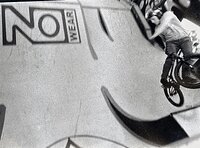
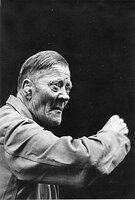
How's My Reversing? (Tri-X Reversal 7266 in D19)

Man walking.

A
Man walking.

  • 0
  • 0
  • 18
_Z721713-positive.JPG

H
_Z721713-positive.JPG

  • 3
  • 3
  • 113

Recent Classifieds

Forum statistics

Threads
202,002
Messages
2,833,595
Members
101,065
Latest member
canadian_xpress
Recent bookmarks
0
OP
OP

mr.datsun

Member
Allowing Ads
Joined
Oct 27, 2008
Messages
379
Location
The End of t
Format
Sub 35mm
Well, not entirely--let me explain a bit better--this "new way" to explain occurred to me:
You'll see.....it took me years....you'll go throught the same, since you want to learn it yourself, just like I did.

READ THE MONOBATH BOOK.

No, I don't want to take years and I'm very happy to learn from others who have done these things before. Of course, now I have been exposed to two versions of the reversal process – one advocating hypo and one the opposite – and so choosing one requires a certain leap of faith to someone who like me is a reversal neophyte. So i have to take things slowly and try one thing at a time.

If I understand, your use of ferricyanide bleach is a way of fixing things if the end image is too dark. But my question is how to get the correct image balance in the first place without resorting to hypo or the use of ferricyanide bleach? I have not got there yet although your observation of keeping the development time to under 10 minutes is one I will take note of. Other factors in getting to the right final image seem to be nebulous. Correct kind of developer, correct dilution, correct temperature and correct dev time. From where I am it still appears to be a trial and error process – especially if as your say there is no single solution for all films! At the moment I can only go on other people's methods - especially those who have shown evidence of success and who have documented their process.

Yes I will try and get to read the Grant Milford Haist book but it is long out of print. Any PDFs around?
 
Last edited by a moderator:

johnielvis

Member
Allowing Ads
Joined
May 21, 2010
Messages
966
Format
Medium Format
Ahhhh there's a few copies of the book in the Harold Washington Library in Chicago....That's where I got mine from.

The bleaching end step is for underexposed film...so with your process, as it is, 200 speed would be underexposed.

The way to get results is to expose for the process--then there is no "post repair" needed. You get 2/3 stop less than 200 with the d-19 at 10 minutes, then that is your speed. you want to maybe push it more...use the developer hotter--either temperature wise or with added "accellerants". You want the box speed, then get the chemicals from Kodak motion picture, and try to use them according to the process...it's on their website--kodak/go/motion I think. It takes some digging, but it's in there. Or you can then try to reverse engineer thier developer or maybe they'll tell you what's in it...check the msds maybe???

Be warned--it's a touchy process and you likely won't meet with much success without a machine.

You seem to think that your results are unacceptable for some reason.

Look what you're doing: you're doing a different process than the kodak machine process and you're expecting to get the same results. This is kind of like einstein's definition of instanity.

Different processes yeild different effective film speeds. There is nothing you can do to make one process give the same results as another. There is nothing wrong with this. People rate their films here at non-box speeds ALL THE TIME.

Look at it this way--you want to drag race, you need a dragster--you ain't gonna get good results with your souped up hot rod street car. Ain't ever gonna happen. sorry to say

You're going to add hypo now and get different results---also different from the kodak process. Well, have at it, I say--it's the only way to learn. Start cookin'.
 
OP
OP

mr.datsun

Member
Allowing Ads
Joined
Oct 27, 2008
Messages
379
Location
The End of t
Format
Sub 35mm
You seem to think that your results are unacceptable for some reason.

Look what you're doing: you're doing a different process than the kodak machine process and you're expecting to get the same results. This is kind of like einstein's definition of instanity.

Different processes yeild different effective film speeds. There is nothing you can do to make one process give the same results as another. There is nothing wrong with this. People rate their films here at non-box speeds ALL THE TIME.

Look at it this way--you want to drag race, you need a dragster--you ain't gonna get good results with your souped up hot rod street car. Ain't ever gonna happen. sorry to say

You're going to add hypo now and get different results---also different from the kodak process. Well, have at it, I say--it's the only way to learn. Start cookin'.

My Tri-X results were OK at 100ASA but not great. And no, I am not comparing them with factory results and I am not expecting the same – what I am doing is comparing them with what others have got developing themselves with Dektol or D19, for example plus hypo. I've simply seen better than what I am getting with similar process and trying to understand why.

No, I'm not adding hypo to my Tri-X tests - as I have said here a few times – it was not working for me. It did work for others.

But I'm not complaining as you seem to be implying – I just want to get the best results I can, understand how to do that and learn about the process along the way. I've worked some on Tri-X, enjoyed it, learnt quite a bit and now I am now testing Adox Pan-X with D19 with hypo to see what i can do with that.

And yes, I am adding hypo to Pan-X as the image had a grey veil on top of a strong black image – very unlike the Tri-X thin greyness. The hypo in this case made the image come alive.
 
Last edited by a moderator:

Tofek

Member
Allowing Ads
Joined
Nov 8, 2010
Messages
61
Location
Paris
Format
Multi Format
Johnielvis, can you explain your "10 min theory" ?
If the problem is that the developer will start to fog at this point, then that's what we want! All that fog will be bleached away and we will get a lighter image in the end. Am I getting it wrong ?
 

johnielvis

Member
Allowing Ads
Joined
May 21, 2010
Messages
966
Format
Medium Format
Johnielvis, can you explain your "10 min theory" ?
If the problem is that the developer will start to fog at this point, then that's what we want! All that fog will be bleached away and we will get a lighter image in the end. Am I getting it wrong ?

Not a theory--it's what happens. put a piece of unexposed film in developer and let er go for 5, 10, 15, 20 minutes....like about 10 mintues is where the fog starts developing--the background fog. developing this with the rest of the image pushes all the tones up up up and compresses them and therefore reduces contrast and dynamic range. at the same time, you're developing stuff that should be getting saved to make the reversal image-the more stuff developed in the first developer, the less that's left to make image dmax in the second development.

I like dmax. That's another reason I don't like hypo in the first developer--i want the densest image I can get--I can always subtract from that with bleach if I want. if you take away stuff before you even see it--well, that seems foolish. I believe using a post bleach method, it's possible to get a higher effective film speed than any first developer-hypo method--AND by inspection!

Since post bleaching is an added step I gave up on it like I gave up on the monobath first developer.

My preferred method is to give adequate exposure to use a non-hypo first developer--this can't help but give the max dmax and maximum dynamic range--no way to argue that it don't.
 

Tofek

Member
Allowing Ads
Joined
Nov 8, 2010
Messages
61
Location
Paris
Format
Multi Format
Ok that's clear, thank you :smile: . I was thinking : since we have a too dark image the dmax should be lowered, but you mean that the image 'quality' will suffer from that. Like there won't be 100% dark darks, right?

Now let's see if the projector is capable of seeing through that high density...
 
  • Deleted member 2924
  • Deleted
Photrio.com contains affiliate links to products. We may receive a commission for purchases made through these links.
To read our full affiliate disclosure statement please click Here.

PHOTRIO PARTNERS EQUALLY FUNDING OUR COMMUNITY:


Ilford ADOX Freestyle Photographic Stearman Press Weldon Color Lab Blue Moon Camera & Machine
Top Bottom