• Welcome to Photrio!
    Registration is fast and free. Join today to unlock search, see fewer ads, and access all forum features.
    Click here to sign up

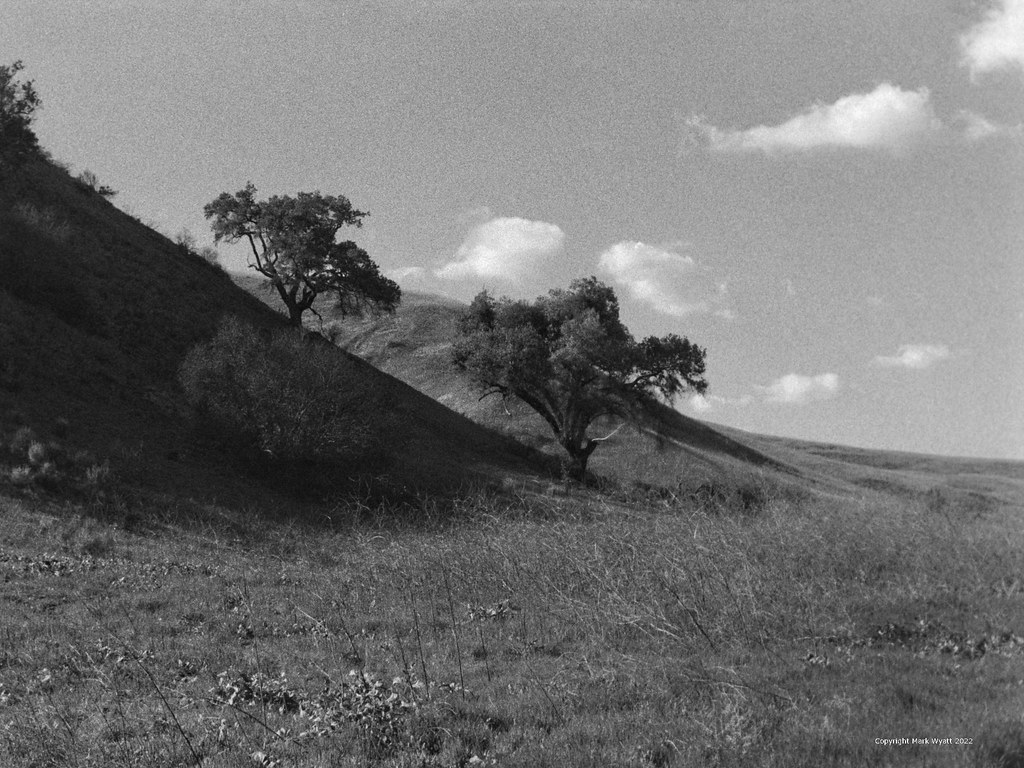
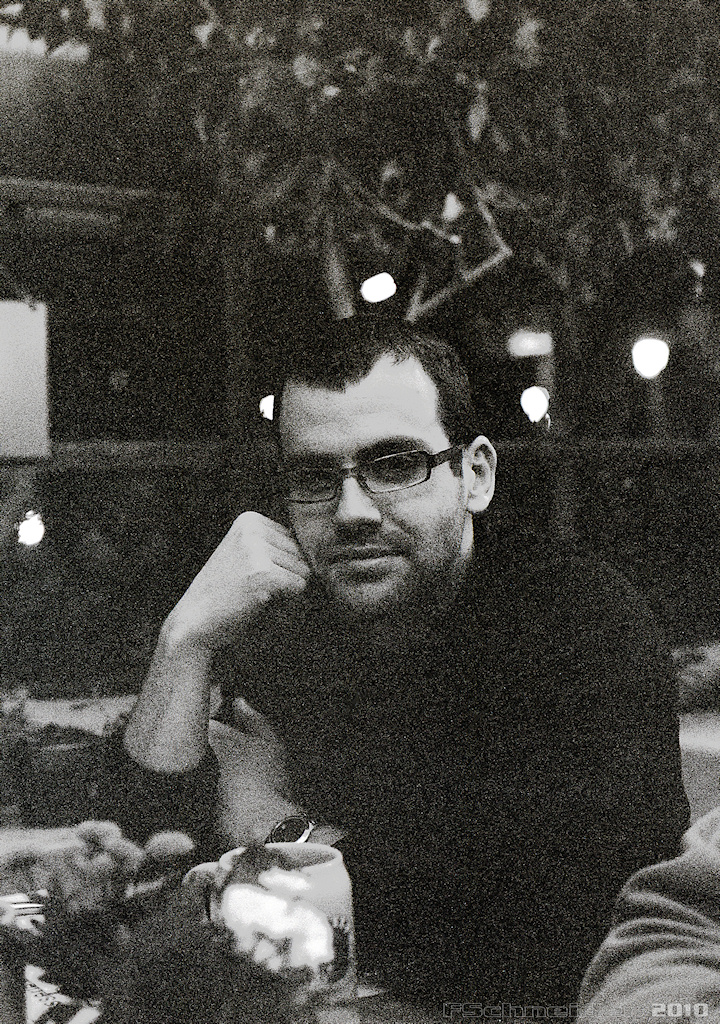
How to get big grain

Two Horses

A
Two Horses

  • 6
  • 2
  • 41
Billboard, Cork city 1977

H
Billboard, Cork city 1977

  • Tel
  • Mar 17, 2026
  • 1
  • 0
  • 33

Recent Classifieds

Forum statistics

Threads
202,802
Messages
2,845,708
Members
101,541
Latest member
ΦÆdon
Recent bookmarks
1
Is it only me? I always thought to quest was for finer grain. Either this is a time warp or I am getting old. :errm:
 
The visibility of grain depends a lot on the light source and optics used, whether you are projecting, enlarging, or digitizing the negative.
A lot of grain effects attributed to scanning relate to the scanner used - particularly if the results are being compared to printing with a diffusion enlarger.
The scanners (and software) I have used over the years have tended to enhance the visibility of grain. They have done the same, unfortunately, with dust!
 
Is it only me? I always thought to quest was for finer grain. Either this is a time warp or I am getting old. :errm:
People who want to use film, but don't want grain are indeed old.
The preoccupations of our youth are difficult to shake.
 
People who want to use film, but don't want grain are indeed old.

That's me to a tee. :laugh:

I remember, about 45 years ago, shooting Agfapan 25 with my faithful Praktica Super TL and thinking I had entered heaven when I viewed my almost grainless10x8 print. Yes back then the Holy Grail was no grain.
 
It was a quest for progress, lust. The theoretical question of how big could you go.

But let me tell you, I’m about to be finished with printing tmx100 from 2018 negatives. Printed over 500 11x14 fb this past month from tmax100 and foma400 negatives. The tmax 100 + XTOL 1:1 prints, I almost Hate them. There’s no grain, not even with the focuser loupe. I know why I switched to ilfosol-3, to gain sharpness and grit.

The foma 400 prints are outstanding. A bit of grit, sharp. They all stand out versus the tmax 100 prints, which are definitely softish in general.
 
People just want what they do not have:
Grain
Kodachrome
HIE
If they have girls, they want a boy. If they have boys girls are easier and they want one.​
 
You will need a dedicated film scanner or a DSRL scanning setup, both able to focus on the grain by design, to make statements on what scanning can and cannot do wrt grain.

I have a Nikon Coolscan 9000 and I have scanned a negative and made a wet print from it. The grain is much more visible in the scan than a wet print.
 
I have a Nikon Coolscan 9000 and I have scanned a negative and made a wet print from it. The grain is much more visible in the scan than a wet print.

Was the exposure and development of the negative optimised for the scan, or was it optimised for your wet print, with the scan of the negative being an afterthought?

Also, would you say your skills with acquiring and processing negative scans are as good as those you have in darkroom printing, or rather better, or worse?

In general, I think there are many variables involved on top of any technical aspects private to each of the two workflows.
 
Last edited:
From what I've seen so far there is the quest for grain but not many questions asked about the quality of the grain. So there are two ways to go, a nice tight grain that accentuates the graphic quality of the image, or a mushy all pervasive grain that stultifies the image. Grain is easy, just make a mess of your exposure and processing and then come to the forum and ask what you did wrong, or be happy with it. But to have a vision it needs to be expressed to get the right response. Maybe the OP could point to some photographers that use grain, Gibson or Moriyama for example to help out?
 
That was a long time ago indeed. During a mid-00's conversation with a friend R.G. told him he switched to Kodak 3200 stock cos modern 400 films were too slick.

"He got pretty normal exposure times for his negs"
I read somewhere that in the 70's his normal eposure times were one two 3 minutes, which would be the result of greatly overdeveloped negs.

I gave my source, so contradict him not me. However if you don't have the book 'Darkroom' published by Lustrum Press I recommend it. If he switched films later I think you have to go on the basis that all artists evolve in some way and aren't stuck to the background around them. So what was your point?
 
Was the exposure and development of the negative optimised for the scan, or was it optimised for your wet print, with the scan of the negative being an afterthought?

Also, would you say your skills with acquiring and processing negative scans are as good as those you have in darkroom printing, or rather better, or worse?

In general, I think there are many variables involved on top of any technical aspects private to each of the two workflows.

It is foolish to expect any scanning device to effectively scan grain. Even an internegative is very lossy, and it’s the next best thing to the native negative.
 
Was the exposure and development of the negative optimised for the scan, or was it optimised for your wet print, with the scan of the negative being an afterthought?.
What do you consider optimizing development for scanning? I have no idea what than means. The negative was correctly exposed and developed to give a normal contrast range based on densitometry.
 
Is it only me? I always thought to quest was for finer grain. Either this is a time warp or I am getting old. :errm:
That used to be the goal until film became more hip. When I started, my dad who studied photography in the 1940s emphasized fine grain, and one of the first rolls of 35mm he gave me to shoot was Panatomic-X. Still, sometimes I like some grain. It can help with shading, especially going from light to shadow.
 
I take this thread with more than a grain of salt. :tongue:
 
A salt or a salt and pepper?
 
Oh the internetz. They demand proof and when you show the proof they just go dead silent. However I haven't never been asked for "peer reviewed IEEE paper" to this day :D
 
Oh the internetz. They demand proof and when you show the proof they just go dead silent.

You didn't show any proof. And I would recommend toning down your passive-aggressiveness a little, if you like to be taken seriously.

However I haven't never been asked for "peer reviewed IEEE paper" to this day :D

Sounds like your problem right there, then. You should familiarise yourself with the fundaments of the scientific method, and understand that the burden of proof is on whoever attempts a rejection of the null hypothesis, not the opposite.

But I'll leave you to your religious beliefs on grain, scanning and darkroom prints. Have a nice one!
 
Last edited:
Nothing beats Rollei R3 !

Pentax 645N • Pentax FA 645 150mm f:2.8 ED
Rollei R3 @ 6400 ISO developped in Rollei High Speed RHS
Scanned with Epson Perfection V500 at 2400dpi

 
You didn't show any proof. And I would recommend toning down your passive-aggressiveness a little, if you like to be taken seriously.
Sounds like your problem right there, then. You should familiarise yourself with the fundaments of the scientific method, and understand that the burden of proof is on whoever attempts a rejection of the null hypothesis, not the opposite.
But I'll leave you to your religious beliefs on grain, scanning and darkroom prints. Have a nice one!

Ok, .. I think we are done here :D
 
Oh the internetz. They demand proof and when you show the proof they just go dead silent. However I haven't never been asked for "peer reviewed IEEE paper" to this day :D

Well I appreciated you sharing your images and experiences!
 
Is it only me? I always thought to quest was for finer grain. Either this is a time warp or I am getting old. :errm:
Hi Sirius,
It's a personal quest , to find ways to produce large coarse grain in my prints. You should see at the work of Michael Ackerman.
 
Photrio.com contains affiliate links to products. We may receive a commission for purchases made through these links.
To read our full affiliate disclosure statement please click Here.

PHOTRIO PARTNERS EQUALLY FUNDING OUR COMMUNITY:



Ilford ADOX Freestyle Photographic Stearman Press Weldon Color Lab Blue Moon Camera & Machine
Top Bottom