• Welcome to Photrio!
    Registration is fast and free. Join today to unlock search, see fewer ads, and access all forum features.
    Click here to sign up

How much editing is justified?

Recent Classifieds

Forum statistics

Threads
203,291
Messages
2,852,468
Members
101,766
Latest member
Onetrick
Recent bookmarks
1

Heavy editing (analog or digital) on an image is...

  • ...required to bring out the hidden diamond; not doing it demonstrates inexcusable incompetence

  • ...OK if you think it helps

  • ...not a great idea; show some restraint

  • ...an abomination and you should be hanged, drawn and quartered for even suggesting it


Results are only viewable after voting.
Art is constructive. It is constructed from the reality around the artist, the tools and materials at their disposal, and their imagination.

Photography has always been "edited" whether by chemical, digital, or mechanical means. Moreover, the compositional/constructive process of the photographer is inherently an editing process even in the most abstract of photographs.

For me, all methods and manipulations are in bounds so long as the process is under the photographer's control. If you want to scan your negative, edit/fix/improve it, create a digital internegative to make a carbon transfer print, that's all legit. You are in charge of the whole business. This holds true for digital, analog, and/or hybrid workflows.

Where I part ways with all this is when some significant portion of the manipulation is no longer under the photographer's direct control. The digital post capture of many consumer products like iPhones are increasingly intended to give you the picture it's decided you wanted, not the one you took. The process if opaque and not easily placed in the hand of the photographer.
 
A definition that has been highly diluted from the original, although the example may be closer to the original, if it applies to a boxer who has been accredited by a recognized accrediting organization.

How does s professional boxer differ from a prize fighter?
 
The second definition, while correct in current/common usage as stated by Pieter, seems best when used with another word, like 'quality': "The editing of their images are both memorable and of professional quality."

That's very iffy. A lot would depend on a person opinion. There's nothing confusing with one who works at it for a living.
 
Art is constructive. It is constructed from the reality around the artist, the tools and materials at their disposal, and their imagination.

Photography has always been "edited" whether by chemical, digital, or mechanical means. Moreover, the compositional/constructive process of the photographer is inherently an editing process even in the most abstract of photographs.

For me, all methods and manipulations are in bounds so long as the process is under the photographer's control. If you want to scan your negative, edit/fix/improve it, create a digital internegative to make a carbon transfer print, that's all legit. You are in charge of the whole business. This holds true for digital, analog, and/or hybrid workflows.

Where I part ways with all this is when some significant portion of the manipulation is no longer under the photographer's direct control. The digital post capture of many consumer products like iPhones are increasingly intended to give you the picture it's decided you wanted, not the one you took. The process if opaque and not easily placed in the hand of the photographer.

Wouldn't you want different standards based on purpose? For example news, documentary and scientific vs. Portrait and fine art.
 
Art is constructive. It is constructed from the reality around the artist, the tools and materials at their disposal, and their imagination.

Photography has always been "edited" whether by chemical, digital, or mechanical means.

You might say that some forms of art, such as sculpture, are edited. Chipping away at a block of marble is in fact editing.
 
Editing is fine and individual photographers do what they think is necessary, but isn't photography unique as an artform in it's immediacy and when used in that way, too much editing can destroy that quality. Just my personal opinion.
 
Editing is fine and individual photographers do what they think is necessary, but isn't photography unique as an artform in it's immediacy and when used in that way, too much editing can destroy that quality. Just my personal opinion.
You win some, you lose some. The loss of immediacy can be a perfectly valid or even desirable consequence in the light of the desired output.

Reminds me of something I saw recently:

Hey...that's yours!
 
Koraks, I'm not sure I understand your point.
 
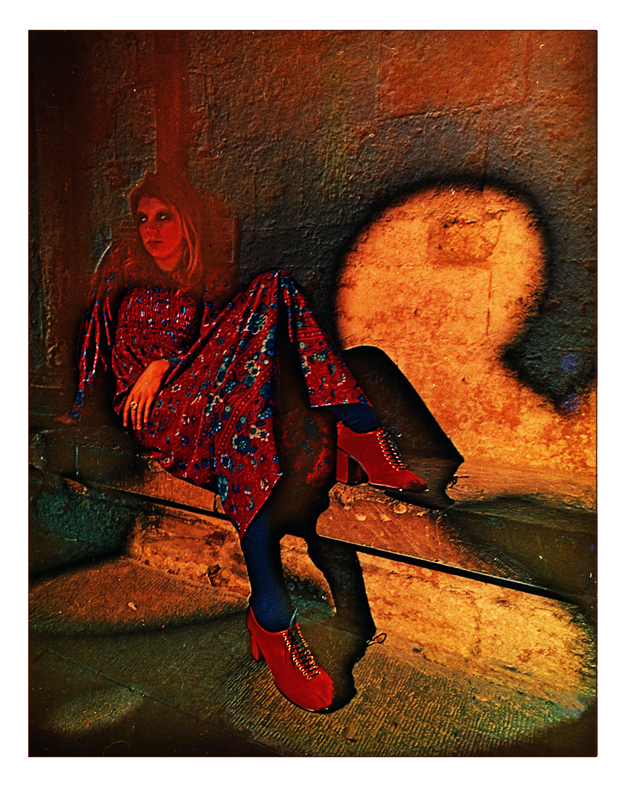
I would consider your image heavily 'edited' and not answer in particular to the criterion of 'immediacy' that you purport to be essential. I don't blame you for it; by no means, but I do find it remarkable and frankly quite refreshing and comforting that you seem to happily break your own doctrine.
 
I would consider your image heavily 'edited' and not answer in particular to the criterion of 'immediacy' that you purport to be essential. I don't blame you for it; by no means, but I do find it remarkable and frankly quite refreshing and comforting that you seem to happily break your own doctrine.

The sunlight can change in a fraction of a second and the only editing was a sabattier effect.
 
the only editing was a sabattier effect
I understand that, and I could comment in either of two ways.

The first would be soothing and encouraging. Of course, it's only a single 'editing step' you applied. It's marginal at best. You invited the medium to guide you. No 'immediacy' or any other somewhat vague property was 'lost' in the process. You adhered to your own principle.

The second would be more critical, and I'm afraid that that's how I really see things. While sabattier was the 'only' thing you did, the nature of that beast comprises a fundamental reshuffling of tonal values that draws the image into the realm of the abstract. The medium in this case is a complex interplay between light and chemistry - the only reason why the editing would not be qualified as 'extensive' is that you as a photographer did relatively little (cf. @chuckroast's argument above - you were inherently not in control). But the lack of doing cannot be mistaken for the lack of an effect.

The reason why my assessment is critical is IMO easily recognized if we did a thought experiment where you started with the same capture on film, but processed it normally and then used photoshop to get the exact same rendition. If you, or anyone else would do so, I'm sure virtually everyone on this forum would quality the editing as 'extensive'. The only difference being that in the latter case, the photographer takes full control over the process. With that control comes responsibility - a natural consequence. The way I see it, by referring to the notion of 'only' applying a single form of editing (sabbatier), you dodge this responsibility - signified by the word 'only'. But I don't think the critical (re)viewer is so easily fooled.

I think your argument is ultimately inconsistent - as we've seen in a different instance, recently. Now, I stand by what I said in post #1, which boils down to 'anything goes' without attributing a particular normative judgement to whatever someone chooses to do. But if someone says A, and at the same times does B, and fails to recognize the inconsistency - at that point, I cannot help but shake my head and take A with a hefty dash of salt. Which is a different matter from my possible appreciation of B, which can still be there.
 
(cf. @chuckroast's argument above - you were inherently not in control).

Another way to think about this, I think, is whether the doing- or not doing is intentional on the artist's part. It is the intentionally of the artistic manipulation or act that makes the work the artist's, not the machine's.

But the lack of doing cannot be mistaken for the lack of an effect.
+100

In the words of one of my music teacher when discussing improvisational soloing - "The funk is in the holes." What you don't play matters as much as what you do play.

(Miles Davis was a master of this. Most modern Jazz and Pop performers have Diarrhea Of The Notes by comparison.)
 
Wouldn't you want different standards based on purpose? For example news, documentary and scientific vs. Portrait and fine art.

I was speaking for art as pure art.

Art in the service of a political cause is propaganda. Art in the service of commerce is marketing or advertising. Art in the service of reporting is journalism (or is supposed to be, anyway). None of these are purely the product of the artist's vision. That vision is directed by an outside intent.
 
You might say that some forms of art, such as sculpture, are edited. Chipping away at a block of marble is in fact editing.

Closer to home, we see physical manipulations of prints in the work of people like Jerry Ulesman or Ansel Adams correcting a black spot on a print with a razor knife, etc. For that matter, cutting a print to crop it to taste for display, is another physical manipulation available to the artist.
 
If you, or anyone else would do so, I'm sure virtually everyone on this forum would quality the editing as 'extensive'.

Thanks @koraks

FWIW, and trying to dissect the topic while remaining within its boundaries: I personally still consider the image by @cliveh a proper photograph, with clear immediacy (!), and not too-heavily-edited. I have used both solarisation and pseudo-solarisation in B/W in the past, I know how they work, and I find them pleasant in certain specific contexts. By that measure, I consider it part of the "photographic language", if you like.

Conversely, I fail to recognise a photograph in the image you posted (yesterday?), the abstract one with contrasting colours which, if started from an actual photograph, to my eyes has lost completely any immediacy. I am not saying that it is good ot bad.

Actually, I will not include any judgement of my personal appreciation of either image as a piece of art, as that is probably inconsequential to this thread, aand ultimately irrelevant.

We do not need to agree on how I feel about those images, either, as you asked for personal feelings on heavy-editing, and getting different points of view on the matter of heavy-editing is apparently what you were after in the original post. I hope that hearing different opinions on that personal question you asked initially could somehow help you finding what you are looking for.

OneEyedPainter
 
All this analysis is a bit beyond me, I just press the shutter.
 
It is the intentionally of the artistic manipulation or act that makes the work the artist's, not the machine's.

The important moment is the decision. It doesn't matter what made the object what it is, the artist is the one who decided that the result is art. To identify that as "intention" is muddying. A completely unintentional result can be put forward as art. That decision is an act of ownership and determination at the same time (that's what authorship is). For the most part, whatever the camera comes up with is only so much within your control - even if you go as "straight" as possible.

You were dead on right with the cameras now messing with photos. I used my phone to take a photo of a print I made (a photo of my daughter). The phone photo has my daughter in black and white and everything else in a kind of sepia tone. It looks like she's superimposed over the background. Also, the photo exhibits a greenish tone if anything.
 
Photrio.com contains affiliate links to products. We may receive a commission for purchases made through these links.
To read our full affiliate disclosure statement please click Here.

PHOTRIO PARTNERS EQUALLY FUNDING OUR COMMUNITY:



Ilford ADOX Freestyle Photographic Stearman Press Weldon Color Lab Blue Moon Camera & Machine
Top Bottom