
-
Welcome to Photrio!Registration is fast and free. Join today to unlock search, see fewer ads, and access all forum features.Click here to sign up
You are using an out of date browser. It may not display this or other websites correctly.
You should upgrade or use an alternative browser.
You should upgrade or use an alternative browser.
How much editing is justified?
-
- Thread starter koraks
- Start date
Recent Classifieds
-
For Sale Fuji GW670 III
- Started by campy51
-
For Sale Hasselblad X Pan w/ 45mm/f4 Lens
- Started by eftones
-
For Sale 6 antique French pneumatic shutters _ Guerry
- Started by Manual Camera
-
For Sale Voigtländer Nokton Classic 35mm/1.4 with Leica M-mount
- Started by Klaus Mähring
-
For Sale Voigtländer Bessa R2 Special Edition Olive Green
- Started by Klaus Mähring
Forum statistics


warden
Member
Finally we have one vote for “abomination”. Anyone want to claim that vote? 

Vaughn
Subscriber
If I got this right, basically you are saying a good photo should jump off the contact sheet and hit you in the eye....
"If a photo is very good I think it will stand out no matter the editing (unless it is obviously too dark, overexposed or sth)"
Of course it can be improved (and should be improved imo) with a careful editing (as in your picture).
But honestly I didn't need the editing in the first place to understand that it was a good picture
No amount of editing is going to save a poorly conceived image. It might make it a little more pleasing to look at, though. And some creative editing might even successfully turn the source material into a whole new image not originally realized.
But at what point does the performance* itself become editing? Or does it ever? Or does it always? Or does editing start with act of seeing?
I will do all the 'editing' needed to create the image I want, be it zero or a ton.
* The classic "the negative is the score..." thing.
Vaughn
Subscriber
Nice catch! For me, cropping down to the top of the house to get rid of a lot of that blue sky lets my eyes connect and equate the blue of the car and the posts easier. You nicely cropped out most of the competing baby blue on the left side.Example where a heavy edit was planned in advance. I only had a 28mm lens. I noticed that the car had been hand-painted in the same color as the house/fence posts of the people who owned it. I wanted to highlight that point of interest and also wanted to correct the perspective from my vantage point as well as remove extraneous elements.
Before:
View attachment 407626
After:
View attachment 407627
Real life it was more striking because the shades of blue were indistinguishable. I think because I used the very saturated Velvia it separated the tones. I do wish they had stayed more similar to one another in this case.

@loccdor - a question, just because I'm curious. Why didn't you step between the two cars in the original image to get closer to what you wanted? Were you on a bike?
I was on a pezouli (stone porch raised about a meter from the ground with a short wall around it). I think I needed the little extra bit of height for the composition.
- TheTomTom
- Deleted
- Reason: under review
- TheTomTom
- Deleted
-

- nuriarv
- Deleted
-

- eliadesqu
- Deleted

oneeyedpainter
Member
Sorry for resuscitating a past thread, but I really found it interesting, and I was not here yet when it happened . I noticed that none of the responses was perfectly aligned with my personal feelings on (heavy) editing, so perhaps sharing my opinion would offer a somehow different point of view.
As several others have said, for me an editing feels definitely unacceptable when it adds/removes elements of the image for purely aestethical reasons (removing a boat from a bay or adding a bit more sky and a few more stairs at the bottom of the frame). But I feel generally uneasy with any processing that I do not full understand/control/could reproduce myself with some effort, being it physical or chemical, while maintaining the general "integrity" of what was in front of the camera (see above).
I know and understand how contrast works, and what it means to adjust a contrast curve in a given direction, and how I can do that after the shutter has closed, by working on exposure, paper grade, development of the print, etc. I know and understand how to set vertical lines straight, and can easily do that by tilting. I understand somehow how acutance/local contrast can be manipulated by a combination of development and paper choices. I understand burning/dodging although I never had the patience to go for more than 2/3 different exposures on a single print. I can remove dust from a negative, easily.
I also know and understand most of the harsh effects of classical analogue photography, including posterization, reduction to pure B/W, solarization, (chemical) toning, etc.
What I do not understand and what feels physically impractical to control or reproduce makes me feel really uneasy. I do not understand how one could easily boost dramatically a tight range of tones (e.g., deep shadows) while muting another very tight range of tones (e.g., bright grays) in the same print, as I am not aware of any chemical/physical process that can do that with the surgical precision of a PS slider (I know and understand how PS does that, but that is only possible in the digital world, so far). I do not understand how one can have a dynamic range of 18 or 20 stops in the same picture, as no sensor or film or process can physically do that (again, know and understand how it is possible in the PS world). I cannot physically remove a cloud from the sky, or add 250 sheep to a grazing field without creating something clearly artificial. And so on.
Perhaps is the old (delusional?) fascination of photography as a mean to interpret reality, whilst remaining in the realm of feasible and attainable with physical means? Obviously, this point of view remains open to being extended, insofar as our (personal and collective) understanding of the physical world improves and expands with time and technological progress.
Nevertheless, I normally prefer to indulge in as little editing as possible, in an attempt to keep as much of the "physical chain" from scene to viewer as intact, understandable, and reproducible as possible.
OneEyedPainter
. I noticed that none of the responses was perfectly aligned with my personal feelings on (heavy) editing, so perhaps sharing my opinion would offer a somehow different point of view.As several others have said, for me an editing feels definitely unacceptable when it adds/removes elements of the image for purely aestethical reasons (removing a boat from a bay or adding a bit more sky and a few more stairs at the bottom of the frame). But I feel generally uneasy with any processing that I do not full understand/control/could reproduce myself with some effort, being it physical or chemical, while maintaining the general "integrity" of what was in front of the camera (see above).
I know and understand how contrast works, and what it means to adjust a contrast curve in a given direction, and how I can do that after the shutter has closed, by working on exposure, paper grade, development of the print, etc. I know and understand how to set vertical lines straight, and can easily do that by tilting. I understand somehow how acutance/local contrast can be manipulated by a combination of development and paper choices. I understand burning/dodging although I never had the patience to go for more than 2/3 different exposures on a single print. I can remove dust from a negative, easily.
I also know and understand most of the harsh effects of classical analogue photography, including posterization, reduction to pure B/W, solarization, (chemical) toning, etc.
What I do not understand and what feels physically impractical to control or reproduce makes me feel really uneasy. I do not understand how one could easily boost dramatically a tight range of tones (e.g., deep shadows) while muting another very tight range of tones (e.g., bright grays) in the same print, as I am not aware of any chemical/physical process that can do that with the surgical precision of a PS slider (I know and understand how PS does that, but that is only possible in the digital world, so far). I do not understand how one can have a dynamic range of 18 or 20 stops in the same picture, as no sensor or film or process can physically do that (again, know and understand how it is possible in the PS world). I cannot physically remove a cloud from the sky, or add 250 sheep to a grazing field without creating something clearly artificial. And so on.
Perhaps is the old (delusional?) fascination of photography as a mean to interpret reality, whilst remaining in the realm of feasible and attainable with physical means? Obviously, this point of view remains open to being extended, insofar as our (personal and collective) understanding of the physical world improves and expands with time and technological progress.
Nevertheless, I normally prefer to indulge in as little editing as possible, in an attempt to keep as much of the "physical chain" from scene to viewer as intact, understandable, and reproducible as possible.
OneEyedPainter
OP
OP

So, imagine you would learn about ways to selectively control contrast of specific parts of the tonal range (e.g. burning & dodging while making an enlarger print) - would that change your position on whether such modifications would be permissible?I do not understand how one could easily boost dramatically a tight range of tones (e.g., deep shadows) while muting another very tight range of tones (e.g., bright grays) in the same print
I guess my outlook is different and has only become more pronounced since making this thread. Recently I was playing around with images like this one:
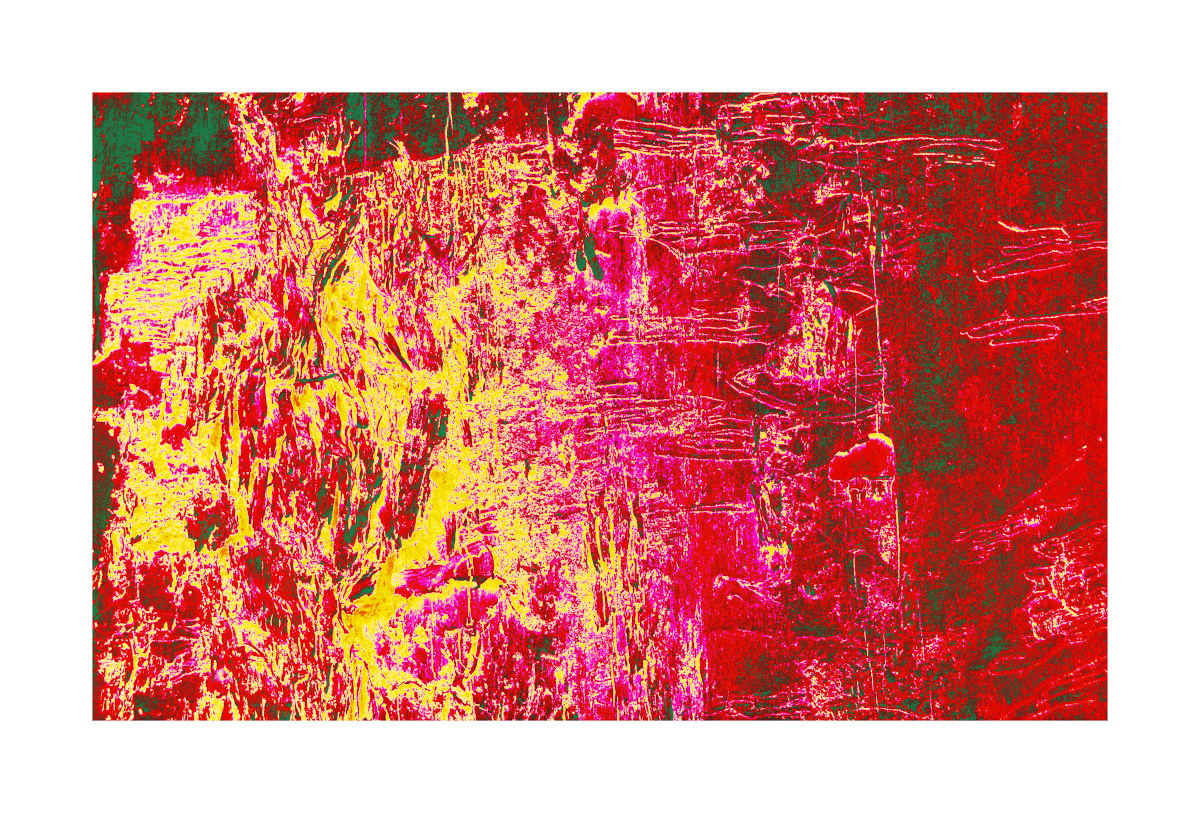
While I understand what I did here in terms of curve manipulations and color controls, there's no way I could replicate this in the darkroom. For me, that wasn't a criterion in working on the image. My interest was in the relationships between the colors and their relative weights, and my emotional response to them.
I think 'interpreting reality' lends a very large degree of flexibility. And I suppose we have different views on whether photography needs to be bound by what's attainable through physical means. As to the latter, I'd add "by a particular person", since in your reflection, this seems to be related to personal understanding and competence. Pretty much everything you've mentioned can be done physically/in the darkroom - but some of it sure isn't easy!Perhaps is the old (delusional?) fascination of photography as a mean to interpret reality, whilst remaining in the realm of feasible and attainable with physical means?

RalphLambrecht
Subscriber
I might have asked beforehand, but fact of the matter is that I did it anyway, and at least some people seem to have liked it. I'm referring to this image I included in the Picture a Day thread a few days ago:
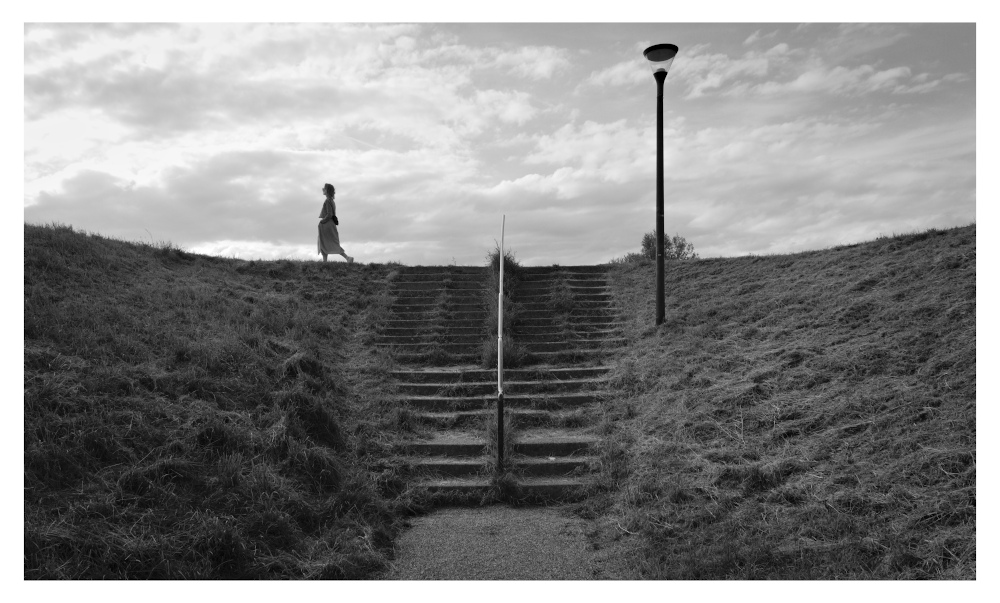
Some people have said some very kind things about this photo of mine, and I'm evidently grateful for those comments.
At the same time, I suspect that there are many people who may not take so kindly if they know how the image was made. No, it's not an AI render. But it's heavily doctored alright. No pixels were made up. But virtually all of them were thoroughly massaged (or maimed, if you will).
Here's the original capture as produced by the camera:
View attachment 406140
The following modifications were involved to get to the result shown earlier:
What I resisted was local contrast adjustments using layers and burning & dodging those layers in GIMP. Which is to say that despite the considerable list of modifications, I feel I'm roughly halfway done, give or take a few virtual brush strokes. I'm very much aware that the considerable editing that went into this image pales in comparison with what many other photographers do. This is just an example I had handy and for which I could easily reconstruct the editing path.
- Exposure compensation
- Highlight reconstruction; highlight compression
- Shadow expansion
- Graduated ND filter simulation
- Artificial vignetting
- Perspective correction (to make the light post vertical)
- Crop
- B&W conversion with simulated red filter
- Added 'local contrast' for emphasis on textures
- Added a border
- Unsharp mask
- I may have done an overall curve adjustment towards the end. I'm not sure.
I wonder how you guys feel about the extent of post-processing that's sometimes unleashed on an image. Emphasis on 'feel', because I'm looking for the emotional response to knowing what went into the image in order to make it look the way it ended up looking. I'm taking this image as an example, but I'm looking for generalizations - so it's not about this image in particular. It's just an illustration.
I'd also like to clarify up front that any perspective is justified. If you think this kind of editing is a sheer necessity to bring out the image as it's intended to be, that's fine. If you feel that this degree of doctoring on an image constitutes 'faking it instead of making it' and the end result will inevitably be an affront to good taste, that's also fine. I'm also very specifically not looking for a 'digital vs analog' debate. I think we all know (or should know) that literally everything I did to this image digitally, would have been possible in the wet darkroom just the same (but it would have taken me a week instead of half an hour).
Whichever take you have on this, I'd be interested to understand why you feel this way. I.e. what norms, assumptions, preferences etc. are underlying your response?
PS: parts of the answers to the poll are of course in jest. If you pick the first or last option, surely nobody will seriously believe you're stating people are incompetent or should be summarily executed.
I think you've done the picture a lot of good. a lot better than the original!
oneeyedpainter
Member
So, imagine you would learn about ways to selectively control contrast of specific parts of the tonal range (e.g. burning & dodging while making an enlarger print) - would that change your position on whether such modifications would be permissible?
Thanks @koraks My answer to your question was actually already in my post, a few lines below:
"Obviously, this point of view remains open to being extended, insofar as our (personal and collective) understanding of the physical world improves and expands with time and technological progress."
I don't know of any way of doing that with the same surgical precision a software can achieve. I can imagine a couple of laborious ways of doing something very rough on a wide bunch of adjacent tones, with a quite lengthy process similar to posterisation/tone separation, but it would be very rough indeed, and most probably visually unpleasant anyway. If you have pointers on any existing physical/chemical techniques to achieve surgical tone boosting/muting, I will eagerly read through them, though.
I purposedly refrained from commenting on whether one should use at all any of the edits that I personally consider "admissable" in an actual picture, as I wanted to remain in topic. That is exactly where personal taste and preference takes precedence. The fact that one can use a specific process does not mean that he/she should do that on every image, or at all.
I personally can find an image pleasant even if I notice that it has been too-heavily manipulated according to my taste. I simply cease considering it a photograph at that point. It becomes something else, similar to a drawing or a painting, and I have to assume that the intent of the author was probably something very different from a photograph. I think this is the "feeling" you were asking about in the original message. When it is too-heavily-edited, it feels like it does not look like a photograph to me, any more.
OneEyedPainter
OP
OP
Thanks; as you say, it's all very personal. To pick one point from your post:
I realize for me it's not so important how the end result can be categorized. If it's no longer a photograph...well, then so be it. I'm fine with that.When it is too-heavily-edited, it feels like it does not look like a photograph to me, any more.

Alan Edward Klein
Member
I think you've done the picture a lot of good. a lot better than the original!
We often get caught up in the technical power of our editing tools. The first question I like asking myself, does my picture provide emotional and aesthetic appeal? What is it saying? Do the camera's angle and composition and the content and subjects of the picture do something? If they do, then general adjustments to lighting, cropping, etc are acceptable to me. Cloning, which you apparently have not done, would be a bridge too far.I might have asked beforehand, but fact of the matter is that I did it anyway, and at least some people seem to have liked it. I'm referring to this image I included in the Picture a Day thread a few days ago:
Some people have said some very kind things about this photo of mine, and I'm evidently grateful for those comments.
At the same time, I suspect that there are many people who may not take so kindly if they know how the image was made. No, it's not an AI render. But it's heavily doctored alright. No pixels were made up. But virtually all of them were thoroughly massaged (or maimed, if you will).
Here's the original capture as produced by the camera:
View attachment 406140
The following modifications were involved to get to the result shown earlier:
What I resisted was local contrast adjustments using layers and burning & dodging those layers in GIMP. Which is to say that despite the considerable list of modifications, I feel I'm roughly halfway done, give or take a few virtual brush strokes. I'm very much aware that the considerable editing that went into this image pales in comparison with what many other photographers do. This is just an example I had handy and for which I could easily reconstruct the editing path.
- Exposure compensation
- Highlight reconstruction; highlight compression
- Shadow expansion
- Graduated ND filter simulation
- Artificial vignetting
- Perspective correction (to make the light post vertical)
- Crop
- B&W conversion with simulated red filter
- Added 'local contrast' for emphasis on textures
- Added a border
- Unsharp mask
- I may have done an overall curve adjustment towards the end. I'm not sure.
I wonder how you guys feel about the extent of post-processing that's sometimes unleashed on an image. Emphasis on 'feel', because I'm looking for the emotional response to knowing what went into the image in order to make it look the way it ended up looking. I'm taking this image as an example, but I'm looking for generalizations - so it's not about this image in particular. It's just an illustration.
I'd also like to clarify up front that any perspective is justified. If you think this kind of editing is a sheer necessity to bring out the image as it's intended to be, that's fine. If you feel that this degree of doctoring on an image constitutes 'faking it instead of making it' and the end result will inevitably be an affront to good taste, that's also fine. I'm also very specifically not looking for a 'digital vs analog' debate. I think we all know (or should know) that literally everything I did to this image digitally, would have been possible in the wet darkroom just the same (but it would have taken me a week instead of half an hour).
Whichever take you have on this, I'd be interested to understand why you feel this way. I.e. what norms, assumptions, preferences etc. are underlying your response?
PS: parts of the answers to the poll are of course in jest. If you pick the first or last option, surely nobody will seriously believe you're stating people are incompetent or should be summarily executed.
Vaughn
Subscriber
Any manipulation needed to say what one wants in an image is fair game.
I try to define a place by the qualities of light found there. So I need to be very careful about changing those qualities so that I can push the feeling of the light forward and not in some other direction that will distract from my interpretation of the reality of the light and place.
I try to define a place by the qualities of light found there. So I need to be very careful about changing those qualities so that I can push the feeling of the light forward and not in some other direction that will distract from my interpretation of the reality of the light and place.

wiltw
Subscriber
There is a definite difference between a professional photographer and any other kind - so that's not just a label. A professional photographer has to do photography in order to eat. Selling your photos does not make you a professional photographer. Doing the photography your clients need you to do makes you a professional - no matter how good or bad you are at at.
Then there is the debate about how 'professional' is the photographer who is paid to shoot an event, but has few skills above the advanced snapshooter, and does it as living.

Pieter12
Member
Then there is the debate about how 'professional' is the photographer who is paid to shoot an event, but has few skills above the advanced snapshooter, and does it as living.
It depends on your definition of professional. Does it mean what one does for a living or one's proficiency?

It depends on your definition of professional. Does it mean what one does for a living or one's proficiency?
"Professional" doesn't mean just someone who does it for a living, although it is often misused that way.
That is a description of a vocation.
"Professional" should mean higher standards and higher qualifications than simply a choice of vocation.
Whether something is done professionally depends on the criteria it is evaluated against. So a professional photojournalist will be evaluated differently than a professional portrait photographer or professional laboratory photographer.
OP
OP
Then there is the debate about how 'professional' is the photographer who is paid to shoot an event, but has few skills above the advanced snapshooter, and does it as living.
Yeah, but to put it bluntly - that's not what I started this thread about because I'm frankly not interested in that discussion. There's not a whole lot of sense to it, because:
* Some photogs are technically incompetent in many ways, and they don't get a lot of paid gigs. Nobody really worries about this because it's fair & square.
* Some photogs are really good at what they do, but they still don't get many paid gigs. That's frustrating especially for them, but well...there's a lot of competent competition about. So do a better job at marketing & networking and hope for the best. Or consider a different career (my advice).
* Some photogs are really good at what they do and they get a lot of paid gigs. We love them or hate them, but ultimately, there's no arguing their success.
* Some photogs stink in many ways and they still make loads of cash. I don't know many and frankly, I couldn't be bothered to spend time on looking for them unless I wanted to figure out how to market a service despite the service being awful. Since I have no interest in that, I don't bother. The only other motivation I can imagine why people would focus on this category is some kind of jealousy. That sounds like a poor thing to waste any energy on.
So that's why I didn't focus this thread in that direction. Unproductive, uninteresting and it has very little to do with what photography is about.
Pieter12
Member
"Professional" doesn't mean just someone who does it for a living, although it is often misused that way.
That is a description of a vocation.
"Professional" should mean higher standards and higher qualifications than simply a choice of vocation.
Whether something is done professionally depends on the criteria it is evaluated against. So a professional photojournalist will be evaluated differently than a professional portrait photographer or professional laboratory photographer.
Professional adjective
- 1.
engaged in a specified activity as one's main paid occupation rather than as a pastime.
"a professional boxer"
- 2.
worthy of or appropriate to a professional person; competent, skillful, or assured.
"their music is both memorable and professional"
1.
engaged in a specified activity as one's main paid occupation rather than as a pastime.
"a professional boxer"
A definition that has been highly diluted from the original, although the example may be closer to the original, if it applies to a boxer who has been accredited by a recognized accrediting organization.
BrianShaw
Member
The second definition, while correct in current/common usage as stated by Pieter, seems best when used with another word, like 'quality': "The editing of their images are both memorable and of professional quality."

Vaughn
Subscriber
How much editing did Van Gogh, Monet or Picasso do?
Difficult to compare in some ways -- sketching out an idea for a painting might be considered the start of the editing process...and now it is possible to view the paint under the paint to see past edits.
Pieter12
Member
How much editing did Van Gogh, Monet or Picasso do?
Tons. But that is irrelevant, since it is pretty much the definition of artistic license. Maybe look at someone like Chuck Close if you want to compare painting to photography. There is always some editing in any art form.
"Professional" doesn't mean just someone who does it for a living
Essentially, it does. It doesn't denote anything past what you claim to be able to do and be paid for. While there are professional associations that may (or may not) uphold a set of standards for their members, most "professions" don't actually have any. In general, if you can't do the work, you don't get the money.
There is no professional association for my line of work. I am a professional, though. Moreover, I am an expert at what I do - so maybe that's what you're thinking of.
Tons
The entire process is editing - so, yeah, of course.
Any manipulation needed to say what one wants in an image is fair game.
Couldn't agree more.
Photos can serve many purposes. If you want your photo to be as accurate a record of what you pointed your camera at as possible, maybe you don't want to do much editing. If your goal is a "pretty picture", maybe you want to do a lot of editing.
wiltw
Subscriber
Interesting discussion. On the issue of removal/placement of objects not in the scene, traditional photography for formal portrait purposes included negative retouching and print retouching, and an offensive (to the subject) facial blemish or stray bunch of hair might be retouched so as to not be present in the final portrait. Yet, it seems, if it is done today (according to some opinions) it is going 'too far'. Which brings us back to the point mentioned by many replies...'if it is to achieve what is wanted (the desired goal)' as the other opinion.
The purpose of an image has a strong contribution to what might be acceptable vs. unacceptable amounts of alteration. If the purpose is to accurately record reality for documentary purposes, even the removal of a blemish becomes unacceptable, although the same action is very acceptable when done to present a pleasing portrait to a client.
The purpose of an image has a strong contribution to what might be acceptable vs. unacceptable amounts of alteration. If the purpose is to accurately record reality for documentary purposes, even the removal of a blemish becomes unacceptable, although the same action is very acceptable when done to present a pleasing portrait to a client.
Last edited:
| Photrio.com contains affiliate links to products. We may receive a commission for purchases made through these links. To read our full affiliate disclosure statement please click Here. |
PHOTRIO PARTNERS EQUALLY FUNDING OUR COMMUNITY:  |