
• Welcome to Photrio!
    Registration is fast and free. Join today to unlock search, see fewer ads, and access all forum features.
    Click here to sign up

How much editing is justified?

Forum statistics

Threads
203,283
Messages
2,852,327
Members
101,760
Latest member
zhao chen
Recent bookmarks
0

Heavy editing (analog or digital) on an image is...

  • ...required to bring out the hidden diamond; not doing it demonstrates inexcusable incompetence

  • ...OK if you think it helps

  • ...not a great idea; show some restraint

  • ...an abomination and you should be hanged, drawn and quartered for even suggesting it


Results are only viewable after voting.

koraks

Moderator
Moderator
Joined
Nov 29, 2018
Messages
28,885
Location
Europe
Format
Multi Format
I might have asked beforehand, but fact of the matter is that I did it anyway, and at least some people seem to have liked it. I'm referring to this image I included in the Picture a Day thread a few days ago:
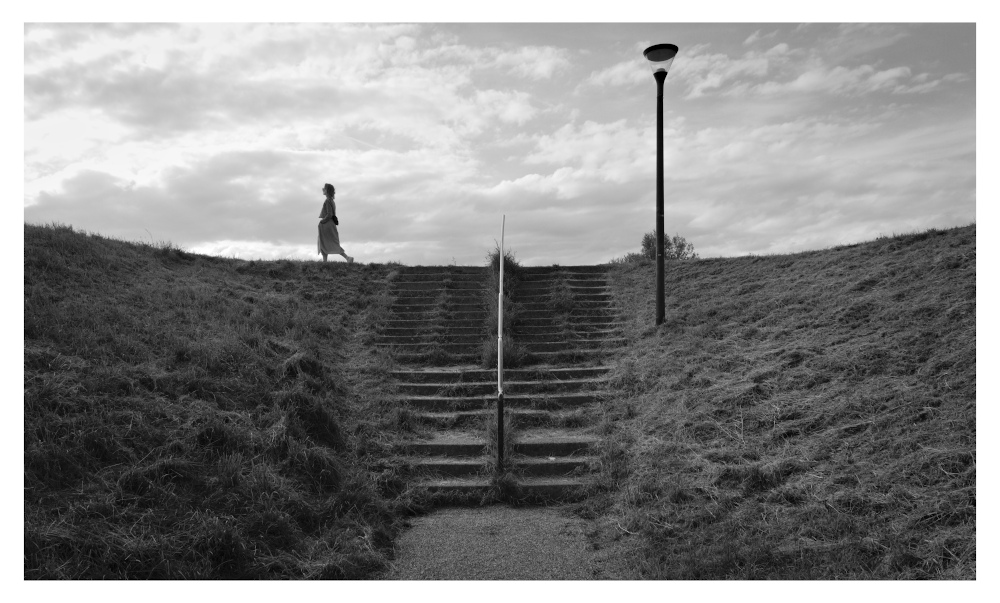
full

Some people have said some very kind things about this photo of mine, and I'm evidently grateful for those comments.

At the same time, I suspect that there are many people who may not take so kindly if they know how the image was made. No, it's not an AI render. But it's heavily doctored alright. No pixels were made up. But virtually all of them were thoroughly massaged (or maimed, if you will).

Here's the original capture as produced by the camera:
1756210774003.png


The following modifications were involved to get to the result shown earlier:
  • Exposure compensation
  • Highlight reconstruction; highlight compression
  • Shadow expansion
  • Graduated ND filter simulation
  • Artificial vignetting
  • Perspective correction (to make the light post vertical)
  • Crop
  • B&W conversion with simulated red filter
  • Added 'local contrast' for emphasis on textures
  • Added a border
  • Unsharp mask
  • I may have done an overall curve adjustment towards the end. I'm not sure.
What I resisted was local contrast adjustments using layers and burning & dodging those layers in GIMP. Which is to say that despite the considerable list of modifications, I feel I'm roughly halfway done, give or take a few virtual brush strokes. I'm very much aware that the considerable editing that went into this image pales in comparison with what many other photographers do. This is just an example I had handy and for which I could easily reconstruct the editing path.

I wonder how you guys feel about the extent of post-processing that's sometimes unleashed on an image. Emphasis on 'feel', because I'm looking for the emotional response to knowing what went into the image in order to make it look the way it ended up looking. I'm taking this image as an example, but I'm looking for generalizations - so it's not about this image in particular. It's just an illustration.

I'd also like to clarify up front that any perspective is justified. If you think this kind of editing is a sheer necessity to bring out the image as it's intended to be, that's fine. If you feel that this degree of doctoring on an image constitutes 'faking it instead of making it' and the end result will inevitably be an affront to good taste, that's also fine. I'm also very specifically not looking for a 'digital vs analog' debate. I think we all know (or should know) that literally everything I did to this image digitally, would have been possible in the wet darkroom just the same (but it would have taken me a week instead of half an hour).

Whichever take you have on this, I'd be interested to understand why you feel this way. I.e. what norms, assumptions, preferences etc. are underlying your response?

PS: parts of the answers to the poll are of course in jest. If you pick the first or last option, surely nobody will seriously believe you're stating people are incompetent or should be summarily executed.
 
Last edited:
It depends entirely upon the goal, and there isn’t always a single goal… or persistent goal… or ultimate goal.

It’s all about the end product.
 
Last edited:
The answer to your question is... it depends!

If you are a photojournalist... very little processing is allowed. The organization you are photographing for will/should have guidelines for what is allowable. Straying from those guidelines too much will get you fired.

At the opposite end of the spectrum, if you are an artist using photography as your medium then any processing that helps you achieve your vision is perfectly acceptable.
 
Very nuanced and understandable answers, gentlemen. But please note - I asked about your personal feelings. I understand there can be contextual factors that pose limits. I'm not inquiring about those. The example I gave can act as an illustration also in this sense: it's 'free' work, not bound by the requirements of expectations of an external customer.
 
I'm very much in the Adams camp of "The negative is comparable to the composer’s score and the print to its performance." Do what needs to be done to achieve the desired result. Anything less is a disservice to the image's potential.
 
As a viewer or a consumer I am interested in an end product of the artist/photographer. It can be of interest as to how it was created and the materials used. If requested I feel it should be honestly represented. Whether manipulated or not doesn’t matter to me.
 
But it's heavily doctored alright. No pixels were made up.
I'm perfectly happy with everything you did here, and would also be happy if you made up some pixels too, assuming reason and good taste prevail.

(Nice shot, btw. Your timing was perfect to get your wife mid-stride.)
 
I might have asked beforehand, but fact of the matter is that I did it anyway, and at least some people seem to have liked it. I'm referring to this image I included in the Picture a Day thread a few days ago:
full

Some people have said some very kind things about this photo of mine, and I'm evidently grateful for those comments.

At the same time, I suspect that there are many people who may not take so kindly if they know how the image was made. No, it's not an AI render. But it's heavily doctored alright. No pixels were made up. But virtually all of them were thoroughly massaged (or maimed, if you will).

Here's the original capture as produced by the camera:
View attachment 406140

The following modifications were involved to get to the result shown earlier:
  • Exposure compensation
  • Highlight reconstruction; highlight compression
  • Shadow expansion
  • Graduated ND filter simulation
  • Artificial vignetting
  • Perspective correction (to make the light post vertical)
  • Crop
  • B&W conversion with simulated red filter
  • Added 'local contrast' for emphasis on textures
  • Added a border
  • Unsharp mask
  • I may have done an overall curve adjustment towards the end. I'm not sure.
What I resisted was local contrast adjustments using layers and burning & dodging those layers in GIMP. Which is to say that despite the considerable list of modifications, I feel I'm roughly halfway done, give or take a few virtual brush strokes. I'm very much aware that the considerable editing that went into this image pales in comparison with what many other photographers do. This is just an example I had handy and for which I could easily reconstruct the editing path.

I wonder how you guys feel about the extent of post-processing that's sometimes unleashed on an image. Emphasis on 'feel', because I'm looking for the emotional response to knowing what went into the image in order to make it look the way it ended up looking. I'm taking this image as an example, but I'm looking for generalizations - so it's not about this image in particular. It's just an illustration.

I'd also like to clarify up front that any perspective is justified. If you think this kind of editing is a sheer necessity to bring out the image as it's intended to be, that's fine. If you feel that this degree of doctoring on an image constitutes 'faking it instead of making it' and the end result will inevitably be an affront to good taste, that's also fine. I'm also very specifically not looking for a 'digital vs analog' debate. I think we all know (or should know) that literally everything I did to this image digitally, would have been possible in the wet darkroom just the same (but it would have taken me a week instead of half an hour).

Whichever take you have on this, I'd be interested to understand why you feel this way. I.e. what norms, assumptions, preferences etc. are underlying your response?

PS: parts of the answers to the poll are of course in jest. If you pick the first or last option, surely nobody will seriously believe you're stating people are incompetent or should be summarily executed.
ll modifications done by the original photographer are fine with me. It is the artist's right to massage the image to his or her liking. I may have little to do with analog photography, but everything with the historic process.
 
It’s funny but we’re getting into semantics already! I don’t even think about lots of what you wrote as editing! Like adjusting exposure and contrast those are just the necessary steps of print making.

In a digital realm every single images I work on has its black, white and grey point set, dust removed, and then a contrast curve applied to bring it roughly what I envisioned.

Anyway I’m firmly in the camp that editing is great. I find it increasingly annoying after the basics but certainly don’t begrudge someone taking the time.

As for what’s too much editing? It might just be a taste issue. If the editing becomes obvious or detracts from the image then that would be more editing than I would like :smile:
 
Although your edits are extensive (and made a great picture), I don't consider them heavy because just about all of them could be achieved traditionally in a darkroom, although with a bigger time expense.

Or another way of saying it: it still looks like something (perhaps even more like something than the original picture) that you could see with your eyes.

You also didn't add any elements that weren't in existence (like an extra person). You didn't draw anything directly onto the image.

You could have done all the steps to get your original image in the field, but you know the results of the steps well enough to do them at home. And you would have missed the spontaneous picture if you had attempted to replicate all that in the field, unless you had a very clear image in your head of what you wanted at that very moment.

When I think of heavy editing, I think of the 2000s HDR craze, or massive oversharpening, or various artistic filters applied recklessly in imaging software.

My heaviest edit is this one. There was a big ugly modern boat right at the bottom of where the water begins. I had mixed feelings about doing it but I liked the result and wouldn't have liked it with the boat included. When I was doing it I couldn't help but be reminded of that famous Stalin photo edit where the person was removed (from the picture, and unfortunately also from this mortal coil).

53211811169_547398e1b1_k.jpg


Now that I look at this again, some vignetting applied would help it.
 
Thanks for the thoughts so far; I think what you say is all very commendable and sensible. I mean, honestly. I also realize that it's very hard to filter away whatever inhibitions we may have and outright speak our minds - although I don't doubt that's that you all have done so far (and you just have nuanced, tolerant minds).

I may have little to do with analog photography, but everything with the historic process.
Indeed, as said, I don't think it's an analog/digital thing. But part of my curiosity about this is related to the popularity of analog on Photrio. I would have expected (still kinda do, really) that this would correlate at least in some with fairly strict convictions on what can and cannot be done to a photo. Cf. Cartier-Bresson's (alleged? heartfelt?) adage of printing the entire frame.
 
When I look at your final b&w image, nothing jumps out that says "extensive and unreasonable" editing was done, so I don't even think about it. If however, when looking at an image, I think right off the bat that someone must have done some crazy edits to get that final image, then that is when it bothers me. Ansel was known to do extensive magic in the darkroom...
 
I think @jeffreyg said just about everything I'd say. The creator of any work (dismissing journalism, forensics, etc) has the right to present it as he or she sees fit. Who am I to question the work? Ya wanna talk about image manipulation...consider Ansel Adam's Moonrise image; the final print is quite different from what was captured on the negative! Do I care? No. It's a beautiful image IMO.
 
My initial thought was: If the picture is interesting to me then some alteration to contrast or shadow details which has made the details clearer is fine. I'd prefer the picture to represent what the photo actually saw

However the fact remains that as were are no longer( perhaps we never were) a pure analogue forum where scans of only a darkroom print is allowed then what gets done to the negative before we see what isn't a darkroom print anyway, then what is done to what we see doesn't matter

pentaxuser
 
I would much rather get the correct exposure on film to begin with.
 
Your question demands a question in response: "What is your intended use of the image?"
We really cannot answer the question without that information.
In the case of that image, I'd ask a further question: "What does your wife think?"
Actually, when your wife is in the photo, that probably should be the first question!
 
As a general rule with many exceptions, unless one is purposefully showing off their darkroom or digital editing skills, I feel that images/prints should avoid making it obvious to one's audience that edits were made. Otherwise, IMHO, the sky's the limit.

My particular bias, both in my own work and looking at other work, is caring about how the light is handled in creating the image. If an image is not true to the existing light, I would like to see a good reason for it in the image. A simple example would be darkening the distance mountains and eliminating the affects of atmospheric haze, thus visually bringing those distance mountains forward and flattening/limiting the feel of the image to 2 dimensions. Or darkening the mountains being reflected in the (non-glacier) lake until they are darker than the reflection.

Personally I print full-frame (sheet film/alt processes) with no burning/dodging. The whole process from wandering in the woods with the camera to framing the print, is all the same performance. I do it for my own reasons, not for purity or any of that crap. It's my dance with light.
 
Alexey Brodovitch said "shout the subject..." my current interpretation is that he gave me permission to manipulate the image to my hearts content to express the feeling I want the image to portray. I can use anything at my disposal - analog, digital, or whatever can be imagined to enhance the image.

I'm not an imaginative artist, so I exist within the normal tools and media available, and as more come along I'll readily use those. I did that in the darkroom, and now in the digital world. The end, (result), justify the means.
 
Last edited:
First of all, what you have done is fine, if that is what you want to achieve. But as someone who likes minimum intervention after capture, I would say out of the following: -

  • Exposure compensation
  • Highlight reconstruction; highlight compression
  • Shadow expansion
  • Graduated ND filter simulation
  • Artificial vignetting
  • Perspective correction (to make the light post vertical)
  • Crop
  • B&W conversion with simulated red filter
  • Added 'local contrast' for emphasis on textures
  • Added a border
  • Unsharp mask
  • I may have done an overall curve adjustment towards the end. I'm not sure.
I would take issue with is the crop. It seems you have cropped the vertical, but not the horizontal. Why not frame it as you want in the first place. As this somewhat destroys the integrity of the original capture compared to you later preference. But I'm sure many will disagree.
 
All fine and doesn't seem too heavy handed for my taste. I would not call this heavy editing, medium perhaps. I have no great arguments for why that should be so, but am generally ok with all modifications that can be done in the darkroom with reasonable effort, and have no ethical objections to more serious modifications as long as an image doesn't claim reportage like authenticity. Aesthetically, I often dislike heave handed modification of local contrast, but this is fine.
I would maybe have left the lamppost off vertical, the colour original has a whimsy to it that is more charming to me than the more sober end result, and how the lamp plays with the figure might have something to do with that.
Generally I often find perspective "correction" unnecessary or even detrimental, it seems to me to simply be a convention taken over from painting to display verticals as vertical, but it's not necessarily how we see and certainly not how the camera without movements sees, and it's unfair to apply a different standard to verticals than to horizontals. Equally for all spatial dimensions!
OTOH I would have done even more burning in the sky in the top left corner.
 
Last edited:
Very nuanced and understandable answers, gentlemen. But please note - I asked about your personal feelings. I understand there can be contextual factors that pose limits. I'm not inquiring about those. The example I gave can act as an illustration also in this sense: it's 'free' work, not bound by the requirements of expectations of an external customer.

OK! The large majority of my work is as you describe 'free'.

That said, all of my digital images are saved as RAW files. Thus, every image needs basic processing (contrast, exposure, black/white point, sharpening, noise reduction, etc.) in order to get anything close to a usable image.

Also, the large majority of my non-wildlife images are converted from their native color to black and white. In doing this I rely heavily on the color conversion sliders in modern software. These tools allow very sophisticated control of the final tones in a print compared to the physical filters in the days of film/yore. On occasion, I will apply a differing color conversions to different parts of an image.

Having 'grown up' with a 4x5 camera, almost all of my files are cropped from 2:3 to 4:5 ratio and sometimes to non-standard ratios to fit the subject. I also use cropping as a compositional tool, especially with wildlife where one does not often have time to refine the composition.

If the image warrants it, I will apply local adjustments to brightness, contrast, etc. using adjustment brushes and/or the digital equivalent of graduated neutral density filters.

The large majority of what I have mentioned above is no different than how I worked in the darkroom. Although some adjustments (e.g. black/white point, sharpening and noise reduction) have no analog equivalents, but still fall into the 'basic' every image needs them category.

I will sometimes (maybe 10 - 20% of images) use modern digital tools including cloning or remove tools if they can 'improve' an image. However, being an hobbyist, I am not constrained by any external 'rules' in this regard.

My 'bottom line' is that use the power of digital image processing to its full extent.

Because of this, my digital images/prints are way, way better than my analog prints ever were.

I never had the time available to learn and apply the most sophisticated darkroom techniques back in the day. Variable contrast paper and a bit of dodging and burning were all I could muster!!!
 
I would take issue with is the crop. It seems you have cropped the vertical, but not the horizontal. Why not frame it as you want in the first place. As this somewhat destroys the integrity of the original capture compared to you later preference. But I'm sure many will disagree.

I disagree with the reasons about integrity and such. (And how would the op "frame it as (he) wants in the first place" if the camera has a taller frame than the desired end result?) But I prefer the geometry of the unedited image over the crop. I would, in fact, be tempted to crop something off the bottom!
 
Last edited:
I chose the first response, but I would be more comfortable with slightly less provocative wording, such as:

Heavy editing (analog or digital) on an image is...
( ) ...required to bring out the hidden diamond potential; not doing it demonstrates inexcusable incompetence or laziness

And I don't like the word "justified" in your title. Although you are propbably only asking if the end result is worth the time required to get there(?), the word "justified" can also imply you might be asking how much editing is allowed by some sort of moral code or rules based system(?)
 
Photrio.com contains affiliate links to products. We may receive a commission for purchases made through these links.
To read our full affiliate disclosure statement please click Here.

PHOTRIO PARTNERS EQUALLY FUNDING OUR COMMUNITY:


Ilford ADOX Freestyle Photographic Stearman Press Weldon Color Lab Blue Moon Camera & Machine
Top Bottom
