• Welcome to Photrio!
    Registration is fast and free. Join today to unlock search, see fewer ads, and access all forum features.
    Click here to sign up

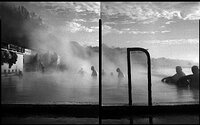
How I learned to stop worrying and love the drying marks...

Three Pears

A
Three Pears

  • sly
  • Mar 17, 2026
  • 0
  • 0
  • 0
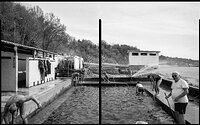
Windows - Valencia

A
Windows - Valencia

  • 0
  • 0
  • 6

Recent Classifieds

Forum statistics

Threads
202,810
Messages
2,845,772
Members
101,542
Latest member
sshhane
Recent bookmarks
0
Almost as effective as course sandpaper or emery paper.

😀 Have you tried it? I scan at ~100mps + and see absolutely no sign of any damage.
Just the most recent shot (HB 500 c/m 50 FLE Portra 400 in Cinestill C-41)
DSCF4252-Edit copy 3.jpg
 
Mainly Cinestill during the supply chain problem, and some Unicolor. Just ordered Rollei, so that I can separate the bleach and the fix.

Maybe that also solves the color problems you seem to be having, although this may be a scanning issue, color developer used past its capacity limits or at lower temperature, or expired film.
 
Maybe that also solves the color problems you seem to be having, although this may be a scanning issue, color developer used past its capacity limits or at lower temperature, or expired film.

Thanks!
I think it's been lower temperatures. I've been lazy keeping developer at 102 after starting the process. Need to re-emerse it in the tank between agitations, I think....
 
Thanks Don. I just went out and bought 3 bottles of Palmolive for the darkroom. I'm afraid to give them to the wife, she might insist that I use it for it's intended purpose. 🤣 I got the sarcasm.

(Joking) Dawn. Any excess you can give to a lithographer for their fountain solution or naturalist to clean seabirds. (Joking)

(Serious) Don’t touch the film any more than necessary. Two fingers is risky. Dead skin cells scratch. Squeegees get old and stiff. Chamois get contaminated and can hold particles. With enough wetting agent, the rinse water will sheet off carrying dust with it. You do not need to squeegee anyway. (Serious)

(Also serious) See-sawing through tank or tray and immediately hanging is good. I don’t like the extra handling between wet and hang that occurs if you try to do final rinse on the reel, then unwind and hang. (Also serious).

(And to answer @Huss) If there’s a ton of foam I would dump and try again. Probably has no real effect but try to keep foam down. It’s not hard to gently mix. Usually there’s a few moderate bubbles clinging to the edge of the tray. They are harmless.
 
Thanks!
I think it's been lower temperatures. I've been lazy keeping developer at 102 after starting the process. Need to re-emerse it in the tank between agitations, I think....

Yes, that could be it. Although I'd expect this severity only with really off-standard processing, like room temperature C41 with extended development times. A small drift shouldn't create such significant color problems, I'd expect. Anyway, as long as it doesn't bother you, there's no real problem of course.
 
" I don’t like the extra handling between wet and hang that occurs if you try to do final rinse on the reel, then unwind and hang. (Also serious)."

Bill, I don't see much extra handling.... i take my reel out of the washer, put it in a developing tank i use only for photo-flo rinse....20 sec... then unspool & hang.
 
One of the most effective in streaking film.

Again, I really don't mean to be an outlier here, but when I soak the squeegee in my wetting agent while developing film and change the squeegee every couple hundred uses, I never ever get a streak on the film. I know others have a very different experience, and am not advocating; just sayin'....
 
Again, I really don't mean to be an outlier here, but when I soak the squeegee in my wetting agent while developing film and change the squeegee every couple hundred uses, I never ever get a streak on the film. I know others have a very different experience, and am not advocating; just sayin'....

I can use a Paterson squeegee, on black and white film that has been processed with a hardener type fixer. I just choose not to.

Ilford has dozens of great videos and how to instructions online, better than any other manufacturer. When in doubt consult Ilford.
 
(Joking) Dawn. Any excess you can give to a lithographer for their fountain solution or naturalist to clean seabirds. (Joking)

(Serious) Don’t touch the film any more than necessary. Two fingers is risky. Dead skin cells scratch. Squeegees get old and stiff. Chamois get contaminated and can hold particles. With enough wetting agent, the rinse water will sheet off carrying dust with it. You do not need to squeegee anyway. (Serious)

(Also serious) See-sawing through tank or tray and immediately hanging is good. I don’t like the extra handling between wet and hang that occurs if you try to do final rinse on the reel, then unwind and hang. (Also serious).

(And to answer @Huss) If there’s a ton of foam I would dump and try again. Probably has no real effect but try to keep foam down. It’s not hard to gently mix. Usually there’s a few moderate bubbles clinging to the edge of the tray. They are harmless.

Very good information here.
 
(And to answer @Huss) If there’s a ton of foam I would dump and try again. Probably has no real effect but try to keep foam down. It’s not hard to gently mix. Usually there’s a few moderate bubbles clinging to the edge of the tray. They are harmless.

I use the foam to gauge whether i’ve mixed it enough. I’m currently going for just a little, but it has made no difference really. Which is why I created this thread to learn to love the drying marks!
 
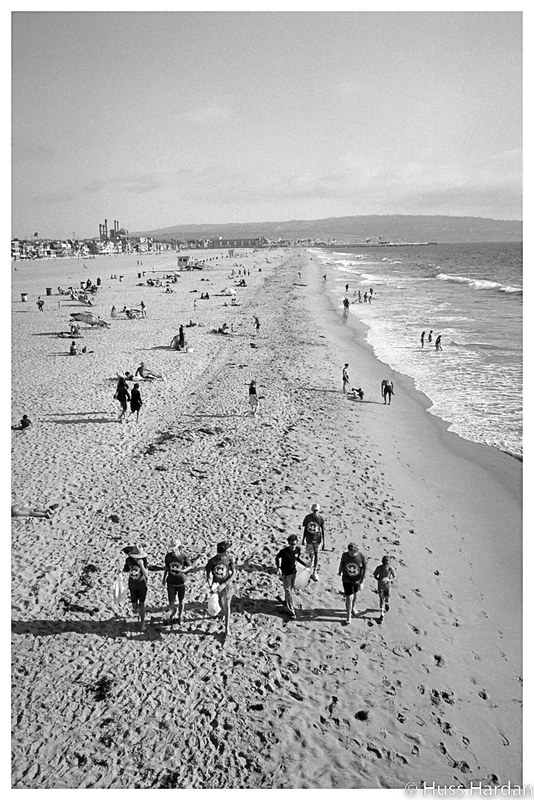
Another roll I just developed, with drying marks all over it that I did not bother to clean off.
Does not show up on the scan. Freedom!

Leica MP, TTA 28 5.6 BP, Arista 100, DF96 Monobath

Clean up volunteers

 
^^^This^^^ is what works for me.

Has anyone ever had the content of the spot analyzed to see what its source is? I figure it’s likely minerals from the water of what ever is in a wetting agent.

After 60 years of experience, I long ago concluded that if you exclude physical damage from mishandling (a major source of problems to emulsions), there are several sources of blems or water spots on dried film:
1. Physical distortion of the emulsion from one side of a line drying quickly and the other side not drying quickly. Source: water drops left on the emulsion. Solution: a final rinse in a wetting agent, like Photoflo. As for Photoflo, I adhere to the idea that Kodak recommends the absolute strongest mix for a working solution, and that it works better if mixed half strength.
2. Foreign deposits contributed by the water of the final rinse. While this can just be bits of crap in unclean water, the more common deposit is dissolved minerals in the final rinse water, i.e., "hard" water, which crystallize on the film surface (either side) as the surface water dries. Solution: Mix the wetting agent in distilled water for a final bath before hanging to dry.
3. Physical damages to wet emulsion after processing. Solution: Do not use an f....ing squeegee.
 
If you use a squeegee, you may get away with no marks for hundreds of films. But sods law states that when you take some of your best ever images, you will trap a particle of microscopic grit and make scratch marks down the whole length of the film. Never ever use a squeegee
 
I've shared this several times before, but once again:

After your normal post-development washing routine, do another rinse of the film with deionised water. Finally, briefly soak the film in a 95:5 mixture of deionised water : high purity (99+%) isopropyl alcohol, then hang to dry (without squeegeeing). If you do this your film will be pristine.
 
I've shared this several times before, but once again:

After your normal post-development washing routine, do another rinse of the film with deionised water. Finally, briefly soak the film in a 95:5 mixture of deionised water : high purity (99+%) isopropyl alcohol, then hang to dry (without squeegeeing). If you do this your film will be pristine.

Amen.
 
You're right Huss. But that never stopped us before!

Such a simple process, but it has driven many of us nuts (nutser). Everyone is different on this too. FWIW, I use Photoflo or Arista wash aid, whichever is handy. My problems were related to drying the film too fast, or too slow. It has to be juuuust right, for me anyway.

Film comes out of the wash and is snapped like a whip a few times to get off excess water. It's tricky w/ 36 exp, but I'm 5'8" and it works. Shower is run for a while on HOT to build up steam in the bathroom w/ the door shut. When sufficiently humid, the film is hung and spritzed w/ distilled water. Door is shut and stays shut for at least an hr.

But, that wasn't enough. I have to remember to crack the door open a little around the 1 hr mark, and look to see how things are going. Not that I could do anything about it at that point, you learn that the hard way. Then finally the film is considered completely dry when every drop is off, but I let it stay hanging for another hour anyway. Then it's cut and sleeved.
 
Film comes out of the wash and is snapped like a whip a few times to get off excess water.

Every time momus posts about this, I can't help but think of DEVO:
 
Photrio.com contains affiliate links to products. We may receive a commission for purchases made through these links.
To read our full affiliate disclosure statement please click Here.

PHOTRIO PARTNERS EQUALLY FUNDING OUR COMMUNITY:



Ilford ADOX Freestyle Photographic Stearman Press Weldon Color Lab Blue Moon Camera & Machine
Top Bottom