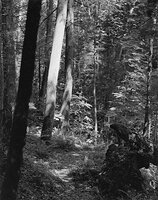
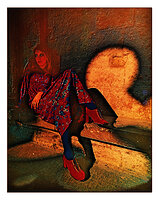
There have been previous discussions about reversal processing of paper and films. My interest in this would be a reversal processed paper 'positive', which would function as a one-of-a-kind original image, from a large format camera.
I was alerted to the availability of a direct positive paper, made by Efke and sold through Freestyle. Here's the blurb from the
Freestyle site:
Product Details:
A totally unique B&W paper product that yields a postive B&W image. Yes, you can use this paper in a large format camera or pinhole camera and shoot original photographs with no negative involved. The possibilities are endless!
Available in medium-weight RC Glossy or Matt paper as well as single-weight (140 gsm) fiber base matt surface paper.
Process in standard B&W paper developer.
Shoot in camera at a speed rating of approximately ISO 1 - 6.
Use under red safelight conditions only!
I'd like to know if anyone here has used this paper, and if so how the image quality fares. There may be some degree of image manipulation possible with various paper developers and dilutions, as well as the possibility of preflashing the paper prior to exposure to improve shadow details. I won't know until I try it, of course. I'm assuming that it's orthochromatic in tonal range, so portraits will look, um, 19th century. Or folks will have to apply powder to their faces!
Also, this paper was listed in Freestyle's site under 'graded papers', but I don't see a paper contrast grade listed. I also visited Efke's site, and this media wasn't listed either. It may be too new for them to have updated their site.
I'm assuming, from the Freestyle blurb, that this product develops in standard paper developer, no bleach or re-exposure necessary.
My interest in this would be in combination with a one-shot developer/fixer, which may permit public portraits be taken, via large format camera, and processed to the rinse stage in a few minutes directly on the spot, by transfer from film holder to a developing tank. With the right equipment I can see doing everything, including a quick rinse and rinse-aid, at the public location. One would need to figure out how to quickly dry the print with minimal surface contamination while outdoors, after which the customer can choose to keep as-is, or re-rinse at home.
With the possible demise of Polaroid materials, this sounds like an interesting alternative process for near-instant images.
~Joe