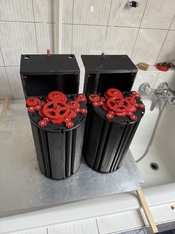
Here’s a quick but substantial update on my
DIY RA4 Durst Printo clone print processor project – an attempt to recreate the functionality of the classic
Durst Printo in a home-buildable form. For those who missed the original post with early concepts and 3D versions, you can find it here:
"RePrinto" A "Modern" Durst Printo clone
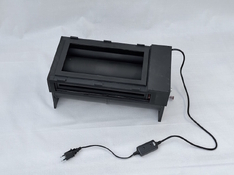
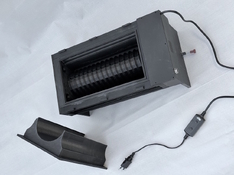
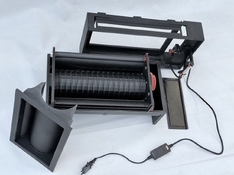
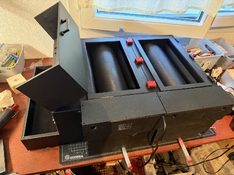
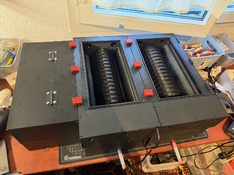
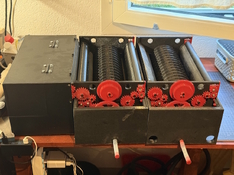
This update is all about the Intro Module, which is now fully built and tested. I'm happy to report that the paper feed-in works flawlessly up to 30.5x40cm/12x16" format – the rollers align perfectly, and the paper tracks cleanly into the system.
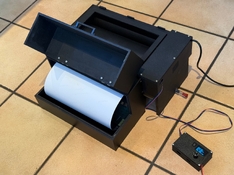
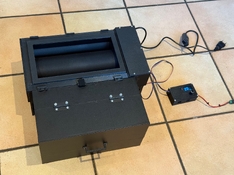
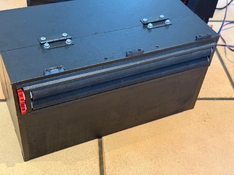
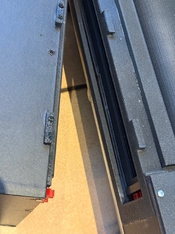
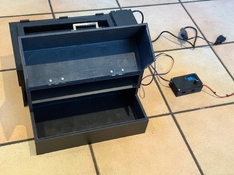
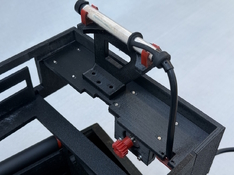
Initially, I designed three PETG 3D-printed versions. Since this part doesn’t come into contact with chemistry, I even considered PLA. But at some point I thought – why 3D print everything? It's mostly flat walls and a light-tight flap.
So I went with a hybrid design using 6 mm plywood for the structural box and 4 mm panels for the overlapping light-trap lips. I laser-cut the parts with a small desktop machine, but they can easily be cut by hand with basic tools. After gluing it together, the frame fit the rollers perfectly. The result is a mainly wood-based module with a few PETG elements.
For finishing, I used matte self-adhesive chalkboard foil, fixed it in place with a medium-heat iron – works great and looks quite elegant. The interior was coated with deep matte black acrylic primer from the art store.
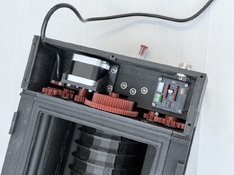
Two hinges later – and it’s done! The only technical issue remaining is gear meshing: the 21-tooth drive gear barely grips the intro roller gear. I’ll likely shift the axle by about 0.5–0.7 mm to improve engagement. For now, I'm using slightly oversized gear teeth as a workaround. As always, some tolerances only show up in the real-world build – no matter how accurate the CAD model.
The PETG version will be shared as well, although I may not print it myself immediately. Basically and kind of light tight box can be build around the intro-rollers frame (this is the interface). Next will be the log lasting printing and assembly of the second module and integration of the fimal control and signal and power interconnectors.... and then first RA-4 prints I hope.