
• Welcome to Photrio!
    Registration is fast and free. Join today to unlock search, see fewer ads, and access all forum features.
    Click here to sign up

Direct carbon on glass process

Recent Classifieds

Forum statistics

Threads
201,996
Messages
2,833,483
Members
101,059
Latest member
Janeijsden
Recent bookmarks
0
OP
OP

AndrewBurns

Member
Joined
Jul 12, 2019
Messages
297
Location
Auckland, New Zealand
Format
Multi Format
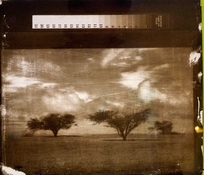
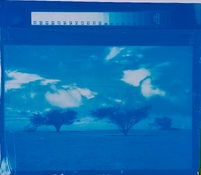
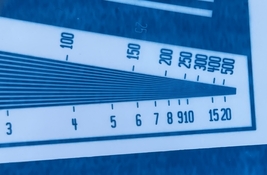
FYI here's two exposure tests, one with cyan pigment and the other magenta. For fun I flipped and stacked the two glass plates so that the gradients overlapped and blended together.

20260128_051543.jpg


The colour plates are pretty vibrant, happy with the results so far. I plan to expose and develop the yellow plate tonight.
 

AntonKL

Member
Allowing Ads
Joined
Jun 23, 2025
Messages
24
Location
Europe
Format
35mm
If you replace acetic acid by tartaric acid, you will have the system Poitevin introduced around 1860.
At a ~ 4 : 1 (ferric chloride : tartaric acid) weight ratio the warm gelatin solution will not coagulate and can be used for coating.
They used to use this as a positive process, by toning the unexposed parts with gallic acid. The exposed parts became more soluble which aids clearing, to amplify this they let the gelatin/ferric/TA mix hydrolyze for a couple days before coating. See e.g. ch. 8 in Die Lichtpausverfahren, die Platinotypie und verschiedene Kopierverfahren ohne Silbersalze (not sure if that link works from outside of Germany).

Perhaps fructose would work - it also forms a light sensitive complex with FeCl3 and its thermolysis products are effective crosslinkers (sadly also effective at staining).
 
Photrio.com contains affiliate links to products. We may receive a commission for purchases made through these links.
To read our full affiliate disclosure statement please click Here.

PHOTRIO PARTNERS EQUALLY FUNDING OUR COMMUNITY:


Ilford ADOX Freestyle Photographic Stearman Press Weldon Color Lab Blue Moon Camera & Machine
Top Bottom