• Welcome to Photrio!
    Registration is fast and free. Join today to unlock search, see fewer ads, and access all forum features.
    Click here to sign up

Developing zones/shadow vs. highlight.

Shadow play

A
Shadow play

  • 5
  • 1
  • 29

Forum statistics

Threads
201,229
Messages
2,820,845
Members
100,601
Latest member
gamlate
Recent bookmarks
1

Corey Fehr

Member
Allowing Ads
Joined
Mar 15, 2017
Messages
108
Location
Wisconsin
Format
35mm
One more big question for the day.

I know the saying "expose for the shadows, develop for the highlights" is quite common. I understand the concept of exposing for the shadows. (Which, correct me if I'm wrong, is metering the shadow (zone IV) then compensating the light down from middle gray (zone V) to ensure the correct exposure.)

I'm a bit confused on the "develop for the highlights", however. I was told by the professor that "if the image has true black, those blacks need to be exposed as true blacks." Maybe I'm not wrapping my head around this, but that seems more like you're "developing for shadows" as well.

Could someone elaborate in basic/moderate terms what developing for the highlights entails, and how what I was told fits into this?

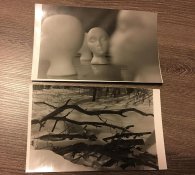
I'm including my VERY FIRST (so go easy) printed images I ever made. (As of a few days ago.) Feel free to critique or use these as examples of what I could change in correlation with this question.
 

Attachments

  • FirstPhotos.jpg
    FirstPhotos.jpg
    113.6 KB · Views: 288

Craig75

Member
Allowing Ads
Joined
May 9, 2016
Messages
1,234
Location
Uk
Format
35mm
is he not referring to printing a "true black" -ie giving enough exposure to the printing paper (as opposed to the negative)

once you have given the exposure to the shadows you require on the negative then they are far more locked in place than the highlights which can be made darker or lighter by changing the development time.

prints look great - killer first go. You will get really good very quickly.
 
OP
OP
Corey Fehr

Corey Fehr

Member
Allowing Ads
Joined
Mar 15, 2017
Messages
108
Location
Wisconsin
Format
35mm
Thanks-that helps a lot since I got a critical critique today.

He used the term "true black", so I think that threw me off.

Could you elaborate what you mean by giving exposures to the shadows on the negative? (So the exposure isn't in reference to the settings on the camera, but the chemical processing?)

I apologize if these are super basic questions, but we were essentially thrown some basic terms and put in the dark room. I want to understand this in more detail.
 

John Wiegerink

Subscriber
Allowing Ads
Joined
May 29, 2009
Messages
3,893
Location
Lake Station, MI
Format
Multi Format
Yes, your prints seem to look good. I say "seem to" because the lighting on your examples isn't even and it makes it hard to judge. The snow scene looks like you hit exposure and development pretty darn close. As for the "develop for the highlights"? If you would have added 20 to 30% more time to your development your brightest snow would have been brighter yet and maybe blown. It means that area in the negative would be much more dense or darker. If you went the other way and gave less development the snow would be darker. Your shadow areas would pretty much remain the same since that is controlled more by exposure.
 

Craig75

Member
Allowing Ads
Joined
May 9, 2016
Messages
1,234
Location
Uk
Format
35mm
Ah ok. It sounds like he is saying to his eye the prints require some nice deep blacks on them to give them some punch / impact. You might be printing them too soft for his eye so try increasing the contrast on your enlarger.
 
OP
OP
Corey Fehr

Corey Fehr

Member
Allowing Ads
Joined
Mar 15, 2017
Messages
108
Location
Wisconsin
Format
35mm
I'll take "seem to" as an ok response to first tries. :smile:

I'm guessing we haven't gotten to this in class as I'm pretty lost...

When someone refers to development time...are they referring to the film development process or the print development process? Is this playing with chemicals and times, or more with the enlarger/chemicals/filters/etc?

Totally new territory for me.

Thanks in advance for everyone's help.
 

John Wiegerink

Subscriber
Allowing Ads
Joined
May 29, 2009
Messages
3,893
Location
Lake Station, MI
Format
Multi Format
I only said "seem to" because it's hard for me to see by the angle of the light shining on the prints and the reflection. Nothing to do with your prints actually.
I was just talking the "film" stage and not the printing stage. You have to get the negative pretty close to right or you won't get both the highlights and shadows to come out the way you want. If you don't get the exposure of the negative as it should and the development right you will likely have either good highlights or good shadows, but not both. Remember, Rome wasn't built in one day, or one week or one year. Patients and reading good reference books in the beginning helped me and I still struggled some. You're on your way and the light bulb will certainly flick on for you.
 

Jim Blomfield

Subscriber
Allowing Ads
Joined
Mar 27, 2006
Messages
50
Location
Waterloo, ON, Canada
Format
Medium Format
Negative development time is what is adjusted, to make sure that your negative contains the best and most complete information you can get from the scene. Print development time remains constant throughout the process as long as you use the same paper.
 

MattKing

Moderator
Moderator
Allowing Ads
Joined
Apr 24, 2005
Messages
54,731
Location
Delta, BC Canada
Format
Medium Format
It is very important to separate discussions about the film and the print, even though the goal is to achieve a negative that results in a good print.
The "expose for the shadows, develop for the highlights" phrase refers strictly to the film part of the equation. But the thing to understand is that when you do that correctly you end up with a negative that is easy to print from - one that will easily result in a print with nice dark shadows, and nice white highlights, and nicely spaced midtones between.
At least that is the goal :smile:.
If you expose the film correctly, there will be satisfactory detail in the shadows, and the density of the highlights will be within a satisfactory range.
Within a fairly wide range, development doesn't have much effect on shadow details in an appropriately exposed negative. But adjusting the development can have a large effect on mid-tone and highlight detail.
You test for correct development by doing prints!
The following ignores one of the most important controls available to a printer - contrast control. It also ignores the wonderful box of techniques and tools available to you as the darkroom printer. For these purposes, assume a middle contrast paper/filter/setting and a properly exposed negative.
If the film development time is too short, and the print is printed with enough exposure to give good dark detailed blacks, the mid-tones and highlights in the print will be too dark and grey, and the "tonality" will seem muddy.
If the film development time is too long, when the print is printed with enough exposure to give good dark detailed blacks, the mid-tones and highlights in the print will be too bright and will lack detail, and the "tonality" will seem hard.
And if the film development is within the right range, when the print is printed with enough exposure to give good dark detailed blacks, the mid-tones and highlights in the print will be appropriately bright with appropriate detail, and the "tonality" will seem pleasing.
 
OP
OP
Corey Fehr

Corey Fehr

Member
Allowing Ads
Joined
Mar 15, 2017
Messages
108
Location
Wisconsin
Format
35mm
Thanks everyone for your input.

So you can actually alter the development process to change the exposure of your film? Or in incredibly basic terms, as I'm not sure I'm using the correct terminology... during the chemical process in which you turn the raw film into negatives, is this where you can make changes to shadows and highlights?

I was only taught one way to do this, perhaps why it seems confusing to me. How do you even go about making those changes?

I just bought a few books on Amazon regarding the zone system and development...hopefully those will help!
 
OP
OP
Corey Fehr

Corey Fehr

Member
Allowing Ads
Joined
Mar 15, 2017
Messages
108
Location
Wisconsin
Format
35mm
So, what if the development process (film) gives you a good detailed black, but the highlights are too dark? How do you change one without the other? Is that dodging and burning?

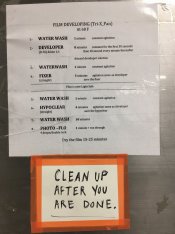
So for example, I was taught this, and only this, as a film processing routine (Tri-X Pan 400 35 mm)

Attached is the photo for the development process. How could one alter that to change the highlights?
 

Attachments

  • FilmDeveloping.JPG
    FilmDeveloping.JPG
    664.9 KB · Views: 155

Leigh B

Member
Allowing Ads
Joined
Jan 17, 2011
Messages
2,059
Location
Maryland, USA
Format
Multi Format
So you can actually alter the development process to change the exposure of your film?
Not exacctly.

You adjust the development time to change the density in the subject highlights.
Changing the development time makes little or no difference in the subject shadow detail.

Take a look at the curves on the last page of this Fuji Acros datasheet: http://www.foto-r3.com/files/acros.pdf

Each chart shows the results of different development times with the specified developer.
As the time increases, the maximum density increases.

- Leigh
 

Peter Schrager

Subscriber
Allowing Ads
Joined
Jul 19, 2004
Messages
4,294
Location
fairfield co
Format
Large Format
Corey there set constants in exposing and developing film. ..you can only change so much
Through exposure and development. .the goal is create the best negative you can so you can print easily without going crazy. .hopefully that's a negative with the full range of black and white...you can deviate in the printing process
Do yourself a BIG favor and buy one of the zone sytem books..my favorite is THE ZONE VI MANUAL BY FRED PICKER. .I promise you if you did the exercises you would know more about exposure and development than 99% of the people who practice photography!
There are other equally good I'm S fan of this one
Have,a great day!
 

MattKing

Moderator
Moderator
Allowing Ads
Joined
Apr 24, 2005
Messages
54,731
Location
Delta, BC Canada
Format
Medium Format
Thanks everyone for your input.

So you can actually alter the development process to change the exposure of your film? Or in incredibly basic terms, as I'm not sure I'm using the correct terminology... during the chemical process in which you turn the raw film into negatives, is this where you can make changes to shadows and highlights?

I was only taught one way to do this, perhaps why it seems confusing to me. How do you even go about making those changes?

I just bought a few books on Amazon regarding the zone system and development...hopefully those will help!

Careful - development doesn't affect exposure (much), because what we think of mostly when we talk about exposure is how the dark parts (the shadows) of the scene are rendered. Given good (shadow) exposure, development affects contrast and highlight rendition - for example how white the snow will appear in your print.

Assuming you are using a particular developer, you change development by changing one of the controlled variables: time, temperature or agitation. The easiest one to control is time.

Be very careful about reading a "few" books, especially if they include the Zone system. One step at a time. The full Zone system is a relatively complex refinement that I think should only be approached after one has a decent basic understanding about exposing and developing film.

Here is a link I find helpful. It concerns assessing negatives for appropriate exposure and development. The rendition on the web isn't perfect, but it gives a decent indication: https://www.ephotozine.com/article/assessing-negatives-4682
 

Michael Wesik

Member
Allowing Ads
Joined
Jan 2, 2015
Messages
65
Location
Vancouver, B
Format
ULarge Format
When I started out in photography five or six years ago I was really lucky to have a few awesome, and super experienced teachers. The way I learned it was that exposure of film controls density and development controls contrast. The best thing to do is just experiment and take lots of notes while you're working your way through way too much info and far too many approaches.

Have fun with it first and foremost...
 

removed account4

Subscriber
Allowing Ads
Joined
Jun 21, 2003
Messages
29,832
Format
Hybrid
hi corey

the best thing in the world ( with film photography at least )
is the bracket your exposures. first of all, without reading a manual
or anything else you should "rate" your film 1 fstop more than the "box speed"
so if it is 400 speed film set your camera at 200, if it is 125 speed film set it at about 70 &c ...
THEN bracket your exposures
so do what your light meter says for example 60th of a second it says f11 expose at f11 ... also at f 16 and f8
( one stop above and 1 stop below ) and process as your school suggests you process your film ..
and print so you have BLACK and white using contrast filters.
the photographs you have uploaded look great !
keep up the good work !
john
 

Lachlan Young

Member
Allowing Ads
Joined
Dec 2, 2005
Messages
5,061
Location
Glasgow
Format
Multi Format
On a negative, exposure controls shadow density & development controls highlight density & the subsequent relationship between the two defines the contrast range of the negative.
 
OP
OP
Corey Fehr

Corey Fehr

Member
Allowing Ads
Joined
Mar 15, 2017
Messages
108
Location
Wisconsin
Format
35mm
hi corey

the best thing in the world ( with film photography at least )
is the bracket your exposures. first of all, without reading a manual
or anything else you should "rate" your film 1 fstop more than the "box speed"
so if it is 400 speed film set your camera at 200, if it is 125 speed film set it at about 70 &c ...
THEN bracket your exposures
so do what your light meter says for example 60th of a second it says f11 expose at f11 ... also at f 16 and f8
( one stop above and 1 stop below ) and process as your school suggests you process your film ..
and print so you have BLACK and white using contrast filters.
the photographs you have uploaded look great !
keep up the good work !
john

Is this a way of not having to recalibrate your exposure on the zone system? (Like metering a shadow, then knocking it down a stop of light)
So setting your ISO down eliminates the need to do this?

And thank you for your kind words. Needed them today.
 

Leigh B

Member
Allowing Ads
Joined
Jan 17, 2011
Messages
2,059
Location
Maryland, USA
Format
Multi Format
...you should "rate" your film 1 fstop more than the "box speed"...
John, recommending any deviation from published specifications to a novice is extremely counter-productive.

Particularly so when you lack the qualifications, budget, and equipment on which to base such deviations.

If those adjustments results in better negatives in your darkroom, it likely results from errors in your process.

- Leigh
 
OP
OP
Corey Fehr

Corey Fehr

Member
Allowing Ads
Joined
Mar 15, 2017
Messages
108
Location
Wisconsin
Format
35mm
So, when one gets to a more advanced point, do you hold up your negatives to the light and make a call based on that? (on how to develop for shadows and highlights?)

I will not be trying this anytime soon. Just curious.
 

Lachlan Young

Member
Allowing Ads
Joined
Dec 2, 2005
Messages
5,061
Location
Glasgow
Format
Multi Format
So, when one gets to a more advanced point, do you hold up your negatives to the light and make a call based on that? (on how to develop for shadows and highlights?)

I will not be trying this anytime soon. Just curious.

Yes - after a lot of experience! Or you can get deep into the weeds of densitometry & sensitometry. Making a potentially expressive negative is relatively easy, judging how to print it comes with experience and aesthetic choice.

There's relatively little 'right' or 'wrong', just negatives that are easy to make prints that say what you want them to say & others that leave you pitching prints in the bin, cursing their inability to express what you want them to.
 

Leigh B

Member
Allowing Ads
Joined
Jan 17, 2011
Messages
2,059
Location
Maryland, USA
Format
Multi Format
Hi Corey,

One simple test that has been suggested is try to reading newsprint through the densest areas of the negative.

Supposedly if you can do so, the exposure and development are about right, and it should print OK.

I've never tried it. Just passing on what I've heard.

- Leigh
 
Photrio.com contains affiliate links to products. We may receive a commission for purchases made through these links.
To read our full affiliate disclosure statement please click Here.

PHOTRIO PARTNERS EQUALLY FUNDING OUR COMMUNITY:


Ilford ADOX Freestyle Photographic Stearman Press Weldon Color Lab Blue Moon Camera & Machine
Top Bottom