
• Welcome to Photrio!
    Registration is fast and free. Join today to unlock search, see fewer ads, and access all forum features.
    Click here to sign up

Developing zones/shadow vs. highlight.

Shadow play

A
Shadow play

  • 5
  • 1
  • 29

Forum statistics

Threads
201,229
Messages
2,820,845
Members
100,601
Latest member
gamlate
Recent bookmarks
1

Craig75

Member
Allowing Ads
Joined
May 9, 2016
Messages
1,234
Location
Uk
Format
35mm
Honestly corey for me id put all the thoughts of negatives to one side for the moment. You have your negative. Thats fixed in place now. The next stage is to get a nice print out of the negative

Your teacher wants your prints to have some deeper blacks on them. I know loads of my prints were just wishywashy and lacked oomph so what he is saying sounds sensible advice. To get some deeper blacks then increase the time of the photo paper under the enlarger until the shadows have some bite. (You might simply not being giving enough time under enlarger). Does it look better now or is it just a muddy mess? If its a muddy mess then increase the contrast on your enlarger. Once you understand how contrast control on the enlarger works you can then play with contrast on the negative. But learn one control at a time until you understand it then move on otherwise you wont know whether you are cpming or going. So work with negative you have in darkroom until you can get nice deep shadows and see if you can hold texture in snow at same time.

Oh and buy ralphs book - its excellent
 

removed account4

Subscriber
Allowing Ads
Joined
Jun 21, 2003
Messages
29,832
Format
Hybrid
That was a little harsh.

This is what we're being taught in my college class, so I technically do have to know them.

We are being tested on them.

hey corey

the 3 rolls bracketed and 3 different developments pretty much will
be like a zone system approach
the zone system is like a sliding scale that is used to enhance different greys on your negative
people suggest answell aadaams invented it but it was around well before he turned it into a household name ( at least by photographer househoolds )
because earlier films didn't have the same amount of "grey zones" panchromatic film has so the users had to figure out how to best
expose their high contrast medium like you would if you shoot paper negatives instead of film ...

bracketing slides what you are having as your "middle grey" over and under development are your +1 and -1 developments
think of at least the exposure in the camera part of it like taking a photograph in the winter time and there is snow all around
your camera says "F11" but you know that it is probably 2 stops off because the snow fools the meter the zone approach
is the same sort of thing ( sort of ) but with normal every day exposing "stuff" you photograph a white birch tree for example, you know that if you expose the film
as the meter tells you, the tree - negative will be grayish and maybe not have much contrast on the film. if you underexpose your negative ( bracketed so you see
what the 3 exposures look like on the film ) and process normally, you will see a thinner (less on there ) a regular looking and a denser ( more info on the film ) negative ...
prints will show more details and less details as well.
if/when you process the same film with extra or less than the middle of the road time ... you will see less and more contrast in addition to less and more information
on the film ... BUT as guillaume said that is just the negative. make contact prints and enlargements so you see what happens when you make prints

a lot of it is lingo, i guess ... with a little practice you will be doing all this stuff 2nd nature/without thinking about it....

don't forget to have fun
john
 
Last edited:

Helinophoto

Member
Joined
Aug 19, 2011
Messages
1,091
Location
Norway
Format
Multi Format
I have a pretty simple approach to this, it sometimes works, sometimes....well, I cock up :smile:

My approach is this:
When taking the photo, everything from zone III and lower will "stick" during your average development, things above VI, can "move" brighter, by extending the development-time.
So, establish what you want to be black and shadows and make sure they are at zone 1-3.

Shadows always form first during development, and then they "stick" (move extremely slowly, or not at all), while the tones from VI and up, will become brighter and brighter (denser and denser on the negative) as you extend your development-time.

This cause an increase in contrast, over time.

Since the shadows hardly move during development, they need to be established during exposure, the highlights can be controlled, normally by developing-time.

I normally don't care much about this when I shoot, since I shoot rollfilm (multiple scenarios on each roll) and I shoot portraits mostly, so the skin-tone is normally placed at zone VI.
If I had shot the whole roll on a sunny day, I will reduce development time slightly, to avoid blowing out the highlights too much, on overcast I do nothing special and I try to get it all together during printing, by using contrast-filters/split-grade.
- During printing, you can control more if you want the tones, set at zone III on the negative, to be true blacks instead of shadows, for example.

Then again, I am no master photographer or printer, but it seems to work pretty well for me most of the time. :smile:
 

Michael Wesik

Member
Allowing Ads
Joined
Jan 2, 2015
Messages
65
Location
Vancouver, B
Format
ULarge Format
Michael:
I don't disagree about the benefits of visualization.
But I do disagree that it makes sense for someone who has just developed her first film and done her first print to immediately start referring to zone system resources.
A much more basic text - Henry Horenstein comes to mind - makes much more sense.
If you can point her (and me) to a resource that emphasizes the benefits of visualization but also deals with the technical requirements with a simplified, roll film approach suitable for near beginners, then please do so.
To me, the zone system can be a great tool for improving and refining one's work, but I don't think it is at all appropriate for someone who is basically new to film and the darkroom.

Sorry, I think you're missing the point. What's so wonderful about forums like this is that you can ask any question, seek out what information you wish. Whether or not you think certain materials are appropriate for a beginner's learning is irrelevant. It's really up to the person asking the questions to determine what is and isn't relevant.

There are also ways to suggest different paths of learning and materials without being arrogant and condescending. There's no need for that kind of tact and delivery, particularly with someone new to this approach to the medium. Telling anyone that they have no business typing the "zone system" is simply inappropriate.

On post #58, Ralph offered a really nice overview of the Zone System. Personally, I didn't find it complicated at all when I was a beginner, but I'll let someone else make that decision for him or herself.
 

MattKing

Moderator
Moderator
Allowing Ads
Joined
Apr 24, 2005
Messages
54,731
Location
Delta, BC Canada
Format
Medium Format
Telling anyone that they have no business typing the "zone system" is simply inappropriate.
I think I see more where you are coming from.
I took Leigh's comment more as a rather stark warning than anything else. But I see now that it could be taken more as an order.
And I would still warn beginners against starting with any of the zone system materials. In fact, I think I have done so in this thread.
 

bdial

Subscriber
Joined
Jan 2, 2005
Messages
7,507
Location
North East U.S.
Format
Multi Format
Another good read by Fred Picker is The Zone VI Workshop. As stated earlier, Picker is far easier to understand than St Ansel. It's a tiny little book, and takes only a day or two to read.
If you have a copy of The Negative, put it away and don't open it until this time next year :smile:
 

Harry Stevens

Member
Allowing Ads
Joined
Dec 18, 2014
Messages
424
Location
East Midland
Format
Multi Format
God I am so glad I just picked up a camera in the 70s and took pictures and didn't bother with all this hogwash....:smile:
 

John Wiegerink

Subscriber
Allowing Ads
Joined
May 29, 2009
Messages
3,893
Location
Lake Station, MI
Format
Multi Format
Another good read by Fred Picker is The Zone VI Workshop. As stated earlier, Picker is far easier to understand than St Ansel. It's a tiny little book, and takes only a day or two to read.
If you have a copy of The Negative, put it away and don't open it until this time next year :smile:
I couldn't agree more!
 

~andi

Member
Allowing Ads
Joined
Mar 11, 2011
Messages
203
Location
here
Format
Multi Format
Welcome to Apug!

Your images look great! I'm with Ralph on this one. Creativity is there, the tech stuff comes with practice. Keep going and don't overthink it. Maybe get a good book with the foundations explained using clear and consistent terminology (Ansel Adams Negative/Print comes to mind or maybe Ralphs book, although some chapters are very technical, you can skip those).

According your curriculum, probably only your school/teacher really knows what is relevant for your exam. If I were you (and I was at a similar position when getting my second degree), I would not take advice from the internet about what to learn/not to learn or to research terms and concepts your teacher might use. They might be entirely different than what your teacher expects. Use the materials your teacher provides (course material, literature lists, etc.) to learn for the test. Use APUG to learn for life :wink:

Cheerio,
~andi
 

removed account4

Subscriber
Allowing Ads
Joined
Jun 21, 2003
Messages
29,832
Format
Hybrid
I would not take advice from the internet about what to learn/not to learn or to research terms and concepts your teacher might use. They might be entirely different than what your teacher expects. Use the materials your teacher provides (course material, literature lists, etc.) to learn for the test. Use APUG to learn for life :wink:

~andi ---
OMG !
forgive me for being blunt, but you have no business typing that whole do not take advice from the internet bit,
i read on the internets that the internets know everything everyone knows that ...
next thing you are going to say is that my phone isn't tracking me by gps, or my TV isn't
sending me transmissions from the mothership ( yes, i am wearing a metal hat ) or that
hamsters don't drive KIAs.
i've seen the interweb articles, and talk shows and TV ads and you tube videos ...

i saw a guy down the street from me driving a toaster the other day too ...\
me? i drive a cardboard box...

:wink:
 
Last edited:

~andi

Member
Allowing Ads
Joined
Mar 11, 2011
Messages
203
Location
here
Format
Multi Format
OMG !
forgive me for being blunt, but you have no business typing that whole do not take advice from the internet bit,
i read on the internets that the internets know everything everyone knows that ...
next thing you are going to say is that my phone isn't tracking me by gps, or my TV isn't
sending me transmissions from the mothership ( yes, i am wearing a metal hat ) or that
hamsters don't drive KIAs.
i've seen the interweb articles, and talk shows and TV ads and you tube videos ...

i saw a guy down the street from me driving a toaster the other day too ...\
me? i drive a cardboard box...

:wink:


jnanian, man, was it really necessary to bust my world in public?
What should I do with my aluminum-hat collection now? :wink:

~andi

--
PS: Did you actually read the whole paragraph I wrote?
 
Last edited:

removed account4

Subscriber
Allowing Ads
Joined
Jun 21, 2003
Messages
29,832
Format
Hybrid
i did, ...
and i agree completely with what you said
i will unfortunately have to keep this dialog short
i am in the middle of a seance ... i'm talking to MAN RAY through my dining room lamp.
i have asked him advice he is quite clear to consult my "8-ball" ..

regarding the tin foil hats .. send them to the us, we could always use more !
 
Last edited:

~andi

Member
Allowing Ads
Joined
Mar 11, 2011
Messages
203
Location
here
Format
Multi Format
Man Ray, send him my regards, haven't seen this ole rascal around for a while now.

I'd gladly send them hats over, but, you know, the contrails thing...
 

removed account4

Subscriber
Allowing Ads
Joined
Jun 21, 2003
Messages
29,832
Format
Hybrid
Man Ray, send him my regards, haven't seen this ole rascal around for a while now.

I'd gladly send them hats over, but, you know, the contrails...

i know, i know those contrails ..
i bought a full bodyshop paint suit with a canister (filter) and mask i have a spare if you need one.
eboink sells this stuff cheep !

ps my canister i got filled at my vapor-ecig store, its vanilla root beer, mmm
 

Bill Burk

Subscriber
Allowing Ads
Joined
Feb 9, 2010
Messages
9,455
Format
4x5 Format
A quick thought back to the prints... shots like the mannequin heads, studio or indoors shots without much difference in light between dark and light can take more time in the D-76 1:1 developer. So if you want to play with something, take a whole roll indoors like that and give it maybe 15 minutes in developer.

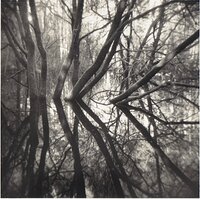
Outdoors lighting is often times more contrasty, like your branches shot... and that film should get the routine times so that the contrast doesn't get too hard to handle.

But those flat shots, soft light, can stand more time in the film developer.
 

Larry the sailor

Member
Allowing Ads
Joined
Feb 3, 2016
Messages
333
Location
NE Oklahoma
Format
Multi Format
Those that have a better grasp of this than I do correct me if I'm off on this or it is too confusing.
From a recent returnee to film after a couple decades away from it and now trying to understand the Zone System myself. I had a little difficulty wrapping my head around the zone systems use of terms till I grasped the need to think negatively. My understanding of the zone system so far is that you are basically manipulating the negative. Looking at a negative the "thin" parts will be the shadows and dark areas on the print, while conversely the darker or denser parts of the negative will be the gray to white areas of the print.
When film is exposed to light it is altered. When film is developed the exposed silver in the emulsion is chemically changed. When the film is "fixed" the silver in the emulsion that wasn't exposed and therefore did not react with the developer is essentially washed away leaving light area that received less exposure(shadows) A black area can be a nearly clear spot on the negative, and dark areas that received more exposure(highlights) When that film is exposed to developer the parts of the film that have received the least light (dark areas/shadows) will be fully developed first, A light or white subject will cause the film to be altered more. When that area is exposed to the developer it takes longer for the chemical reaction to work through all the "altered" emulsion. Because of that we can manipulate the highlights (light toned areas) by changing development time. More development time means more silver in the emulsion is converted by the developer giving light tones, less time means less of the silver is converted giving darker tones.
 

Bill Burk

Subscriber
Allowing Ads
Joined
Feb 9, 2010
Messages
9,455
Format
4x5 Format
Those that have a better grasp of this than I do correct me if I'm off on this or it is too confusing.
From a recent returnee to film after a couple decades away from it and now trying to understand the Zone System myself. I had a little difficulty wrapping my head around the zone systems use of terms till I grasped the need to think negatively. My understanding of the zone system so far is that you are basically manipulating the negative. Looking at a negative the "thin" parts will be the shadows and dark areas on the print, while conversely the darker or denser parts of the negative will be the gray to white areas of the print.
When film is exposed to light it is altered. When film is developed the exposed silver in the emulsion is chemically changed. When the film is "fixed" the silver in the emulsion that wasn't exposed and therefore did not react with the developer is essentially washed away leaving light area that received less exposure(shadows) A black area can be a nearly clear spot on the negative, and dark areas that received more exposure(highlights)

Yes, you write this is as clearly as it can be written...


. When that area is exposed to the developer it takes longer for the chemical reaction to work through all the "altered" emulsion. Because of that we can manipulate the highlights (light toned areas) by changing development time. More development time means more silver in the emulsion is converted by the developer giving light tones, less time means less of the silver is converted giving darker tones.

This part of your thoughts could be more clear...

I like to think that the shadows get as far as they are ever going to get in the first few minutes and no amount of developing is going to make them gain any more density.. But the highlights, because they are so ready to be developed, will get darker and darker with more developing time as the developer reaches more of the exposed grains.
 
Photrio.com contains affiliate links to products. We may receive a commission for purchases made through these links.
To read our full affiliate disclosure statement please click Here.

PHOTRIO PARTNERS EQUALLY FUNDING OUR COMMUNITY:


Ilford ADOX Freestyle Photographic Stearman Press Weldon Color Lab Blue Moon Camera & Machine
Top Bottom
