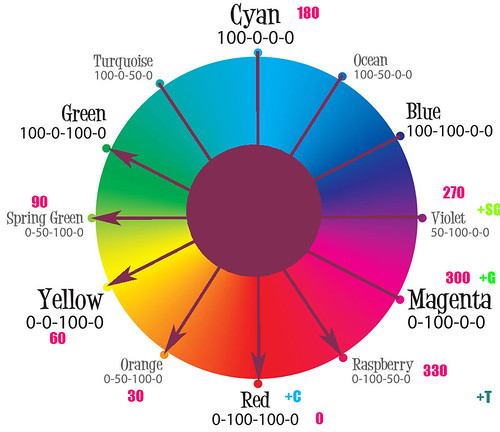
That looks very nicely engineered for a one-off product, Joachim! Too bad it doesn't live up to its purpose. Yes, you need a *lot* of red in comparison to green and blue. If you also want to do variable contrast, I would recommend also increasing green, as with variable contrast emulsions, it turns out you need quite a lot of green in comparison with blue. For my next build I will therefore seriously consider the 2:2:1 (R:G:B) ratio I mentioned before. For color work, 2:1:1 would be a good start, although 3:1:1 is perhaps even closer to what you need, but then you may have to start capping the output of the red channel in some situations.
The other problem is that you have very limited range of intensity control at green and blue.
If all colors go from 0-200 for example, the maximum value for blue will be around 20. 20 steps is not enough to do a proper color filtration.
So intensity of R, G and B LEDs has to be pre-calibrated to for example 100%R 20%G and 10%B.
After this, electronic control can be 0-200 for each.
Yes, that general line of argumentation is about right. To make matters more complicated, a linear attenuation does not really approximate a true dichroic filter head; you're looking for a more exponential change between settings. So 200 steps of attenuation will actually require many more steps in software or electronics - or you'd have to 'hardwire' the desired exponential curve by means of discrete electronics, which is inflexible and unnecessarily complicated IMO.
To overcome all this, I did the following:
1: Use twice as many red lights as blue and green, so that 'automatically' already gives a 2:1:1 ratio without further measures.
2: I use a 12-bit PWM controller instead of relying on e.g. an Arduino's in-built 8-bit PWM. This gives me 4096 distinct power levels to play with, and that conveniently allows something like 300 brightness steps with exponential curves to be used, in which a single unit change in any of the channels still works out as a distinct light level. See the curve plots I posted before; in my software, they are translated into a range of 0-4095 that is written to the PWM controller.
3: The 2:1:1 ratio of the leds requires some further finetuning (quite a bit in fact), or in other words, blue and green need to be further capped. Empirically I reached an approximation, which turns out to be a maximum level of 4095 for red, 3689 for green and 2514 for blue. In other words, actual electrical power driving each of the channels is only 45% of the red power for green and just 30.7% for blue in comparison with red.
The story above is yet further complicated by the actual efficiency or luminous output per watt of each of the leds. For this, I could find no really good data, which has a few causes:
1: The leds I used like I said before don't come with any datasheet and only a few key parameters for use (max current, voltage drop range, peak wavelength and total lumens output).
2: While the total output in lumens is provided for these leds, the lumen range is non-linear and based on the sensitivity of the human eye. In other words, the same number of blue lumens is not the same absolute photon flux as the same number of green lumens, etc.
So lumens seem at first glance a nice approximation of output power, but when you think about how they are defined and how that relates to the sensitivity of paper (which evidently is completely different from the sensitivity of the human eye), lumens become nearly useless as a power measure.
For all intents and purposes, I therefore conclude that we're pretty much limited to experimentation and some rough estimations.
One way of trying to establish a neutral white output for the led head, i.e. R, G and B levels that correspond fairly well to a halogen light source in a regular enlarger, was to use the white balance of a digital camera for this purpose. Essentially I just shot a digital picture of a grey baseboard under a regular enlarger (halogen light source without any filtration) and then tuned the R, G and B channels on the led head until they produced a similar color temperature as 'measured' by the digital camera. This turned out to be a *very* rough approximation indeed, as it throws the sensitivity of a digital camera sensor (R, G and B...) into the mix of complexity and it proved to be impossible to get exactly matching results. However, it got me close enough - but never close enough to achieve perfect translation of filter values from a dichroic head to the led head. That wasn't so important to me, but initially I did try that, but evidently, was not successful in that respect.
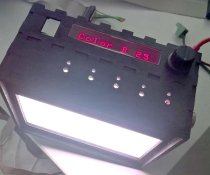
If in your next try you are aiming for 40+10+10W I bet you would be very close or right on the money for enlarging up to 6x9cm. It may depend a bit on the light path after the leds. In my setup, I use the Durst 138 unmodified; I put the leds in an approx. 10x10x10cm enclosure with one open end (simplified a bit; there's also a fan on another side and ventilation slots on the opposing side to run cool air across the surface of the leds) and the open end holds a milky white plexiglass diffuser. That sits right in the place where the 138 normally has its heat filter installed, and after that it's just an unmodified condenser setup. I use the 240 condenser in the top position and the 200 for 4x5, the 130 for 6x6cm and either the 130 or the 85 for 35mm. So the top condenser is never changed, as opposed to when an old-style bulb is used as a light source. This way I get a lot more overall light at the same size print for larger film formats than for smaller film formats, but even with 35mm it's workable.
Exposure times are around 4.5 seconds for a 12x18cm print from 35mm negative at f/8 (Nikkor 75/4, 240+85 condenser). This is at something like 120W of nominal led power (in reality for a given print, actual consumed power will be probably something like 40-50W due to attenuation of blue and green). Your exposure time of ~1 minute for a 2x enlargement of 6x9cm at 20W nominal led power isn't all too far off from this, so sounds about right. You just want some more power for this. I based my 'somewhere around 100W' estimate also on the 250-1000W incandescent sources that are usual for the Durst 138, figuring that 100W of led power should get me pretty close (or even better) to the light level of a 300-400W halogen light source.




 cmyk-HSB
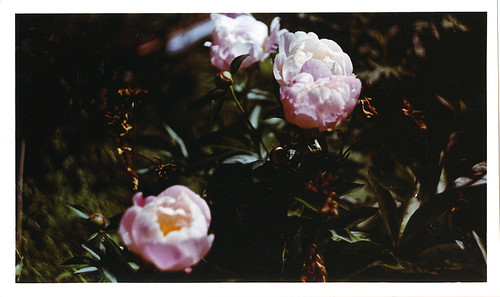 Gold 200 on Endura print 2

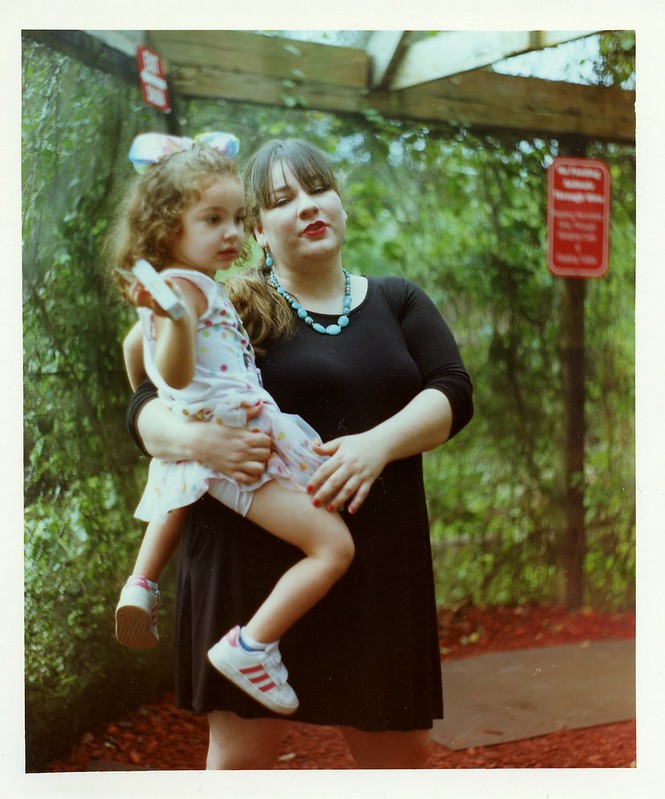 Monkey Jungle
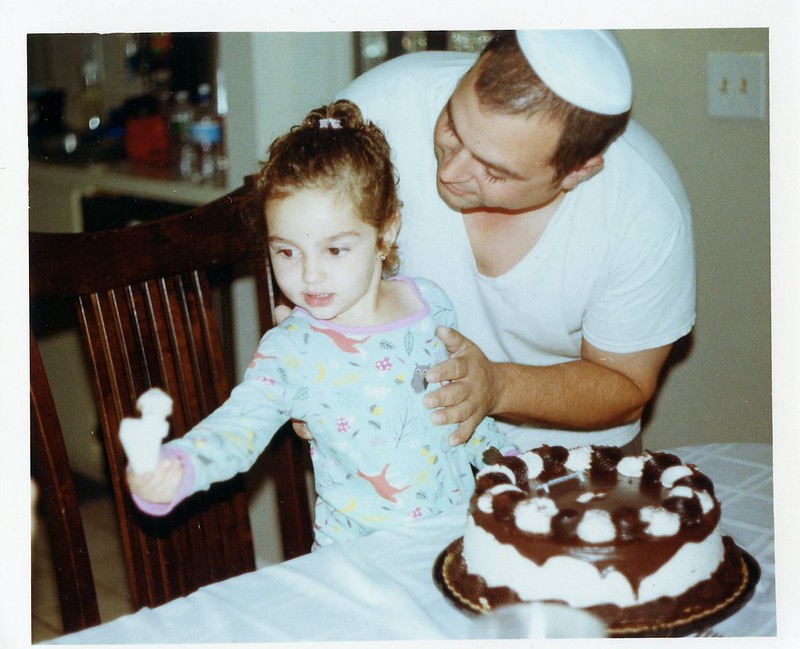 Birthday
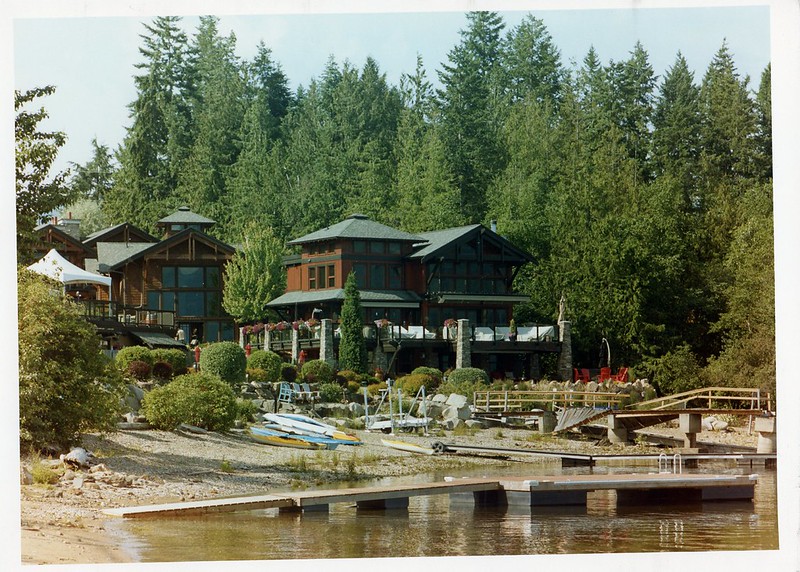 Blind Bay
