

• Welcome to Photrio!
    Registration is fast and free. Join today to unlock search, see fewer ads, and access all forum features.
    Click here to sign up

Chemical containers?

Moment of Spin

A
Moment of Spin

  • 0
  • 0
  • 24
Bad patch

H
Bad patch

  • 1
  • 0
  • 23

Recent Classifieds

Forum statistics

Threads
203,099
Messages
2,849,804
Members
101,666
Latest member
Historicalscans
Recent bookmarks
0

OptiKen

Member
Allowing Ads
Joined
Oct 31, 2013
Messages
1,054
Location
Orange County
Format
Medium Format
Dead Link Removed

Air vac. - collapsable - food grade - ????

I'm tempted to give them a try....haven't decided yet.
 
They look like Polyethylene, which is not your best choice for some developers. Nothing beats amber glass bottles.
 
The permeability of Polyethylene stands against the advantage of lack of air in the container.

Alternatives would be stiff impermeable container filled-up either with protective gas or solid volume substitue.
Or collapsible containers (bellows) from impermeable material (metallized Polyester foil).
 
I've had good results with plastic soft drink bottles with T-Max film and print developer, even with a lot of air left in the bottle.
 
Nalgene bottles contain a fluoropolymer that improves chemical resistance. That is one of the better plastic container alternatives
 
PET plastic bottles provide an excellent air/oxygen barrier. They are used as soda and seltzer bottles; they keep oxygen out to protect chemicals as well keeping carbonation in when used as soda bottles. I use 1-liter plain seltzer bottles (2 liter bottles are also available). Other features are they can be squeezed to a large degree to remove air from headspace, have strong caps, and are basically free. Because they are clear, they need to be stored in the dark (or a plastic tote, which you want to do anyway to contain any spills or leaks).
 
Do some of you use this kind of storage tank with a floating lid ? http://www.bhphotovideo.com/c/produ..._2FLC_Complete_Storage_Tank.html/prm/alsVwDtl
How does it compare with collapsible bottles ? I am thinking to buy 3 of those for developer/acetic acid/fixer for the ease of use compared to the collapsible bottles but I'm concerned with how much faster the chemicals will get spoiled by air contact even though there is a floating lid. Thanks for sharing your experience.
 
8 Liters of developer? You might shorten the tank in height.
 
Floating lid storage tanks are common for commercial settings, but probably not practical for most home dark rooms. In a commercial or shared darkroom setting that 2 gallons would be used within a few weeks if not a few days. The floating lid does limit it's exposure to the air, but it's not air-tight and over a few months the developer would still go bad.

If you are using a lot of chemistry then they are very convenient. You place them so you can get a graduate under the spout, dispense what you need to fill your 20x24 :wink: tray and go for it.
 
Do some of you use this kind of storage tank with a floating lid ? http://www.bhphotovideo.com/c/produ..._2FLC_Complete_Storage_Tank.html/prm/alsVwDtl
How does it compare with collapsible bottles ? I am thinking to buy 3 of those for developer/acetic acid/fixer for the ease of use compared to the collapsible bottles but I'm concerned with how much faster the chemicals will get spoiled by air contact even though there is a floating lid. Thanks for sharing your experience.

I use similar container for Xtol stock solution. I can prepare the 5 l directly in the container. (I’m using then diluted Xtol as one shot.) The Xtol keeps well in there for 4-5 months. I think the floating lit would not be very convenient if you pour back the solution.

For stop and fix I’m using 1l glass bottles.

Keep in mind that those containers are relatively big and you need some space to store them.
 
Floating lid storage tanks are common for commercial settings, but probably not practical for most home dark rooms. In a commercial or shared darkroom setting that 2 gallons would be used within a few weeks if not a few days. The floating lid does limit it's exposure to the air, but it's not air-tight and over a few months the developer would still go bad.

If you are using a lot of chemistry then they are very convenient. You place them so you can get a graduate under the spout, dispense what you need to fill your 20x24 :wink: tray and go for it.
Our university darkroom uses this approach for fix and hypo clear. Pouring chems back in is not an issue as the lids float, even when full. I expect the 2-gallon version would still work in a home darkroom for most everything except most developers.
 
Thanks everybody !
Steve, do you say it would work for everything except most developers because developers are more sensitive to air (I would use these containers only for stock and not working solutions) ?
Philippe
 
For several years now have been using the 2-gallon Arkay for storing Dektol and Xtol stock solutions without a problem. Recently I used the remaining 300mL of Xtol that was mixed more than 7 months previously without any problem. Usually, though, I use the developers within a 6-month period although on occasion I have went as long as 6 months and never had a problem. TIP: Mixing Xtol with distilled water will keep the developer clear but I never had a problem with tap water. Due to the mixing temperature, I use tap water for Dektol.

Thomas
 
Our local college has been using those Two Gallon, with spigot, B & H type storage containers for a few years. They seem to work quite well.
In the scheme of things, 50 bux is a pretty good deal for something that will probably last several years.?

I am still getting my darkroom together, but i have been using everything from the empty One Gallon, distilled water bottles to..... Amber Glass Jugs/Bottles that i buy from these people.
http://www.specialtybottle.com/
 
The best storage unit I ever came across was from a guy on FADU who used an empty wine box. When the bag is empty, simply remove the tap with a blunt knife and wash out the bag. Pour in the developer, replace the tap and you can even reverse the box to mark the developer you are using on the outside (no confusion with wine in case of temptation to drink it). Hey presto - you then have a dispenser for your developer with a spring loaded tap and one that collapses as you use it, thus minimal oxidation. The best bit is you have to drink the wine before you can use the bag.
 
The best storage unit I ever came across was from a guy on FADU who used an empty wine box. When the bag is empty, simply remove the tap with a blunt knife and wash out the bag. Pour in the developer, replace the tap and you can even reverse the box to mark the developer you are using on the outside (no confusion with wine in case of temptation to drink it). Hey presto - you then have a dispenser for your developer with a spring loaded tap and one that collapses as you use it, thus minimal oxidation. The best bit is you have to drink the wine before you can use the bag.
Those bags were a good option, but they may not be as good anymore.
They used to be mylar, and were therefor relatively impervious to oxygen. Now, however, they tend to be a type of plastic that is relatively porous to oxygen, so don't fulfill the task nearly as well.
There are still mylar versions out there, but you have to check.
 
Those bags were a good option, but they may not be as good anymore.
They used to be mylar, and were therefor relatively impervious to oxygen. Now, however, they tend to be a type of plastic that is relatively porous to oxygen, so don't fulfill the task nearly as well.
There are still mylar versions out there, but you have to check.

Matt, I am surprised by this as wine goes off if exposed to air.
 
Matt, I am surprised by this as wine goes off if exposed to air.
The ever-marching hobnail boots of capitalism will crush any useful quality out of a product until it is cheaper than possible and has none of the properties which made the original useful.
That's when someone steps in with a boutique, artisan crafted mylar bag with mustache graphic at twice the cost of the original.

Pretty sure that hobby brewer supply places still have good wine bag kits and you don't have to drink or dispose of wine to use them. I'm considering this for my next Xtol mixing session.
 
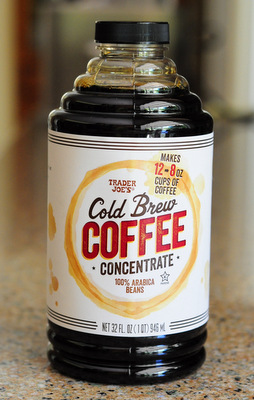
I found the Trader Joe's cold brewed coffee containers are perfect for metal developing tanks. When completely full they hold exactly enough to fill an empty tank (4 - 35mm reels). When you put 4 empty reels the water level is flush with the top so the bottle holds just enough that as long as its up to the neck, you get full reel coverage. ( They hold just a smidge under a liter)
DSC3768.jpg


This is the same container:
http://www.freundcontainer.com/32oz-clear-pet-stepped-bottles/p/36232-B/

For some reason Trader Joe's stopped selling the coffee with lids that have the P/E foam liners...stupid! Anyway, I was able to find lids at different companies:
http://www.freundcontainer.com/white-polypropylene-flat-plastic-caps-f217-foam-lined/p/X38-400/
or
http://www.bottlestore.com/caps-and...bbed-side-matte-top-plastic-ct-cap-f217.html?

The lids are 38-400 sized and also fit Datainer Gallon sized containers. The lid is large enough for a funnel to sit stable and the bottle shape is good for pouring into the developing tanks.

I just bought a bag of 100 of the lids for $19 shipped. My 8 Datainer's lids had warped and had no seals so this was a decent deal. The Freund sore has three colors but charges $13 shipping.
 
Last edited:
I am giving mason jars a try this year. They have good plastic lids available now, and the wide mouths making filling a roll film developing tank easy; fast dumping of working solution, back into the jars, very easy. Mason Jars come in a number of sizes, so you can store larger quantities among several smaller jars, topped off and ready to go, when needed. Best of all, they rock for saving dry chemicals, bought in bulk. The two part metal lids seal great and the jars can be spray/brush coated by opaque rubberized products, like plastic dip, which helps hold back pieces of broken glass, etc, when broken.
Of course, you can just do as I have and place blackout curtain backing over your chem. storage shelves and boxes, to protect clear glass jars.
 
I am giving mason jars a try this year. They have good plastic lids available now, and the wide mouths making filling a roll film developing tank easy; fast dumping of working solution, back into the jars, very easy. Mason Jars come in a number of sizes, so you can store larger quantities among several smaller jars, topped off and ready to go, when needed. Best of all, they rock for saving dry chemicals, bought in bulk. The two part metal lids seal great and the jars can be spray/brush coated by opaque rubberized products, like plastic dip, which helps hold back pieces of broken glass, etc, when broken.
Of course, you can just do as I have and place blackout curtain backing over your chem. storage shelves and boxes, to protect clear glass jars.
 
Amber glass bottles can be efficiently cleaned and you can see if there is crud on the bottom . I worry far more about clean than breakage. A walk matt on the floor will save your feet and protect a bottle which I have never dropped.

My mixing containers are stainless beakers, 1 and 4 liters, and developers are decanted to one time use size bottles so there are never any air problems. If one broke, no big deal.

I spent decades becoming proficient at spotting prints. Once I got the glass bottles + water and air filters and made a hospital clean darkroom, all those issues went away.
 
Photrio.com contains affiliate links to products. We may receive a commission for purchases made through these links.
To read our full affiliate disclosure statement please click Here.

PHOTRIO PARTNERS EQUALLY FUNDING OUR COMMUNITY:



Ilford ADOX Freestyle Photographic Stearman Press Weldon Color Lab Blue Moon Camera & Machine
Top Bottom