
Hi all:
I have acquired a new camera (RZ67) and am beginning the process of getting used to the camera, calibrating and finding my new 'system' of working. Before, I used a pretty loose system, as my shooting was often roving portraiture, spontaneous, and I was using roll film where not every exposure was finely controlled: I shot my black and white film about 2/3 stop "slower" than the manufacturer's rating, and came to find a developing time that gave a negative that preserved all the values, especially the highlights, and I used dilute developers with "semi-stand" development. Anyway, it was a fail proof method to wander the city at night, or day, or go to Madagascar or Uganda or wherever and always have a negative that I could print well.
I'm looking for a bit more control now, for most of my work anyway, and my image priorities have changed. 20 years ago when I was starting, I was obsessed with grain. Then for a long time, I was after the sharpest images I could, using Rodinal and then Dixactol with Ilford Delta films. My Semi-stand development then would give edge effects furthering this end. I still want a very sharp image, but my priority now is tonality, then sharpness, with grain at 3rd place and really only objectionable if it's quite large. I'm now after the more subjective, nuanced aspects of the image. For more control and image "dimentionality" I've decided to switch to FP4 and HP5 and have been experimenting with WD2D+. I've very much liked what I've seen with FP4 especially. A very 'liquid' look that I love.
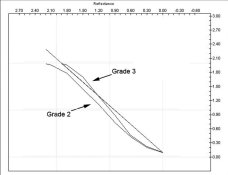
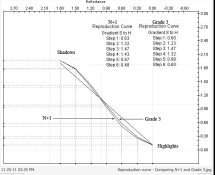
Part of my current intention is to really know my materials much more and exercise tighter control, as I now make plenty of work that isn't found portraiture. I've taken up use of a spot meter and have started identifying and placing zones when I shoot. For the first time I intend to go through and calibrate my methods to the zone system. For the first time, I'll know the real working speed of my film as I use it! I'm testing the workflow with my previously informally-used Rodinal, Dixactol and WD2D+, but will likely settle on one of the staining developers. Anyway, to finally get to my question, is there a difference in final tonality or otherwise if I calibrate my workflow to a paper grade of 3 instead of 2? Would I somehow miss out on what the film can offer, as I'm thus using less of the full scale that it can deliver? Any other drawbacks?
The reason I am pursuing a grade 3 pipeline is that there will still be times when I will go away on a 3rd world adventure and cannot control every exposure as well as I normally could, and want to have some safety built into the softer negative. However, with the same system I would like continuity with what I otherwise produce. I print with Ansco 130 and so one thought is to split some of the difference with tweaking the formula: less hydroquinone and perhaps more metal and glycin, effectively calibrating to a grade 2.5 or 2.75.
Thanks!
Jarin
I have acquired a new camera (RZ67) and am beginning the process of getting used to the camera, calibrating and finding my new 'system' of working. Before, I used a pretty loose system, as my shooting was often roving portraiture, spontaneous, and I was using roll film where not every exposure was finely controlled: I shot my black and white film about 2/3 stop "slower" than the manufacturer's rating, and came to find a developing time that gave a negative that preserved all the values, especially the highlights, and I used dilute developers with "semi-stand" development. Anyway, it was a fail proof method to wander the city at night, or day, or go to Madagascar or Uganda or wherever and always have a negative that I could print well.
I'm looking for a bit more control now, for most of my work anyway, and my image priorities have changed. 20 years ago when I was starting, I was obsessed with grain. Then for a long time, I was after the sharpest images I could, using Rodinal and then Dixactol with Ilford Delta films. My Semi-stand development then would give edge effects furthering this end. I still want a very sharp image, but my priority now is tonality, then sharpness, with grain at 3rd place and really only objectionable if it's quite large. I'm now after the more subjective, nuanced aspects of the image. For more control and image "dimentionality" I've decided to switch to FP4 and HP5 and have been experimenting with WD2D+. I've very much liked what I've seen with FP4 especially. A very 'liquid' look that I love.
Part of my current intention is to really know my materials much more and exercise tighter control, as I now make plenty of work that isn't found portraiture. I've taken up use of a spot meter and have started identifying and placing zones when I shoot. For the first time I intend to go through and calibrate my methods to the zone system. For the first time, I'll know the real working speed of my film as I use it! I'm testing the workflow with my previously informally-used Rodinal, Dixactol and WD2D+, but will likely settle on one of the staining developers. Anyway, to finally get to my question, is there a difference in final tonality or otherwise if I calibrate my workflow to a paper grade of 3 instead of 2? Would I somehow miss out on what the film can offer, as I'm thus using less of the full scale that it can deliver? Any other drawbacks?
The reason I am pursuing a grade 3 pipeline is that there will still be times when I will go away on a 3rd world adventure and cannot control every exposure as well as I normally could, and want to have some safety built into the softer negative. However, with the same system I would like continuity with what I otherwise produce. I print with Ansco 130 and so one thought is to split some of the difference with tweaking the formula: less hydroquinone and perhaps more metal and glycin, effectively calibrating to a grade 2.5 or 2.75.
Thanks!
Jarin