
• Welcome to Photrio!
    Registration is fast and free. Join today to unlock search, see fewer ads, and access all forum features.
    Click here to sign up

Artefacts of bromide drag?

Flooded woodland

Flooded woodland

  • 4
  • 0
  • 20
Babylon

D
Babylon

  • 2
  • 1
  • 41

Recent Classifieds

Forum statistics

Threads
202,833
Messages
2,846,186
Members
101,555
Latest member
MartinWild
Recent bookmarks
0

Elmarc

Member
Allowing Ads
Joined
Feb 23, 2022
Messages
221
Location
Eu
Format
Analog
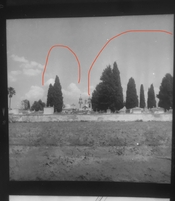
Hello all, I have recently been experiencing some uneven development in the form of streaking which seems to bleed from lower density areas into the higher density ones.
Is this a consequence of bromide drag?
Nothing has changed in my processing regime (including chemicals - DDX/Water stop/Rapid fix).
I have always used a manual rotary tank with consistent results.
Any thoughts, help or advice would be much appreciated.
I have attached examples from two contact sheets.
 

Attachments

  • 8BD04A34-3045-4DB8-96FF-5107F0722E6B.jpeg
    8BD04A34-3045-4DB8-96FF-5107F0722E6B.jpeg
    518.4 KB · Views: 576
  • 95769436-F5A7-4E49-841D-68E510262D93.jpeg
    95769436-F5A7-4E49-841D-68E510262D93.jpeg
    599.1 KB · Views: 228
I have had this problem with Paterson tanks where I have used stick to agitate. C41 or BW, when I've used stick (single direction or back and forth) it creates these streaks. Try to do inversion to see if that helps.

Others might have more ideas
 
Just to be clear, what do you mean by a manual rotary tank?

Apologies if I was not clear regarding the tank. I was referring to the Rondinax/Lab Box type tanks.
As an addition, I was wondering if my pouring times could have been slower than usual in these two instances or that the constant agitation was not as consistent as usual. I don't often take photos with sky so I'm also wondering if I am inviting these type of artefacts with such a scene that would not normally show up otherwise.
 
Which film?
It definitely does look like bromide drag. I've gotten that from extended rest times between agitation cycles, from 5 min or longer (semi-stand/stand development especially).
 
Which film?
It definitely does look like bromide drag. I've gotten that from extended rest times between agitation cycles, from 5 min or longer (semi-stand/stand development especially).
The first example is HP5 and the second FP4.
My tank requires constant agitation so the developer is always moving.
The streaking seems to be happening when there is a pointed subject (eg: a tree) against an area of high density. In this case the sky.
 
I have completely given up daylight tank processing of any kind. I process everything in open tanks in the dark. For sheet films I use Kodak Development Hangers #6 which have the absolutely minimal contact possible with the film. For roll films, I only use Nikor stainless steel type reels.

I came to this approach because I do a fair bit of high dilution/low agitation development (semistand and EMA) and this just begs for bromide drag and other development nasties. After a lot of testing, I concluded that framed hangers, plastic reels and daylight tanks with small volumes were the enemy.
 
The first example is HP5 and the second FP4.
My tank requires constant agitation so the developer is always moving.
The streaking seems to be happening when there is a pointed subject (eg: a tree) against an area of high density. In this case the sky.

Actually, I just realised that you are showing us the positives. The drag marks are lighter. Bromide drag marks should be darker in the positive (clear in the negative). Maybe the marks are due to excessive agitation, in one direction. When I do constant agitation, it is when I use BTZS tubes. The tubes spin in the water bath, but the bobble, making the developer flow kind of randomly. In your case, it would be similar to using a swivel stick in a Paterson tank. Can you agitate more gently/slowly?
 
The first example is HP5 and the second FP4.
My tank requires constant agitation so the developer is always moving.
The streaking seems to be happening when there is a pointed subject (eg: a tree) against an area of high density. In this case the sky.

Based on what you have said about your process, the answer is a resounding NO. It has nothing to do with your process

So what can I say that is as definite about the cause. Nothing unfortunately. All I would say is that I hope in order to collectively solve your problem that we avoid going down unproductive routes such as your pouring is a little slow or your developer temperature was 0.2 degrees too cool for your development time and get tied up in unproductive arguments about pouring and temperature etc

pentaxuser
 
Here is a frame (again with sky) from the same HP5 contact sheet which does not exhibit the same problem. It seems that the streaking always emanates from a pointed (for want of a better word) object of lower density.
Yes Andrew, you are correct re bromide drag would equal darker in the positive. So if bromide drag is not the cause then what is?
 

Attachments

  • B337A07B-4DD0-4256-9A0B-72C4B36FFB63.jpeg
    B337A07B-4DD0-4256-9A0B-72C4B36FFB63.jpeg
    1.6 MB · Views: 127
Based on what you have said about your process, the answer is a resounding NO. It has nothing to do with your process

So what can I say that is as definite about the cause. Nothing unfortunately. All I would say is that I hope in order to collectively solve your problem that we avoid going down unproductive routes such as your pouring is a little slow or your developer temperature was 0.2 degrees too cool for your development time and get tied up in unproductive arguments about pouring and temperature etc

pentaxuser

I'm hoping that someone here has experienced the same problem and was able to resolve it. My process is by no means sloppy and results have always been consistent until these anomalies occurred.
The streaking that is literally shooting out from the trees but nowhere else is puzzling.
 
To aid in discussion - copies from the scan posted by the OP, then inverted and re-sized for uploading. For what it is worth, this is the best way to display this sort of problem:
1692032936948.png
 
To aid in discussion - copies from the scan posted by the OP, then inverted and re-sized for uploading. For what it is worth, this is the best way to display this sort of problem:
View attachment 346592
Noted. Thank you.
I could take photos of the negs on a light table should it be of more help.
 
Last edited:
Here is a frame (again with sky) from the same HP5 contact sheet which does not exhibit the same problem. It seems that the streaking always emanates from a pointed (for want of a better word) object of lower density.
Yes Andrew, you are correct re bromide drag would equal darker in the positive. So if bromide drag is not the cause then what is?

I gotta say that this just screams "uneven development" or developer trapping where old developer cannot get replaced with new during agitation. Other thoughts:

Are you presoaking the film prior to development?

Have you recently changed to a new batch of developer or an entirely new developer?

Does this happen with all films or just HP5+ and FP4+?

How closely do you match temps from dev to stop to fix? Is the dev temp close to the nominal 68F?
 
One question is how the marks are oriented in relation to the length of the film strip. Are they always the same direction? You could try developing the film up in relation to the tank and then another roll down. By down, I mean that the lettering on the rebate would be upside down in the tank.
 
Are you presoaking the film prior to development?

No.

Have you recently changed to a new batch of developer or an entirely new developer?

No. I have standardised with DDX for many years
Does this happen with all films or just HP5+ and FP4+?

These are the only films I use.
How closely do you match temps from dev to stop to fix? Is the dev temp close to the nominal 68F?
Within +/- 1 degree
 
One question is how the marks are oriented in relation to the length of the film strip. Are they always the same direction? You could try developing the film up in relation to the tank and then another roll down. By down, I mean that the lettering on the rebate would be upside down in the tank.

I have only experienced vertical marks as shown in the examples.
I don't think it is possible to change the orientation of the film with this particular tank.
 
In these uncertain situations, I would just start changing variables and see if one makes a difference. Change cameras, change the kind of film. If possible, change the tank and developer. Take film to a lab to develop. To avoid wasting good rolls, you could shoot test rolls of the type of contrasty subjects that tend to produce the artifacts.
 
The Lab Box looks like it cannot be inverted or even tipped much to the side and the internal spool is 90 degrees rotated from a typical hand processing tank like a Peterson; is this correct?

Do you rock it from side to side or do you wind it/rotate it in place?

How do you agitate?

If you only rotate it, you might try adding an occasional "left-right wagging" motion to the Lab Box to break-up any laminar flow within the box itself.

I'll hazard a guess and say these negatives were on the outermost wind of the reel; do you remember?

Directional effects are not confined to bromide drag. If you have a strip of film running through an otherwise still tank of developer, the liquid can develop hot and weak zones of developer strength without agitation to displace or move them around depending on the density or lack of density being developed below. You see this a lot in early continuous development processors for motion pictures until they devised turbulation or impingement bars that sprayed developer directly on the surface of the emulsion, breaking up any zones of strong or weak developer in the solution.

Think of these as very broad "Mackie Lines"...
 
Last edited:
I have only experienced vertical marks as shown in the examples.
I don't think it is possible to change the orientation of the film with this particular tank.

Oh right, because you feed the film into the tank in the daylight. There might be a way to send the film through it the other orientation, but could be a hassle. If I understand correctly, with this tank, the film spool is in a vertical direction. So when a film frame reaches the bottom of the spool it is in a horizontal position with respect to the ground. This is interesting because gravity would not cause materials to sink from the top of the frame to the bottom.
 
And this problem never happened before?

No. That is why I am a little loathe to start changing my routine as Bluechromis suggested. I have followed the same process for many years without problems.
 
The Lab Box looks like it cannot be inverted or even tipped much to the side and the internal spool is 90 degrees rotated from a typical hand processing tank like a Peterson; is this correct?

Do you rock it from side to side or do you wind it/rotate it in place?

How do you agitate?

The tank is actually a Rondinax which iin principle is the same as the Lab box. The spool sits vertically in the tank. Agitation is constant by hand. No tipping/rocking etc
 
No. That is why I am a little loathe to start changing my routine as Bluechromis suggested. I have followed the same process for many years without problems.

As someone suggested, shoot some test rolls in another camera and also take a rolls shot with this camera and have it processed elsewhere to try and find the offending variable.
 
I have experienced pouring marks with steel and plastic tanks and the aberrations always ran parallel to the length of the film. Because film in the Lab Box is oriented the other way, if there were pouring marks they could go in the direction of your examples. Pouring marks might be a long shot, but at least it is something to rule out. I found that presoaking mitigated pouring marks. I assume you could do a presoaking cycle with the Labbox to see if it made any difference.
 
Photrio.com contains affiliate links to products. We may receive a commission for purchases made through these links.
To read our full affiliate disclosure statement please click Here.

PHOTRIO PARTNERS EQUALLY FUNDING OUR COMMUNITY:


Ilford ADOX Freestyle Photographic Stearman Press Weldon Color Lab Blue Moon Camera & Machine
Top Bottom