

• Welcome to Photrio!
    Registration is fast and free. Join today to unlock search, see fewer ads, and access all forum features.
    Click here to sign up

Calibrating Kodak 400TX with HC-110 advice needed

Beach walkers

A
Beach walkers

  • 1
  • 0
  • 51
Romy

A
Romy

  • 3
  • 1
  • 57

Forum statistics

Threads
204,412
Messages
2,868,168
Members
102,255
Latest member
brianalog
Recent bookmarks
0

robonfilm

Member
Joined
Jul 10, 2024
Messages
78
Location
Italy
Format
Analog
Hello everyone,

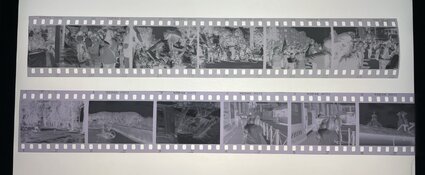
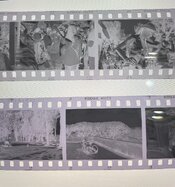
I am currently trying to calibrate my development times for Kodak Tri-X 400 in HC-110 at 20°C, but I am hitting a bit of a paradox between the two test strips I recently developed. I've attached the images of both negatives to this post.

Looking at the rebate markings, it is clear to me that one strip is significantly underdeveloped and the other is possibly overdeveloped.

Here are the details of my process:

  • Top Strip: Developed using Dilution E for 8m at 20°C. The rebate markings are very faint and greyish, and the overall negative lacks density and shadow detail.
  • Bottom Strip: Developed using Dilution E for 9m 45s minutes at 20°C. The rebate markings are completely black, and the highlights are extremely dense and hard to pierce during scanning or printing.
I am aware of the widespread consensus that Kodak's official published time for the new 400TX in Dilution B (3.75 minutes) is notoriously short. Because of this, I wanted to move to a higher dilution like Dilution E to get more manageable and controllable times.

Part of my confusion stems from contradictory information found on the well-known Covington Innovations HC-110 resource page. He explicitly states that most photographers recommend about 6 to 7 minutes for the old Tri-X in Dilution B and the new one is only a few percent shorter than that one, however, in his own data table, he lists 6.5 minutes for Dilution E.

Theoretically, if a proper Dilution B time should be around 6 to 6.5 minutes, Dilution E (being 1.5x more dilute) should require around 9 to 9.5 minutes. This aligns with why my 8 minute attempt turned out so thin.

Given these results, I would love to get your insights on two things:
  1. Based on the attached negatives, what specific development time would you recommend I try next in order to hit the sweet spot?
  2. What are your personal go-to times and dilutions when developing the new Tri-X 400 in HC-110 (especially if you use Dilution E)?
Thanks in advance!
 

Attachments

  • IMG_1034 - dimensioni grandi.jpeg
    IMG_1034 - dimensioni grandi.jpeg
    158.2 KB · Views: 66
  • IMG_1036 - dimensioni grandi.jpeg
    IMG_1036 - dimensioni grandi.jpeg
    420.4 KB · Views: 62
Last edited:
To get more shadow detail over expose a half a stop or so. In terms of development, do they look good when printed on grade 2 paper or lower?
 
To get more shadow detail over expose a half a stop or so. In terms of development, do they look good when printed on grade 2 paper or lower?

To be honest, I only made a couple of quick test strips under the enlarger using and neither printed well.

The top bottom is so dense that by the time I give the paper enough exposure to get any detail in the brighter areas, the shadows just go black and lose all texture.

The top negative prints rather flat and muddy, the shadows lack any depth, and the whole print just looks washed out, with low range.
 
Edge prints are not generally reliable indicators of development, as different films may have experienced very different latency environments.
I'd only look to them as a relative indicator if both films came from the same emulsion batch and were shipped and stored in the same conditions, for the same time.
 
Use a lower EI. About 250 is recommended by most users who measure their results carefully.

Depends on metering approach and how you weigh different components in the imaging chain.
If you are a Zone System devotee, and use Zone system criteria for your negatives, the 2/3 of the stop change has already been built into your approach.
 
Depends on metering approach and how you weigh different components in the imaging chain.
If you are a Zone System devotee, and use Zone system criteria for your negatives, the 2/3 of the stop change has already been built into your approach.

It has nothing to do with the zone system. The ISO speeds for B&W films are measured with a flawed system. In 1960, ASA speed numbers were doubled because it was believed negatives were too dense. The problem was that negative development recommendations (which were based on negatives that were ideal for contact prints from large roll-film negatives) were too long for the 35mm film cameras that were becoming popular after WWII. Also, many of those cameras were leaf-shutter types, which tend too over-expose when used at small apertures. Also, many of those leaf-shutter cameras had a top speed of 1/300sec at best. So, when the faster 35mm films came out in the 1950s (Tri-X and others) the negatives were being too heavily exposed and developed to make good enlargements. These negatives would have been fine in 616 size, when drug stores did the processing and contact printing. My relatives had many such photos from the 1940s, taken with those old folding cameras. Unfortunately, right around 1960, many 35mm focal-plane shutter cameras became popular; Zeiss Contarex,

Leica Ms, Pentax, Nikon, and others flooded the market. Using the new higher numbers leads to underexposure with focal-plane shutter cameras. Period. I rate my 400 ISO films at 250, and it has nothing to do with the zone system. If you are using a leaf-shutter camera, you may use the higher numbers successfully. The Zeiss Contaflex was a very popular leaf-shutter interchangeable-lens camera. I sold them, so I should know! So, go back to the old numbers for ISO!!!!!

 
The current film speed system accurately measures the sensitivity of film. The change in the ASA specification that happened almost 2/3 of a century ago removed a safety factor that was no longer appropriate or necessary due to the improvements in film and camera technology.
Some users were resistant to the change. And a very few continue to resist that change.
The vast majority, including the photographic industry as a whole, have used the current system more than satisfactorily since then.
 
The current film speed system accurately measures the sensitivity of film. The change in the ASA specification that happened almost 2/3 of a century ago removed a safety factor that was no longer appropriate or necessary due to the improvements in film and camera technology.
Some users were resistant to the change. And a very few continue to resist that change.
The vast majority, including the photographic industry as a whole, have used the current system more than satisfactorily since then.

It measures the sensitivity of the film, but the numbers are too high to give the best results with focal-plane shutter cameras! Try it yourself! Get an incident light meter, measure the light on a nice sunny day. Then make a series of exposures on a tripod, using a focal-plane shutter camera. You will find that the exposure of one stop more will give the best prints. Everyone who tries this will find the same results.

A Contaflex (leaf shutter) set to 1/125 @ f/16 will give more exposure than a Contarex (focal-plane shutter) at the same settings. That was the problem! When the change was made, it was based on the conditions of the past decade or so, when leaf shutters were far more numerous than focal-plane shutters, but the shift to focal-plane shutter cameras had already begun.

Read this:


1781052502400.png


1781052431137.png
 
Last edited:
It measures the sensitivity of the film, but the numbers are too high to give the best results with focal-plane shutter cameras! Try it yourself! Get an incident light meter, measure the light on a nice sunny day. Then make a series of exposures on a tripod, using a focal-plane shutter camera. You will find that the exposure of one stop more will give the best prints. Everyone who tries this will find the same results.

Not everyone :smile:.
Certainly not me.
 
All sorts.
But at least 2/3 are 35mm and 120 cameras with focal plane shutters.
And most importantly, with a "focus" (pun intended) on mid-tone and highlight rendition - the parts of the image that most viewers react most strongly to.
That is what the print viewing tests concentrate on, because that is what human beings are most attuned to.
And it is that which the ISO standards are based upon.
In my experience, a lot of old style photographers pay a lot more attention to how shadows render. They are well served in that endeavour by adding extra exposure.
 
A Contaflex (leaf shutter) set to 1/125 @ f/16 will give more exposure than a Contarex (focal-plane shutter) at the same settings. That was the problem! When the change was made, it was based on the conditions of the past decade or so, when leaf shutters were far more numerous than focal-plane shutters, but the shift to focal-plane shutter cameras had already begun.

Read this:
There goes another AI-generated urban legend, combining piles of misinformation from the past! Please take the time and check the sources used by AI, it's old forum-threads ripped out of context like e.g. pre WWII large-format lenses. It's really shocking how knowledge disintegrates in plain sight through the uninformed use of AI.

But you should at least read and understand your own references as even the AI clearly states that shutter efficiency is not a relevant effect at the 1/125th from your own example above.

Furthermore, it is a well established phenomenon with little practical relevance for ambient-light photography, neither at the time nor today as practical engineering compensated for it in most cameras: Industry standards like german DIN defined that the manufacturers had to. One really must assume engineers of the past to be kind of stupid not have come to a practical solution to this obvious problem and it wasn't to mess up the standards for the sensitivity of film and making it depend on the type of shutter used for the exposure instead of fixing it at the source.

The whole matter breaks down to one sentence: The actual time indicated on a leaf-shutter takes into account its efficieny.

The photographer will never notice its actual efficiency in a well calibrated camera which certainly doesn't apply for everything made before WWII or as found on ebay. And I have been working with different leaf-shutter cameras and sytems for decades and never noticed it. With flash it can be a completely different matter when burning-times in studio-flashes are longer and the (in)efficiency cuts of part of the light emitted. But this again is all in the literature but most of it not available online and hence largely ignored by AI.

To get back on topic: The whole matter of personal preference to deviate from the ISO standard which many of us tend to do has nothing to do with the efficiency-problems of leaf-shutters. Some of us like more better shadow-contrast or increased color-saturation from their negatives: Personal preference to deviate from the technical standard.
 
Last edited:
Looking at the rebate markings, it is clear to me that one strip is significantly underdeveloped and the other is possibly overdeveloped.

Please don't use edge markings as a quantitative, densitometric indicator, they were not designed for this purpose. The density of those marks varies wildly across- and even within- batch not to mention across film stock and brand. @MattKing in post #4 is bang on.

Given these results, I would love to get your insights on two things:
  1. Based on the attached negatives, what specific development time would you recommend I try next in order to hit the sweet spot?
  2. What are your personal go-to times and dilutions when developing the new Tri-X 400 in HC-110 (especially if you use Dilution E)?
Thanks in advance!

Given your negatives, I would say your issue is erratic exposure, especially in the bottom strip, where frames 1,2,4,5 are arguably underexposed, and frame 3 is overexposed. How are you metering?
 
I’m not sure we can really with the information provided. I’m also unsure if this is for printing or for scanning; if it’s scanning they look fine. Test strips usually refers to darkroom printing.

If you want a specific time / ISO to shoot these at you need to do further testing with a reference image. Shoot a colour chart (or similar) after metering with something you trust and bracket a series of exposures.

If you’re unhappy with the contrast of that strip with the default development times you’ll have to repeat it and alter one variable in it until you’re happy with the results.
 
Thanks to everyone that responded.

I forgot to mention that the difference in base color is likely due to the lack of a pre-bath on the bottom strip. I also thought rebate markings were a good indicator of correct development. These rolls were bought together, shared the same storage conditions, and were shot just a few weeks apart from each other.

if it’s scanning they look fine. Test strips usually refers to darkroom printing.
I do both: I scan the whole roll first, then I usually do a contact print in the darkroom and decide from there what to actually print with the enlarger.

How are you metering?
As for metering, I can't really vouch for the exposures I made. Most of these were taken out on the street with no light meter, just metered by eye.

Since there was a sub-discussion about down-rating the film, I would still love to know: for those of you who actually shoot 400TX at box speed (400 ISO), what are your personal go-to times and dilutions with HC-110 to get a balanced negative? I might start from there.
 
As suggested earlier in this thread, I’d do some additional testing to find your personal film speed and preferred development time for Tri-X 400. When I did this I found the film speed that worked best for my way of metering and overall workflow was 200. I develop it using HC-110 dilution H (1:63) for 9 mins at 68°F, but YMMV.
 
As suggested earlier in this thread, I’d do some additional testing to find your personal film speed and preferred development time for Tri-X 400. When I did this I found the film speed that worked best for my way of metering and overall workflow was 200. I develop it using HC-110 dilution H (1:63) for 9 mins at 68°F, but YMMV.

👍 as always, excellent advice!
 
Since there was a sub-discussion about down-rating the film, I would still love to know: for those of you who actually shoot 400TX at box speed (400 ISO), what are your personal go-to times and dilutions with HC-110 to get a balanced negative? I might start from there.

Exposure Index choices that people throw around as absolutes are really more an indication of their metering habits, average scene contrast preferences and their idea of acceptable shadow detail levels, and in the case of HC-110/ Ilfotech HC, their impact on curve shape with some emulsions, where they can upsweep the curve somewhat (i.e. make the highlights relatively denser), unlike D-76/ ID-11.

From recall, Ilfotech HC at 1+47 claims to need around 9m for many 400 speed films, probably for around ISO (0.6) contrast.
 
Last edited:
There goes another AI-generated urban legend, combining piles of misinformation from the past! Please take the time and check the sources used by AI, it's old forum-threads ripped out of context like e.g. pre WWII large-format lenses. It's really shocking how knowledge disintegrates in plain sight through the uninformed use of AI.

But you should at least read and understand your own references as even the AI clearly states that shutter efficiency is not a relevant effect at the 1/125th from your own example above.

Furthermore, it is a well established phenomenon with little practical relevance for ambient-light photography, neither at the time nor today as practical engineering compensated for it in most cameras: Industry standards like german DIN defined that the manufacturers had to. One really must assume engineers of the past to be kind of stupid not have come to a practical solution to this obvious problem and it wasn't to mess up the standards for the sensitivity of film and making it depend on the type of shutter used for the exposure instead of fixing it at the source.

The whole matter breaks down to one sentence: The actual time indicated on a leaf-shutter takes into account its efficieny.

The photographer will never notice its actual efficiency in a well calibrated camera which certainly doesn't apply for everything made before WWII or as found on ebay. And I have been working with different leaf-shutter cameras and sytems for decades and never noticed it. With flash it can be a completely different matter when burning-times in studio-flashes are longer and the (in)efficiency cuts of part of the light emitted. But this again is all in the literature but most of it not available online and hence largely ignored by AI.

To get back on topic: The whole matter of personal preference to deviate from the ISO standard which many of us tend to do has nothing to do with the efficiency-problems of leaf-shutters. Some of us like more better shadow-contrast or increased color-saturation from their negatives: Personal preference to deviate from the technical standard.

Look, I am 76 years old. I was interested in photography from a young age. I learned a little about these things growing up (from my father), and learned more as I went along. My relatives used the old folding roll-film cameras, and I saw the contact prints from them. 35mm cameras didn't become popular until after WWII, and the vast majority of those were leaf-shutter models until about 1960. I have a Popular Photo magazine from January 1956, and it is full of ads for inexpensive 35mm cameras, from Argus, Konica, Minolta, and East Germany. These were almost all leaf-shutter models. I would wager that at least 90% of the cameras in use at that time were leaf-shutter models with top shutter speeds of 1/300 at best. Remember that Tri-X was introduced in 1954, at ASA 200, and this threw everything off. Those who used fast films in bright sun were forced to use very small apertures, and this is where the trouble with overexposure with fast films occurs. Films made in the 1930s and 40s were much slower. Everything was fine, but when faster films were introduced, and when they were developed by photofinishing services, they tended to follow their old practices, resulting in overly dense negatives. I know, because I have the negatives my father took on his honeymoon in New York City in 1948, with his Argus C3. Those negatives are quite dense, not close to ideal.
It is a fact that a Contarex will give less exposure at f/16 and 1/300 sec than a Contaflex.

Now do you understand?
 
Last edited:
Look, I am 76 years old. I was interested in photography from a young age. I learned a little about these things growing up (from my father), and learned more as I went along. My relatives used the old folding roll-film cameras, and I saw the contact prints from them. 35mm cameras didn't become popular until after WWII, and the vast majority of those were leaf-shutter models until about 1960. I have a Popular Photo magazine from January 1956, and it is full of ads for inexpensive 35mm cameras, from Argus, Konica, Minolta, and East Germany. These were almost all leaf-shutter models. I would wager that at least 90% of the cameras in use at that time were leaf-shutter models with top shutter speeds of 1/300 at best. Remember that Tri-X was introduced in 1954, at ASA 200, and this threw everything off. Those who used fast films in bright sun were forced to use very small apertures, and this is where the trouble with overexposure with fast films occurs. Films made in the 1930s and 40s were much slower. Everything was fine, but when faster films were introduced, and when they were developed by photofinishing services, they tended to follow their old practices, resulting in overly dense negatives. I know, because I have the negatives my father took on his honeymoon in New York City in 1948, with his Argus C3. Those negatives are quite dense, not close to ideal.
It is a fact that a Contarex will give less exposure at f/16 and 1/300 sec than a Contaflex.

Now do you understand?

Yes, the Contaflex leaf shutter design is such that the shutter is opening, then reaches max opening size and then has to close back down. , which makes the timing slightly different for each aperture, but most folks just get used to how their leaf shutter works and never really notice or care about the slight little difference.
 
Yes, the Contaflex leaf shutter design is such that the shutter is opening, then reaches max opening size and then has to close back down. , which makes the timing slightly different for each aperture, but most folks just get used to how their leaf shutter works and never really notice or care about the slight little difference.

And of course, this has nothing to do with how to set the film speed on any meter we use, unless the particular camera we are using requires a systematic offset from a norm.
 
And of course, this has nothing to do with how to set the film speed on any meter we use, unless the particular camera we are using requires a systematic offset from a norm.

Yes, it does. Assume we are using a 35mm camera with a focal-plane shutter.

If your goal is good prints, make a series of exposures bracketing the one recommended by an incident meter. Then make prints, and select the negative that makes the best print (with good shadow detail). You will likely find that the negative that received slightly more than the "metered" exposure will give the best print. In general, I think we can say that there will be less deviation from reciprocity with a focal-plane shutter camera. All I am saying is that the change made in 1960 causes slight underexposure with focal-plane shutter cameras. Hardly anyone knows this.

Interesting anecdote: I remember my father berating my mother one time when we had company over because when she dropped off the film (35mm) from their honeymoon, she didn't specify enlargements. They returned contact prints! That's how I know that photo-finishers treated the 35mm films the same way as they had treated the larger roll films.

Take a look here. This will show you the prevalence of leaf-shutter cameras:
 
Last edited:
Photrio.com contains affiliate links to products. We may receive a commission for purchases made through these links.
To read our full affiliate disclosure statement please click Here.

PHOTRIO PARTNERS EQUALLY FUNDING OUR COMMUNITY:


Ilford ADOX Freestyle Photographic Stearman Press Weldon Color Lab Blue Moon Camera & Machine
Top Bottom