

• Welcome to Photrio!
    Registration is fast and free. Join today to unlock search, see fewer ads, and access all forum features.
    Click here to sign up

Calibrating Kodak 400TX with HC-110 advice needed

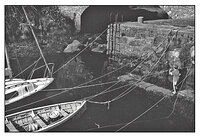
Boy and boats

A
Boy and boats

  • 2
  • 0
  • 48
sunset.jpg

A
sunset.jpg

  • 0
  • 0
  • 33

Recent Classifieds

Forum statistics

Threads
204,376
Messages
2,867,678
Members
102,240
Latest member
baronvonsmootj
Recent bookmarks
1

robonfilm

Member
Joined
Jul 10, 2024
Messages
77
Location
Italy
Format
Analog
Hello everyone,

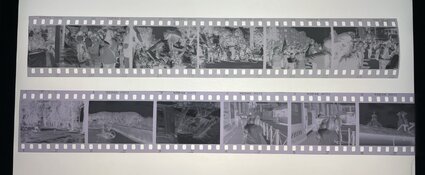
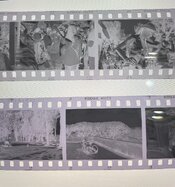
I am currently trying to calibrate my development times for Kodak Tri-X 400 in HC-110 at 20°C, but I am hitting a bit of a paradox between the two test strips I recently developed. I've attached the images of both negatives to this post.

Looking at the rebate markings, it is clear to me that one strip is significantly underdeveloped and the other is possibly overdeveloped.

Here are the details of my process:

  • Top Strip: Developed using Dilution E for 8m at 20°C. The rebate markings are very faint and greyish, and the overall negative lacks density and shadow detail.
  • Bottom Strip: Developed using Dilution E for 9m 45s minutes at 20°C. The rebate markings are completely black, and the highlights are extremely dense and hard to pierce during scanning or printing.
I am aware of the widespread consensus that Kodak's official published time for the new 400TX in Dilution B (3.75 minutes) is notoriously short. Because of this, I wanted to move to a higher dilution like Dilution E to get more manageable and controllable times.

Part of my confusion stems from contradictory information found on the well-known Covington Innovations HC-110 resource page. He explicitly states that most photographers recommend about 6 to 7 minutes for the old Tri-X in Dilution B and the new one is only a few percent shorter than that one, however, in his own data table, he lists 6.5 minutes for Dilution E.

Theoretically, if a proper Dilution B time should be around 6 to 6.5 minutes, Dilution E (being 1.5x more dilute) should require around 9 to 9.5 minutes. This aligns with why my 8 minute attempt turned out so thin.

Given these results, I would love to get your insights on two things:
  1. Based on the attached negatives, what specific development time would you recommend I try next in order to hit the sweet spot?
  2. What are your personal go-to times and dilutions when developing the new Tri-X 400 in HC-110 (especially if you use Dilution E)?
Thanks in advance!
 

Attachments

  • IMG_1034 - dimensioni grandi.jpeg
    IMG_1034 - dimensioni grandi.jpeg
    158.2 KB · Views: 24
  • IMG_1036 - dimensioni grandi.jpeg
    IMG_1036 - dimensioni grandi.jpeg
    420.4 KB · Views: 22
Last edited:
To get more shadow detail over expose a half a stop or so. In terms of development, do they look good when printed on grade 2 paper or lower?
 
To get more shadow detail over expose a half a stop or so. In terms of development, do they look good when printed on grade 2 paper or lower?

To be honest, I only made a couple of quick test strips under the enlarger using and neither printed well.

The top bottom is so dense that by the time I give the paper enough exposure to get any detail in the brighter areas, the shadows just go black and lose all texture.

The top negative prints rather flat and muddy, the shadows lack any depth, and the whole print just looks washed out, with low range.
 
Edge prints are not generally reliable indicators of development, as different films may have experienced very different latency environments.
I'd only look to them as a relative indicator if both films came from the same emulsion batch and were shipped and stored in the same conditions, for the same time.
 
Use a lower EI. About 250 is recommended by most users who measure their results carefully.

Depends on metering approach and how you weigh different components in the imaging chain.
If you are a Zone System devotee, and use Zone system criteria for your negatives, the 2/3 of the stop change has already been built into your approach.
 
Depends on metering approach and how you weigh different components in the imaging chain.
If you are a Zone System devotee, and use Zone system criteria for your negatives, the 2/3 of the stop change has already been built into your approach.

It has nothing to do with the zone system. The ISO speeds for B&W films are measured with a flawed system. In 1960, ASA speed numbers were doubled because it was believed negatives were too dense. The problem was that negative development recommendations (which were based on negatives that were ideal for contact prints from large roll-film negatives) were too long for the 35mm film cameras that were becoming popular after WWII. Also, many of those cameras were leaf-shutter types, which tend too over-expose when used at small apertures. Also, many of those leaf-shutter cameras had a top speed of 1/300sec at best. So, when the faster 35mm films came out in the 1950s (Tri-X and others) the negatives were being too heavily exposed and developed to make good enlargements. These negatives would have been fine in 616 size, when drug stores did the processing and contact printing. My relatives had many such photos from the 1940s, taken with those old folding cameras. Unfortunately, right around 1960, many 35mm focal-plane shutter cameras became popular; Zeiss Contarex,

Leica Ms, Pentax, Nikon, and others flooded the market. Using the new higher numbers leads to underexposure with focal-plane shutter cameras. Period. I rate my 400 ISO films at 250, and it has nothing to do with the zone system. If you are using a leaf-shutter camera, you may use the higher numbers successfully. The Zeiss Contaflex was a very popular leaf-shutter interchangeable-lens camera. I sold them, so I should know! So, go back to the old numbers for ISO!!!!!

 
The current film speed system accurately measures the sensitivity of film. The change in the ASA specification that happened almost 2/3 of a century ago removed a safety factor that was no longer appropriate or necessary due to the improvements in film and camera technology.
Some users were resistant to the change. And a very few continue to resist that change.
The vast majority, including the photographic industry as a whole, have used the current system more than satisfactorily since then.
 
Photrio.com contains affiliate links to products. We may receive a commission for purchases made through these links.
To read our full affiliate disclosure statement please click Here.

PHOTRIO PARTNERS EQUALLY FUNDING OUR COMMUNITY:


Ilford ADOX Freestyle Photographic Stearman Press Weldon Color Lab Blue Moon Camera & Machine
Top Bottom