
I think a big thing I've learned as a result of this post is that in a low contrast scene I probably should raise contrast, because it will be easier to manage while printing. I think coming from smaller formats, I would have done it earlier were it not from fears that N+ development would raise grain.
-
Welcome to Photrio!Registration is fast and free. Join today to unlock search, see fewer ads, and access all forum features.Click here to sign up
You are using an out of date browser. It may not display this or other websites correctly.
You should upgrade or use an alternative browser.
You should upgrade or use an alternative browser.
Zone System Testing
-
A
- Thread starter peoplemerge
- Start date
Recent Classifieds
-
For Sale (NOS) Fuji Slide Processing Mailers
- Started by UsedFilmCameras
-
Want to Buy Arca swiss plate for Mamiya RZ67
- Started by blee1996
-
For Sale Hi-Con IR film
- Started by MCB18
-
Want to Buy Hasselblad tripod quick release plate... level
- Started by eli griggs
-
For Sale Fotodiox Pronto AF adapter
- Started by OAPOli
Forum statistics
-

- markbarendt
- Deleted
- Reason: Dupe

Well, there's more than one way to skin a cat.I think a big thing I've learned as a result of this post is that in a low contrast scene I probably should raise contrast, because it will be easier to manage while printing. I think coming from smaller formats, I would have done it earlier were it not from fears that N+ development would raise grain.
The alternative to raising film contrast, N+; is raising paper contrast, using a harder paper grade. +1 on film has roughly the same effect as going from grade 2 paper to grade 3.
For me adjusting the paper grade is easier.
+1 on film has roughly the same effect as going from grade 2 paper to grade 3.
For me adjusting the paper grade is easier.
Surely there must be trade-offs to this approach; would an engineer say that would lower the signal-to-noise ratio? I'd like to learn conceptually what they are so I can study and identify them in my work. For example using grade 3 vs +1 film mean less grain at the cost of ... what, acutance?
Sorry for calling you Shirley.

Surely there must be trade-offs to this approach; would an engineer say that would lower the signal-to-noise ratio? I'd like to learn conceptually what they are so I can study and identify them in my work. For example using grade 3 vs +1 film mean less grain at the cost of ... what, acutance?
Sorry for calling you Shirley.
I'm going to say this hesitantly, and hopefully without offending you.
Your comment reveals an important misunderstanding about how this stuff works.
The film plus paper system is just that - a system. None of the various parts have a strictly linear response, but for each part the shape of that response (the "curve") is somewhat malleable.
The goal of the Zone System is essentially to create a response curve in the negative that matches/complements the response curve of the paper. The Zone System was developed when papers had fixed contrast responses (curves). So a user first picked a favourite paper and favourite (usually intermediate) grade. Then that user performed Zone System tests in order to calibrate their process to that paper.
All of that changes considerably when the fixed target - the fixed grade paper - is replaced with a changeable target - variable grade paper.
In that circumstance, it may very well be more desirable to to use the controls available with the paper rather than the controls available from modifying film development, because:
1) that approach is much better suited to roll films, where the character of the light may vary greatly from shot to shot; and
2) there is a real argument for leaving the most important controls to the very last step of the process, where corrections are most easily applied.
If you use the Zone System with variable contrast paper, your goal tends to become obtaining negatives that easily permit the best use of the flexibility of variable contrast paper, rather than negatives that print easily at a particular contrast filtration.
When it comes to evaluating print appearance, factors like grain and acutance will be essentially the same for most moderate combinations of negative contrast manipulation (through exposure and development controls) and moderate print contrast manipulation (through variable filtration controls).

Good grief - have none of the posters read here what went before?
I outlined a testing system that matched the OPs requirements.
Hey everyone, get a negative that you can interpret and you are there.
and by the way, many of Adam's negatives were shit but he could make sure prints from them sang to the world.
Bests,
David.
www.dsallen.de
I outlined a testing system that matched the OPs requirements.
Hey everyone, get a negative that you can interpret and you are there.
and by the way, many of Adam's negatives were shit but he could make sure prints from them sang to the world.
Bests,
David.
www.dsallen.de
Hey peoplemerge, Matt has answered for me quite nicely.Surely there must be trade-offs to this approach; would an engineer say that would lower the signal-to-noise ratio? I'd like to learn conceptually what they are so I can study and identify them in my work. For example using grade 3 vs +1 film mean less grain at the cost of ... what, acutance?
Sorry for calling you Shirley.
In terms of the finished print I do not believe there is any trade off in quality. At most there are simply differences: in personal preference, of where people like to make certain adjustments, and how they like to think about the process; that's perfectly ok.
@MattKing on the contrary, I appreciate it! I come knowingly and openly confused and with questions.I'm going to say this hesitantly, and hopefully without offending you.
Your comment reveals an important misunderstanding about how this stuff works.
The film plus paper system is just that - a system. None of the various parts have a strictly linear response, but for each part the shape of that response (the "curve") is somewhat malleable.
The goal of the Zone System is essentially to create a response curve in the negative that matches/complements the response curve of the paper. The Zone System was developed when papers had fixed contrast responses (curves). So a user first picked a favourite paper and favourite (usually intermediate) grade. Then that user performed Zone System tests in order to calibrate their process to that paper.
All of that changes considerably when the fixed target - the fixed grade paper - is replaced with a changeable target - variable grade paper.
Ahhh! I get it now!
In that circumstance, it may very well be more desirable to to use the controls available with the paper rather than the controls available from modifying film development, because:
1) that approach is much better suited to roll films, where the character of the light may vary greatly from shot to shot; and
So I think my studio workflow under with fixed lighting character would lend itself nicely to film contrast development. Assuming there is some benefit that I could derive from taking the time to test and learn the process, which seems to be debateable.
2) there is a real argument for leaving the most important controls to the very last step of the process, where corrections are most easily applied.
I completely agree it's easier in any form of post processing, where fine tuning can be done efficiently and mistakes are possible to correct.
Does it follow, then, that the goal should be to get generally flatter negatives, not to exceed moderate contrast limits while printing? Seems you can achieve more latitude that way, so you are more likely to get more detail from shadows and highlights. This supports my curiosity for stand development.
Yes, it seems to obviate that premise described in The Negative. I'm glad I asked the question, it's much more clear now!If you use the Zone System with variable contrast paper, your goal tends to become obtaining negatives that easily permit the best use of the flexibility of variable contrast paper, rather than negatives that print easily at a particular contrast filtration.
When it comes to evaluating print appearance, factors like grain and acutance will be essentially the same for most moderate combinations of negative contrast manipulation (through exposure and development controls) and moderate print contrast manipulation (through variable filtration controls).
OK! That does absolutely answer my question #4. I'm surprised to hear there aren't tradeoffs in that regard. Before asking here, I would have thought you'd want to do as much as you could while processing your negative.
Seems the conclusion is to simply ensure your negatives are within a certain margin of safety so you don't need to apply contrast corrections in the extreme, especially you're either processing sheet film or know you have a roll with lighting of a consistent quality.
Thanks very much for the clarification.
Good grief - have none of the posters read here what went before?
I outlined a testing system that matched the OPs requirements.
Yes, thank you again. Now that I actually found the appendix of The Negative, your approach seems fairly close to what he's suggesting, though with some slight differences in increments. It's great to see the thinking brought forward in printing technology. Comparing methodologies is helping me get clear on the process too (Ansel I find is not consistently good at explaining things).
Hey everyone, get a negative that you can interpret and you are there.
Yep, seems that's the gist of it. I see a thread of agreement.
Thanks everyone for your help clearing up my confusion!
That's pretty much it.Seems the conclusion is to simply ensure your negatives are within a certain margin of safety so you don't need to apply contrast corrections in the extreme, especially you're either processing sheet film or know you have a roll with lighting of a consistent quality.
I develop my films normally all the time regardless of the contrast of the scene or the EI I shot at, the rest is done during the print process.
This is pretty well what I mostly do. The odd time I'll be working in consistently low contrast lighting, or consistently high contrast lighting, and will adjust development (and sometimes exposure) accordingly.That's pretty much it.
I develop my films normally all the time regardless of the contrast of the scene or the EI I shot at, the rest is done during the print process.
OK I ran a series of tests. I had 6 sheet of Delta 100 I exposed using technique described by @David Allen using my press camera and 90mm lens, because it has the newest and probably most reliable shutter, a Seiko from the '80s. I had 12 shots remaining with the same film in my Leica IIIf nickel elmar so I conducted Ansel's version with those (it requires more exposures). Also Fred Picker's book just arrived; I have 2 more camera systems to test. Will post once I have some results to share!

In my experience, exposing film, without taking contrast into account, will give you the optimum negative only if you shoot under the same conditions every time. That almost never happens with me and I am always adjusting develop time to compensate for conditions. That is the reason for film testing.
So, what does optimum negative mean? Optimum for grade 2 paper and ... or ... ? Optimum for your standard enlarger settings?In my experience, exposing film, without taking contrast into account, will give you the optimum negative only if you shoot under the same conditions every time. That almost never happens with me and I am always adjusting develop time to compensate for conditions. That is the reason for film testing.
Optimum = the negative which requires the least dancing around in the darkroom. Dodging and burning should be a creative tool and not triage. This becomes more important with LF contact prints. I want the negative to print easily on paper which has a contrast of around grade 2, more or less.So, what does optimum negative mean? Optimum for grade 2 paper and ... or ... ? Optimum for your standard enlarger settings?
Thanks,Optimum = the negative which requires the least dancing around in the darkroom. Dodging and burning should be a creative tool and not triage. This becomes more important with LF contact prints. I want the negative to print easily on paper which has a contrast of around grade 2, more or less.
Wanted the OP to see where you were going.
RPC
Member
- Joined
- Sep 7, 2006
- Messages
- 1,633
- Format
- Multi Format
Dodging and burning should be a creative tool and not triage.
It certainly can be used as a creative tool, but it is also a valuable means of compensating for unavoidable deficiencies in print materials, e.g., the low dynamic range of print material compared to film.
OK so I've completed the Zone 1 exposure and development on 4 camera systems.
Picker & Adams agree at this point that you check these tests with a densitometer. Ansel says "the net density value closest to 0.10 represents the desired Zone I exposure." Picker says "find the negative with a density of .08 to .10 above film base and fog or send the film to me if you can't locate a densitometer."
Everybody agrees not to bother to proceed with the rest of the tests without nailing down zone I. So, I'm kinda stuck. There are a number of labs in the area who have densitometers but not many people around who know how to use them! My best lead is a photographer who took a zone system class and frequents the same darkroom space.
From what I'm reading, there are just way too many variables when trying to use a scanner, so plan B is out.
I kind of feel visual inspection of both proof sheets and flatbed scans suggest it *seems* to be somewhere around 5 1/3 stops under what the film is rated at (Delta 100 developed 6m in HC110, proofs using #2 contrast filter following picker's method of determining pure black print off film base+fog). That is, I can make just make out enough on the gray card that it's clearly distinguishable from true black but not sure where that is on the density scale without a reading. They do both roughly agree on that point. Caveat: it may be a tad lower still, my proofs were on RC paper, whereas I usually print FB.
Thanks Doc W and markbardendt for that clarity. This gives me hope that a visual method will be viable.
Picker & Adams agree at this point that you check these tests with a densitometer. Ansel says "the net density value closest to 0.10 represents the desired Zone I exposure." Picker says "find the negative with a density of .08 to .10 above film base and fog or send the film to me if you can't locate a densitometer."
Everybody agrees not to bother to proceed with the rest of the tests without nailing down zone I. So, I'm kinda stuck. There are a number of labs in the area who have densitometers but not many people around who know how to use them! My best lead is a photographer who took a zone system class and frequents the same darkroom space.
From what I'm reading, there are just way too many variables when trying to use a scanner, so plan B is out.
I kind of feel visual inspection of both proof sheets and flatbed scans suggest it *seems* to be somewhere around 5 1/3 stops under what the film is rated at (Delta 100 developed 6m in HC110, proofs using #2 contrast filter following picker's method of determining pure black print off film base+fog). That is, I can make just make out enough on the gray card that it's clearly distinguishable from true black but not sure where that is on the density scale without a reading. They do both roughly agree on that point. Caveat: it may be a tad lower still, my proofs were on RC paper, whereas I usually print FB.
Optimum = the negative which requires the least dancing around in the darkroom... I want the negative to print easily on paper which has a contrast of around grade 2, more or less.
Thanks Doc W and markbardendt for that clarity. This gives me hope that a visual method will be viable.
OK so I've completed the Zone 1 exposure and development on 4 camera systems.
Picker & Adams agree at this point that you check these tests with a densitometer. Ansel says "the net density value closest to 0.10 represents the desired Zone I exposure." Picker says "find the negative with a density of .08 to .10 above film base and fog or send the film to me if you can't locate a densitometer."
Everybody agrees not to bother to proceed with the rest of the tests without nailing down zone I. So, I'm kinda stuck. There are a number of labs in the area who have densitometers but not many people around who know how to use them! My best lead is a photographer who took a zone system class and frequents the same darkroom space.
From what I'm reading, there are just way too many variables when trying to use a scanner, so plan B is out.
I kind of feel visual inspection of both proof sheets and flatbed scans suggest it *seems* to be somewhere around 5 1/3 stops under what the film is rated at (Delta 100 developed 6m in HC110, proofs using #2 contrast filter following picker's method of determining pure black print off film base+fog). That is, I can make just make out enough on the gray card that it's clearly distinguishable from true black but not sure where that is on the density scale without a reading. They do both roughly agree on that point. Caveat: it may be a tad lower still, my proofs were on RC paper, whereas I usually print FB.
Thanks Doc W and markbardendt for that clarity. This gives me hope that a visual method will be viable.
If you are following the testing procedure that I posted earlier there is no need for a densitometer as all tests use the equipment that you normally use.
Bests,
David.
www.dsallen.de
Ok, so to understand why 0.1 is important in the ZS you need to understand that two assumptions are being made.OK so I've completed the Zone 1 exposure and development on 4 camera systems.
Picker & Adams agree at this point that you check these tests with a densitometer. Ansel says "the net density value closest to 0.10 represents the desired Zone I exposure."
Assumption 1) Underexposure is bad. I agree fully with this. The big value I see in the testing you just did is that you should now have a good idea of where your lower exposure limits are. As you go out into the wild you'll probably refine what you've found.
Assumption 2) Minimizing exposure is good. For me this is a, yeah whatever thing. The ZS thought is that this minimizes camera exposure time. Minimizes enlarger exposure time. Minimizes grain. And those are reasonable thoughts. What isn't made explicit though is that 0.1 doesn't have a hard technical tie to the print. In the wild Zone I may fall .08 or .375 or whatever and that's ok, the system has latitude and those variances are simply adjusted for with the print exposure settings.
Practice is more important.Thanks Doc W and markbardendt for that clarity. This gives me hope that a visual method will be viable.
- removed account8
- Deleted
@David Allen Yes in fact, I have been following your method. With some caveats
So right away I'm confused as to why "meter the darkest area in which you wish to retain shadow detail" - isn't the purpose of the test to determine how much shadow detail you can get (rather than a precondition)? Seems like Adams and Picker suggest using constant tone wall or gray card. Any case, I'd hope to be as little as possible at the mercy of variances in the subject matter and would probably want both - gray card as control, as well as range.
Image 1: box iso 100 at meter 1/2 f/11
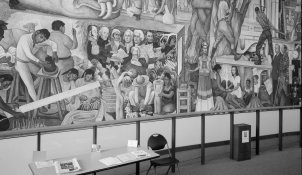
Image 2: close down 4 stops, still f/11 now 1/30
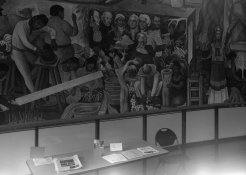
Image 3: 1/60

Image 4: 1/125
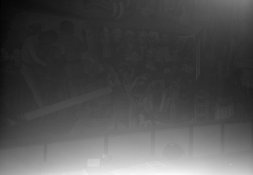
Image 5: 1/15
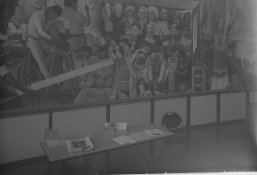
Image 6: 1/8
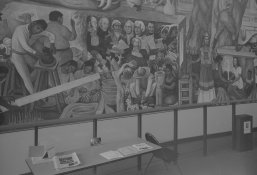
I did some light photoshop to adjust levels. Also I seem to be having some camera problems on these images I won't go into... may be better to show sets of images from rolls.
1. Find a scene with with a good range of tones
2. Using the box speed, meter the darkest area in which you wish to retain shadow detail
3. Move the camera so that you are only photographing this shadow area
4. From the meter's reading close down the aperture by 2 stops or increase the shutter speed by two stops and then expose 6 frames at: the given exposure then +1 stop, +2 stops, -1 stop, -2 stops and -3 stops less than the meter has indicated
5. Process the film
So right away I'm confused as to why "meter the darkest area in which you wish to retain shadow detail" - isn't the purpose of the test to determine how much shadow detail you can get (rather than a precondition)? Seems like Adams and Picker suggest using constant tone wall or gray card. Any case, I'd hope to be as little as possible at the mercy of variances in the subject matter and would probably want both - gray card as control, as well as range.
Image 1: box iso 100 at meter 1/2 f/11
Image 2: close down 4 stops, still f/11 now 1/30
Image 3: 1/60
Image 4: 1/125
Image 5: 1/15
Image 6: 1/8
I did some light photoshop to adjust levels. Also I seem to be having some camera problems on these images I won't go into... may be better to show sets of images from rolls.
You can get an infinite amount of shadow detail - just adjust your exposure to match the light and the subject.So right away I'm confused as to why "meter the darkest area in which you wish to retain shadow detail" - isn't the purpose of the test to determine how much shadow detail you can get (rather than a precondition)?
David Allen's procedure is valuable because it is based on how photographs appear, not just on densitometers and technology. As a matter of fact, the ISO standard is also grounded on how photographs appear.
You choose a particular shadow area, and adjust your exposure settings to it, because in most scenes there is at least some area where you don't care if there is any shadow detail. Think, for example, of the inside of a car, when you are exposing for the outside. Exposure choices are usually a compromise between what is in the scene and what you want to put into the print.
| Photrio.com contains affiliate links to products. We may receive a commission for purchases made through these links. To read our full affiliate disclosure statement please click Here. |
PHOTRIO PARTNERS EQUALLY FUNDING OUR COMMUNITY:  |