
Zone I is almost black. In this zone, a hint of tonality is observed, but it has no pictorial value.
does so
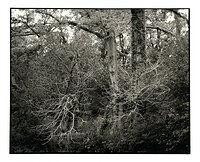
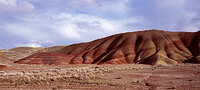
Zone I is almost black. In this zone, a hint of tonality is observed, but it has no pictorial value.

Exactly. By simple definition of a zone, the difference between zone 0 and zone I is visible.
We don't disagree here. That's what I said to Mr. Lambrecht. My eyes can perceive tone so much better since I now have lens implants and not my biological lenses that were laden with cataract.
By the way each print zone is described by the guy who gave us the term zone in the first place, there is not any detail in 0, I, or II (nor is there any in VIII, IX, or X). Zones 0 and I only show tone. Zone II only shows texture. Detail does not appear until zone III.
I don't differentiate between "texture" and "detail"---I don't see the need to do so. There is texture in Zone VIII ("I have used Value VIII as a standard for high-value density specifically because of its importance as the lightest area in a full-scale image that retains some texture."). It is further described as having "whites with texture and delicate values, textured snow". And, regarding Zone II, there is a "first suggestion of texture" in Zone II with Zone III considered to render full texture or "adequate" texture. The parts in quotations are certainly not my words.; they belong to that guy that you brought up.
However, by simple definition of a zone, everyone with properly working eyes can see the difference between any two zones. If he or she cannot, then they just ain't different zones!
Exactly my point. Being able to see the difference between any two zones, IMO, means that all zones have a pictoral value. Is pictoral value limited only to those zones that convey texture or detail----not IMO, and it's just an opinion. There is the "full black to pure white" scale, Zone 0 to X; the "dynamic range", Zone II to Zone IX; and, the textural range, Zone III to VIII. This may be where I seem to differ from many folks who talk about the ZS--I don't believe pictoral value begins and ends with the textural range. Subtle differences in tone at the extreme ends of the scale are also important where one hopes or chooses to convey it.
Don't waste your time with aiming at Zone I. Place your detailed shadows at Zone III or IV.
This confounds me----my opinion about Zone I in no way have indicated that I am aiming to place my shadows on Zone I. However, there are multiple examples of AA placing shadows on I or II.
In my simple and uninspiring pictures in my portfolio, the "Bubbles and Ice" negative; "Abandoned Home #3" negative; and, "Abandoned Home #6" negative were all Zone II placements. You may not agree, but these are extremely successful negatives for me. I've never made a Zone I placement.
You can only control two points on the paper curve anyway, one for the shadows and one for the highlights.
Damn straight, that why those of us who like that control, test our materials. We don't disagree.

I don't differentiate between "texture" and "detail"---I don't see the need to do so. There is texture in Zone VIII ("I have used Value VIII as a standard for high-value density specifically because of its importance as the lightest area in a full-scale image that retains some texture."). It is further described as having "whites with texture and delicate values, textured snow". And, regarding Zone II, there is a "first suggestion of texture" in Zone II with Zone III considered to render full texture or "adequate" texture. The parts in quotations are certainly not my words.; they belong to that guy that you brought up.
I think you misunderstood what I wrote. I was not arguing with you. There is no disagreement in there between what I said and what the quotes said. I said that only zones III - VII show detail. Zones II and VIII show texture but no detail. Zones 0, I, IX, and X show only tone. This matches the quotations you used. I do not consider zones II and VIII to have detail, but only texture: some tonal variation that gives hints of what might be there, but without showing anything that is a truly discernible subject. I do make a differentiation between texture and detail.
I make two modifications to the Zone System when I use it, but the descriptions of the print zones and what they show needs no modification IMO (for instance, calling zones II and VIII zones that show detail, as you do). Adams' description of how an 11 step gray scale is rendered on a print seems accurate enough to me to use without changes. The two things I change are that I use zones II and VIII (the edges of texture) as my points when figuring out how to rate and develop a film (not I and VIII, as in Adams' method). The second is that I do my EI and development calibrations visually by shooting a textured surface and printing a black frame to maximum black, instead of with a densitometer and a grey card. Using prints for judgment, I stick with the EI used during testing that gives me the first hint of texture on on zone II placement.

... The two things I change are that I use zones II and VIII (the edges of texture) as my points when figuring out how to rate and develop a film (not I and VIII, as in Adams' method). ...
I make a similar modification by using Zone I.5 and VIII.5 (where I see the edges of texture). However, after doing so and generally placing my shadows on Zone III or IV, I ignore Zone I and IX, because they play no role for texture (just tonality), and therefore, have no pictorial value in my opinion.
If people see it differently or have another definition for 'pictorial value' and it works for them, more power to them. I will be the last to argue with success. The Zone System is flexible enough to adjust it to one's liking and work flow.
I think you misunderstood what I wrote.
Yes, I may have---thanks for clarifying.
The Zone System is flexible enough to adjust it to one's liking and work flow.
Absolutely Ralph.

CPorter in your Abandoned House #3, is it the top right side of the window you measured for zone II?
Thanks
Well, to me, pictorial value is a conceptual and artistic term. Something of pictorial value is anything within the picture that affects the picture. So, everything present in a picture has pictorial value by definition. ...
Zones as I usually discuss them are print values, not negative values. ...
Yes, by your definition. My definition of pictorial value is different, and that why we have a different opinion about Zone I being of pictorial value.
You do realize that this was not AA's definition of Zones?
Why don't you just tell us what it is then? Quit acting like everyone should inherently know your definition for some term.
Who is 'us' and 'everyone'? I think it's just you at the moment. Anyway, I already did (post#32), but it's not even important for this discussion. What's important is that there are different definition for pictorial value, and the people having different definitions will never be able to agree if Zone I is part of it or not.
As I said, whatever works for you is fine with me.
For what it's worth, Ansel Adams avoided the term altogether and differentiated between textural and dynamic range. For me, the pictorial range is in-between the two, going up to, what Phil Davis called, the 'last usable print density', IDmin or 90% of Dmax.
... I also seem to remember at least one other poster disagreeing that certain zones do not have any.
| Photrio.com contains affiliate links to products. We may receive a commission for purchases made through these links. To read our full affiliate disclosure statement please click Here. |
PHOTRIO PARTNERS EQUALLY FUNDING OUR COMMUNITY:  |
