• Welcome to Photrio!
    Registration is fast and free. Join today to unlock search, see fewer ads, and access all forum features.
    Click here to sign up

Zone 1 density

Filling In

H
Filling In

  • 1
  • 2
  • 39
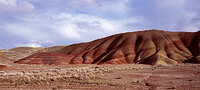
Painted Hills # 3.jpg

H
Painted Hills # 3.jpg

  • 4
  • 0
  • 86

Recent Classifieds

Forum statistics

Threads
203,208
Messages
2,851,442
Members
101,726
Latest member
Peter1111
Recent bookmarks
0
I tend to look at the gradient of the curve. If there is a positive slope, there's density difference. Of course how well the difference is perceived in the print has to do with a number of factors including the amount of viewing light.

In regard to the definition of the paper's 90% D-Max, I only have the 1983 version of the standard, but it does reference Jones' Control of Photographic Printing: Improvements in Terminology and Further Analysis of Results, which I do have, but not as a pdf. Maybe I'll scan it, but like most of Jones' papers, it's long.
 
Exactly. By simple definition of a zone, the difference between zone 0 and zone I is visible.

We don't disagree here. That's what I said to Mr. Lambrecht. My eyes can perceive tone so much better since I now have lens implants and not my biological lenses that were laden with cataract.

By the way each print zone is described by the guy who gave us the term zone in the first place, there is not any detail in 0, I, or II (nor is there any in VIII, IX, or X). Zones 0 and I only show tone. Zone II only shows texture. Detail does not appear until zone III.

I don't differentiate between "texture" and "detail"---I don't see the need to do so. There is texture in Zone VIII ("I have used Value VIII as a standard for high-value density specifically because of its importance as the lightest area in a full-scale image that retains some texture."). It is further described as having "whites with texture and delicate values, textured snow". And, regarding Zone II, there is a "first suggestion of texture" in Zone II with Zone III considered to render full texture or "adequate" texture. The parts in quotations are certainly not my words.; they belong to that guy that you brought up. :tongue:

However, by simple definition of a zone, everyone with properly working eyes can see the difference between any two zones. If he or she cannot, then they just ain't different zones!

Exactly my point. Being able to see the difference between any two zones, IMO, means that all zones have a pictoral value. Is pictoral value limited only to those zones that convey texture or detail----not IMO, and it's just an opinion. There is the "full black to pure white" scale, Zone 0 to X; the "dynamic range", Zone II to Zone IX; and, the textural range, Zone III to VIII. This may be where I seem to differ from many folks who talk about the ZS--I don't believe pictoral value begins and ends with the textural range. Subtle differences in tone at the extreme ends of the scale are also important where one hopes or chooses to convey it.
 
Last edited by a moderator:
Don't waste your time with aiming at Zone I. Place your detailed shadows at Zone III or IV.

This confounds me----my opinion about Zone I in no way have indicated that I am aiming to place my shadows on Zone I. However, there are multiple examples of AA placing shadows on I or II.

In my simple and uninspiring pictures in my portfolio, the "Bubbles and Ice" negative; "Abandoned Home #3" negative; and, "Abandoned Home #6" negative were all Zone II placements. You may not agree, but these are extremely successful negatives for me. I've never made a Zone I placement.

You can only control two points on the paper curve anyway, one for the shadows and one for the highlights.

Damn straight, that why those of us who like that control, test our materials. We don't disagree.
 
I have get my own zone I density by printing my test negatives to the VC grade 2 (using my enlargers VC head). For Pyrocat-HD developed films the density FBF+0.12 is barely distinguishable from paper's full black, but it's hard to see if you don't know that it should be there.
FBF+0.17 is the point where I can see the zone I as clearly separate value from paper's darkest black.

These works ofcourse only with tested paper and staining developer. However the trend seems to be quite same with all material I have tested.

Generally I agree with WBTM book's FBF+0.17 as speedpoint as it seems to work good with my eyes under normal lightning situations.
The Adam's 0.08 - 0.11 values are a bit too low leading zone I being practically same as zone 0.

One's way to exposure and transfer visualization to the negative causes also variating to zone I density. I place often dark shadows to II and some of darkest to zone I without thinking that zone I should be treaded as pure black. Perhaps the way I use ZS is one reason why I prefer bit more dense zone I value.
 
I don't differentiate between "texture" and "detail"---I don't see the need to do so. There is texture in Zone VIII ("I have used Value VIII as a standard for high-value density specifically because of its importance as the lightest area in a full-scale image that retains some texture."). It is further described as having "whites with texture and delicate values, textured snow". And, regarding Zone II, there is a "first suggestion of texture" in Zone II with Zone III considered to render full texture or "adequate" texture. The parts in quotations are certainly not my words.; they belong to that guy that you brought up. :tongue:

I think you misunderstood what I wrote. I was not arguing with you. There is no disagreement in there between what I said and what the quotes said. I said that only zones III - VII show detail. Zones II and VIII show texture but no detail. Zones 0, I, IX, and X show only tone. This matches the quotations you used. I do not consider zones II and VIII to have detail, but only texture: some tonal variation that gives hints of what might be there, but without showing anything that is a truly discernible subject. I do make a differentiation between texture and detail.

I make two modifications to the Zone System when I use it, but the descriptions of the print zones and what they show needs no modification IMO (for instance, calling zones II and VIII zones that show detail, as you do). Adams' description of how an 11 step gray scale is rendered on a print seems accurate enough to me to use without changes. The two things I change are that I use zones II and VIII (the edges of texture) as my points when figuring out how to rate and develop a film (not I and VIII, as in Adams' method). The second is that I do my EI and development calibrations visually by shooting a textured surface and printing a black frame to maximum black, instead of with a densitometer and a grey card. Using prints for judgment, I stick with the EI used during testing that gives me the first hint of texture on on zone II placement.
 
... The two things I change are that I use zones II and VIII (the edges of texture) as my points when figuring out how to rate and develop a film (not I and VIII, as in Adams' method). ...

I make a similar modification by using Zone I.5 and VIII.5 (where I see the edges of texture). However, after doing so and generally placing my shadows on Zone III or IV, I ignore Zone I and IX, because they play no role for texture (just tonality), and therefore, have no pictorial value in my opinion.

If people see it differently or have another definition for 'pictorial value' and it works for them, more power to them. I will be the last to argue with success. The Zone System is flexible enough to adjust it to one's liking and work flow.
 
CPorter in your Abandoned House #3, is it the top right side of the window you measured for zone II?

Thanks
 
Well, to me, pictorial value is a conceptual and artistic term. Something of pictorial value is anything within the picture that affects the picture. So, everything present in a picture has pictorial value by definition. Everything in a picture does something for the picture (and even things outside of the picture do so, such as all the details of how it is presented and viewed). That is just common sense. Instead of stating that something used in a picture has no pictorial value, why not simply explain what something's pictorial value is?

I also rarely place anything below II, and I am not saying that this is common practice. As I have stated a few times in this thread, I am most concerned with obtaining placement accuracy and expected tonal relationships with II – VIII. Subjects that end up a little out of place tonally at 0, I, IX, or X are not a great concern of mine. Printing can take care of any slop there. But printing cannot add the subtle bits of detail or tone that are lost in the sagging "toe" of a film's curve if one calibrates using zone I. This is why I don't think using zone I for finding an EI is the most useful way to go about it.
 
CPorter in your Abandoned House #3, is it the top right side of the window you measured for zone II?

Thanks

Actually, I placed the shadow beneath the house on Zone II.
 
Last edited by a moderator:
I’m sorry, but I find any discussion on exposure using Zones problematic. They're great for helping to conceptualize exposure, but Zones are basically arbitrary and don’t intrinsically represent actual exposure values. It’s not like saying an exposure of 0.0085mcs for a 100 speed film and showing where it falls on the film curve. Zone II for someone under rating their film one stop is different than Zone II for someone rating it at the film speed and the they will experience different results.

Using Zones with exposure also tends to imply some specific exposure/density relationship that doesn’t exist. And even if you don’t agree with that statement, isn’t there an inherent contradiction when talking about placing a value at a specific Zone and then talking about adjusting the EI, or talking about placing a value on a different Zone to actually mean adjusting the exposure index, ie “I shifted my Zone II placement to Zone III”? Exposure is about placing the subject luminance range on a usable section of the film curve using a single value of luminance in the determination of exposure that represents the multiplicity of values of the subject.

In discussions, there’s also a tendency to mix up the concepts of exposure Zones with print Zones. If I under rate my film one stop, I’m going to have separation in the negative at Zone O, but there won’t be separation at the print’s Zone O. So, which version is a person referring to when they say Zone O?

That’s the problem, without an explicit expression of parameters and actual values, people can be discussing very different scenarios without realizing it. The discussion then becomes no more useful or conclusive than arguing about how many angels can dance on the head of a pin.
 
Zones as I usually discuss them are print values, not negative values. I think we all know that, though perhaps all the shorthand used in Internet discussion in order to keep wording brief and clear makes it seem as if we are saying that zones are equivalent to negative exposures. What we are discussing is the minimum amounts of negative density necessary to get traces of detail or texture to appear on the print right at the print zone where they first become visible, when a normal print is made. In other words, calibrating film curves to land in a certain way atop paper curves so that we have the thing we call the "nomal print, " and craft negatives to match it. It is not necessary. It just makes printing easier and more streamlined, and problems easier to judge. Of course one can print any amount of density down to whatever print zone one wants, especially with the new films that are hard to overexpose to death.
 
Well, to me, pictorial value is a conceptual and artistic term. Something of pictorial value is anything within the picture that affects the picture. So, everything present in a picture has pictorial value by definition. ...

Yes, by your definition. My definition of pictorial value is different, and that why we have a different opinion about Zone I being of pictorial value.
 
Fred Picker's instructions use the print in determining Zone placement. He advised to carry small prints of eight zones as a field reference.
 
Yes, by your definition. My definition of pictorial value is different, and that why we have a different opinion about Zone I being of pictorial value.

Why don't you just tell us what it is then? Quit acting like everyone should inherently know your definition for some term.
 
You do realize that this was not AA's definition of Zones?

Yes, I do. But I don't feel like writing out "the placement of a tone relative to middle grey via exposure so that it correlates with a certain print value once calibration of ones process has been acheived." I say zone when discussing placements that result in certain print values. My point was that I do not use zones to discuss negative densities directly.
 
Why don't you just tell us what it is then? Quit acting like everyone should inherently know your definition for some term.

Who is 'us' and 'everyone'? I think it's just you at the moment. Anyway, I already did (post#32), but it's not even important for this discussion. What's important is that there are different definition for pictorial value, and the people having different definitions will never be able to agree if Zone I is part of it or not.

As I said, whatever works for you is fine with me.

For what it's worth, Ansel Adams avoided the term altogether and differentiated between textural and dynamic range. For me, the pictorial range is in-between the two, going up to, what Phil Davis called, the 'last usable print density', IDmin or 90% of Dmax.
 
Who is 'us' and 'everyone'? I think it's just you at the moment. Anyway, I already did (post#32), but it's not even important for this discussion. What's important is that there are different definition for pictorial value, and the people having different definitions will never be able to agree if Zone I is part of it or not.

As I said, whatever works for you is fine with me.

For what it's worth, Ansel Adams avoided the term altogether and differentiated between textural and dynamic range. For me, the pictorial range is in-between the two, going up to, what Phil Davis called, the 'last usable print density', IDmin or 90% of Dmax.

Post number 32 does not contain a definition of pictorial value. It contains your statement about certain zones not having any because they lack texture. They lack texture, therefore IMO they have no pictorial value is not a definition; it is a line of reasoning. Flip it around and it is a definition, and a very incorrect one, I would argue. I think you have your words crossed. Since when does pictorial mean textural? The phrase "no pictorial value" sounds incredibly arrogant and awkward. I think pictorial is the wrong word, as it is so broad. Look it up. Cannot you just say no textural value?

I also seem to remember at least one other poster disagreeing that certain zones do not have any.
 
Last edited by a moderator:
... I also seem to remember at least one other poster disagreeing that certain zones do not have any.

Correct, but that 'one other poster' already agreed that the Zone System is flexible enough to adjust it to one's liking and workflow. I'm petty sure, the inventors of the Zone System would've agreed with that.

Asking for my definition and then arguing that my definition is not a definition, per your definition of a definition has to be, is just taking things too far.

All the best.
 
Unbelievable! Just come out and say what you mean so that I, a mere peon, can try to understand! Pretty please?

The problem is that your definitions stinks, and you do not want to spell it out plainly because it is wrong. You'd rather tuck it awkwardly into something you wrote a few pages back, and then arrogantly act like I am crazy and stupid and below you for not agreeing.

So, Ralph is right and the ignorant peon is wrong, as usual. Unbelievable. If you have an argument to make, then make it. Quit playing games to dance away from the fact that you are wrong.
 
You should read this sometime;

...Nature and peace are my shelter and companions...

- Rob Tyner
 
Photrio.com contains affiliate links to products. We may receive a commission for purchases made through these links.
To read our full affiliate disclosure statement please click Here.

PHOTRIO PARTNERS EQUALLY FUNDING OUR COMMUNITY:



Ilford ADOX Freestyle Photographic Stearman Press Weldon Color Lab Blue Moon Camera & Machine
Top Bottom