
I have a Yashica 635 and I love it. I've got a copy with the Yashikor triplet. I've been wanting to get a new 6x6 TLR. I started looking for a Rolleicord, but recently ran into several Yashicas (Mat 124g, and D) rocking a Yashinon. I wanted some inputs as in how much better does the Yashinon gets and on deciding whether a 124g would be better than a D. I'm leaning towards the D, because I just feel it's better built, but that's just me.
-
Welcome to Photrio!Registration is fast and free. Join today to unlock search, see fewer ads, and access all forum features.Click here to sign up
- Home
- Forums
- Analog Workflow Forums (100% Analog/Traditional)
- Analog Equipment
- Medium Format Cameras and Accessories
You are using an out of date browser. It may not display this or other websites correctly.
You should upgrade or use an alternative browser.
You should upgrade or use an alternative browser.
Yashikor vs Yashinon
-
A
- Thread starter elmartinj
- Start date
Recent Classifieds
-
For Sale Leica Summicron-M 50mm F/2.0 Black 11826 V5 (Boxed 2018) (6-Bit)
- Started by jshcrlsn
-
For Sale CAMERA KIT
- Started by jeffreyg
-
For Sale Mint Nikon Lenses
- Started by Barlow
-
For Sale 3 Mint Nikon D2X Camera Bodies
- Started by Barlow
-
For Sale Minolta SR Extension Tube Set
- Started by Jon Shiu
Forum statistics
I have both a D and a 124g, years ago I had a 635, the Yashikor does pretty well stopped down to F11, the Yashinon does really well at 5.6 and passable at 3.5. The 124 is faster, the crank is the difference, but if you not shooting action the D does well, just remember to cock the shutter, and with D is possible to make multiple exposures. I think both have the same core, just different shutter advance. For much more than a 124 you can get a Mamyia 220 with the excellent 80mm 2.8,
If money is not an issue, go for a Rollie 'T' or a Rollieflex with a F3.5 Tessar lens. They are far better made that the Yashica version. I also have a soft spot for the Minolta Autocord but they are getting a little elderly now. The Rokkor taking lens is reputed to be better than the Tessar.

I have owned both a Yashica D with Yashikor lens and a 124G with Yashinon, the latter for about 20 years. The Yashinon is definitely the better lens. I would say the 124G feels less well built than earlier models (including the non-G 124) due to its greater use of plastic.
I agree with the recommendation of a Tessar-equipped Rolleiflex; the difference in build quality will be instantly obvious. I would also say that a Rolleicord is a much better built camera than any of the Yashicas, and the Schneider Xenar lens is similar to the Tessar. You can probably pick up a ROlleicord V, Va or Vb for about the same price as a top condition 124G. A Rolleiflex MX-EVS with Tessar would be a little more while giving the nicer ergonomics compared to the Rolleicord.
I agree with the recommendation of a Tessar-equipped Rolleiflex; the difference in build quality will be instantly obvious. I would also say that a Rolleicord is a much better built camera than any of the Yashicas, and the Schneider Xenar lens is similar to the Tessar. You can probably pick up a ROlleicord V, Va or Vb for about the same price as a top condition 124G. A Rolleiflex MX-EVS with Tessar would be a little more while giving the nicer ergonomics compared to the Rolleicord.

With the good prices on Japanese TLRs today, why not get one with a 4-element lens? I have a Diacord and an Autocord. Lenses in both are great, particularly the Autocord.

mweintraub
Subscriber
I have the Yashica C with the triplet lens and love the rendering of the OOF areas. I sold my Yashica-Mat with the 'non lens in favor of the C.
A Yashica 635 was the first serious camera I bought, long ago, and I was always happy with the Yashikor lens, using mostly smaller apertures. The manual shutter-cocking is a minor inconvenience -- simpler design, less to go wrong.
Dan Fromm
Member
- Joined
- Mar 23, 2005
- Messages
- 6,970
- Format
- Multi Format
I also have a soft spot for the Minolta Autocord but they are getting a little elderly now. The Rokkor taking lens is reputed to be better than the Tessar.
Interesting. There are Tessars and there are Tessars, and there are Tessar types and there are Tessar types. I've always thought that the Autocord's 75/3.5 Rokkor was a Tessar type and the Autocord III manual on butkus.org confirms this. So what exactly is it better than?
Re elderly, I'm elderly. Post WW-II Japanese TLRs are all younger than I am, some are considerably younger than I am. I wouldn't call them elderly. Some Rolleiflexes and 'cords are older than I am, others are younger. Let's not have any age discrimination here.
OP, with respect to these old crocks (Oh, my. what have I just done?) condition is much more important than specifications. Except for Flexarets, which all seem to be flaky.
I actually love this feature.A Yashica 635 was the first serious camera I bought, long ago, and I was always happy with the Yashikor lens, using mostly smaller apertures. The manual shutter-cocking is a minor inconvenience -- simpler design, less to go wrong.
I loved this answer, thank youInteresting. There are Tessars and there are Tessars, and there are Tessar types and there are Tessar types. I've always thought that the Autocord's 75/3.5 Rokkor was a Tessar type and the Autocord III manual on butkus.org confirms this. So what exactly is it better than?
Re elderly, I'm elderly. Post WW-II Japanese TLRs are all younger than I am, some are considerably younger than I am. I wouldn't call them elderly. Some Rolleiflexes and 'cords are older than I am, others are younger. Let's not have any age discrimination here.
OP, with respect to these old crocks (Oh, my. what have I just done?) condition is much more important than specifications. Except for Flexarets, which all seem to be flaky.


I"m always reading that this lens is better than that, or whatever. Leica lenses, especially, breed a particular variety of equipment differentiation snob -- lenses with 8 elements are better than those with 7, and Canadian ones are better than German ones, or something.
Whatever -- I've got several hundred cameras in my collection and shot with all varieties of them and gotten good images with all of them. The lens/gear, as I keep saying, is 5 percent of the end image -- the other 95 percent is up to you.
Especially if you stop down to 5.6 or so.
So get the best camera your money can buy, and go take pictures. Pondering the fall and texture of the light will yield many more rewards than pondering lens design.
Whatever -- I've got several hundred cameras in my collection and shot with all varieties of them and gotten good images with all of them. The lens/gear, as I keep saying, is 5 percent of the end image -- the other 95 percent is up to you.
Especially if you stop down to 5.6 or so.
So get the best camera your money can buy, and go take pictures. Pondering the fall and texture of the light will yield many more rewards than pondering lens design.
I"m always reading that this lens is better than that, or whatever. Leica lenses, especially, breed a particular variety of equipment differentiation snob -- lenses with 8 elements are better than those with 7, and Canadian ones are better than German ones, or something.
Whatever -- I've got several hundred cameras in my collection and shot with all varieties of them and gotten good images with all of them. The lens/gear, as I keep saying, is 5 percent of the end image -- the other 95 percent is up to you.
Especially if you stop down to 5.6 or so.
So get the best camera your money can buy, and go take pictures. Pondering the fall and texture of the light will yield many more rewards than pondering lens design.
I couldn't agree more with you. Since I finished college and got a job I've become a little GASsy, but I think you're totally right. I think I'm getting a pinhole instead and have tons of fun. Cheers.
Interesting. There are Tessars and there are Tessars, and there are Tessar types and there are Tessar types. I've always thought that the Autocord's 75/3.5 Rokkor was a Tessar type and the Autocord III manual on butkus.org confirms this. So what exactly is it better than?
Re elderly, I'm elderly. Post WW-II Japanese TLRs are all younger than I am, some are considerably younger than I am. I wouldn't call them elderly. Some Rolleiflexes and 'cords are older than I am, others are younger. Let's not have any age discrimination here.
OP, with respect to these old crocks (Oh, my. what have I just done?) condition is much more important than specifications. Except for Flexarets, which all seem to be flaky.
The Tessar is an older lens than the Rokkor by several decades and there will have been minor changes in the design to help eliminate aberrations.
I have used a Rollie 'T' fitted with a Tessar and a couple of Autocords and I found that the edge definition wider open on the Rokkor fitted to the Autocord was slightly better. Also the lens seemed less prone to flare. At the time I owned my last Autocord I also owned a Rollieflex 3.5F fitted with a Planar lens and the Rokkor placed against this lens was not as good, but in the main with the colour correction. The Rokkor definition was not far behind. You would have to compare the two lenses on an optical test bench to get the definitive answer. I also recall that the contrast of the Planar was better and had to modify my B&W processing to cope.
We are all getting on but still performing well (I hope).

I have always liked the D with the Yashikor lens. I had a 124G - can't remember why I sold it - probably just because I hadn't used it in a while.
Perhaps a few examples from the D?


Perhaps a few examples from the D?

I see you aren't looking for an upgrade anymore but after shooting several of the Yashikor and several (5+) examples with the Yashinon, you are only losing a bit of contrast/resolution wide open in general, and a bit on the corners. Looks just a bit more old school/vintage compared to the slightly more modern/slightly more saturated Yashinon.
Make sure you are using a hood and forget about the differences. An Autocord is indeed better in lens quality, I have had a few of those and they seem to be a notch above the Yashinon. If you still have GAS, I'd look for one of those or a Planar/Xenotar Rolleiflex.
Make sure you are using a hood and forget about the differences. An Autocord is indeed better in lens quality, I have had a few of those and they seem to be a notch above the Yashinon. If you still have GAS, I'd look for one of those or a Planar/Xenotar Rolleiflex.

I owned a 124G years ago, and it did feel a bit plasticky. I sold it after about four years of ownership and bought a Rolleiflex with the Tessar 3.5 lens. I eventually sold the Rollei during times of too much gear and not enough money. A few years ago I decided to shop for a good but economical TLR, I would have liked to get a Autocord because of tis great reputation, but I couldn't find any in my price range. The Autocords have gotten spendy of late. So, of all the Yashica models, I decided on the 124. No "G". The 124 is built out of all metal, has the Yashinon lens and even has the meter, same as the "G". It's just a much more solid feeling camera. Price was about $100 US with shipping to my door. It might not be a Rollei or an Autocord, but it does a good job, I feel.


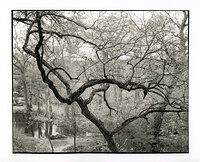
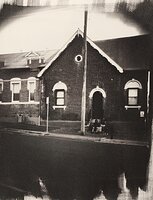
Both of the above images were cropped and downsized for display online.
Both of the above images were cropped and downsized for display online.

Big fan of my girlfriend’s Yashica D with the Yashikor. In fact, I was just printing a few negatives from it tonight and was absolutely blown away. I bought it for her knowing it had the “lesser” lens but after putting a few rolls of film through it (to test!) I really can’t see how the lens could be improved. It is sharp where it needs to be and renders everything else beautifully. It’s dreamy without being soft.
I think like the way it looks more than my Mamiya C lenses.
I think like the way it looks more than my Mamiya C lenses.

I had and used the Yashica 635 for many years for a range of tasks and found it to be very good for portraits but not so good for landscapes.
The Yashikor lens lost too much detail around the edges and at the corners.
The only way around it for me was to crop the image in the darkroom, which kind of defeated the purpose of the larger negative in the first place.
I sold it and bought a Mamiya C330 and was much more pleased with the results
Tom
The Yashikor lens lost too much detail around the edges and at the corners.
The only way around it for me was to crop the image in the darkroom, which kind of defeated the purpose of the larger negative in the first place.
I sold it and bought a Mamiya C330 and was much more pleased with the results
Tom
This is a 5x7 print cropped from a negative I shot with the Yashica D (Yashikor lens). No complaints.

| Photrio.com contains affiliate links to products. We may receive a commission for purchases made through these links. To read our full affiliate disclosure statement please click Here. |
PHOTRIO PARTNERS EQUALLY FUNDING OUR COMMUNITY:  |