• Welcome to Photrio!
    Registration is fast and free. Join today to unlock search, see fewer ads, and access all forum features.
    Click here to sign up

Working idea - Zone System exposure - Time/CI darkroom

Horicon Marsh-5

A
Horicon Marsh-5

  • 2
  • 0
  • 73
Millstone, High Water

A
Millstone, High Water

  • sly
  • Dec 17, 2025
  • 7
  • 5
  • 139

Recent Classifieds

Forum statistics

Threads
201,250
Messages
2,821,227
Members
100,621
Latest member
anthonysgevans
Recent bookmarks
0

jordanstarr

Member
Allowing Ads
Joined
Apr 30, 2007
Messages
781
Location
Ontario
Format
Multi Format
...whatever works.

I worked with a Print Master that knew so much science behind exposure, film developing and printing it was ridiculous. He even wrote a book on it and taught darkroom techniques for over a decade. He was even Annie Leibovitz's fulltime printer for a number of years. But when I'd hit the darkroom and ask for advice on certain negs, printing, shooting in various lighting conditions, his answers were very simple. I think the purpose of a theory like this is to dissect the science to such a degree that individuals can pick and chose what parts work for them and then develop their own formula for the prints they want to produce. This theory combined with experimenting can be a very valuable tool for photographers to understand all the variables and then choose what works for their own unique vision. If someone wants to strictly calculate everything or on the other side, strictly experiment with everything, great results can still be obtained. I personally have my own foundation of knowledge on the zone system calculated and I apply it to the field based on how I develop and print through experimenting and running various tests. Everyone will be different. Whatever works.
 
Joined
Jan 7, 2005
Messages
2,725
Location
Los Angeles
Format
4x5 Format
When the subject luminance range is long, we are taught to contract it to fit onto the paper. But this disregards the shape of the curve and the local contrast effects of modified development.

This is true, but you shouldn't totally ignore that using the relationship between the negative density range with the paper's log exposure range can be an effective guide. And as with most things, things aren't as straight forward as you might expect. It doesn't make them wrong, just more complex.

Jones discusses the best way to relate the film to the paper in two rather tedious papers, Control of Photographic Printing: Improvement in Terminology and Further Analysis of Results, 27 pages, and The Control of Photographic Printing by Measured Characteristic of the Negative, 60 pages. Both published in the Journal of the Optical Society of America. These are the studies that helped to establish the LER ranges for paper grades and the NDR/LER matching system. He looks at a number of different ways to "match" film to paper and concludes,

"The procedure followed in obtaining a relationship between NDR and LER may seem forced and artificial. This we grant, and it must be born in mind that the print quality obtained by its use will not be the highest possible quality. But what other course is there to follow? Either we must make the best of a somewhat imperfect relationship or face the prospect of having no criterion whatever for choosing the paper contrast grade."

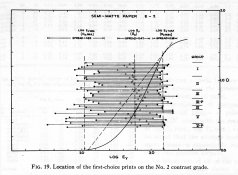
This doesn't mean anyone should throw the baby out with the bath water. It just means there isn't system that works perfectly every time. I've attached a graph from Jones' testing showing the variance in negative density ranges that yielded first choice prints on a grade 2 paper. What Jones found was “for the soft papers, the density scales of the negative (DR) should in most cases exceed the sensitometric exposure scale of the paper (LER), whereas, for the hard papers, the density scales of the negatives should in most cases be less than the sensitometric exposure scale of the paper (LER).”

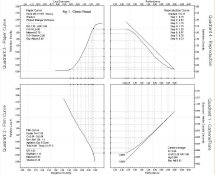
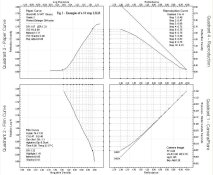
Michael, the method of matching the NDR with the LER isn't broken, there are just other factors involved. And you have pointed one out. While it is acceptable to compress the values from the highlights and shadows, the mid-tone gradient must exceed the mid-tone contrast of the original subject for the print to be perceived as being of high quality. They found the mid-tone gradient generally needs to be over 1.10. To fit the values from a subject with a high luminance range onto the paper, it is likely the mid-tones have to fall below the 1.10 gradient level. So even though the NDR matches the paper LER, unless the mid-tone gradient is greater than 1.10, the resulting print will probably not be acceptable. (This is another reason I like to use multiple quadrant reproduction curves. The fourth quadrant compares the print values to the original subject values. It's a very useful analysis tool. In fact, I just uploaded two examples. Fig 1 is a classic example for Normal and Fig 2 is for a 10 stop luminance range. Even though both film and paper match, there is a major difference in the reproduction curve.)

This all falls under the heading of subjective tone reproduction theory. I believe the third edition of the Theory of the Photographic Process best covers this subject. The biggest variable is that the end product of the photographic process is subjective. This is where variance and statistics come into play. You determine the way something generally works in order to produce some form of guideline to get you close enough most of the time to make it work.

Another problem especially with long range subjects comes from the fact that paper can't reproduce specular reflections. In order to produce any tones above the reflectance of the paper, they have to be printed down but without loosing the impression of brilliance. Subjective tone reproduction makes my head spin, but objective tone reproduction makes little sense without it.
 

Attachments

  • Jones Graph.jpg
    Jones Graph.jpg
    998.1 KB · Views: 117
  • 4 quad - Normal.jpg
    4 quad - Normal.jpg
    252.4 KB · Views: 112
  • 4 quad - 10 stop LSLR.jpg
    4 quad - 10 stop LSLR.jpg
    267.3 KB · Views: 103
Last edited by a moderator:
Joined
Jan 7, 2005
Messages
2,725
Location
Los Angeles
Format
4x5 Format
I should have included this in the last post. This is the same 10 stop luminance range, but the negative density range doesn't match the the paper's log exposure range. As Jones has suggested, the NDR is higher than the paper LER. The resulting mid-tone gradient on the tone reproduction curve is over the 1.10 minimum for a perceived quality print. If needed the highlights and shadows can be controlled through printing techniques.

To me, this appears to support Michael's observations. In addition, it is consistent with tone reproduction theory. Tone Reproduction Theory - it's a problem solving tool.:smile:
 

Chuck_P

Member
Allowing Ads
Joined
Feb 2, 2004
Messages
2,369
Location
Kentucky
Format
4x5 Format
I assume the step tablet is in contact with the film. If so, then it is a non flare test.

So, by this reasoning, if there is no step tablet, then the original testing can be considered to include flare and it then becomes a question of how much based on the target in question.
 
Last edited by a moderator:
Joined
Jan 7, 2005
Messages
2,725
Location
Los Angeles
Format
4x5 Format
So, by this reasoning, if there is no step tablet, then the test can be considered to include flare and it then becomes a question of how much based on the target in question.

If the target has a full range, and it also depends how it is shot. Look again at the camera/flare Quad example. If you're making the exposure at the metered exposure point, there is little flare no matter what. This would include any situation where a target is metered and then the camera exposure is stopped down. If this is the way the testing is done then there's only a chance flare would go from zero to 3%. That's a long way from 100% at the point of the test. To introduce the appropriate amount of flare, you would need to meter a gray card and then shoot a black card that has the necessary reflectance (4 or 4 1/3 stops darker than the gray card) which does not fill the frame and is surrounded by a sunlit scene. Of course, one reason why flare is problematic in testing is that it is extremely difficult to control and measure.

If you're interesting in just seeing how flare affects things, you should do the Black Box test that Phil Davis discusses. I suggest surrounding the black box's opening with targets of varying reflectances.
 
Last edited by a moderator:
OP
OP
Bill Burk

Bill Burk

Subscriber
Allowing Ads
Joined
Feb 9, 2010
Messages
9,455
Format
4x5 Format
two-tone-target.jpg

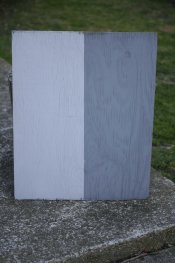
This painted plywood two-tone target, specified in Minor White's Zone System, does not have much flare. The two tones are supposed to meter one stop apart - so it is a one-stop Subject Brightness Range.
 
OP
OP
Bill Burk

Bill Burk

Subscriber
Allowing Ads
Joined
Feb 9, 2010
Messages
9,455
Format
4x5 Format
Michael,

I think it would be fine to expand your idea.


Maybe I already do that. I know for example, when I place a shadow on Zone II, then spot a caucasian face, I want to "place" that on Zone VI. So when my meter already shows it as Zone VI - I declare that negative N. Even if the sky meters Zone IX. I will let that go, or add a yellow filter to pull it down a bit.
 
Joined
Jan 7, 2005
Messages
2,725
Location
Los Angeles
Format
4x5 Format
If people blindly try to always match the negative and paper, thinking this is the best way to a fine print, I'd say they are just as much in your "do we know what we're getting" zone as people who misinterpret their test data.

It's almost my mantra. One of the most important aspects of testing and one of the most overlooked is the theory / reason behind the concept. The "why" of something is as important or even more important as the "how."

Here's wishing everyone a Merry Christmas.
 
OP
OP
Bill Burk

Bill Burk

Subscriber
Allowing Ads
Joined
Feb 9, 2010
Messages
9,455
Format
4x5 Format
Update: I have collected the thoughts that started here and posted them to this article:

(there was a url link here which no longer exists)
 
Photrio.com contains affiliate links to products. We may receive a commission for purchases made through these links.
To read our full affiliate disclosure statement please click Here.

PHOTRIO PARTNERS EQUALLY FUNDING OUR COMMUNITY:


Ilford ADOX Freestyle Photographic Stearman Press Weldon Color Lab Blue Moon Camera & Machine
Top Bottom