• Welcome to Photrio!
    Registration is fast and free. Join today to unlock search, see fewer ads, and access all forum features.
    Click here to sign up

Why isn't TMAX developer more popular?

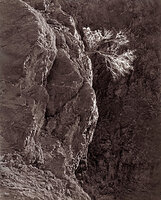
Bush on Canyon Wall

A
Bush on Canyon Wall

  • 0
  • 0
  • 0
double portrait

A
double portrait

  • 1
  • 0
  • 20

Forum statistics

Threads
203,257
Messages
2,851,997
Members
101,747
Latest member
Tallphotographer
Recent bookmarks
0
I've used it with TMY3200 and what surprised me was how much of a boost it gave to the shadows.

I just bought a new bottle and started to play around with some TMY-2 and Tri-X.
 
Hmax Concentrate (Kodak Tmax concentrate clone) ...
Water 110-120F 540 ml
Sod. Sulfite anhyd. 24 g
Antical #3 1% solution 45 ml
Hydroquinone 6 g
Kodalk (NaBO2•8H2O) 29 g
Dimezone S 1% solution 35 ml
KBr 1 g
Benzotriazole 0.2% solution 40 ml
Water to make 757 ml (matching the Kodak Tmax concentrate volume)
...

Not familiar with "Antical #3" Can you say what it is and where to get it?
 
Sara, Just as an FYI, I just use regular TMAX dev mixed 1:4 to replenish, not the replenisher, or TMAX RS, just regular TMAX dev.

The negs I get from TXP 320 are just amazing to print. I soup this film for 7.5 mins @ 68 Deg f. For TMY-II film I soup for 8 minutes..... Negs are a joy to print also.... You will find that seasoned replenished developer is less apt to blow highlights for some reason. It gets to this point after around 15 or so films have been run through the 2 liter working solution... replenishing each time 500ml per 5 x 120 films is about right for me.


......
Tmax is the only developer I've ever used, apart from a couple of detours with Rodinal. Recently I thought of trying something else though, because I am so stupidly persistent in thinking I will remember how many films I develop without writing it down. So end up using it when it's very weak, but reading Andrews reply about replenishing I might try that.
 
Sara, Just as an FYI, I just use regular TMAX dev mixed 1:4 to replenish, not the replenisher, or TMAX RS, just regular TMAX dev.

The negs I get from TXP 320 are just amazing to print. I soup this film for 7.5 mins @ 68 Deg f. For TMY-II film I soup for 8 minutes..... Negs are a joy to print also.... You will find that seasoned replenished developer is less apt to blow highlights for some reason. It gets to this point after around 15 or so films have been run through the 2 liter working solution... replenishing each time 500ml per 5 x 120 films is about right for me.


......

Andrew,

Through what mechanism are you using the replenished T-Max developer; Paterson Super System 4 tanks?

Tom
 
I use Tmax RS 1+9 for making masks for color printing. With Ilford FP4+ if gives a nice neutral image tone with reduced (3 minute) development. This keeps color casts from forming in the highlights. Many other developers go give a brown image with short times.
 
Antical #3 is a calcium chelating agent similar to calgon. If you mix the stock solution and also dilute with distilled water, or if your tap water source is relatively free of minerals it can be omitted from the formula. One possible source is: http://www.digitaltruth.com/products/rawchemicals.php
 
Interesting.... I'm not faulting your methods, but Clyde Butcher has been a big proponent(well, maybe more of a "silent" proponent) of Tmax Developer and TMX100, and he's shooting in in 4x5-12x20.

so using it for sheet film might not be such a big deal, IDK, just noticed this when reading through his site the other day

-Dan

There is a different version of Tmax called Tmax RS, which is also replenishible, that is made for the sheet films. That may be the version Clyde Butcher uses.
 
I have used Tmax developer at 1:7 for 120 Tri-X for years and love it.
 
TMAX is the first developer i use for developing at home, did about 4 rolls and one came out not good because the film is cooked and it was my first film roll and i didn't store it well, but all other rolls came out fine to me [not sure if you think not], and i will develop one more roll with this developer, i use this developer as 1+4 and dump it, and the remaining is not much, so i will use it all until i run out this developer and then use another developer.
The problem with me is that i am so new in film so i can't be sure which developer can give me better results, i can't tell until i use same exact film with same exact exposures and frames and then develop both with different developers and see the difference, until now i am happy with any results i can get from any developer.
 
I think the name of this thread will have to change! TMax Dev gets some love after all.
 
I wish you could all see one of Andrew's prints, held in your own hands. They have gorgeous tonality, and the materials are used to their best ability.
There are quite a few people here on APUG that use TMax developers; I always thought that perhaps the developer is surrounded mostly by silence because it gives the users very little trouble. :smile:

Find what works, and keep using it. I always believed that good results can be had with any combination of materials, if you care to really learn it. The sum is in all of the parts of your process, acting together, and when you get it right, symbiosis strikes.


I love TMAX developer. It works great for late films such as TXP 320 in 120 format. I use it 1:4 and replenish it. Used this way, it is VERY economical. Kodak specs say you can develop up to 15 rolls with the stock solution before needing to adjust development times. Using it replenished is also consistent. I have a 2l working batch of TMAX 1:4 strength developer ready to go. Prior to each session, I pour out about 500ml of working solution, and mix in another fresh batch of 1:4 (100ml developer, and 400ml water) and I am good to go. I could get away with less, but there is no need and I use this for approximately 5 rolls of film per session. This method of replenishment is something I've been doing with my fixer too and going on like this I see no reason for my developer to last indefinitely. I also find that TMAX dev season REALLY well too. After 15 rolls or so are through it, the negs are really nice, and not as easily blown in the highlights.... espeically handy for TXP. YMMV of course!
 
Last edited by a moderator:
t-max developer is a good alrounder but it does not excel in any point, based in the superadditivity of the pq combination it is easely exceeded in all departments by x-tol, d-76 especially if diluted
 
What I'd really like to know is why Tmax dev was created by Kodak in the first place? What was the goal?
 
What I'd really like to know is why Tmax dev was created by Kodak in the first place? What was the goal?

(there was a url link here which no longer exists) was designed to give a higher effective EI and allow better results with push processing, but a side effect was Dichroic fog in some instances if used for LF sheet films."

Tmax developer was brought out to get the best out of the new emulsions which when tested by all the professional & amateur magazines of the time was generally found not to reach the claimed box speed, and wasn't good for push processing.

Many people had poor results with Tmax 100 & 400 in D76/ID-11 and Kodak released TMax developer which complimented and brought out the best in T-grain emulsions.

Ian
 
Tom, I use both stainless Hewes reels and adorama tanks for all film processing exclusively now... I had too many anomalies with the Paterson system and especially with pyrocat negs.. The stainless tanks have eliminated all of these issues with ALL developers.

..
Andrew,

Through what mechanism are you using the replenished T-Max developer; Paterson Super System 4 tanks?

Tom
 
Ian,

My high school history teacher used to say that if we only read History from newspapers and magazines, we are doomed to repeat it.


D-76 worked consistently fine with TMY from Day 1. At least it did for me, and several other folks I knew. I had the good fortune, however, to be given a quantity of TMY in unmarked yellow boxes. My contact at Kodak said it was like Plus X and it is EI 400. So, I shot a roll in the studio at 400, and did a couple clip tests to find a development time, and that was done. When TMAX developer appeared later, it worked very well, giving a little longer straight line than D-76, but was very similar - just a liquid !


What TMAX was, was a pleasant alternative to HC-110. VERY different beasts are TMAX and HC-110.

I did not have the disadvantage of reading 'experts' months later whose work was simply shoddy, who claimed the strange results you referred to. At least American 'experts' were wrong, except for Sexton. This was a matter of interest to me at the time; I printed for a couple shooters whose work was developed by highly reputed labs who catered to pros, and I SAW the problems folks had with D-76 and TMY. Rather, I had to print the stuff, and very quickly I began to hang out at the labs to find out just what they were doing.

What I saw at a couple operations was a casual and incompetent atmosphere: TMY was treated as it were TX, with the attitude of "Anything goes, it'll work". Temperatures were inconsistent, times and agitation was variable, and often the personnel was poorly trained and supervised.

I can't account for what other people did, but there were lots of folks who were attentive and correct, and got great results.

I'm not offering this as a comprehensive history, simply an anecdote from a primary source.

 
Last edited by a moderator:
What I'd really like to know is why Tmax dev was created by Kodak in the first place? What was the goal?

I have no idea WHY it was created. But it yielded a completely different curve than HC-110, and it was welcomed immediately.

Kodak has always given photographers products to get the variety of results we needed. Hence D-76 AND DK-50, hence TMAX developer and HC-110.

We sometimes make the wrong comparisons. Kodak didn't offer TMY as a replacement for Tri X, it was an alternative to Plus X. (TMX replaced Panatomic X.) TMZ was the alternative to Tri X (and with higher speed, and higher resolution, it has been a wonderful alternative !) How Kodak markets their stuff has always baffled me, but the Marketing Department of many companies have done their best to wreck fine engineering.
 
Tom, I use both stainless Hewes reels and adorama tanks for all film processing exclusively now... I had too many anomalies with the Paterson system and especially with pyrocat negs.. The stainless tanks have eliminated all of these issues with ALL developers.

..

Hello Andrew,

Your comments are interesting as I have also experienced anomalies processing with the Paterson tanks that can come and go even with a careful work flow.

Tom
 
Hello Andrew,

Your comments are interesting as I have also experienced anomalies processing with the Paterson tanks that can come and go even with a careful work flow.

Tom

Tom,

For what it's worth, I have had the same problems. I'm sure that fine results can be had with the Paterson system, but it seems more difficult. Since I switched to an all stainless steel system, I haven't had any problems either, not with uneven development, or trapped air bubbles.

- Thomas
 
Ian,

What I saw at a couple operations was a casual and incompetent atmosphere: TMY was treated as it were TX, with the attitude of "Anything goes, it'll work". Temperatures were inconsistent, times and agitation was variable, and often the personnel was poorly trained and supervised.

I can't account for what other people did, but there were lots of folks who were attentive and correct, and got great results.

I'm not offering this as a comprehensive history, simply an anecdote from a primary source.
Don, I used Tmax 100 & 400 from their release, I think my initial tests were in Ilfotec HC a and I found both superb films and I switched to them immediately only changing recently because of poor availability where I'm living.

However I saw a lot of photographers struggle with Tmax films, mainly because like you said they expected to treat them like Tri-X or FP4/HP5. Many still swear blind to this day that Tmax (all speeds) even the newest fersions is awful film and just can't be convinced.

But regardless of the various magazine test reports and user comments it was Kodak themselves who stated that Tmax developer gave better effective film sped, far better shadow detail and also gave far better results with push processing of both the emulsions, at the time of the developers launch. I tried Tmax developer on its release and found there was an improvement in speed & tonality, and knew plenty of others who found the same.

Ian
 
My 2 cents, I believe if they had named it something other than T-Max Developer it would of sold better. In my mind it ties the product to T-Max films. Maybe that's what they wanted. How many thought it was only for T-Max films? Do you think every photographer reads the pdf file of information?
 
Does the TMax developer really give better film speed (shadow detail) than Xtol?
 
Does the TMax developer really give better film speed (shadow detail) than Xtol?

Kodak's take on it:

http://www.kodak.com/global/images/...ts/chemistry/bwFilmProcessing/f002_0072hc.gif

I saw the same problems with photographers' expectations that they could treat TMY as TX, and TMax developer as D-76. In the late 1980's I printed about 2000 custom B&W prints a month at a lab that had gone with TMax as their standard B&W film developer. It did very well considering the extent to which people abused their film, and after I asked for a tweak in the development times, I could pull good to excellent prints from a wide variety of films with various degrees of abuse. I had the front desk at the lab copy the section at the start of the TMZ tech sheet that says it's fundamentally an ISO 800 film, and post it by the drop off window with that section highlighted in bright yellow.

Lee
 
Last edited by a moderator:
Photrio.com contains affiliate links to products. We may receive a commission for purchases made through these links.
To read our full affiliate disclosure statement please click Here.

PHOTRIO PARTNERS EQUALLY FUNDING OUR COMMUNITY:


Ilford ADOX Freestyle Photographic Stearman Press Weldon Color Lab Blue Moon Camera & Machine
Top Bottom