• Welcome to Photrio!
    Registration is fast and free. Join today to unlock search, see fewer ads, and access all forum features.
    Click here to sign up

why is it that you think 99% of photography isn't considered an art form?

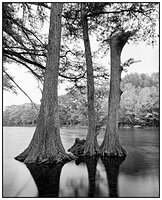
Frio River

A
Frio River

  • 0
  • 0
  • 0
Maniqui

D
Maniqui

  • 0
  • 0
  • 9

Recent Classifieds

Forum statistics

Threads
203,576
Messages
2,856,618
Members
101,908
Latest member
lokiloki
Recent bookmarks
1
Performance art is very different. Like Marina Abramovic at MOMA: The Artist is Present. Performing arts is what you mean.
Yes, I meant performing arts like dance and music and singing. Of course performance art is art as well. All these art forms have no utility other than effecting our emotions. Of course there are utilitarian arts like architecture as well where you can actually use the art as well as appreciating its beauty and gaining an emotional response from it.
 
Recent issue of New York Review of Books included a review of Allan Sekulo's "Art isn't Fare" and Glenn Adamson's "Craft".
Both books may be of interest to this discussion [as well as the review itself].
 
If you want to see how bad the state of "art" is today, attend an art school's MFA show. Part of it is the "everyone deserves a trophy" culture, part because nobody has the balls to call it like they see it. The unfortunate side effect is the only ones who are willing to truly criticize art tend to be narrow-minded cultural elite.
Is this true for every MFA's Thesis Show ? Or. .. specific schools ?
 
Interesting that all those definitions seem to ignore the arts of the voice (and dance).

For voice I'll go with Amy Winehouse. For dance I suggest line dancing as practiced in Texas and street samba as practiced in Brazil.
 
In photography, what about Barthes "Punctum"? He defines it as "the sensory, intensely subjective effect of a photograph on the viewer."
 
I will go out on a limb and say pretty much any art school.
so correct me if I am wrong, but you said. ..
every art school, and every MFA candidate / graduate(?) who has their work in a thesis show creates bad art, because they live in / were brought up in "trophy culture" and no one has the balls to tell them how bad their work is ? are there any exceptions to the rule? any MFA holders who do not produce work so terrible that no one has the balls to tell them how bad it is, so they give them a degree ?
 
Do MFA programs usually graduate great artists? It is probably hard to flunk out of an MFA program unless you just don’t do the work.
 
Do MFA programs usually graduate great artists? It is probably hard to flunk out of an MFA program unless you just don’t do the work.
its pretty rigorous, some people drop out.
some MFA programs produce great artists I am certain of that...
 
In photography, what about Barthes "Punctum"? He defines it as "the sensory, intensely subjective effect of a photograph on the viewer."
If you want to attempt a definition of art as a photograph, you could argue that any photograph that has a punctum that registers for more than the person who took the photograph is art, because it successfully communicates the emotion the photographer was trying to capture at the time of its taking.

Conversely, every photograph has a punctum - why else would the photographer take it? But it may be something utterly unique to the photographer, and to everyone else looking at it, it is just a bad/uninteresting photograph.
 
Do MFA programs usually graduate great artists? It is probably hard to flunk out of an MFA program unless you just don’t do the work.


The German MFA-type photography programs are intensely geared to art-world success. Entry is very selective and limited, apparently based on potential acceptance in the commercial system, and most of those graduates achieve some level of success.
 
Masters programs don't "generate" great artists, writers, engineers, mathematicians, etc.
Great and potentially great (and mediocre and aspirational but lousy) artists, writers, engineers, mathematicians, etc. enroll in Masters programs in search of some benefits for themselves, and generally come out the other side having gained something from it.
An MFA isn't like an electrician's apprenticeship!
 
The German MFA-type photography programs are intensely geared to art-world success. Entry is very selective and limited, apparently based on potential acceptance in the commercial system, and most of those graduates achieve some level of success.

I went to the Yale Photography MFA program website to get a sense of what is being taught. Here is the course description for one of the required first year courses:

"ART 949a, Diving into the Wreck: Rethinking Critical Practice This mandatory course for first-year M.F.A. students borrows its title from Adrienne Rich’s poem, written in 1973 at the beginning of the second wave of feminism, in the wake of the civil rights movement, amid the student protests against the Vietnam War, and in reflection of the poet’s own process of self-discovery and personal emancipation. As a work that focuses on the isolation of life as it does on a sense of shared community, Rich’s poem brings forth a perspective that there can be no understanding of the “wreck” without becoming one with the wreck. The course explores how this self-motivated, even self-legislated, impulse toward autonomy is mirrored within the very constitution of a work of art that is bound by the dialectic between autonomy and dependence, individuality and collectivity, randomness and resoluteness, expression and rationality. Taking Diving into the Wreck as a point of departure, the course aims toward a cultivation of consciousness that extends self-knowledge into a sense of community through the act of critical reflection. The course adopts a lecture/seminar approach with additional breakout sessions. Students are required to complete required readings, participate in class-wide discussions, and develop the form of their writing as a method of engaging with the themes of the course."

I hardly know where to start. It appears that I have some background reading to do, and not just about punctum and studium.
 
Last edited:
I should probably add that there is nothing inherent in completing an electrician's apprenticeship that would prevent one from also being a successful artist.
Though probably not a starving artist:whistling:.
 
Sad fact: 99% of all photographs lack Punctum. And while we're at it, Gregory Crewdson's pictures are crap, as is his teaching.
 
Following up my last post, here is a link to a collection of photographs made by the Yale Photography MFA 2020 graduates. To see the photos, click on the graduate's name.

http://mfaphoto.yaleschoolofart.org/

If you scroll down to the bottom of the page, you will see a list of questions asked of the photographers. Some of them are pretty interesting.
 
Last edited:
Following up my last post, here is a link to a collection of photographs made by the Yale Photography MFA 2020 graduates. To see the photos, click on the graduate's name.

http://mfaphoto.yaleschoolofart.org/

If you scroll down to the bottom of the page, you will see a list of questions asked of the photographers. Some of them are pretty interesting.
Some may be interesting, but none are outstanding as far as I am concerned, especially as a body of work and graduating from a well-respected institution with a good photo program. You can imagine what other schools are turning out.
 
I should probably add that there is nothing inherent in completing an electrician's apprenticeship that would prevent one from also being a successful artist.
Though probably not a starving artist:whistling:.

Would they be called a bright spark artist? :unsure:
 
Just because 99% of painting isn't art either... Walls need colour.
 
Some may be interesting, but none are outstanding as far as I am concerned, especially as a body of work and graduating from a well-respected institution with a good photo program. You can imagine what other schools are turning out.
At least the work is far more advanced and thought out than the work of 99% of the those who are just self-taught.
 
At least the work is far more advanced and thought out than the work of 99% of the those who are just self-taught.

Sometimes it is difficult to tell the difference between well thought out and lipstick on a pig. With respect to contemporary photography, I really don't feel qualified to make the call. I am mostly just puzzled.

One thing I have noticed is that a lot of contemporary photography is staged. For example, take the tableaux of Gregory Clewsdon, the head of the Yale photography MFA program we previously referred to. From what I read, he sometimes uses up to 100 assistants to set up the scenes. It seems to me the creative aspect is imagining the scene and then realizing it. Taking the photo is merely to document what he has created. I wonder if William Eggleston thought up that tricycle image, and then got a tricycle, set the scene up down at the end of his driveway, and photographed it. I don't really know. Maybe it doesn't matter. The Pictorialists were hammered by Group F/64 for setting up those allegory scenes. Maybe some contemporary photographers are just Pictoralists reimagined.
 
Last edited:
Photrio.com contains affiliate links to products. We may receive a commission for purchases made through these links.
To read our full affiliate disclosure statement please click Here.

PHOTRIO PARTNERS EQUALLY FUNDING OUR COMMUNITY:



Ilford ADOX Freestyle Photographic Stearman Press Weldon Color Lab Blue Moon Camera & Machine
Top Bottom