
-
Welcome to Photrio!Registration is fast and free. Join today to unlock search, see fewer ads, and access all forum features.Click here to sign up
- Home
- Forums
- Analog Workflow Forums (100% Analog/Traditional)
- Analog Equipment
- 35mm Cameras and Accessories
You are using an out of date browser. It may not display this or other websites correctly.
You should upgrade or use an alternative browser.
You should upgrade or use an alternative browser.
Why is B&W paper so expensive?
-
A
- Thread starter chip j
- Start date

Recent Classifieds
-
For Sale Fuji GW670 III
- Started by campy51
-
For Sale Hasselblad X Pan w/ 45mm/f4 Lens
- Started by eftones
-
For Sale 6 antique French pneumatic shutters _ Guerry
- Started by Manual Camera
-
For Sale Voigtländer Nokton Classic 35mm/1.4 with Leica M-mount
- Started by Klaus Mähring
-
For Sale Voigtländer Bessa R2 Special Edition Olive Green
- Started by Klaus Mähring
Forum statistics

summicron1
Subscriber
depends on the paper and maker. Photo paper has silver in it -- price of that varies -- and the paper base itself is darn expensive, super high-quality paper. Fiber base costs more than RC, but worth it.
what kind you buying? Most ilford and others are closer to $1 a sheet in 8 by 10. Still not cheap, but not what you're looking at there. Adorama has Ilford that is remarkably cheaper than Freestyle does, for some reason.
what kind you buying? Most ilford and others are closer to $1 a sheet in 8 by 10. Still not cheap, but not what you're looking at there. Adorama has Ilford that is remarkably cheaper than Freestyle does, for some reason.

Ken Nadvornick
Member
We have now moved from mass markets into the realm of niche markets. This means that there is a far more symbiotic relationship between the remaining manufacturers and remaining consumers. Both sides must now be far more aware of the other side's needs, and especially minimum requirements, and be willing to compromise.
Paper costs what it does because that's what the manufacturers today need to survive to continue offering it into the reduced marketplace demand. It's also because the surviving papers of today are the highest quality materials ever produced. Quality and availability in a small demand environment costs money.
Photography has never been an inexpensive pursuit. It will be even less so in the future. That's an inconvenient truth for many. To continue, a lot of people are going to have to do some hard prioritizations and give up something else to keep playing.
Ken
Paper costs what it does because that's what the manufacturers today need to survive to continue offering it into the reduced marketplace demand. It's also because the surviving papers of today are the highest quality materials ever produced. Quality and availability in a small demand environment costs money.
Photography has never been an inexpensive pursuit. It will be even less so in the future. That's an inconvenient truth for many. To continue, a lot of people are going to have to do some hard prioritizations and give up something else to keep playing.
Ken
thegman
Member
- Joined
- Feb 8, 2010
- Messages
- 621
- Format
- Medium Format
I don't know all the details, but the fact that Ilford paper is made in a country where wages are reasonably high, and the cost of running a business is reasonably high probably has a lot to do with it. I expect you could have it made a lot cheaper if you're OK with poor working conditions etc.
pbromaghin
Subscriber
We have now moved from mass markets into the realm of niche markets. This means that there is a far more symbiotic relationship between the remaining manufacturers and remaining consumers. Both sides must now be far more aware of the other side's needs, and especially minimum requirements, and be willing to compromise.
Paper costs what it does because that's what the manufacturers today need to survive to continue offering it into the reduced marketplace demand. It's also because the surviving papers of today are the highest quality materials ever produced. Quality and availability in a small demand environment costs money.
Photography has never been an inexpensive pursuit. It will be even less so in the future. That's an inconvenient truth for many. To continue, a lot of people are going to have to do some hard prioritizations and give up something else to keep playing.
Ken
+10,000. Ken, you've nailed it.
BMbikerider
Member
Way back, I think around the mid to late 1970's to around 1980/1 there was a huge world wide price hike with silver, consequently the price of film, paper etc shot up in price. Cost was approx $38 per ounce. Investors were falling over themselves to buy silver bullion and the resulting hike was going to be obvious. A 120 film in UK cost then about 50p in UK money = approx .75 of a dollar in today's money. The price of silver now is approx 30% of what it was at the peak but the price of materials has not fallen in proportion to balance this out. It actually went down to around $8 per once but is climbing back again.
The cost of the paper base has gone up in the meantime, with fibre base being the most expensive. As it has been said before, film etc is a niche market and there is not the demand which would result in lower prices. However this still does not (in my view) warrant the high price being asked, sorry, no, demanded by the likes of Ilford etc. (They are not the only ones) So like a large number of other commodities the companies or their suppliers are cashing in.
The cost of Kentmere paper was significantly lower than Ilford, (Also in my opinion better, it was faster by at least 1 stop and had a better contrast). Then Ilford bought them out and the two brands ran side by side for a while. Recently Kentmere fibre base paper was phased out, leaving only Ilford to provide what is required. Ilford fibre based has also been recently be re-vamped and from the sample I have tried is pretty well much the same as Kentmere was, but about 30% more expensive. Hence part of the high cost of materials.
It cannot be proved, but it is once again company greed following advice from the bean counters (accountants).
The cost of the paper base has gone up in the meantime, with fibre base being the most expensive. As it has been said before, film etc is a niche market and there is not the demand which would result in lower prices. However this still does not (in my view) warrant the high price being asked, sorry, no, demanded by the likes of Ilford etc. (They are not the only ones) So like a large number of other commodities the companies or their suppliers are cashing in.
The cost of Kentmere paper was significantly lower than Ilford, (Also in my opinion better, it was faster by at least 1 stop and had a better contrast). Then Ilford bought them out and the two brands ran side by side for a while. Recently Kentmere fibre base paper was phased out, leaving only Ilford to provide what is required. Ilford fibre based has also been recently be re-vamped and from the sample I have tried is pretty well much the same as Kentmere was, but about 30% more expensive. Hence part of the high cost of materials.
It cannot be proved, but it is once again company greed following advice from the bean counters (accountants).
Last edited by a moderator:

Dr Croubie
Member
Just take a look at decent quality Inkjet paper.
Moab Entrada Rag (a very nice fibre-based paper), A4 or letter (just a bit bigger than 8x10), box of 25 is $31 at B+H for 190gsm, $34 for 300gsm.
Compare that to Ilford FB Classic, 8x10, box of 25, 255gsm, only $28.
Or you could compare Fomalux FB at $50 for a 25-sheet box. But then there's Hahnemuhle Museum Etching or Photo Rag that go for more than $60 a box.
Plus the enlarger paper is coated in silver, there's nothing really special coated on the inkjet paper (although at least it doesn't curl).
Plus developer, fixer, and trays are a lot cheaper than ink.
Plus a decent enlarger is a lot cheaper than a decent printer (at least, going on the fact that you can get working second-hand enlargers for free, I wouldn't trust a second-hand printer, ink lines/head could be blocked).
Bargain if you ask me.
Moab Entrada Rag (a very nice fibre-based paper), A4 or letter (just a bit bigger than 8x10), box of 25 is $31 at B+H for 190gsm, $34 for 300gsm.
Compare that to Ilford FB Classic, 8x10, box of 25, 255gsm, only $28.
Or you could compare Fomalux FB at $50 for a 25-sheet box. But then there's Hahnemuhle Museum Etching or Photo Rag that go for more than $60 a box.
Plus the enlarger paper is coated in silver, there's nothing really special coated on the inkjet paper (although at least it doesn't curl).
Plus developer, fixer, and trays are a lot cheaper than ink.
Plus a decent enlarger is a lot cheaper than a decent printer (at least, going on the fact that you can get working second-hand enlargers for free, I wouldn't trust a second-hand printer, ink lines/head could be blocked).
Bargain if you ask me.
Last edited by a moderator:

mr rusty
Member
It cannot be proved, but it is once again company greed following advice from the bean counters (accountants)
I think you should get yourself on an Ilford factory tour and see what goes in to manufacturing paper - the emulsion mixers, environment controlled storage areas, paper cutting and prepping, precision coating, hand packaging (in red light areas), transport, etc, and of course it isn't just Ilford themselves that have to take a margin, but the distributors as well. Personally, I am surprised they manage to get it out the door for the price they do.
Just take a look at decent quality Inkjet paper.
Moab Entrada Rag (a very nice fibre-based paper), A4 or letter (just a bit bigger than 8x10), box of 25 is $31 at B+H for 190gsm, $34 for 300gsm.
Compare that to Ilford FB Classic, 8x10, box of 25, 255gsm, only $28.
Or you could compare Fomalux FB at $50 for a 25-sheet box. But then there's Hahnemuhle Museum Etching or Photo Rag that go for more than $60 a box.
Plus the enlarger paper is coated in silver, there's nothing really special coated on the inkjet paper (although at least it doesn't curl).
Plus developer, fixer, and trays are a lot cheaper than ink.
Plus a decent enlarger is a lot cheaper than a decent printer (at least, going on the fact that you can get working second-hand enlargers for free, I wouldn't trust a second-hand printer, ink lines/head could be blocked).
Bargain if you ask me.
Well when I needed a letter I bought the cheapest printer in the shop for cartridges. Printed my letter and then found a box of photo paper in the packing and tried it.
I was impressed by quality and I find it is archival paper and ink.
The software drivers are pigs.
Yes my enlarger, lens, frames, etc., ... & trays were free but the paper/RC and chemicals more expensive and 25 miles away.
Used to do cibachrome so VC way easy, but negs all horrible.
snapguy
Member
You wants to play, you gots to pay.

Rick A
Subscriber
Gelatin silver printing paper is actually cheap, compared to non-coated stock used for platinum/palladium or other alternate procedures.

Mainecoonmaniac
Member
- Joined
- Dec 10, 2009
- Messages
- 6,295
- Format
- Multi Format
It's probably no more expensive than good ink jet paper and archival ink.

winger
Subscriber
It's probably no more expensive than good ink jet paper and archival ink.
I think that, once the ink is added, photo paper might actually be cheaper. Though the developer-stop-fix probably make each method about the same.
It's also an incentive to edit your shots and only the print the best ones as well as to become a better printer.

Jim Noel
Member
- Joined
- Mar 6, 2005
- Messages
- 2,261
- Format
- Large Format
Way back, I think around the mid to late 1970's to around 1980/1 there was a huge world wide price hike with silver, consequently the price of film, paper etc shot up in price. Cost was approx $38 per ounce. Investors were falling over themselves to buy silver bullion and the resulting hike was going to be obvious. A 120 film in UK cost then about 50p in UK money = approx .75 of a dollar in today's money. The price of silver now is approx 30% of what it was at the peak but the price of materials has not fallen in proportion to balance this out. It actually went down to around $8 per once but is climbing back again.
The cost of the paper base has gone up in the meantime, with fibre base being the most expensive. As it has been said before, film etc is a niche market and there is not the demand which would result in lower prices. However this still does not (in my view) warrant the high price being asked, sorry, no, demanded by the likes of Ilford etc. (They are not the only ones) So like a large number of other commodities the companies or their suppliers are cashing in.
The cost of Kentmere paper was significantly lower than Ilford, (Also in my opinion better, it was faster by at least 1 stop and had a better contrast). Then Ilford bought them out and the two brands ran side by side for a while. Recently Kentmere fibre base paper was phased out, leaving only Ilford to provide what is required. Ilford fibre based has also been recently be re-vamped and from the sample I have tried is pretty well much the same as Kentmere was, but about 30% more expensive. Hence part of the high cost of materials.
It cannot be proved, but it is once again company greed following advice from the bean counters (accountants).
Almost historically correct. The price of silver was driven up rapidly by the Hunt brothers who were attempting to corner the market. The price of photographic materials climbed rapidly, and when the price of silver dropped back to below $20 ounce, the photo product prices did not drop. We have climbed from there. For a period of years there seemed to be a conspiracy to raise prices every January 1. Because of that my friend and I used to order enough film for the next year which was quite a large order since we each were averaging well over 100 sheets of various sizes per month.

Thomas Bertilsson
Member
I'm actually surprised it isn't more expensive, but of course happy it isn't. If it were more expensive, I would not be able to afford it.

jp498
Member
I used to have an epson 7600 printer. I didn't use it enough. It often needed to clean the heads. I figured every time I printed anything, it was costing me about $20/sheet. If you take the cost of the printer and ink divided by the number of decent prints, it might be over $20 each....
If you're doing cheap contact proof sheets, I get some cheap paper like the Seagull or Arista RC glossy, etc.. The seagull is actually pretty nice. If you're making some nice prints and spending an hour or more in the darkroom, what's an extra buck or two per good print for the paper you want? Ilford art300 is in a class by itself and some images (not higly detailed) look even better on this. Ilford multigrade warmtone is another one I really like for some things. Fomatone class is another nice paper for some things. None of them are dirt cheap but they are nice enough to be worth having and using.
If you're doing cheap contact proof sheets, I get some cheap paper like the Seagull or Arista RC glossy, etc.. The seagull is actually pretty nice. If you're making some nice prints and spending an hour or more in the darkroom, what's an extra buck or two per good print for the paper you want? Ilford art300 is in a class by itself and some images (not higly detailed) look even better on this. Ilford multigrade warmtone is another one I really like for some things. Fomatone class is another nice paper for some things. None of them are dirt cheap but they are nice enough to be worth having and using.
Thomas Bertilsson
Member
I used to have an epson 7600 printer. I didn't use it enough. It often needed to clean the heads. I figured every time I printed anything, it was costing me about $20/sheet. If you take the cost of the printer and ink divided by the number of decent prints, it might be over $20 each....
If you're doing cheap contact proof sheets, I get some cheap paper like the Seagull or Arista RC glossy, etc.. The seagull is actually pretty nice. If you're making some nice prints and spending an hour or more in the darkroom, what's an extra buck or two per good print for the paper you want? Ilford art300 is in a class by itself and some images (not higly detailed) look even better on this. Ilford multigrade warmtone is another one I really like for some things. Fomatone class is another nice paper for some things. None of them are dirt cheap but they are nice enough to be worth having and using.
Yes, inkjet can run really expensive too. Especially if you use really nice Hahnemule or similar paper, and the good inks are not exactly cheap either.
I see many practitioners of some hybrid technologies, like printing in platinum/palladium using digital negatives. That stuff is expensive on a whole other scale.
I see others doing gravure, some even crazy enough to do copper photogravure, where each plate is hideously expensive.
Silver gelatin remains a fairly inexpensive way of making prints, believe it or not. Almost every alternative is more expensive, particularly with respect to surrounding equipment.

Print colour negatives. The rolls of colour (RA4) paper are really quite cheap.
removed account4
Subscriber
- Joined
- Jun 21, 2003
- Messages
- 29,810
- Format
- Hybrid
its as expensive as it is because of perceived quality, fewer people buying it, and people will pay for it.
its actually cheaper to make your own emulsion and coat your own paper but ... that takes at least 1$ / 8x10 worth of effort.
its actually cheaper to make your own emulsion and coat your own paper but ... that takes at least 1$ / 8x10 worth of effort.

Roger Cole
Member
It's really not that expensive as hobbies go. Every hobby I've ever had gets somewhat expensive once you get really into it. Photography is actually one of the less expensive ones.
Sent from my iPhone using Tapatalk
Sent from my iPhone using Tapatalk
jp498
Member
It's really not that expensive as hobbies go. Every hobby I've ever had gets somewhat expensive once you get really into it. Photography is actually one of the less expensive ones.
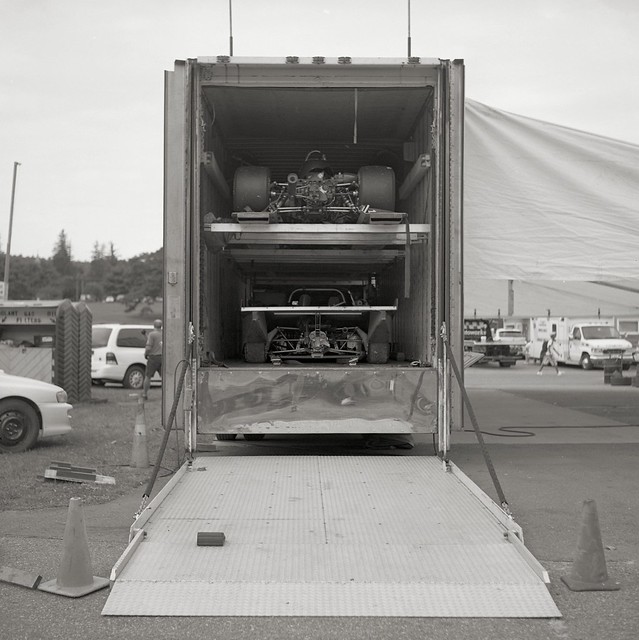
Right on. Photography's cheap compared to vintage racing. (which I enjoy as a spectator or photographer rather than a racer/owner)
Dr Croubie
Member
But if you overexpose when enlarging it's all black. Perfect to use as a cover for printing test-strips, or to cut up for burn/dodging masks 
Roger Cole
Member
Right on. Photography's cheap compared to vintage racing. (which I enjoy as a spectator or photographer rather than a racer/owner)
I started taking flying lessons in 2006 and got my private pilot certificate in 2007. One odd "advantage" is that, after being into flying, all my other hobbies look ridiculously cheap!
I rented planes to fly semi-regularly but due to circumstances I now haven't flown in a bit over a year. I still miss it and WILL get back to it.
| Photrio.com contains affiliate links to products. We may receive a commission for purchases made through these links. To read our full affiliate disclosure statement please click Here. |
PHOTRIO PARTNERS EQUALLY FUNDING OUR COMMUNITY:  |