Once one gets to understand how black and white film works, and which specific films to choose for certain applications, then in a sense, you can have it all. Given the right choice of film and development, very wide ranges of illumination can be captured in the same scene, and done so sensitively, without needing to resort to runaway bulldozer techniques like neutral grad filters. I've never used a grad filter or polarizer for a black and white shot in my entire life, and don't like em for color applications either. I'm not implying that's wrong to do, but I personally find those options both unnecessary and relatively crude hatchet-job approaches. I like to capture all the intricate sparkle and magic of the light, and not beat it into submission with a polarizer. But that's a whole other topic in its own right.
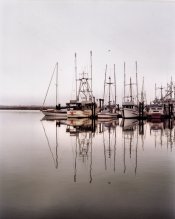
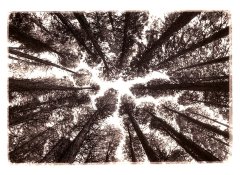
I could make the same sort of axiomatic reply to the problem of photographing low-contrast weather, like the previous reference to Ireland. I've never been to Ireland, though I would certainly love to some day. But from what I have seen photographed or filmed of it, the lighting conditions must often be very analogous to what we get around here, where veiling coastal fog is common much of the year, right now in fact. But I can go out with my 8X10 camera and use the same film for a soft four stop scene when the fog is in, as well as for a twelve stop scene when direct sunlight comes out unhindered a few hours on the same day, when those same coastal forests suddenly exist in very high contrast. No, not just any film will accept that, or have the right kind of versatility. But that's why we need to understand respective films themselves, and not trust generic advice. Is that fact difficult and annoying to accept? Not if you're like me, and love the challenge. I dance with the light, and let it lead.