

• Welcome to Photrio!
    Registration is fast and free. Join today to unlock search, see fewer ads, and access all forum features.
    Click here to sign up

Which RB67 lenses are really floating elements?

Moment of Spin

A
Moment of Spin

  • 0
  • 0
  • 24
Bad patch

H
Bad patch

  • 1
  • 0
  • 23

Recent Classifieds

Forum statistics

Threads
203,099
Messages
2,849,800
Members
101,666
Latest member
Historicalscans
Recent bookmarks
0

rayonline_nz

Member
Allowing Ads
Joined
Mar 20, 2010
Messages
658
Location
Wellington,
Format
Multi Format
I have a 127mm and a 180mm in the KL version but I have been told they are not really floating element lenses but just a dof guide. Can someone confirm this please? I was told the 50mm C lens is a floating element though.


Cheers.
 
KL itself is not floating element designation. If a lens has a floating element adjustment ring, they must be (and from my reading it may NOT work at all, some issues with internal design and possibility of "losing" the connection). Can't get to my lenses right now so cannot confirm the 127/180 for you. Never seen a floating difference outside of close distance work though.
 
I have a 127mm and a 180mm in the KL version but I have been told they are not really floating element lenses but just a dof guide. Can someone confirm this please? I was told the 50mm C lens is a floating element though.

50mm and 65mm have floating elements.
 
...of the C-lenses, 50, 65 and 140mm macro have manually set floating elements to correct distance-related abberations. These lenses should work just as well at close distances as they do at infinity. The floating element control looks like a focusing ring and has a certain resistance to turning - you are, of course, using it to move several 'chunks' of glass. In contrast, the depth-of-field ring on your 127 and 180mm lenses will turn with almost no effort. That's how you can easily identify the the difference.
 
Obviously, another BR67 lens having floating elements is the 100-200mm zoom. If one finds those excellent primes too much sharp then he may get a zoom :smile:

It should be noted that "usually" floating elements design is a source for some performance loss.

Instead in the RB67 case (with the zoom exception) those primes have the floating element for distance optimization purposes, which is a different situation than having the floating element for focus and having this an impact in the peak performance. That floating glas is to optimize performance, not for another thing and damaging optimization.

"Unit Focus" is great for easy performance and for construction/design simplicity, drawbacks are "focus breathing" (not always a drawback) and exposure correction need (also not a drawback for TTL metering).

Some other lenses like the cheap/superb Nikon 50mm f/1.8AF are not Internal Focus, but Unit Focus, the ring displaces all the glass at the same time, probably because of that the cheap/simple 1.8AF is slightly (peak) sharper than the more expensive 1.4AF.


Those RB67 glasses perform crazy good !!! And the best... they have a very refined bokeh which for many it is more important than peak performance.
 
...of the C-lenses, 50, 65 and 140mm macro have manually set floating elements to correct distance-related abberations. These lenses should work just as well at close distances as they do at infinity. The floating element control looks like a focusing ring and has a certain resistance to turning - you are, of course, using it to move several 'chunks' of glass. In contrast, the depth-of-field ring on your 127 and 180mm lenses will turn with almost no effort. That's how you can easily identify the the difference.

^ This. Only the 50, 65 and 140 have floating elements.
 
I believe that there are two versions of the 50, 65 and 140 for the RB. One with and one without the floating elements. The floating elements help to get your corners in sharp focus. I owned the 50mm ULD (floating element) lens for the RZ67. There was also a cheaper in price, non ULD lens for the RZ too.
 
Here is a page from the instructions for the 140mm Macro C lens. As you will see, the lenses that have a floating element on them have more markings near that depth of field scale than the ones that just have a depth of field scale.
upload_2020-7-10_10-41-41.png
 
90 KL has floating element too. I don't think any lenses that have it do not say so right on the adjustment ring, the ring is clearly marked "floating element" . 75/127/180 do not have it for sure.
 
I believe that there are two versions of the 50, 65 and 140 for the RB. One with and one without the floating elements. The floating elements help to get your corners in sharp focus. I owned the 50mm ULD (floating element) lens for the RZ67. There was also a cheaper in price, non ULD lens for the RZ too.
...not quite right: all 50mm (C and non-C) for RB 67 have floating elements. 65mm non-C don't have floating elements - these lenses, with a wasp-waisted profile, are quite rare. The most common version is the 65mm C and this does have floating elements. I thought all 140mm macro had floating - but I may be wrong.
 
...not quite right: all 50mm (C and non-C) for RB 67 have floating elements. 65mm non-C don't have floating elements - these lenses, with a wasp-waisted profile, are quite rare. The most common version is the 65mm C and this does have floating elements. I thought all 140mm macro had floating - but I may be wrong.

Thanks, Neil. I'm more familiar with the RZ lenses.
From what I have found on the internet about RB lenses, it's clear as mud. :smile:
 
90 KL has floating element too. I don't think any lenses that have it do not say so right on the adjustment ring, the ring is clearly marked "floating element" . 75/127/180 do not have it for sure.
Have to correct myself: the 75 KL is floating too. Also, ring s clearly engraved with FLOATING SYSTEM, just cannot miss it.

Further, according to Mamiya's RB Pro SD brochure, following lenses have floating mechanism: 50/65/75 (not shift one)/90/140
 
Last edited by a moderator:
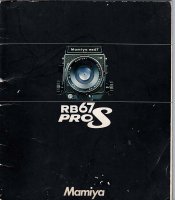
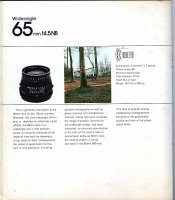
Further more, according to Mamiya's RB Pro S brochure, following lenses have floating mechanism: 50mm / 65mm NB. There is no "C" in the description or the lens photos but the lens is an 8 element in 7 groups which is the same as the C lens is. There is no mention of the 140 in the "Pro-S 76.1" brochure.

Perhaps there were four 65mm lenses made:
65mm Non-C
65mm Non-C, NB, improvement in eradication of aberration (floating).
65mm C (floating)
65mm K/L (floating)

Witold's link leading to Codes here: https://rb67.helluin.org/lenses/

Some stuff about the RZ lenses: https://emulsive.org/reviews/camera...z67-part-three-lenses-filters-and-accessories
 
Last edited:
[QUOTE="....am unsure of what "NB" means but strongly suspect it equates to "New Barrel" which is also used for the 90 / 127mm, there is no mention of the 140 in the "Pro-S 76.1" brochure.

- the 140mm macro is a post-1976 lens?
 
[QUOTE="....am unsure of what "NB" means but strongly suspect it equates to "New Barrel" which is also used for the 90 / 127mm, there is no mention of the 140 in the "Pro-S 76.1" brochure.

- the 140mm macro is a post-1976 lens?

Sorry I was editing that out as I found some better info on Witold's link

I would not go as far as to say it is post 76, the brochure may have been printed for a future publication and pushed out regardless.

My brochure seems to trip over itself in more than one place, as far as I know the C designation started before 76 which further muddles it up, if the 76.1 means what it looks like.

pro-s1.jpg pro-s-65mm.jpg pro-s-system-chart.jpg pro-s-back.jpg
 
Last edited:
[QUOTE

My brochure seems to trip over itself in more than one place, as far as I know the C designation started before 76 which further muddles it up, if the 76.1 means what it looks like.

View attachment 250122 View attachment 250123 View attachment 250124 View attachment 250125[/QUOTE]
... your brochure may be timed to the release of the Pro S (1974). Many lenses were subsequently added or updated. I've never seen a 65mm NB - only 90mm and 127mm. It's interesting nonetheless. I think the 140mm macro was introduced in the early 80's.
 
The 1978 Bell and Howell/Mamiya RB67 Pro-S system chart I have in pdf format lists the 140mm f/4.5 C macro lens with floating element.
The 140mm macro lens is the only one that has any reference to a floating element, and that is hard to read, because the chart was apparently over a two page spread, and it has been scanned in two parts, and the lens description is half in one part, and half in the other!
 
The instruction manual for the original RB67 that Mike Butkus has on his site has information on the early (pre C) lenses. There is no 140mm macro on the list, and the description of the 50mm lens is the only one that refers to a fkloating element.
 
I have a 127mm and a 180mm in the KL version but I have been told they are not really floating element lenses but just a dof guide. Can someone confirm this please? I was told the 50mm C lens is a floating element though.


Cheers.

Yes, the 127 and 180 are NON floating.

Lenses that have the floating system don't have a DOF guide, they have a ring that is turned and feels more or less stiff and precision-like, like a focusing ring would.

The 50 and 65mm have the floating system, except for the very very very early version of the 65mm without floating system and a much bigger front element.
 
The 1978 Bell and Howell/Mamiya RB67 Pro-S system chart I have in pdf format lists the 140mm f/4.5 C macro lens with floating element.
The 140mm macro lens is the only one that has any reference to a floating element, and that is hard to read, because the chart was apparently over a two page spread, and it has been scanned in two parts, and the lens description is half in one part, and half in the other!
I have the brochure for SD with same 2 page spread, so what I wrote is what it says.
 
I believe the K/L 65/75/90 are floating element lenses. I don't think any telephoto's are, but perhaps don't quote me as this is just from memory.
 
I believe the K/L 65/75/90 are floating element lenses. I don't think any telephoto's are, but perhaps don't quote me as this is just from memory.

I have already posted (as in below) which lenses are floating. I see no reason to argue with Mamiya.

...

Further, according to Mamiya's RB Pro SD brochure, following lenses have floating mechanism: 50/65/75 (not shift one)/90/140
 
Photrio.com contains affiliate links to products. We may receive a commission for purchases made through these links.
To read our full affiliate disclosure statement please click Here.

PHOTRIO PARTNERS EQUALLY FUNDING OUR COMMUNITY:


Ilford ADOX Freestyle Photographic Stearman Press Weldon Color Lab Blue Moon Camera & Machine
Top Bottom