
• Welcome to Photrio!
    Registration is fast and free. Join today to unlock search, see fewer ads, and access all forum features.
    Click here to sign up

Where would film technology be now?

Recent Classifieds

Forum statistics

Threads
203,174
Messages
2,850,953
Members
101,712
Latest member
Plastic
Recent bookmarks
0
Technically, it was ideal BW to develop, scan and print in the digital minilabs of the era, lack of silver grain made it easy to scan and its sensitometry made it easy to print in RA-4 paper alongside color prints of the next roll, and of course then cheap C-41 chem was in the minilab tanks. So that stuff comes from there.

For a creative photographer BW400CN had a beatiful spectral signature (spectral sensitivity) that delivered a nice tonal separation for skin, and it also had an insane latitude in the highlights that made easy to print glares in the faces, if photographer wanted to exploit that to depict face volumes.

...but BW400 was not much suitable for hard core BW photographers wanting a high degree of control from selecting specific developers or working with grain structure and all that...

BW400 was a very beautiful film, with strong and weak points, some of my most loved shots (loved by me, saying... of course :smile:) were made with it.

This conversation is interesting. I have many feet of BW400 in 70mm. I don't really know what to do with it as I develop C-41 at home and it's expensive and a bit of a waste to develop C-41 B&W at home. I'm unsure if it takes to pushing which also makes it a little less useful. Currently I use it when my C-41 kits are twice past manufacture recommended rolls. Since there's no worry of color shifts I save the BW400 for the end of the processing life.
 
What is it you like particularly about:
A. Chromogenetic film?
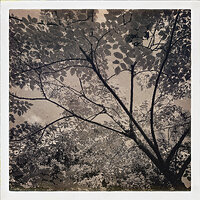
B. The tonal range? The glowing effect of leaves could be easily achieved with a green or Y/G filter.
C. The photo? To me it looks like a pretty standard trial shot, with some random subject and little attention to composition. Am I missing something?

I like those chromogenic films because I'm trained to use them and they fit my needs. There were times when I had little time to develope and print my stuff; I bought Neopan 400CN or Ilford XP2 Super and a few hours later I got sharp negatives wth little grain, easy to scan for the moment and to wet-print in future.
Using this kind of film I get detailed shadows; a wide range of midtones and intact highlights. I can also get beautiful skintones using a yellow-green filter.
I'm not saying that something like that is not possible with other traditional films. I like my TriX; I use TMAX too.

I like the photo because it reminds me to a place I visited a couple of years ago and had some 'happy times' there;
it has a special 'summery feel' for me. I like it for the 'glow' in the trees and on the grass; maybe I like it because it is 'pretty standard' (that's what I am). :smile:
 
This conversation is interesting. I have many feet of BW400 in 70mm. I don't really know what to do with it as I develop C-41 at home and it's expensive and a bit of a waste to develop C-41 B&W at home. I'm unsure if it takes to pushing which also makes it a little less useful. Currently I use it when my C-41 kits are twice past manufacture recommended rolls. Since there's no worry of color shifts I save the BW400 for the end of the processing life.

Pull it, throw a lot of light to it, it likes light !!!


You can also develop BW400CN in regular BW developers: https://www.digitaltruth.com/devchart.php?Film=%Kodak+BW400CN%&Developer=&mdc=Search&TempUnits=C&TimeUnits=D

https://mrleica.com/kodak-bw400cn-film-review/

In Xtol:

48893397577_6a1bb43c51_c.jpg


48643878883_c44be5d9b8_c.jpg
 
Last edited:
Holy crap. That is the coolest thing I've ever heard.

Carestream, who bought the Kodak Health Sciences business, has been selling X-Ray type printers that use dry film processing for almost 20 years. It was an awesome breakthrough.
 
Photo CD may have become a mass market product for viewing and sharing photos with your friends....
 
I like the photo because it reminds me to a place I visited a couple of years ago and had some 'happy times' there;
it has a special 'summery feel' for me. I like it for the 'glow' in the trees and on the grass; maybe I like it because it is 'pretty standard' (that's what I am). :smile:
Thank you Manfred. I am glad you get it. Rural areas of Mississippi have hundreds or thousands of abandoned farm houses, country stores, and cottages like this, and I am trying to document "Lost America" as often as I see a suitable subject.
 
Very nice. What speed did you shoot it at?

EI 100 is fine, but nominal EI 400 is also good if you need speed. If the film is very old and not cold stored then better to overexpose it a bit anyway. For the first roll jaust make some bracketings to see the point in what highlights are blown with your processing.

HC-110 could be nice but for an smooth grain I'd recommend Xtol.

It is coulored so I guess this has an impact for enlarging with VC paper, I've always scanned it, it curls, lab processed film comes flat, but DIY processed can require patience in the scanning, the new EPSOn V800 holders with AN glass help.


Pre soak?

Modern films from principal manufacturers don't require any pre-soak, industrially they are not processed with pre-soak, usually. Modern emulsions include surfactants to ensure an even result, pre-soak remove those surfactants and this can lead to problems if pre-soak is not long enough, so if you pre-soak make it long enough, with surfactants removed if the emulsion is not uniformly swelled then we may have unevenness.

...when we pre-soak we remove those surfactants, so we have to wait until the emulsion is swelled uniformly !!!

shuffle method for tray processing sheets requires pre-soak
 
Very nice. What speed did you shoot it at?

EI 100 is fine, but nominal EI 400 is also good if you need speed. If the film is very old and not cold stored then better to overexpose it a bit anyway. For the first roll just make some bracketings to see the point in what highlights are blown with your processing. BW400CN can be abused like Portra, it likes light.

HC-110 could be nice but for an smooth grain I'd recommend Xtol.

It is coulored so I guess this has an impact for enlarging with VC paper, I've always scanned it, it curls, lab processed film comes flat, but DIY processed can require patience in the scanning, the new EPSOn V800 holders with AN glass help.


Pre soak?

Modern films from principal manufacturers don't require any pre-soak, industrially they are not processed with pre-soak, usually. Modern emulsions include surfactants to ensure an even result, pre-soak remove those surfactants and this can lead to problems if pre-soak is not long enough, so if you pre-soak make it long enough, with surfactants removed if the emulsion is not uniformly swelled then we may have unevenness.

...when we pre-soak we remove those surfactants, so we have to wait until the emulsion is swelled uniformly !!!

shuffle method for tray processing sheets requires pre-soak
 
EI 100 is fine, but nominal EI 400 is also good if you need speed. If the film is very old and not cold stored then better to overexpose it a bit anyway. For the first roll jaust make some bracketings to see the point in what highlights are blown with your processing.

HC-110 could be nice but for an smooth grain I'd recommend Xtol.

It is coulored so I guess this has an impact for enlarging with VC paper, I've always scanned it, it curls, lab processed film comes flat, but DIY processed can require patience in the scanning, the new EPSOn V800 holders with AN glass help.


Modern films from principal manufacturers don't require any pre-soak, industrially they are not processed with pre-soak, usually. Modern emulsions include surfactants to ensure an even result, pre-soak remove those surfactants and this can lead to problems if pre-soak is not long enough, so if you pre-soak make it long enough, with surfactants removed if the emulsion is not uniformly swelled then we may have unevenness.

...when we pre-soak we remove those surfactants, so we have to wait until the emulsion is swelled uniformly !!!

shuffle method for tray processing sheets requires pre-soak

I DSLR scan so having a colored mask is not a major problem.

My C-41 kits always have a presoak step. Maybe that's to get the film up to temp though...
 
A presoak with any film or color paper is quite beneficial.

PE, I you say it then a reason is there, but what's the benefit with today's materials?

It looks that it also can be harmful, Ilford datasheets say: "A pre-rinse is not recommended as it can lead to uneven processing." They say it in Pan F, FP4, HP5, D100, D400 and SFX datasheets.

Also Fuji Frontiers do not use pre-soaks, not for C-41 and not for RA-4... I guess that Noritsus also don't use it.

Tetenal C-41 kit instructions tells to pre-heat the drum for 5min, but this is with the film dry, they don't state a pre-soak.

Kodak TMX datasheet says: "Prewetting sheet film may improve tray process uniformity.", of course this is true if using the Shuffle method making multiple stacked sheets in a single tray, but they say nothing for tanks or drums.

Personally, I have never used pre-soak and I have never had an uneven development with ilford/kodak/fuji/agfa films, I've not shot much Shanghai/Foma...
 
Last edited:
PE, I you say it then a reason is there, but what's the benefit with today's materials?

It looks that it also can be harmful, Ilford datasheets say: "A pre-rinse is not recommended as it can lead to uneven processing." They say it in Pan F, FP4, HP5, D100, D400 and SFX datasheets.

Also Fuji Frontiers do not use pre-soaks, not for C-41 and not for RA-4... I guess that Noritsus also don't use it.

Tetenal C-41 kit instructions tells to pre-heat the drum for 5min, but this is with the film dry, they don't state a pre-soak.

Kodak TMX datasheet says: "Prewetting sheet film may improve tray process uniformity.", of course this is true if using the Shuffle method making multiple stacked sheets in a single tray, but they say nothing for tanks or drums.

Personally, I have never used pre-soak and I have never had an uneven development with ilford/kodak/fuji/agfa films, I've not shot much Shanghai/Foma...

Never did no harm, nor have I seen any help.

If I do a stand or color or something at high temp I'll pre soak. Otherwise I'll skip it.
 
Never harms... with an exception, a too short pre soak may lead to uneven dev...
 
Presoak works. It gets rid of air bubbles and improves uniformity. I use it all the time with my Jobo and I have done probably thousands of rolls of 120, 220 and 35mm as well as 4x5. I did not use it at Kodak but I did have Nitrogen burst there which was quite strong, and so a prewet was not needed. A prewet with tray processing is OK. Kodak has recommended that for years.

PE
 

Attachments

  • processing film demo.jpg
    processing film demo.jpg
    129.9 KB · Views: 286
C41 RANP process film in 9 minutes, including film entrance and drying, I guess that many R+D had to be done over time to reach those 9min. The way the emulsion swells and the chem penetrates uniformly as fast as possible could have rquired a a really intense development.

Probably Kodak/Fuji had an advantage in this field, from that insanely high research budget they had in the good times.

What is contradictory is that ilford explicitly discourages pre soak in their datasheets, ilford literature says that they don't like having the surfactants washed in the pre soak, perhaps kodak/fuji had a more refined design.

My guess is that film/paper designed to be processed that fast has to take chem inmediately, and emulsion has to be uniformly swelled by when induction time is over.

There is no doubt that pre soak was important in the times AA recommended it, but a question is how film evolved to allow RANP times.
 
Last edited:
What is contradictory is that ilford explicitly discourages pre soak in their datasheets,
Only in some cases.
In most cases, they state that it is not recommended, which in the England means that it is not necessary.
 
Only in some cases.
In most cases, they state that it is not recommended, which in the England means that it is not necessary.
See datasheets, they say it may lead to uneven dev
 
See datasheets, they say it may lead to uneven dev
Some do, some don't and in some case they are specific about certain circumstances where they recommend against it.
For example, the Perceptol, ID-11and Microphen datasheet recommends against it with respect to rotary processors, but is silent about the issue with respect to other types of development.
 
Se next datadheets: hp5, fp4, d100, d400, pan f, sfx...
 
Same thing - the recommendations respecting pre-rinse all relate to use in rotary processors, not to other methods of processing. Except with SFX-200, where the wording mirrors the wording in the datasheet for various developers - where the pre-rinse discussion is only in the section on rotary processors.
 
My understanding is that the recommendation is for all processing ways, there is a period before the recommendation.

Also some posts in the ilford forums by ilford technicians clarify that, also stating this is because pre soak washes important surfactants from emulsion.

In the Microphen datasheet they say:
However, generally we
do not recommend using a pre-rinse as it can lead
to uneven development.

That "Generally" IMO says all processings

In fact, make a too short pre soak in tanks and you'll get uneven dev
 
Presoak works. It gets rid of air bubbles and improves uniformity. I use it all the time with my Jobo and I have done probably thousands of rolls of 120, 220 and 35mm as well as 4x5. I did not use it at Kodak but I did have Nitrogen burst there which was quite strong, and so a prewet was not needed. A prewet with tray processing is OK. Kodak has recommended that for years.

PE

Oh gosh, see-saw development! We've come a long way...
 
Sigh! I've done it many many times. I did it in my grandmother's soup bowls in our cold cellar back home, years before computer's existed.

PE
 
Sigh! I've done it many many times. I did it in my grandmother's soup bowls in our cold cellar back home, years before computer's existed.

PE

It lives on...

I use it as the final cleaning. See-saw through the photoflo water. It gives me sparkly clean negatives.
 
Photrio.com contains affiliate links to products. We may receive a commission for purchases made through these links.
To read our full affiliate disclosure statement please click Here.

PHOTRIO PARTNERS EQUALLY FUNDING OUR COMMUNITY:


Ilford ADOX Freestyle Photographic Stearman Press Weldon Color Lab Blue Moon Camera & Machine
Top Bottom