• Welcome to Photrio!
    Registration is fast and free. Join today to unlock search, see fewer ads, and access all forum features.
    Click here to sign up

What should I expect from this old IR filter?

Recent Classifieds

Forum statistics

Threads
204,281
Messages
2,866,562
Members
102,207
Latest member
gustavocf
Recent bookmarks
0

loccdor

Subscriber
Joined
Jan 12, 2024
Messages
3,401
Location
USA
Format
Multi Format
1740439370331.jpeg


I have a Hoya 720nm IR filter and for the films (Agfa Scala/HR-50, Rollei/Aviphot 200) I use I've been able to shoot them at ISO 6 with good results. With this older Series V 670nm filter above, do you think it would be more like ISO 12? Just trying to figure out the comparative factor between the two filters in terms of exposure.
 
Test test test. Then compare the results and decide which you ike best.
 
Sure will. Wasn't expecting to find an IR filter in a size compatible with TLRs even when using a hood.
 
A 670nm filter will let a fair more visible light through than the 720nm filter.
As a result, any Wood effect may be less apparent in the result - the visible light tends to overwhelm the near IR and IR.
And by the way, my 49mm 720nm filter works great on all my Mamiya TLR lenses - in some cases with a 46mm-49mm adapter :smile:.
With or without a hood.
 
@MattKing

I've got a double hood on my Autocord which fits on the outside of the Bay I mount. The Bay I -> Series V adapter looks to be the largest filter I can use with this type of hood.

autocordhood.jpg
 
@MattKing

I've got a double hood on my Autocord which fits on the outside of the Bay I mount. The Bay I -> Series V adapter looks to be the largest filter I can use with this type of hood.

View attachment 392195

I figured something like that - but the temptation to poke some gentle fun was strong.
The Mamiya hoods are single hoods. When I use the filter on the lenses with 46mm threads, I use the adapter that permits using the 49mm filter which happens to be the size that fits directly on the 65mm lens.
And when I do that, the hood designed for the 65mm lens works on the now adapted lens.
This probably wouldn't work for the 55mm lens.
 
I'll go along with Rick A 🤓 test, test, test. To me that applies to all infrared work. The ratio of IR to visible light seems to vary wildly to begin with, plus the human eye doesn't see IR for intuitive adjustments. So one likely wants to bracket their shots a bit.

This post caught my eye because I have a Series VII Wratten 89B bought in the 1960s to work with the Kodak film. I also have 720 and 760 threaded filters but not the hardware to adapt all to one camera! Thus I've never done an A-B comparison. I also don't have any documentation on my 89B, but a while back when I looked up 89Bs online, I got the impression it's spec'ed more like a 695 cutoff. In any event, trying it with SFX200 I got some noticeable Wood effect. And I wound up considering EI 6 as my working number for exposure.

My impression is that the cutoff is not super sharp, so I would not be surprised if you don't see much difference.
Edit: My IR work online @PBase

That is my 1.3 (after tax) cents,
 
Last edited:
This post caught my eye because I have a Series VII Wratten 89B bought in the 1960s to work with the Kodak film.

Wonderful infrared gallery, and I appreciate your photographic notes alongside the images, very helpful. It will be a couple months before we start to see leaves here, but I will put testing this on my list. It definitely will be more pleasant to do infrared with a TLR than an SLR.
 
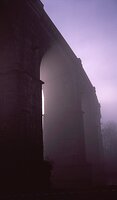
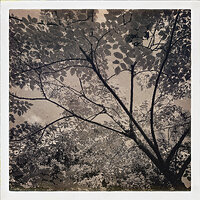
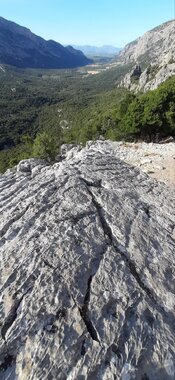
Alright, I was able to try the 89B filter out, and it appears to take a very similar amount of light as the Hoya 720 filter I am used to. This was the best exposed shot, with an EI of 6 on Aviphot 200/Rollei IR. The ones on EI 12 were all badly underexposed.

54398590242_ccac275ffc_k.jpg
 
View attachment 392193

I have a Hoya 720nm IR filter and for the films (Agfa Scala/HR-50, Rollei/Aviphot 200) I use I've been able to shoot them at ISO 6 with good results. With this older Series V 670nm filter above, do you think it would be more like ISO 12? Just trying to figure out the comparative factor between the two filters in terms of exposure.

I would expect it to perform like any other 720 IR filter use a filter factor of 6. I use the light meter to meter the subjects without the meter seeing the sky and open up 6 f/stops. I use Rollei IR 400 at ISO 400 exactly that way and have never had a problem.
 
Photrio.com contains affiliate links to products. We may receive a commission for purchases made through these links.
To read our full affiliate disclosure statement please click Here.

PHOTRIO PARTNERS EQUALLY FUNDING OUR COMMUNITY:



Ilford ADOX Freestyle Photographic Stearman Press Weldon Color Lab Blue Moon Camera & Machine
Top Bottom