• Welcome to Photrio!
    Registration is fast and free. Join today to unlock search, see fewer ads, and access all forum features.
    Click here to sign up

What negative Exposure compensation to use in country with bright light like India?

Forum statistics

Threads
203,442
Messages
2,854,748
Members
101,843
Latest member
Dixonyamaddah
Recent bookmarks
0

silvercloud2323

Member
Allowing Ads
Joined
Oct 4, 2018
Messages
188
Location
Europe
Format
35mm
Hi,


Would it be a good idea to underexpose with exposure compensations for let’s say 2 stops ?

I am using a canon A1 film camera.


What I’m trying to avoid is a film that is too contrasty because of the heavy light.


Please feel free to advice me on the settings to use.

thank you.
 
Use box speed and take the light reading without the sky. That will bring out the colors better for slides or provide better shadow detail for black & white or color negatives. Essentially automatically giving you the benefit of an EI without all the testing.
 
I don't really understand Sirius. I was told to underexpose 2 stops of a general reading. So the blacks are not rendered as 18% grey.
I will be taking photos in black and white.

You say to use box speed. What you mean with it? You mean to use the indicated film speed of the film? why does it provide better shadow?
Why not include the sky in reading?

I'm pretty new to technical aspects of this. but like to learn more.

Anyway thx
 
There is no need to underexpose. Underexposing looses shadow details. When film is underexposures information is lost forever and cannot be retrieved in the darkroom or by digital methods. In fact some overexposure will capture more details that can be brought out by printing techniques. In the US Southwest we often have 16 flstops Subject Brightness Range [SBR] and one can capture most of that using the directions I gave since black & white film can capture up to 14 to 16 f/stops with the right exposure and development. Box speed is the ISO that the manufacturer provides such as Kodak Tri-X 400 is ISO 400 and Kodak Portra 400 is ISO 400, both are the main two films I use.
 
I read that film exposure indication renders grey 18% value. That’s why to underexpose the dark areas 2 stops. To also render them dark and not grey.
 
You either got some bad advice or got confused about the advise you got. Suggest you ignore that and read this:

http://www.canonfd.org/manuals/a-1.pdf

It’s a lot of reading but will properly teach you what you need to no for success.
 
I don't really understand Sirius. I was told to underexpose 2 stops of a general reading. So the blacks are not rendered as 18% grey.
I will be taking photos in black and white.

You say to use box speed. What you mean with it? You mean to use the indicated film speed of the film? why does it provide better shadow?
Why not include the sky in reading?

I'm pretty new to technical aspects of this. but like to learn more.

Anyway thx

If you are taking your metre readings directly from the shadows, then yes, two stops less would put them on zone III, in zone system parlance. Do you have a metre that will allow you to take only shadow readings?
 
You need to meter off something that approximates an 18% grey card. Sidewalks usually work. If you meter off a white building you need to stop down 2 stops. If you meter in deep shadows you need to increase exposure by two stops.
 
Andrew
I only plan to have exposure reading from the camera. So you advice to underexpose 2 stops when I take the reading from the blacks.?
 
You want the film to be correctly exposed. The word "underexposed" can mean several different things and is not helpful without some point of reference. You definitely do not want your film to be two stops underexposed compared to the the correct exposure!

What is the correct exposure? Most of the time - for an average scene - you camera meter will choose the correct exposure, so you don't need do anything extra. But if the scene is not average - maybe there is too much bright sky in the scene, or large areas of deep dark shadows - your meter will not know that, so it may choose an exposure that is too dark or too light.

As others have mentioned, one way to determine the correct exposure when the lighting is not average is to put a 18% gray card in the same light as your subject, meter from the gray card, and use that reading.

Another way to determine the correct exposure would be to get in close to a deep shadow and take a meter reading, being sure only the shadow is visible to your camera meter - and then reduce the exposure by two stops from that reading.

The above two methods should work for negative film. If you are shooting slide film, extra care may be needed to protect the highlights.
 
Last edited:
Many have succeeded by simply pointing an A1 at a scene and pressing the shutter release. Why make it so complex that photography quite likely won’t succeed?
 
Don't use the word "under-expose" - it can lead to confusion in this context.
It actually means give too little exposure.
You want to be thinking instead about whether you should:
1) give the film the exposure recommended by your meter;
2) give the film more exposure than the exposure recommended by your meter - i.e. increase the exposure; or
3) give the film less exposure than the exposure recommended by your meter - i.e. decrease the exposure.
Whether or not you should follow the recommendation of the meter depends on the camera you are using and where you are pointing the camera at.
If you want to have good pictures of as much of a scene as possible, and in particular of the middle tones in a typical scene, point the camera there and do what the camera's meter tells you to do.
If you are most interested in the shadows in a scene, point the camera at the part of the scene that has lots of shadows in it and set the exposure for two stops less than what the camera's meter tells you to do.
If you are most interested in the bright highlights in a scene, point the camera at the part of the scene that has lots of those highlights and set the exposure for two - three stops more than what the camera's meter tells you to do.
The A-1 has a reasonably advanced metering system. More often than not what it recommends will be a good choice.
With negative film, if you are unsure, a little bit more than necessary exposure is probably better than too little.
But box speed and going with what the meter suggests will probably be good.

 
Don't use the word "under-expose" - it can lead to confusion in this context.
It actually means give too little exposure.
You want to be thinking instead about whether you should:
1) give the film the exposure recommended by your meter;
2) give the film more exposure than the exposure recommended by your meter - i.e. increase the exposure; or
3) give the film less exposure than the exposure recommended by your meter - i.e. decrease the exposure.
Whether or not you should follow the recommendation of the meter depends on the camera you are using and where you are pointing the camera at.
If you want to have good pictures of as much of a scene as possible, and in particular of the middle tones in a typical scene, point the camera there and do what the camera's meter tells you to do.
If you are most interested in the shadows in a scene, point the camera at the part of the scene that has lots of shadows in it and set the exposure for two stops less than what the camera's meter tells you to do.
If you are most interested in the bright highlights in a scene, point the camera at the part of the scene that has lots of those highlights and set the exposure for two - three stops more than what the camera's meter tells you to do.
The A-1 has a reasonably advanced metering system. More often than not what it recommends will be a good choice.
With negative film, if you are unsure, a little bit more than necessary exposure is probably better than too little.
But box speed and going with what the meter suggests will probably be good.

Thx Mattking
 
Matt's advice is perfect. Only thing I would add is to bracket when you have a scene you really don't want to miss. That essentially means doing three shots, one at your metered aperture & speed, another one stop more exposure, and a third one stop less exposure.
 
You need to meter off something that approximates an 18% grey card. Sidewalks usually work. If you meter off a white building you need to stop down 2 stops. If you meter in deep shadows you need to increase exposure by two stops.
I think this advice is the wrong way around. Metering a white wall will cause the camera to underexpose. Thus increase exposure by two stops. Similarly taking a reading from shadow details will give a meter reading that indicates more exposure is required when it really isn't - the meter is trying to achieve an exposure for a uniform mid-grey result.

The Canon AE-1, amongst others, had a button which increased the exposure by 1.5 stops over what the auto metering would normally have given. This was useful where there was strong backlighting and for shooting snow scenes. Probably also useful for sunny days at the beach as well.

Useful metering targets that approximate mid-grey include worn asphalt/sidewalks and grass lawns. Even metering from the palm of your hand and opening up by one stop will give good results.
 
If I may add, in a place with intense light it can happen, under the right circumstances, that you'll get less contrast. In a good way.

At least I remember a particular image I took on Velvia 50 inside the courtyard of an ancient, famous Madrasa (islamic school) in Buchara, Usbekistan. Think Silk Road.

I wanted a particular view, standing inside the open space, sun behind and above the building. The open corridors along the courtyard in deep shade, the sun frying the open area around and in front of me. I incident metered, accepting some overexposure by taking the reading closer to the, shaded edge of the courtyard.

But it turned out great, iirc. The sky wasn't totally blown out, the deep shades weren't all black. I think due to the intense light it scattered into the shaded areas. It still looked like deep shades, but compensated the reading in the shade and allowed the scene to fit the dynamic range of Velvia.
 
Shot a lot of color slides in India in the 70’s. always box speed and always trusted the lightmeter in my camera (OM-1), which has a slight preference for the foreground. This gave me 36 correct exposures out of 36. With the Rolleiflex (bw) I always measured the foreground, so, without too much sky.
So, keep it simple.
 
I had a pretty difficult time figuring out the light the first time I went to Italy because of the wide luminance range. Distance between shadows and highlights in the old streets and alleys of Genoa was off the charts. Did what I thought I was supposed to do, which was meter for shadow detail. Ended up in these cases with blocked highlights, and a couple of negs that are nearly impossible to print. I would do it differently today, meaning meter for highlight detail and let the shadows fall where they may.

My advice is trust your eyes before looking at the meter. Bright sun also means deep and dark shadows, and it's OK if they are left deep and dark.
 
I think this advice is the wrong way around. Metering a white wall will cause the camera to underexpose. Thus increase exposure by two stops. Similarly taking a reading from shadow details will give a meter reading that indicates more exposure is required when it really isn't - the meter is trying to achieve an exposure for a uniform mid-grey result.

The Canon AE-1, amongst others, had a button which increased the exposure by 1.5 stops over what the auto metering would normally have given. This was useful where there was strong backlighting and for shooting snow scenes. Probably also useful for sunny days at the beach as well.

Useful metering targets that approximate mid-grey include worn asphalt/sidewalks and grass lawns. Even metering from the palm of your hand and opening up by one stop will give good results.

You are correct about being the wrong way around. Sitting at the computer (and night outside) I just couldn't wrap my head around which way to go. I live in the SE and it's almost always a sunny 16~22 here. Without a meter and the bright sunlight I just increase exposure for the beach and white houses.
 
You are correct about being the wrong way around. Sitting at the computer (and night outside) I just couldn't wrap my head around which way to go. I live in the SE and it's almost always a sunny 16~22 here. Without a meter and the bright sunlight I just increase exposure for the beach and white houses. People shouldn't make it so complicated for the OP
 
Andrew
I only plan to have exposure reading from the camera. So you advice to underexpose 2 stops when I take the reading from the blacks.?
The practice taught as the Zone System is what you are talking about. The underlying principle is “expose for the shadows, develop for the highlights”. You can take a close-up meter reading, move in close to a dark part of the picture (that you envision dark gray in the print). Then the meter reading wouldn’t be right as-is (it would make it middle gray). So to “expose for the shadow” you read that shadow and set the camera exposure to make that part of the picture turn out dark gray. Underexpose two or three stops will make it come out dark gray or black. The rest of the picture will fall on relatively proper shades of gray all the way to white.

To complete the plan you also meter the brightest part of the picture where you want detail. As Sirius Glass points out that might not be the sky (because you might want to ignore that as too bright for detail, let it go blocked out white).

But the Zone System is taught in second level photography, it is wise to start simple.
 
You need to meter off something that approximates an 18% grey card. Sidewalks usually work. If you meter off a white building you need to stop down 2 stops. If you meter in deep shadows you need to increase exposure by two stops.


I think this is correct. But another approach would be to overexpose everything by one stop, as suggested by Bernice Abbott. Anyway, having photographed extensively in India I don't think it's much "brighter" than elsewhere.
 
I think this is correct. But another approach would be to overexpose everything by one stop, as suggested by Bernice Abbott. Anyway, having photographed extensively in India I don't think it's much "brighter" than elsewhere.
I'd have to agree with that as here is Australia it's not worth going out on sunny days to photograph between 10 am and 4 pm. The scene brightness range at that time of day plus the direct overhead lighting makes it difficult to get an exposure to control the highlights and gather in the shadows. Also lousy for portraits unless you want to use fill-flash to lighten up the heavy shadows from the sun being high overhead.
Could a polarising filter help with the extreme brightness range?
 
I'd have to agree with that as here is Australia it's not worth going out on sunny days to photograph between 10 am and 4 pm. The scene brightness range at that time of day plus the direct overhead lighting makes it difficult to get an exposure to control the highlights and gather in the shadows. Also lousy for portraits unless you want to use fill-flash to lighten up the heavy shadows from the sun being high overhead.
Could a polarising filter help with the extreme brightness range?
The polarising filter won't help you much with the brightness range.
I'd like to address the "its not worth going out on a sunny day between 10 am and 4 pm" part though.
The light you encounter in those conditions is harsh and unforgiving, but it is entirely possible that it is just that characteristic that you want in a particular photograph.
If you want to depict something in that way, choose that light.
If you want to show gentle tonal gradation, choose gentle light - shaded subjects indirectly illuminated by the sky over head is a great way to achieve that.
The harsher light is a bit more challenging to meter. Sometimes you have to decide what to favour - the brilliant highlights, or the deep shadows. Once you make that choice, you are in essence choosing to not care (much) about the other end of the brightness scale.
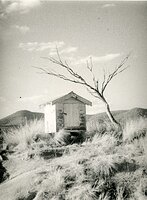
An example, where I chose the shadows:
45d-2021-07-20-cro-res 1000-Shelter.jpg
 
First of all, two different things are being confused : high luminance with overall scene contrast range. Second, we don't have any idea what specific film is in mind. So far, it hasn't even been established whether it's a black and white film, color slide film, or color neg film. An onboard camera compensation setting won't do a bit of good unless there's a known strategy to it.

Light metering basics come first.
 
Last edited:
Photrio.com contains affiliate links to products. We may receive a commission for purchases made through these links.
To read our full affiliate disclosure statement please click Here.

PHOTRIO PARTNERS EQUALLY FUNDING OUR COMMUNITY:


Ilford ADOX Freestyle Photographic Stearman Press Weldon Color Lab Blue Moon Camera & Machine
Top Bottom