
• Welcome to Photrio!
    Registration is fast and free. Join today to unlock search, see fewer ads, and access all forum features.
    Click here to sign up

What is "Visualization"?

Maniqui

D
Maniqui

  • 0
  • 0
  • 0
Redwood Park

A
Redwood Park

  • 4
  • 0
  • 53

Recent Classifieds

Forum statistics

Threads
203,570
Messages
2,856,599
Members
101,908
Latest member
lokiloki
Recent bookmarks
0
Because the in camera controls are essentially the only controls available to them. They have to be able to visualize the results with exactitude, because you can't fix anything later.
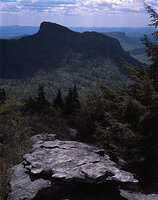
The colour slide that I posted earlier is a perfect example. It is extremely difficult to create a satisfying projectable transparency when shooting in the woods. You have to be able to carefully visualize how the slide will appear, and in only a minority of situations will you have light that will work out well.
This slide projects well:
upload_2021-4-18_16-6-24.png
 
Because the in camera controls are essentially the only controls available to them. They have to be able to visualize the results with exactitude, because you can't fix anything later.

Isn't that simply judgement which is of course vital, especially in colour slide work. The problem with visualisation is that it conjures up an almost mystical thing which borders on it being a kind of a gift that many will never have by definition of the word gift

Visualisation sort of suggests something removed from anything to do with technical ability as if it were "artistry" which most assume is given to a relatively small percentage of the human race.

pentaxuser
 
I think "visualization" takes place during all phases of shooting. From what I've been reading here, the photographer has to imagine what his picture will look like when it's done - paper or slide. He even has to imagine the shoot he may take even before he goes to the photo location like I did below. Then adjust lighting, composition, filters, etc. I had to wait for the right time and adjust framing to catch the right combinations of dead trees. I moved the tripod around to get the right location. In fact, it was standing in water for the actual shot. Even with that, I cropped the image somewhat after I scanned the film. I'd called that post-visualization which I assume Adams used when he did Moonrise.

The photographer who prints has one more step - actually printing the picture although I'd say that compares to my editing after the scan. What's calling visualization is just the whole creative process that goes into taking and presenting a shot.
Chestnut Point, Manasquan Reservoir by Alan Klein, on Flickr
50768568606_f86b5d1d0c_h.jpg
 
Isn't that simply judgement which is of course vital, especially in colour slide work. The problem with visualisation is that it conjures up an almost mystical thing which borders on it being a kind of a gift that many will never have by definition of the word gift

Visualisation sort of suggests something removed from anything to do with technical ability as if it were "artistry" which most assume is given to a relatively small percentage of the human race.

pentaxuser
I think your point is the point I was trying to make. Visualization, especially the redundant and meaningless word previsualization, makes it seem photography is some sort of a black art, rather than a good sense of a learned craft. I can't draw worth a damn. I have trouble with stick figures. So photography gives me a chance to be creative without having the eye-hand mastery of an artist who paints for example.

I think when we talk of previsualization, it scares newcomers. We all have imagination. Our dreams confirm that. Photography allows us to convert those dreams into art. Keeping the process simply defined, rather than making it seem like a magic art, could well draw in more people to photography who might otherwise be scared away because they don't have the ability to shoot creatively, when they actually can.
 
Adams and his contemporaries tended to write in a style that was rather grandiose, but I would suggest that most of the mysticism comes from others.
I understand where they were coming from, mostly because I've dealt with so many people - those amongst the majority of amateur photographers - who were casual snap-shooters who didn't visualize the results before they snapped the shutter.
Most of the regular posters here are quite intentional about their photography, even the more instinctual ones (jnantz comes to mind). When "visualization" was being coined, that didn't apply to most users of photography.
If I were to write a book on photographic visualization today, it would be difficult to avoid an appearance of mysticism.
If you want an example of someone who writes well about essentially the same thing as visualization, but avoids mysticism (and a fair bit of the technical), I might suggest Freeman Patterson. "Photography and the Art of Seeing" would be a good choice.
 
Adams and his contemporaries tended to write in a style that was rather grandiose, but I would suggest that most of the mysticism comes from others.
I understand where they were coming from, mostly because I've dealt with so many people - those amongst the majority of amateur photographers - who were casual snap-shooters who didn't visualize the results before they snapped the shutter.
Most of the regular posters here are quite intentional about their photography, even the more instinctual ones (jnantz comes to mind). When "visualization" was being coined, that didn't apply to most users of photography.
If I were to write a book on photographic visualization today, it would be difficult to avoid an appearance of mysticism.
If you want an example of someone who writes well about essentially the same thing as visualization, but avoids mysticism (and a fair bit of the technical), I might suggest Freeman Patterson. "Photography and the Art of Seeing" would be a good choice.
He's up to Edition 4. Which one?
 
I think that really overstates the case. Nobody worth listening to, including Ansel Adams, ever made a grandiose black box of “visualization”. It has never been anything more than imagining what you’d like the result to look like. It’s a normal part of any creative process, and applies to any artform. It can also change at any time, and can be part of any step in the process. It’s just a fancy word for imagining. That’s all.

This exactly. There isn't a single page of Ansel Adams in which visualization is described or understood as mystical or "some sort of black art." On the contrary, in all his writings "visualization" has everything to do with basic craftsmanship: choice of exposure, of filter, of developer, of paper. We're not talking Dr. Strange.

Adams and his contemporaries tended to write in a style that was rather grandiose

I find Adams' prose quite simple and elegant, actually. His descriptions of the various places he photographed in Examples: The Making of 40 Photographs are extremely eloquent, and totally free of any post-romantic stylistic grandiosities. It's actually a pleasure to read.
 
He's up to Edition 4. Which one?
I doubt it matters.
I no longer have the book, but I expect that the edition I spent most time with was at or near the first one.
 
I was writing my daily pages this morning and this thread entered the thought process. For me at least, I think visualization is, or has been a bit mystical because I never made the correlation between what was placed on the film (or sensor), and what the final outcome was to be. There was a disconnect between the two. I expected the camera to record, and mostly create, what I saw in my mind. Except the camera cannot do that, because the camera cannot think. It has no mind. It cannot separate clouds from sky unless I tell it to. I suppose that's where the "know your tools" part of visualization comes into play. But still, what would happen quite often is that I would get back to the darkroom or computer, and become discouraged because what I was looking at was not what I had imagined. It did not occur to me that visualization is the stopping point between one and the other. You shoot it, you edit it right? Except if what you shot, doesn't provide you with what you need to edit, then there can be no satisfactory final product. Visualization is the equalizer in the equation. If I want to do that later, I have to do this now. If I don't do this now, I can't do that later. If I were to compare visualization to Bob Ross, the negative would be the paint, visualization would be the pallet he held in his left hand which the paint was held on, and the print would be the canvas on the easel. I'm sure he could have just squirted paint directly onto a brush and smacked it up on the canvas, but the final art might not have been as polished. The pallet allowed him to see all his colors at the same time, and make decisions on which shade of a certain color he wanted before it made it to the canvas. Visualization, I suppose, will do that for me as I try to use it more effectively from now on. I hope so at least.
 
The mystical nature of visualization is completely intentional. Visualization is analogous to a visual artist (painter, sculptor) realizing an artistic idea (meaningful unit) in a finished artwork, through the actions particular to bringing that artwork into existence. Visualization aligns photography, theoretically, with the other visual arts - it makes the resultant image the meaningful product of a photographer's work. That is to be held as distinct from something just done by a camera, a view that was always there, or the process of manufacturing copies of a finished print.
I'm writing this from the perspective of aesthetics as a branch of philosophy.
 
Visualization is analogous to a visual artist (painter, sculptor) realizing an artistic idea (meaningful unit) in a finished artwork, through the actions particular to bringing that artwork into existence.

And that is what is never explained, or at least I've felt that it was never explained. Maybe because it cannot be explained, or perhaps because I've gotten too bogged down in the scientific, and mathematical technicalities of photography to realize it.
 
And that is what is never explained, or at least I've felt that it was never explained. Maybe because it cannot be explained, or perhaps because I've gotten too bogged down in the scientific, and mathematical technicalities of photography to realize it.

Truthfully, it's all really "old-fashioned" at this point. The entirety of modernism and post-modernism takes place after this brand of aesthetics - movements which are at least partially bound up in trying to dislodge that presupposed mysticism you find in concepts like "visualization " or "ideation" of art in general. Abstract art, in a way, is an attempt to get away from the older aesthetic ideals by dislodging the necessity for form and content in a work of art. In my opinion, photography could learn more from abstract study than from formal. After all, a photo of a mountain is not only not the mountain but also not what you see when you look at the mountain.
 
The most scary part of this is that I mostly understood what you wrote.
 
You look at the subject and background. You decide what to you want to show up darker or lighter. Then decide how to do that: no filters, which filter, depth of field [f/stop, shutter speed and wear to focus], contrast, ...
 
One point not often mentioned is that by knowing the craft well (by the way of the Zone System and/or whatever) allows one to expand the possibilities of one's visualization...to better know what is possible. That, making (and learning from) mistakes, and looking at a lot of good photographs will take one a long way. It helps one from making the same sort of image over and over.
 
That, making (and learning from) mistakes, and looking at a lot of good photographs will take one a long way. It helps one from making the same sort of image over and over.

It can also help someone make exactly the same sort of image over and over, which is a lot of peoples' goal.
 
It can also help someone make exactly the same sort of image over and over, which is a lot of peoples' goal.
Really? Sounds a little boring...unless it gets better each time.
 
Really? Sounds a little boring...unless it gets better each time.

You mean like 150 large format photos of mountains? Or 150 photos of peppers? Or 200 photos of random people on the streets of New York?
 
No -- different twist on the concept all together. We all take photos of the same thing -- light -- how boring! :cool:

It is doing it the same way 150 times that should be avoided...not the subject matter.
 
No -- different twist on the concept all together. We all take photos of the same thing -- light -- how boring! :cool:

It is doing it the same way 150 times that should be avoided...not the subject matter.

My last post was more of a joke, the second last a bit less of one. Almost every successful practitioner of a discipline, no matter what discipline, establishes a "style" - which is essentially comprised of a set methodology employing a known set of materials, to bring about something (a product) that is recognizably theirs.
 
"Visualization"
is the brief phase between "Pre-Visualization" and "Post-Visualization".
 
With the help of 3d visualization of architectural projects, you can create a model of any building without resorting to the use of many incomprehensible sketches. By correctly depicting every detail, you can clearly model the image of a house, cottage and other construction. But you need to carefully choose 3d visualization services company. It's the most important
 
…..without resorting to the use of many incomprehensible sketches.

Last spring I created a set of plans and elevations of our university’s art gallery. I made some of the “incomprehensible sketches” in the filed and the took them into AutoCAD. I also used an ancient version of Google SketchUp to render them in 3D. I’m a student there (non-traditional) and volunteer in the gallery doing installations and got tired of remeasuring everything evert time we put up a new exhibit.

Full disclosure, I trained and worked as a mechanical drafter long before computers came into it and then taught high school drafting with traditional methods, AutoCAD, SketchUp, and MasterCAM so I have a bit of background.
 
Photrio.com contains affiliate links to products. We may receive a commission for purchases made through these links.
To read our full affiliate disclosure statement please click Here.

PHOTRIO PARTNERS EQUALLY FUNDING OUR COMMUNITY:



Ilford ADOX Freestyle Photographic Stearman Press Weldon Color Lab Blue Moon Camera & Machine
Top Bottom