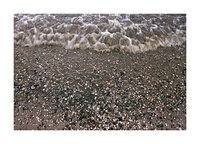
What did I do wrong with this B&W reversal?

Clouds

A
Clouds

  • 3
  • 4
  • 63
Imagon test picture

A
Imagon test picture

  • 2
  • 0
  • 56

Recent Classifieds

Forum statistics

Threads
200,981
Messages
2,817,139
Members
100,468
Latest member
weilglass
Recent bookmarks
0

Ivo Stunga

Member
Joined
Apr 3, 2017
Messages
1,229
Location
Latvia
Format
35mm
That'd require a stupid amount of work for a dry test, otherwise - I'd probably participate in an activity or two. Maybe this could be simplified by including a blank frame to measure from - doing a different task altogether. Just to have a frame to measure DMAX everybody is so agitated about.
 

isaac7

Member
Joined
Apr 12, 2019
Messages
56
Location
Virginia
Format
Med. Format RF
Just like Ilford reversal where you can literally reverse any film by adjusting silver solvent, time and agitation frequency (and developer concentration, if needed) to land contrast you need, making it a very flexible process.

HP5+ included which tends to lend a very flat result in need of boosting contrast, which can be done by deploying constant agitation and increasing developer concentration. Delta 3200 behaves similarly too.

Push/Pull included - any film.
Does this produce best slides out there - unknown to me, but I see no problems with "gradation" and densities.


Sadly he will probably take his knowledge to the grave, because reasons.


Is there a way to use the densitomer in my scanner software to have an understanding what numbers I'm getting with Ilford? Silverfast has one, but I haven't used/don't understand it.

Apparently some of the chemical stuff was published in the darkroom cookbook. Chapter 13. Wood recommends d-11 as the first developer without any silver solvent. Here are the steps:

1. First Development.

2. Wash for 2 minutes with running water or agitation. This wash is important. All of the devel-

oper must be removed or the positive may have an uneven appearance.

3. Drain 15 seconds.

4. Bleach 5 minutes.

5. Wash 1 minute.

6. Clear 2 minutes with 30 seconds of agitation each minute. Do not exceed 2 minutes in the

clearing bath or some silver halide may be dissolved resulting in a loss of density.

7. Rinse for 2 minutes.

8. Re-expose to light.

9. Second developer. Do not use thiocyanate or thiosulfate in the second developer. You

may use D-72 (Dektol) 1:2 for 3 minutes at 68F/20C, Kodak D-19, or any other energetic

developer.

10. It is important to use a full-strength stop bath after the second developer in order to stop devel-

opment in the shortest possible time. This will also help to clear the highlights and aid in archi-

val preservation.

11. Rinse for 1 minute.

12. Fix in an acid fi xer without hardener such as ATF-1. Do not use an alkaline fi xer.

13. Rinse in half strength Hypo Clearing Agent.

14. Wash thoroughly to insure the removal of all excess chemistry.

15. Dry as usual.


I hadn’t heard of others using an acid stop after the 2nd developer before nor of its potential for clearing highlights. Wood actually used a fogging developer instead of light exposure with DR5, don‘t know what that could have been. I’m also curious about the fixing step. I assumed that the 2nd developer worked til completion so there wouldn‘t be any more light sensitive halides left. Recipes for the clearing bath and bleach are in the book as well. The second developer is left vague and the warm tone isn’t mentioned at all.
 

Raghu Kuvempunagar

Member
Allowing Ads
Joined
Jul 28, 2016
Messages
2,973
Location
India
Format
Multi Format
Apparently some of the chemical stuff was published in the darkroom cookbook. Chapter 13.

Does he say that this is the exact process that he uses for processing his customer's films? And does the cookbook provide any real examples of reversal done with this specific process?

I went in a search here and could only find a second hand report of his comment which is probably what I remembered.
Post in thread 'DR5 getting published?'
https://www.photrio.com/forum/threads/dr5-getting-published.178237/post-2393541

Looking through a bunch of posts here about DR5 it doesn’t look like he was using a dichromate intensifier. There are all the regular steps and a mystery one at the end.

Post in thread 'Wanting to try reversal processing but also not die'
https://www.photrio.com/forum/threa...ocessing-but-also-not-die.174178/post-2268858

Other tidbits I ran across include that he did alter the first developer time depending on the film. No “ham fisted” one time for everything. The same chemicals were used every time which is probably why there were some films that just didn’t work well. He also did not use any silver reduction in the first developer. The warm tone developer (he caller number 2) was apparently run at 60(!) degrees Celsius.

Lots of speculation about the process of course. The most credible I think was that he used a really strong fogging developer that built up density and then was able to clear the highlights afterwards.

He used and swore by dichromate bleach.

Thanks.
 

isaac7

Member
Joined
Apr 12, 2019
Messages
56
Location
Virginia
Format
Med. Format RF
Does he say that this is the exact process that he uses for processing his customer's films? And does the cookbook provide any real examples of reversal done with this specific process?


Thanks.


If we trust this analysis about his processor it looks like it does represent his process for the most part.

Post in thread 'Wanting to try reversal processing but also not die'
https://www.photrio.com/forum/threa...ocessing-but-also-not-die.174178/post-2268858


Other parts of the text outline the orthodox view and where Wood disagrees like with the idea of using a silver solvent in the first developer. The d-11 for first developer is directly attributed to Wood and his recipes for the clearing bath and bleach are in the book. If you search out his writings in the internet you’ll see that he was adamant that dichromate bleach was necessary for best results. We don’t know what he used for 2nd developer. There is a mystery bath labeled “FT” on his processor. That’s probably the magic bath lol.

The book doesn’t talk about specific films or have any examples. The assumption is that you’d have to do your own tests. Since none of us are using dip and dunk machines all the times, agitation, etc. will need to be determined by testing. Apparently in the third edition there was a typo about the dilution of d-11.
 

Raghu Kuvempunagar

Member
Allowing Ads
Joined
Jul 28, 2016
Messages
2,973
Location
India
Format
Multi Format

Ivo Stunga

Member
Joined
Apr 3, 2017
Messages
1,229
Location
Latvia
Format
35mm
I assumed that the 2nd developer worked til completion so there wouldn‘t be any more light sensitive halides left.

Exactly, that's why I reuse 1st developer with all the hypo in it as a 2nd developer. And doing grain-peeping - I don't manage to see any adverse effects like thinning or highlights blowing out, or contrast changes, so I continue doing so and save some PQ Universal/money.

Have done this comparison two separate times with 2 different films - saw no ill effect. Lifted the idea from Foma Reversal Set.


Maybe he has a rehalogenation bath in-between.
 
Last edited:

ChrisGalway

Subscriber
Allowing Ads
Joined
Feb 24, 2022
Messages
521
Location
Ireland
Format
Medium Format
I went in a search here and could only find a second hand report of his comment which is probably what I remembered.
Post in thread 'DR5 getting published?'
https://www.photrio.com/forum/threads/dr5-getting-published.178237/post-2393541

Looking through a bunch of posts here about DR5 it doesn’t look like he was using a dichromate intensifier. There are all the regular steps and a mystery one at the end.

Post in thread 'Wanting to try reversal processing but also not die'
https://www.photrio.com/forum/threa...ocessing-but-also-not-die.174178/post-2268858

Other tidbits I ran across include that he did alter the first developer time depending on the film. No “ham fisted” one time for everything. The same chemicals were used every time which is probably why there were some films that just didn’t work well. He also did not use any silver reduction in the first developer. The warm tone developer (he caller number 2) was apparently run at 60(!) degrees Celsius.

Lots of speculation about the process of course. The most credible I think was that he used a really strong fogging developer that built up density and then was able to clear the highlights afterwards.

He used and swore by dichromate bleach.

It was mentioned several times that his process depended on and required specialized lab equipment. Indeed, he had quite a sophisticated processor. But in the years after he closed his lab he has done limited runs with his Jobo processor. He said that the #2 developer was not able to be done though. That makes me think that the custom equipment was only necessary for volume processing and/or for running the #2 developer. How hot can Jobo reliably get?

In any case he had been doing commercial B&W reversal processing for 15 or so years after lots and lots of testing. He was able to process and get great results from a large number of films. Fomapan 100 didn’t work in his process but HP5+ was a popular film for it despite Ilford saying it wasn’t usable in their process. Different processes work differently, who would have guessed?


My whole career was in science and engineering, and speaking from that background I feel it is a tragedy that the full process is not published, now the DR5 process inventor and practitioner is not offering the service commercially. I understand that the process is both the chemistry and the equipment, and I saw an excuse for not publishing it (in a "Darkroom Cookbook" thread some time ago) was that the equipment was unique and could not be replicated by any amateur, so there was little point in disclosing it.

But we make progress by building on the efforts of others. That's why scientists publish their results, and a requirement of peer-reviewed journals (i.e. proper ones) is that sufficient detail must be given to enable a competent person to repeat the experimental procedure.

Yes, the DR5 process might be complicated and involve special equipment and unusual chemistry, but it is a statistical certainty that it can be improved and adapted by others. But to do that, we need to know "the truth, the whole truth and nothing but the truth" (not just hype and hearsay)!

(Edit, see also comment 55).
 

koraks

Moderator
Moderator
Joined
Nov 29, 2018
Messages
25,842
Location
Europe
Format
Multi Format
an excuse for not publishing it (in a "Darkroom Cookbook" thread some time ago) was that the equipment was unique and could not be replicated by any amateur, so there was little point in disclosing it.
Yes, that's an unfortunate line of reasoning. This assumes that the capabilities of amateurs are equal and constant. We have ample evidence only here on Photrio that this isn't the case. We see people working on setups that are much more advanced than what might associate with 'amateurs'. And then there's the constant advancement in technology and availability of materials, concepts and techniques also to the DIY world. To take the DR5 machine we've seen linked to in an Instagram video: that sort of machine is buildable by a dedicated amateur. Yes, they will need to have a decent understanding of embedded systems, mechatronics etc. - but it's absolutely feasible and it does not require gargantuan budgets or knowledge/expertise that's restricted to top-tier organizations.

The argument "you won't be able to do anything with it anyway, so I'll just not share it" is an unfortunate and misguided excuse. And to be honest, I expect it's not the only and perhaps not the main reason. There can be other motives. Perhaps it has something to do with the emperor's new clothes (the process turning out to be not as special as the smoke & mirrors suggest it to be). Or perhaps it's a process that involves steps or elements that the practitioner feels conflicted (embarrassed) about and therefore would rather not share. And/or there might be an element of entitlement; I can imagine that someone who has dedicated a lot of time to setting something up, would not want to freely distribute it to an audience that can then access that information without any effort at all - simply because it doesn't feel right.

So in short, I suspect there are other motives at play here. The net result is of course that our curiosity at least for now will remain unsatisfied. That's a pity. But just like amateurs' capabilities, this may not be static.
 

Raghu Kuvempunagar

Member
Allowing Ads
Joined
Jul 28, 2016
Messages
2,973
Location
India
Format
Multi Format
Just for the sake of clarity, it was Steve Anchell who rejected Dr5 process from being part of 5th edition and it was he who gave the questionable excuse of the process being too complex for home darkroom. Steve will of course not explain why the process is complex.
 

Ivo Stunga

Member
Joined
Apr 3, 2017
Messages
1,229
Location
Latvia
Format
35mm
"Too complex" is nothing but a poor excuse and the real reason is probably something else. Tech isn't advanced solely in top-notch labs - never was.

We have amateurs now making high-speed cameras faster than light and the setup is rather primitive!


isaac7

Member
Joined
Apr 12, 2019
Messages
56
Location
Virginia
Format
Med. Format RF
It’s especially frustrating because when he does special runs of the process from time to time he uses a Jobo. He undoubtedly had to modify times but really, if it can be done with a Jobo anyone could do it with practice and care.

The book mentions d-72 could be used for the 2nd developer but that assumes that you were using light reversal. The DR5 process used a fogging developer instead. He claims that gives more consistent results. I’m willing to believe that, there is room for error with coverage, possible damage, etc. When you do things commercially you want it as consistent as possible. Can’t help but think that the 2nd developer could have something to do with how the results look, especially the warm tone developer. That combined with the rumored bath towards the end that people think help clear the highlights.
 

Raghu Kuvempunagar

Member
Allowing Ads
Joined
Jul 28, 2016
Messages
2,973
Location
India
Format
Multi Format
@isaac7: these are the steps in Dr5 process:

1760974030026.png


Source:

Note the temperature of R.SEP (sepia developer). It is 16.6 C and not 60 C. Rules out hypo-alum sepia toning as speculated by some.

Also note there is a step ST that's done after second development but before fixing as opposed to step FT which is done after fixing. These could be some intensification steps. Or is ST a stop bath as you mentioned earlier? And FT is formalin treatment? Which means there is no intensification at all. 😅
 

destroya

Subscriber
Joined
Jul 23, 2012
Messages
1,230
Location
Willamette Valley, OR
Format
Multi Format
I like the idea of a member organized...thing. Not sure if I'd be very stimulated by shooting a white board and doing densitometer measurements. But the idea of getting our hands dirty as a group on some reversal processing - that sounds quite nice. I'd consider joining in on the fun!

What would we like to experience/learn/demonstrate/see? To answer that one for me - I'd simply enjoy seeing what people make with the technique. It might be putting the cart before the horse a bit, but perhaps there's a nice challenge or theme to apply it to? How about "contrast"? Or something like "geometry"?

i would be up for a group thing for reversal processing testing/playing. I have been doing it for years and getting very good results. there is something magical about a projected B&W slide

john
 

flavio81

Member
Allowing Ads
Joined
Oct 24, 2014
Messages
5,236
Location
Lima, Peru
Format
Medium Format
@isaac7: these are the steps in Dr5 process:

View attachment 409795
Excellent !

So, it is apparently:
1. First developer
2. Two washes
3. Bleach 1
4. Bleach 2
5. Wash
6. CL = most likely clearing bath
7. Two washes
8. R. NEU = ??
9. R. SEP = ??

Steps 8 and 9 must be some kind of second developers, otherwise the image can't be produced.
Also, temperature for step 9 is unusually low, 16.6 C.
Maybe only one of 8 or 9 is active at a given time.

10. ST = stabilizer, i guess (?) or "special treatment"
11. Fixer
12. Wash
13. FT = can be "formaldehyde treatment"? "final treatment"?
15. Wash
15. PF = most likely Photoflo
16. Drying
 

isaac7

Member
Joined
Apr 12, 2019
Messages
56
Location
Virginia
Format
Med. Format RF
@isaac7: these are the steps in Dr5 process:

View attachment 409795

Source:

Note the temperature of R.SEP (sepia developer). It is 16.6 C and not 60 C. Rules out hypo-alum sepia toning as speculated by some.

Also note there is a step ST that's done after second development but before fixing as opposed to step FT which is done after fixing. These could be some intensification steps. Or is ST a stop bath as you mentioned earlier? And FT is formalin treatment? Which means there is no intensification at all. 😅


I appreciate the image, I really didn't want to sign into IG lol. Interesting that the sepia developer is so low. I assume there is a stop after the second developer though I'm not sure why it would be abbreviated ST.
 

isaac7

Member
Joined
Apr 12, 2019
Messages
56
Location
Virginia
Format
Med. Format RF
Excellent !

So, it is apparently:
1. First developer
2. Two washes
3. Bleach 1
4. Bleach 2
5. Wash
6. CL = most likely clearing bath
7. Two washes
8. R. NEU = ??
9. R. SEP = ??

Steps 8 and 9 must be some kind of second developers, otherwise the image can't be produced.
Also, temperature for step 9 is unusually low, 16.6 C.
Maybe only one of 8 or 9 is active at a given time.

10. ST = stabilizer, i guess (?) or "special treatment"
11. Fixer
12. Wash
13. FT = can be "formaldehyde treatment"? "final treatment"?
15. Wash
15. PF = most likely Photoflo
16. Drying
Yeah #8 is the neutral 2nd developer #9 is the sepia 2nd developer. It's possible that the developer in #9 wasn't being used when this picture was taken. Film would only be put through #8 or #9 not both. There were frequently delays if you wanted that warm tone developer as he would wait to get enough to do a batch. If it really was being run at the higher temperature I understand not wanting it cranked up unless it was needed.
 

Tumbles

Member
Allowing Ads
Joined
Apr 20, 2016
Messages
126
Location
SF Bay Area
Format
Med. Format RF
After over 30 tries and a lot of pain and suffering trying to figure out reversal processing, I found out that the first developer has to very aggressive with a silver solvent added, and I had to give up on the light exposure step and use a fogging developer instead (Kodak FD-72). The light exposure step turned out to be the thing that was causing inconsistent results and a lot of confusion. I found that I was getting uneven exposure across the whole roll. Some of the frames would appear to be properly exposed with a normal strength developer. Once I tried a fogging developer all the shots became much darker, and I had to make the fist developer a lot stronger. I wonder how people have success with the light exposure step? I certainly failed there.

I'm still not totally sure if I have it dialed in yet, but for normally exposed FP4+, I found that 1:5 Rodinal with 1 gram Sodium Thiocyanate per liter with 11 minutes of rotary processing at 20C seemed to be approaching correct. I set this aside a few years ago, but I plan to get back to it, and compare what I have to Ilford's recommended process. I was using Dichromate bleach, and the amount of chromium rinse water it produced that I had to haul off to the dump got to be too annoying. I might try a different bleach process once I can convince myself I got everything else right.
 

koraks

Moderator
Moderator
Joined
Nov 29, 2018
Messages
25,842
Location
Europe
Format
Multi Format
8. R. NEU = ??
9. R. SEP = ??
"R.NEU" = Redeveloper, neutral
"R.SEP" = Redeveloper, sepia
This would be my guess.

Also, temperature for step 9 is unusually low, 16.6 C.
That's interesting since it was mentioned earlier that the sepia redevelopment would have been at high temperature. It's possible that the thermostat for that bath was hacked/modified.

10. ST = stabilizer, i guess (?) or "special treatment"
"Stop". See earlier discussion on the need to instantly stop development for archival purposes.

I'm not sure on "FT".
 

Ivo Stunga

Member
Joined
Apr 3, 2017
Messages
1,229
Location
Latvia
Format
35mm
any direct toner on B&W film slides.

Tried Kala Namak during slide processing some years ago - as a 2nd developer straight after Reexposure stage - worked great and is quite controllable: https://www.flickr.com/search/?user...=date-posted-desc&view_all=1&tags=SlideToning

I remember I was able not only to control intensity, but also placement (highlights, shadows) - by playing around with 2nd dev time and toning time, then fixing... Logic being - densest areas develop slowly, so one can make a short redevelopment stage and finish processing with toning - highlights (thinnest area) will be quite neutral, but shadows - toned! Split-toning if you will.
 
Last edited:

Ivo Stunga

Member
Joined
Apr 3, 2017
Messages
1,229
Location
Latvia
Format
35mm
Thank you!

I did directly - as a replacement of 2nd development or as "Stage II" of 2nd development:
1) Redevelop as usual with Kala Namak for very, very saturated result > finish as usual or
2) Redevelop as usual for much shorter time - Rinse - finish this stage with Kala Namak > finish as usual. This will target mids/shadows, leaving highlights quite neutral.

I lost my notes so I don't remember if fixing was involved after toning.
Probably was, given this very useful and excellent reply by you: https://www.photrio.com/forum/threads/toning-b-w-slides-with-kala-namak.189593/post-2510250

If I were to tone again, I'd go for the split toning - no questions asked. Or a very mild global toning. And I'd try Kala Namak first, then 2nd development - that could tone highlights/mids exclucisvely, leaving shadows neutral.
 
Last edited:

Raghu Kuvempunagar

Member
Allowing Ads
Joined
Jul 28, 2016
Messages
2,973
Location
India
Format
Multi Format
Thank you! I did directly - as a replacement of 2nd development or as a 2nd stage of 2nd development.

So you used Kala Namak toner as a second developer and that's essentially similar to indirect toning - redevelop silver halide into silver sulphide specks.

Direct toning is when you tone a metallic silver image into silver sulphide as one does with a developed print using hypo-alum toner. In direct toning, you start with a developed slide/print consisting of metallic silver and then convert some or all of that silver to silver sulfide. Direct toning works nicely with prints but no so well with slides. Try using Kala Namak as a direct toner for slides and you'll find that it is not as effective.

Hypo-alum toner is a direct toner and unlike Kala Namak toner, it doesn't work well as a redeveloper. Reason being simple - it is loaded with thiosulphate which will remove halides before all of them are converted to silver sulphide. Therefore, if Dr5 used hypo-alum toner in their process, it can't be as redeveloper or indirect toner as that would result in significant loss of density due to fixing. And if they used it as a direct toner, they wouldn't get the rich sepia tone that they seem to be getting.
 
Photrio.com contains affiliate links to products. We may receive a commission for purchases made through these links.
To read our full affiliate disclosure statement please click Here.

PHOTRIO PARTNERS EQUALLY FUNDING OUR COMMUNITY:


Ilford ADOX Freestyle Photographic Stearman Press Weldon Color Lab Blue Moon Camera & Machine
Top Bottom