• Welcome to Photrio!
    Registration is fast and free. Join today to unlock search, see fewer ads, and access all forum features.
    Click here to sign up

What causes premature activation of grain or dye clouds?

Dump Truck Hat Trick

D
Dump Truck Hat Trick

  • 0
  • 0
  • 19
Street-Lamp

A
Street-Lamp

  • 2
  • 2
  • 72

Recent Classifieds

Forum statistics

Threads
204,301
Messages
2,866,883
Members
102,218
Latest member
333Ford
Recent bookmarks
0

loccdor

Subscriber
Joined
Jan 12, 2024
Messages
3,401
Location
USA
Format
Multi Format
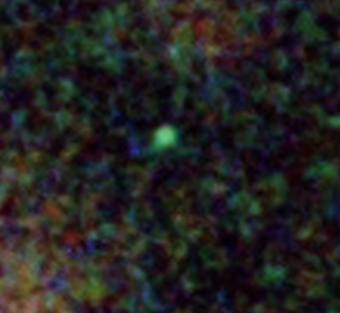
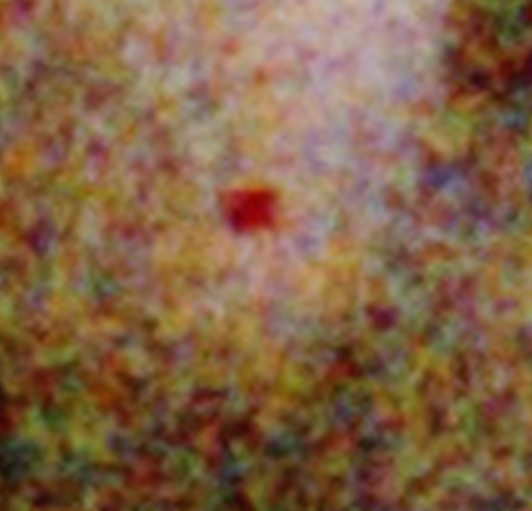
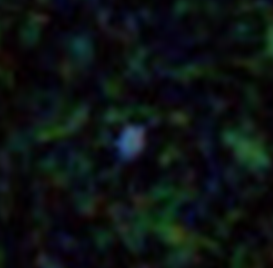
As I shoot and develop more Harman Phoenix I notice that this film is especially prone to having hot-spot dye-cloud dots - is there a name for this? They look similar to the "hot pixels" you get on old screens or sensors, they tend to be red, green, or blue, but unlike a hot pixel they're round instead of square. I'm just curious about the phenomenon that's occurring here, if anyone has more information.
1733592332509.png
1733592406213.png
1733592515679.png
 
As I shoot and develop more Harman Phoenix I notice that this film is especially prone to having hot-spot dye-cloud dots - is there a name for this? They look similar to the "hot pixels" you get on old screens or sensors, they tend to be red, green, or blue, but unlike a hot pixel they're round instead of square. I'm just curious about the phenomenon that's occurring here, if anyone has more information.
View attachment 384958 View attachment 384959 View attachment 384960

My guess is that these large spots are from coupler dispersion globules whose size are well outside the standard deviation of normal coupler dispersions. They represent an opportunity for better process control.
 
My guess is that these large spots are from coupler dispersion globules whose size are well outside the standard deviation of normal coupler dispersions.

Yup, and AFAIK Harman has also acknowledged this issue.

I suspect that the root cause is to be found in the emulsification process employed by Harman. The chemical backstory is that although we talk about 'emulsions' all the time, from a chemical viewpoint, a silver-based gelatin 'emulsion' is really mostly a solution of gelatin with some other stuff mixed into it. The caveat is that in color films (and paper) there actually are emulsions in a literal/chemical sense: the dye couplers are oily molecules and they need to be somehow worked into the gelatin-based 'emulsion' (which, as said, is in its basis really a solution and not an emulsion - yet) without the oily couplers separating out and drifting on top of the watery part.

So a step of emulsification takes place, in which the dye couplers form minute globules that are suspended in a gelatin-based solution - making it an actual emulsion (i.e. an oily substance dispersed in a watery solution). Ideally, this coupler emulsification yields globules of a small, consistent and predictable size. I think we're talking in the order of magnitude of single-digit microns or something thereabouts, but don't quote me on this...

Apparently at Harman, the current emulsification process isn't quite as well in control as it is at e.g. Eastman Kodak or Fuji and they end up with a proportion of too-large globules. These show up in the negatives and this in scans, prints etc. To the best of my knowledge, this presently mostly happens with the magenta coupler. I've indeed seen it in Phoenix as well, but haven't looked for it, and as a result, I've only seen one or two really big (relatively speaking) of these defects. It doesn't surprise me that they actually occur more frequently if you systematically look for them.

This is one of the many things Harman will have to iron out on their journey towards a mature/regular C41 color film.
 
Yes I keep on shaking my head at why Harman ever put the phase 1 Phoenix on the market It's like releasing petrol at say 90 octane when you know none of the vehicles( cameras in this case ) in which it is used can operate properly unless the petrol is 95 octane

pentaxuser
 
This is not related to the camera the film is used in.
The discussion whether or not Harman was 'supposed' to introduce this film has been conducted ad nauseam. Let's not go there again.
 
Thanks very much for the additional information! I enjoy using the film even though it hasn't gone through as much refinement as more established products. So, it's probably a blender somewhere that needs to whip the cake batter up a little more. They're only about as distracting as a typical dust particle, but have a different color, so I was curious.
 
Photrio.com contains affiliate links to products. We may receive a commission for purchases made through these links.
To read our full affiliate disclosure statement please click Here.

PHOTRIO PARTNERS EQUALLY FUNDING OUR COMMUNITY:



Ilford ADOX Freestyle Photographic Stearman Press Weldon Color Lab Blue Moon Camera & Machine
Top Bottom