
• Welcome to Photrio!
    Registration is fast and free. Join today to unlock search, see fewer ads, and access all forum features.
    Click here to sign up

What are these spots??

Recent Classifieds

Forum statistics

Threads
202,825
Messages
2,846,027
Members
101,548
Latest member
Underexposed
Recent bookmarks
0

ColdEye

Member
Allowing Ads
Joined
Jun 14, 2011
Messages
1,476
Location
San Diego, C
Format
Multi Format
I scanned 2 rolls of film that I developed last night. It was a Kodak Tri-X and Ilford Delta 400, both are about a year past expiration date, but are cold stored since I had them. What I did was I developed them in stock Xtol for about 7 minutes and 10 seconds agitation every minute. After developing I washed them with water for about a minute, I did not use the stop bath that I have since in my previous sessions all I developed without it came out fine. Then Kodak fixer for ten minutes, after that I washed it again for 10 minutes and applied Photo Flo last. Only the Tri-X showed these spots. what could it be?

 

Attachments

  • Scan-110923-0004.jpg
    Scan-110923-0004.jpg
    60.9 KB · Views: 312
  • Scan-110923-0002.jpg
    Scan-110923-0002.jpg
    58.9 KB · Views: 344
They look like bubbles on your film when you developed them. You need to tap your tank to dislodge bubbles when you pour in the developer. I could be wrong, but other APUGers can correct me if I'm wrong.
 
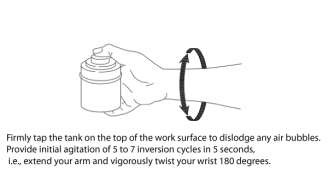
They look like air bubbles to me. Presoaking the film before development will help eliminate this problem as will tapping the edge of the tank as you pour the developer or prewet water into it..

PE
 
I agree. Soaking the film with tempered water for a minute before the developing step and rapping the tank after each agitation should prevent the problem.
 
I see. Will inverting the tank do the trick? In my past developing sessions I invert the quickly for like 10 seconds, but last night I just swirled it around.
 
Sometimes in hard water areas air bubbles can be a real problem, they can occur at all stages and tapping and slightly more vigourous agitation may help, as may a pre-soak. However sometimes they can't be eliminated easily, it may be you need to use deionised/distilled water to make up your chemistry.

Developers are designed to cope with most tap water but there can still be problems. I did some visual testing 2 or 3 years ago and found that air bubbles can form at any time and they mainly stick at the edges, good agitation removes some but in my case (very hard & slightly salty water) a pre soak, tapping, inversion agitation wouldn't stop them. Some emulsions are more prone than others as well.

However as yours seem to be in the middle of the negatives your initial agitation is probably insufficient it should be continuous for at least the first 30 seconds.

You posted as I was writing and effectively confirmed my above comment :D

Ian
 
Last edited by a moderator:
In The Darkroom Cookbook, Steve Anchell states that wetting solution (Photo-Flo, etc) can be added to a developer to help prevent this sort of thing.
 
In The Darkroom Cookbook, Steve Anchell states that wetting solution (Photo-Flo, etc) can be added to a developer to help prevent this sort of thing.

Best as a last resort because you can easily cuase foaming which is in fact worse.

In my csae I wasn't using a commercial developer so I had to add a very small amount of wetting agent, again I did tests to see how much and it was surprising that a minute amount 2 drops of diluted agent was sufficient to entirely eliminate the problem.

Ian
 
Inversion agitation will not remove air bubbles as a general rule. Tapping or banging the tank will dislodge or loosen the bubbles much more effectively.

Addition of a surfactant or wetting agent to a developer is not suggested in any of the books that I trust. The reason is that the surfactant can actually cause more bubbles to form due to foaming action.

PE
 
After each agitation set you should rap the tank a few times on the hard surface to dislodge stuborn bubbles.

.
 
I agree with the others, it looks like air bubbles. Pre-soaking for two minutes with two drops of wetting agent added to the water will help eliminate air bubbles adhering to the film. If you're using a plastic tank, don't bang it too hard - you might crack it! BTDT!

Good luck,
kevs.
 
What ever you do don't rap a plastic tank hard they tend to break or split, a gentle tap is OK.

Another APUG member gave me this tip, a while ago:
Get an old, unused mouse pad. One that you won't use for the computer anymore. Put it on the bottom of your sink or counter where you develop film and use that to bump your tanks on.

I always tap my tanks three times. Old habit. My first photography teacher in high school always told us "three times for good luck." :wink:
 
Informative, I've never seen/had a "air bell" problem but now I know what they look like.

I wouldn't have guessed thats what caused this.
 
I followed the tapping advice and it works like a charm. Plus I went back to the inversion technique, even tho there are leaks. :sad:
 
Is there a tank that does not leak? I am using a omega brand tank with plastic reels that I bought at a store here.
 
Is there a tank that does not leak? I am using a omega brand tank with plastic reels that I bought at a store here.

Stainless steel tanks with plastic lids are pretty close to leak proof.

The ones Freestyle sell are great. I recommend using Hewes reels. It's worth the extra cost.
 
Thanks guys! The SS tank and plastic reels look like a good idea. Gonna check freestyle on that.
 
Thanks guys! The SS tank and plastic reels look like a good idea. Gonna check freestyle on that.

Sorry if we may have confused you - as far as I know no-one makes a SS tank and plastic reel combination.
 
I mean, ill buy a ss tank and then a seperate plastic reel, or is that combination not possible to use?
 
I mean, ill buy a ss tank and then a seperate plastic reel, or is that combination not possible to use?

Nope - the plastic reels are too big in diameter to fit in any SS tanks (that I am aware of).

In addition, as far as I am aware, the only SS reels that work in plastic tanks are Hewes reels that are specially designed for JOBO tanks.
 
What ever you do don't rap a plastic tank hard they tend to break or split, a gentle tap is OK.

shark's teeth have nothing on the bottom edge of my tanks, a mess of half-cracked splinters in all directions! and boy, you should really see my sink one of these days...

:laugh:
 
Last edited by a moderator:
Photrio.com contains affiliate links to products. We may receive a commission for purchases made through these links.
To read our full affiliate disclosure statement please click Here.

PHOTRIO PARTNERS EQUALLY FUNDING OUR COMMUNITY:


Ilford ADOX Freestyle Photographic Stearman Press Weldon Color Lab Blue Moon Camera & Machine
Top Bottom