• Welcome to Photrio!
    Registration is fast and free. Join today to unlock search, see fewer ads, and access all forum features.
    Click here to sign up

Weston's Amidol

Plato's Philosophy.

A
Plato's Philosophy.

  • 2
  • 1
  • 65
Feet of clay

D
Feet of clay

  • 3
  • 6
  • 72

Recent Classifieds

Forum statistics

Threads
201,867
Messages
2,831,423
Members
100,992
Latest member
bob531
Recent bookmarks
0
Joined
Jan 21, 2003
Messages
15,715
Location
Switzerland
Format
Multi Format
I just came off a printing session using Amidol paper developer for the first time. I had a BLAST! At first I was very discouraged by the color of the developer, but when I started tweaking my printing, I found that this has to be the most flexible paper developer ever.
I could print negatives on graded grade 2, that would require a lot of split grade printing on grade 0 while using variable contrast paper. It is so flexible in how you agitate, how long you develop for (I used 3 and 4 minutes), and especially the dilution of the developer. I am so sold on this stuff, the highlights just seem to glow with rays of sunshine.

I just wanted to share my joy of having found this amazing print developer. I think I'll learn how to mix my own and start using Amidol, especially with graded paper. Don't know how it behaves with VC papers. I used it with Fotokemika Emaks G2 and G3, which I like better than any other graded paper I've used, and now they look even better to me.

The level of control, and how it prints high key images is really astonishing. I think I could probably have achieved much the same result with my trusty A-130, Dektol, Bromophen, or Ilford Multigrade. But I definitely believe it would have been more work.

I'll post some scans once the prints are dry.

- Thomas
 

David A. Goldfarb

Moderator
Moderator
Allowing Ads
Joined
Sep 7, 2002
Messages
20,021
Location
Honolulu, HI
Format
Large Format
It works very well with Emaks, particularly with water bath processing for contrast reduction. With Emaks I usually use Michael A. Smith's formula for enlarging papers (on his website at www.michaelandpaula.com).

The basic technique is to use a metronome or timer to time the emergence time for the image, and transfer the print to a still water bath at the emergence time and leave it there without agitation for up to twice the emergence time. The highlights will continue to develop while development slows down and stops in the shadows. For more shadow depth, put the print back into the developer, and then you might try the water bath again or move it ahead to the stop or running water bath and fix when you're satisfied.

Not every print needs this treatment, but if you are using graded paper, it's a handy way of achieving intermediate grades.
 

Mateo

Member
Allowing Ads
Joined
Sep 7, 2002
Messages
505
Location
Hollister, C
Format
Multi Format
Welcome to the world of purple fingernails.
 

Shawn Dougherty

Member
Allowing Ads
Joined
Jul 22, 2004
Messages
4,129
Location
Pittsburgh
Format
Multi Format
Good news, Thomas. It really is flexible, especially with a water bath. I've also found you can increase contrast by reducing exposure time considerably and elongating development time my a similar percentage. You can get at least two grades out of Kentona using the MAS brew... Best of luck. Shawn
 
OP
OP
Thomas Bertilsson
Joined
Jan 21, 2003
Messages
15,715
Location
Switzerland
Format
Multi Format
Well, prints are drying. It was hard to get rid of the brown/orange tint in the prints, but I think I was able to wash it out properly.

A couple of observations:
1. Mateo - I used gloves! :smile:
2. If I get black stains on the back of the paper, does that mean the Amidol didn't dissolve properly?
3. I didn't need a water bath as I had both grade 2 and 3 at hand. Most of my negs print well on grade 2 paper.
4. I use a metronome anyway. It's such a handy tool.
5. I found that development times upward four minutes created some really amazing blacks. Phenomenal stuff, this Amidol. I'll be buying more, but I think I'll use it for portraits mainly I think. It's the only prints that I feel like I need it with.
6. Guillaume - I'll post scans tomorrow. I think they look close to the best I've ever achieved.

Thanks for your good feedback, gentlemen. I think this brew will be a mainstay alongside my 130 developer and a new formula Randy Libersky turned me onto. Defender 58-D, which helps me print fog free on paper that would normally be completely fogged over in 130 or even the Amidol. Cool stuff.

Three paper developers - does that officially make me a geek now? :smile: I've settled for two film developers and thought two paper developers would be enough too... Oh well, who said it was going to be simple.

- Thomas
 

JLP

Subscriber
Allowing Ads
Joined
Feb 22, 2006
Messages
1,608
Location
Oregon
Format
Multi Format
Thomas. Congrats, it is an amazing developer. If you don' already filter the Amidol please try running the brew through a coffee filter, it is so much easier to clear the stain. You may also want to check Michael and Paula's webpage for Fixing suggestions. It works.


jan
 

Mahler_one

Member
Allowing Ads
Joined
Oct 26, 2002
Messages
1,155
Hi Tom....On another thread, I just asked for some additional information on Amidol. Might I PM you in order to spare others the rather mundane questions that they seem to know the answers to already?

Ed
 
OP
OP
Thomas Bertilsson
Joined
Jan 21, 2003
Messages
15,715
Location
Switzerland
Format
Multi Format
The Results

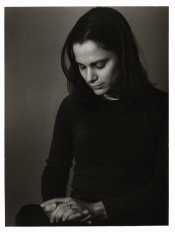
Here is one of the resulting prints. I love this developer. One more batch, then I have to buy some more...

Fotokemika Emaks Grade 2 in condenser enlarger from a medium format neg, shot with a Mamiya 645 using Delta 3200 film (developed in Ilfotec DD-X, shot at 3200).

It's posted in the galleries too.

- Thomas
 

Attachments

  • Erin 02.jpg
    Erin 02.jpg
    170.7 KB · Views: 675

juan

Member
Allowing Ads
Joined
May 7, 2003
Messages
2,709
Location
St. Simons I
Format
Multi Format
From your questions, it would seem you have some of the Chinese amidol. To avoid the black specks, I strain my developer through a coffee filter before putting it in the tray. For removing the yellow stain, I find that moving wash water works best - I put a submersible aquarium filter (minus the filter element) in my initial wash tray and wash until the stain is removed.
juan
 
OP
OP
Thomas Bertilsson
Joined
Jan 21, 2003
Messages
15,715
Location
Switzerland
Format
Multi Format
Hi Juan,

it was a kit from Photographer's Formulary. I don't know if Bud was in on the Chinese Amidol deal or not, but I sure got the stains.
I'll try the filter. I actually use a washer with water moving past the print surface, but the plastic walls between the slots was butt up against the center of one of my prints, which bowed in the washer. Only where the print touched the plastic was it stained. It's unfortunate, because it was the best of the five prints for the evening, but I think that I'll try to tray wash them for a little bit before I put it in the 'soaker' next time.
Thank you for your help.
- Thomas
 

David A. Goldfarb

Moderator
Moderator
Allowing Ads
Joined
Sep 7, 2002
Messages
20,021
Location
Honolulu, HI
Format
Large Format
If you get black stains on the back of the print, it's not really a big deal. Since the large particles settle in the bottom of the tray, what some people do is just to develop face up for the whole development time, and this seems to keep the stains off the front.
 
OP
OP
Thomas Bertilsson
Joined
Jan 21, 2003
Messages
15,715
Location
Switzerland
Format
Multi Format
That seems to be the case, that I got the stains on the back of the print. The back has a few specks here and there, and one or two around the edges. But I print with a 1" margin or more, so I'm not worried about it.
But it seemed to get worse the less I agitated, so perhaps I should filter it all the same? Thoughts on that?
- Thomas
 

dwross

Member
Allowing Ads
Joined
Feb 13, 2004
Messages
1,263
Location
Oregon Coast
Format
Multi Format
Here is one of the resulting prints. I love this developer. One more batch, then I have to buy some more...

Fotokemika Emaks Grade 2 in condenser enlarger from a medium format neg, shot with a Mamiya 645 using Delta 3200 film (developed in Ilfotec DD-X, shot at 3200).

It's posted in the galleries too.

- Thomas

Thomas,

That's a really lovely print.

d
 

David A. Goldfarb

Moderator
Moderator
Allowing Ads
Joined
Sep 7, 2002
Messages
20,021
Location
Honolulu, HI
Format
Large Format
Filtering wouldn't hurt.
 

Paul Verizzo

Member
Joined
Jan 20, 2008
Messages
1,648
Location
Round Rock, TX
Format
35mm
Dmax?

I've never used Amidol, I'm just stirring the conversation pot here.

1. If Amidol does indeed give blacks that MQ/PQ doesn't, wouldn't that mean that the latter aren't converting all of the halide to silver? And if that's the case, wouldn't that mean there is something wrong in the MQ/PQ formula or dilution? Or is it just like POTA, does it mean that indeed MQ/PQ can't get those blacks?

2. Surely someone has done reflective densitomer tests in the last hundred years. Where are they? What are the results?

Sorry, I'm just a natural cynic when it comes to subjectivity becoming alleged objectivity. Not a month ago I read of a little research project where the subjects rated wines. They were told what each one cost (made up, of course) and ran the tests as both swill with high price and good wine with low price.

I need not tell you the outcomes.

I'm happy for you Thomas, and in no way do I want to suggest that I think you are foolish. Whatever brings you joy, do it (even if it's a total PITA? :rolleyes: .) Lord knows we could all use more joy and wonder in our lives.
 

David A. Goldfarb

Moderator
Moderator
Allowing Ads
Joined
Sep 7, 2002
Messages
20,021
Location
Honolulu, HI
Format
Large Format
It's not just blacks--it's also waterbath control.

Sandy King posted a comparison of Ansco 130 and MAS amidol on the Azo forum and demonstrated that 130 (a glycin formula) could get the same density range and a very similar curve, but 130 wasn't as amenable to waterbath processing as amidol.

Many people lament the loss of this or that old paper, but I think amidol was as important as the papers used by Weston, Strand, and others of that era to the look they were able to achieve.
 

PhotoHistorian

Member
Allowing Ads
Joined
Apr 29, 2006
Messages
66
Format
Large Format
I've never used Amidol, I'm just stirring the conversation pot here.

1. If Amidol does indeed give blacks that MQ/PQ doesn't, wouldn't that mean that the latter aren't converting all of the halide to silver? And if that's the case, wouldn't that mean there is something wrong in the MQ/PQ formula or dilution? Or is it just like POTA, does it mean that indeed MQ/PQ can't get those blacks?

2. Surely someone has done reflective densitomer tests in the last hundred years. Where are they? What are the results?

Sorry, I'm just a natural cynic when it comes to subjectivity becoming alleged objectivity. Not a month ago I read of a little research project where the subjects rated wines. They were told what each one cost (made up, of course) and ran the tests as both swill with high price and good wine with low price.

I need not tell you the outcomes.

I'm happy for you Thomas, and in no way do I want to suggest that I think you are foolish. Whatever brings you joy, do it (even if it's a total PITA? :rolleyes: .) Lord knows we could all use more joy and wonder in our lives.

Although densitometers and all kinds kinds of plotting could be done to find the nth degree of scientific info about Amidol or any other photographic product one chooses, in the final analysis photography will always be subjective. As Ralph Gibson once beautifully expressed it, "the pleasure of the open eye." And the human eye will always be subjective.
 
OP
OP
Thomas Bertilsson
Joined
Jan 21, 2003
Messages
15,715
Location
Switzerland
Format
Multi Format
That's the big reason I stay away from digital photography as much as I possibly can. It is boringly perfect.
I just go with what feels good, and try to stay away from the scientific part of things. It complicates matters and detracts from my vision I feel. But that's just me. We're all different. In the end the accomplishment we all have is a print. A flat piece of paper with a bunch of silver halides turned black. I find that the people I admire the most in photography usually don't talk about what paper developers they use, or what film they use, but they discuss the artform, the shapes and textures. Some of it is technical, but very little. I find that very liberating.

Thanks for pitching in everybody. I am so very happy to have discovered Amidol. Paul, i really appreciate your comment about happiness. It's what it's all about, passion one way or another.

- Thomas
 

eclarke

Member
Allowing Ads
Joined
Jun 11, 2004
Messages
1,950
Location
New Berlin,
Format
ULarge Format
Hi All,
I'm a 130 fan but can't resist tinkering. I have a never opened bottle of Kodak Amidol which a friend gave me and it appears to have been made in the 1950s. I have never used Amidol, what are the chances this is still viable??..Evan Clarke
 
OP
OP
Thomas Bertilsson
Joined
Jan 21, 2003
Messages
15,715
Location
Switzerland
Format
Multi Format
In powder form I think it lasts a very long time. But dissolved in liquid form only a couple of hours.

Somebody with more experience may correct me.

- Thomas
 
Photrio.com contains affiliate links to products. We may receive a commission for purchases made through these links.
To read our full affiliate disclosure statement please click Here.

PHOTRIO PARTNERS EQUALLY FUNDING OUR COMMUNITY:


Ilford ADOX Freestyle Photographic Stearman Press Weldon Color Lab Blue Moon Camera & Machine
Top Bottom