• Welcome to Photrio!
    Registration is fast and free. Join today to unlock search, see fewer ads, and access all forum features.
    Click here to sign up

Was asked to DELETE a photo today!

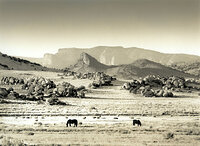
Two Horses

A
Two Horses

  • 7
  • 2
  • 41
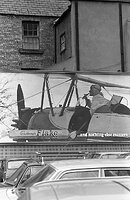
Billboard, Cork city 1977

H
Billboard, Cork city 1977

  • Tel
  • Mar 17, 2026
  • 1
  • 0
  • 33

Recent Classifieds

Forum statistics

Threads
202,802
Messages
2,845,710
Members
101,541
Latest member
ΦÆdon
Recent bookmarks
0
in Canada just like in any other place every building is copyrighted

The Berne Convention Architectural Works Copyright Protection Act of 1990 does give some copyright protection to buildings but this is only to prevent an identical (or very similar) structure from being built and does not restrict photography of a building.

``Sec. 120. Scope of Exclusive Rights in Architectural Works

``(a) PICTORIAL REPRESENTATIONS PERMITTED.— The copyright in an architectural work that has been constructed does not include the right to prevent the making, distributing, or public display of pictures, paintings, photographs, or other pictorial representations of the work, if the building in which the work is embodied is located in or ordinarily visible from a public place.

To take it a step further, a photograph of a building is not a copy of a building. Only another building can be a copy of an existing building.


Steve.
 
Last edited by a moderator:
Steve, that's exactly what I said in my post. You quoted only the first sentence. Every building is copyrighted, not just certain buildings. Architects were born equal :smile:

When a building is "copyrighted" it means that you cannot make another building like that, it doesn't mean you cannot photograph it, that's what I wrote in post #49.
 
Then we agree!

As the Berne Convention Act states that only another building can infringe the copyright of another building, I wonder how far we can take that logic.

i.e. can you only infringe the copyright of a statue by making another statue? A flat piece of paper with the picture of a statue on it is not really a copy of the 3D original.

What about an oil painting? Is a photograph of it a copy which can be an infringement or does it have to be another oil painting in order to infringe the original's copyright?


Steve.
 
Last edited by a moderator:
Some folks demanding photos not be taken might be in hiding (from the law, an abusive ex, etc.), some may be mentally unbalanced, some may just be self-important busybodies. (I'll assume diapositivos comment was meant as a joke.)

Hornby Island, a favorite place of ours, has a clothing optional beach. One cool and cloudy day I was taking LF photos at one end of the beach where there's a wonderful jumble of eroded sandstone. A fully clothed man appoached me stridently stating I wasn't allowed to take photos because it was a nude beach. My camera was clearly pointed at a rock. I offered to show him the groundglass. He repeated his assertion that no photos were allowed. There were 2 brave souls in the water at the other end of the beach - far enough away that their clothing option wasn't apparent. The camera was not pointed that away. I tool my photo, he hovered around saying I was going to get in trouble. He finally left when I folded up my tripod.

I've taken photos there many times, sometimes when the beach is well populated by sun worshippers. No one else has ever objected because I'm respectful of other's privacy. I've seen lots of P&S cameras, and no one seems bothered by them.

A photo I'd have loved to take was a birthday party for a matriarch. She was surrounded by her children and grandchildren. She was proudly, brownly, naked; all her family were clothed. Terrific scene, but my camera stayed in it's pack.
 
Steve, the answer to your question is in the UK copyright law and is possibly influenced by court decisions in the UK.
 
What about an oil painting? Is a photograph of it a copy which can be an infringement or does it have to be another oil painting in order to infringe the original's copyright?

A photograph of an oil painting is a derivative work because both are two-dimensional imagery. Even a sculpture that copies a photograph is derivative, as was established by the Rogers v. Koons case in the Supreme Court for the US, but undoubtedly very influential on IP legal thought around the world.

However, if someone wrote an piece of music about a photograph, as Philip Glass did about Edward Muybridge (though time had elapsed on the copyright), there would not be a derivative work and no copyright problem. Likewise for a ballet about a bridge.
 
However, if someone wrote an piece of music about a photograph, as Philip Glass did about Edward Muybridge (though time had elapsed on the copyright), there would not be a derivative work and no copyright problem. Likewise for a ballet about a bridge.

But what about a sound recording of a mime?!!

Steve.
 
Last edited by a moderator:
People need to learn their highest government-granted liberties, or have them taken away by both private parties and other government bodies. It's their choice which they want. /QUOTE]

Forgive me for picking on words, but this seems to have gotten some people revved up.

Indeed, this is a true statement but might be more easily understood by substituting the word "protected" for 'granted'.
 
But what a bout a sound recording of a mime?!!

There the issue would be recognizability. Would it sound different from some other mime and would it be distinctly the mime in question. A tough case to prove, to say the least. However, if the mime act was like Red Skelton's miming with distinctive cowbells or other sound effects, then yes, it could be derivative and a copyright infringement.
 
A photo I'd have loved to take was a birthday party for a matriarch. She was surrounded by her children and grandchildren. She was proudly, brownly, naked; all her family were clothed. Terrific scene, but my camera stayed in it's pack.

I would have asked. That would make a wonderful photo!
 
Some folks demanding photos not be taken might be in hiding (from the law, an abusive ex, etc.), some may be mentally unbalanced, some may just be self-important busybodies. (I'll assume diapositivos comment was meant as a joke.)

Hornby Island, a favorite place of ours, has a clothing optional beach. One cool and cloudy day I was taking LF photos at one end of the beach where there's a wonderful jumble of eroded sandstone. A fully clothed man appoached me stridently stating I wasn't allowed to take photos because it was a nude beach. My camera was clearly pointed at a rock. I offered to show him the groundglass. He repeated his assertion that no photos were allowed. There were 2 brave souls in the water at the other end of the beach - far enough away that their clothing option wasn't apparent. The camera was not pointed that away. I tool my photo, he hovered around saying I was going to get in trouble. He finally left when I folded up my tripod.

I've taken photos there many times, sometimes when the beach is well populated by sun worshippers. No one else has ever objected because I'm respectful of other's privacy. I've seen lots of P&S cameras, and no one seems bothered by them.

A photo I'd have loved to take was a birthday party for a matriarch. She was surrounded by her children and grandchildren. She was proudly, brownly, naked; all her family were clothed. Terrific scene, but my camera stayed in it's pack.

Sly, don't make assumption about what I write, that has no purpose. Mine was an openly sexist remark, and meant to be*. Maybe not totally deprived of a certain un-serious flair as obvious. This is a photographic forum not a psychology University course.

Regarding your encounter on the nudist camp, I understand the person who came and tell you that you couldn't take pictures in a nudist camp. That's very easy to understand on a let's say "moral" ground.

Although one might wonder if the place was a public one, a private one etc. and could challenge maybe the injunction on juridical ground, one might expect people don't want naked photographs of them freely circulating.

I understand you were not taking pictures of people, but the "warden", or the other persons on the place, might not feel like being on a surveillance duty specifically on you to see where you turn your camera. It certainly is something that make people feel uncomfortable that there is a guy with a camera, regardless of where he's actually pointing it.

Some people doing street photography, you know, do exactly this, point the camera first somewhere else, and then on the intended subject.

Fabrizio

* As I like saying: "I'm not anti-feminist. I'm misogynous". :smile:
 
Regardless of what copyright law states, it has no bearing on the act of photographing, or the act of possessing photos of a copyrighted thing. You cannot legally stop someone from taking pictures of a copyrighted thing if the thing is in the public view. They are two separate issues. Photographing is separate from the act of reproducing and/or distributing. Fundamental ("Constitutional") law governs the former, and copyright law governs the latter. Something must actually be reproduced – that is printed and/or distributed/published – to be in violation of a copyright; thus citing a copyright as justification to bar someone from photographing shows a misunderstanding of what a copyright actually is. You cannot go after someone for a "copyright" violation unless they have actually "copied" something. You cannot bust someone for something you think they might do; you can only bust them for something they have done.
 
Last edited by a moderator:
Regardless of what copyright law states, it has no bearing on the act of photographing, or the act of possessing photos of a copyrighted thing. You cannot legally stop someone from taking pictures of a copyrighted thing if the thing is in the public view. They are two separate issues. Photographing is separate from the act of reproducing and/or distributing. Fundamental ("Constitutional") law governs the former, and copyright law governs the latter. Something must actually be reproduced – that is printed and/or distributed/published – to be in violation of a copyright; thus citing a copyright as justification to bar someone from photographing shows a misunderstanding of what a copyright actually is. You cannot go after someone for a "copyright" violation unless they have actually "copied" something. You cannot bust someone for something you think they might do; you can only bust them for something they have done.

Copyright law is on the US Constitution. A single photograph of any work may be subject to copyright. It does not require reproduction. It can be a single representation.
 
Copyright law is on the US Constitution. A single photograph of any work may be subject to copyright. It does not require reproduction. It can be a single representation.

Congress is generally authorized to enact copyright law by the U.S. Constitution. It does not mean that the specifics of copyright law are in the Constitution. It simply states that the power to make such laws is granted to Congress. The copyright laws themselves are not Constituational. And it certainly does not mean that one may not photograph copyrighted works, which was my point. When it comes to copyright law, it is what one does with the photographs that matters in court, not whether or not they are taken in the first place.

A single unit is a reproduction (or a "print" in photographic terms). The number of copies made does not define something as a reproduction or not; number of copies is related to distribution, not reproduction.
 
Last edited by a moderator:
Copyright only prohibits certain kinds of publication of derivative works.

You are free to make as many photos of an object (or objet d'art or artwork including a painting or even another photographer's photos) as you like, but not necessarily free to publish it wherever you like.

A work such as a photograph is copyright the instant it is created, which is when the shutter is clicked. That includes any derivative works made by the same author from it, such as scans or files or prints or silver gelatin prints, etc.
 
Copyright only prohibits certain kinds of publication of derivative works.

You are free to make as many photos of an object (or objet d'art or artwork including a painting or even another photographer's photos) as you like, but not necessarily free to publish it wherever you like.

Exactly!
 
Exactly and to bring it back to buildings, for e.g., you are free to photograph every McDonalds restaurant exterior you wish. But you can't sell a coffee table book called "My Tour Across America Documenting McDonalds' Restaurants". The logo and brand name are trademarked and therefore you would need consent from McDonalds. I think it gets more complex when logo's and/or trademarks become centerstage as opposed to say a cityscape with a golden arch way in the background and the intent if the book is to document skylines or something benign.
 
Somebody argued with you in NYC? That's hard to believe.

You'd be surprised...because it's such a hyper-photographer city, there's plenty of people who are paranoid of getting their photo taken. I can take pictures in my small town of 1500 more discretely than in NYC.

"if you want privacy, stay at home" -that is gold. I think people would be surprised at how much privacy they give up in NYC from surveillance video as opposed to the average street shot.

Way to stand your ground. You weren't doing anything wrong.
 
Exactly and to bring it back to buildings, for e.g., you are free to photograph every McDonalds restaurant exterior you wish. But you can't sell a coffee table book called "My Tour Across America Documenting McDonalds' Restaurants". The logo and brand name are trademarked and therefore you would need consent from McDonalds. I think it gets more complex when logo's and/or trademarks become centerstage as opposed to say a cityscape with a golden arch way in the background and the intent if the book is to document skylines or something benign.

Trademark and copyright are different things.
Copyright protects the work of invention and its author from copying.
Trademarks protect the identity of a business or product. Something different (not copied) but which uses the "identity" of another product to sell.

You can publish a book devoted solely to McDonalds restaurant, and it would not infringe copyright nor trademark, it's a book of photographs, there is no "copy" and there is no attempt to steal identity of the McDonald's franchise.

You can't open a fast food and adopt a similar brand, or logo, in such a way that it could create confusion between McDonald's and your business.

When Andy Warhol used Coca-Cola bottles, or logo, or Campbell soup cans, or logo, in his body of work he was not violating trademarks, nor copyrights.

Certain stock agencies do exclude images having trademarks just because they understand that their typical users don't know the laws about trademarks and would find a way to violate it, and then it could be argued that it was the duty of the agency to educate the client/user, hence the "paranoia" of certain agencies, and of certain photographers, about trademarks, copyright, property etc.

It's all much simpler and, to simplify, it's basically always fair game unless there is commercial use (promotion of a good or service) or defamation (of a person, even a paid model, and of a firm).
 
I agree with Diapositivo's points which could be summed up quite simply by saying that in order for something to be an infringement, the infringing article must be a copy of the original.

A photograph of a building is not a copy of the building. A building which is built to significantly resemble another building is a copy.

A photograph of a can of Coca Cola is not a copy. A red and white can of Pokey Polar fizzy drink could be seen as a copy of the Coca Cola product.


Steve.
 
You can't open a fast food and adopt a similar brand, or logo, in such a way that it could create confusion between McDonald's and your business.

Here in LA there was a wannabe fast food entrepeneur who turned the Golden Arches upside down and used it as a "W" in the name of his restaurant, Wimpies. The guy never even had a chance to open his doors before McD's shut him down.
 
Here in LA there was a wannabe fast food entrepeneur who turned the Golden Arches upside down and used it as a "W" in the name of his restaurant, Wimpies. The guy never even had a chance to open his doors before McD's shut him down.

There is a "Michelle's" donuts here in L.A. It is hilarious. The silhouette of the sign is a take off on the classic Winchell's shape, and the font is almost identical. It is somewhere on the eastern part of Santa Monica Blvd, on the south side of the street. My initial thought was the it was a modified Winchell's sign, but looking at pix on the Internet, I am not so sure.

dsc01046.jpg


michellesdonuthouse.jpg
 
Last edited by a moderator:
I respectfully disagree with some of the above comments re using trademarks and copyrighted material. In the US there are many cases recently where an artist had someone appropriate his or her piece of art and subsequently sued due to copyright violations - and won. What are really talking about are those who try to make the “fair use” claim. Back in the Warhol day, the trademark holders (Coke, Campbell’s Soup, etc) could have made a claim saying that Warhol’s works were not transformative enough for Fair Use. I don’t know if they did or didn’t make those claims, but today we have a bunch of claims being made and upheld re art and fair use (i.e. the original copyright holder’s work protected).

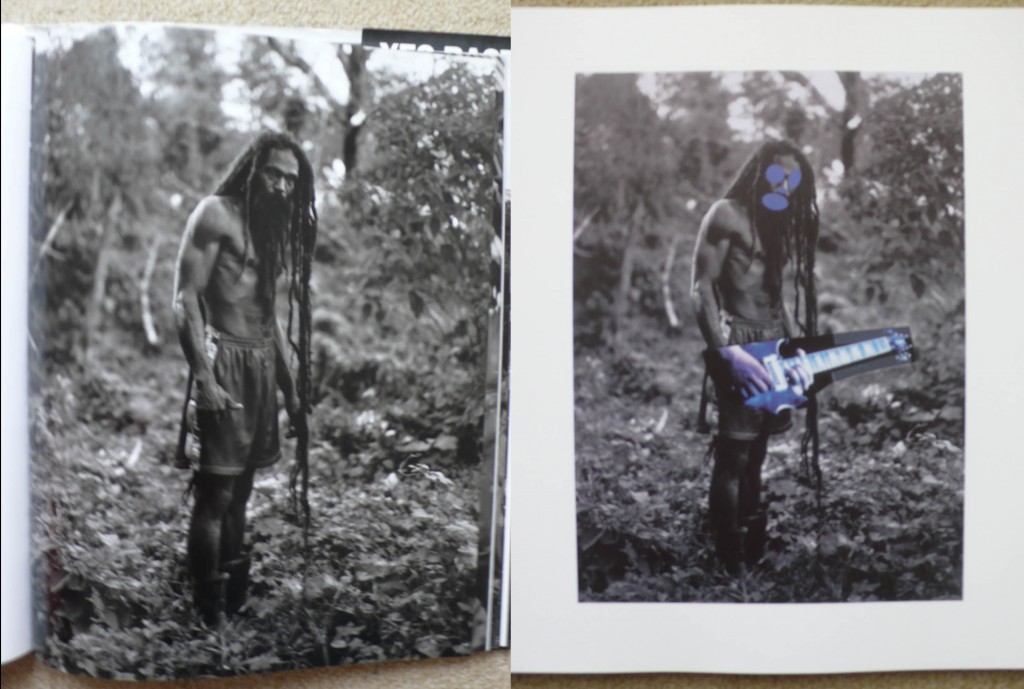
First example, Glen Friedman vs Thierry Guetta (aka Mr. Brainwash)

Orig from Friedman
Run-DMC.jpg


Thierry Guetta’s appropriation (aka Mr. Brainwash):
mbwinvite.jpg


Per the article cited below:
“Judge Pregerson has ruled that Guetta can't defend his work as transformative fair use.”
Article
http://www.hollywoodreporter.com/thr-esq/artist-at-center-oscar-nominated-195544

Second case of recent memory is the case involving the photographer Patrick Cariou suing Ricard Prince (artist), Gagosian Gallery, Lawrence Gagosian and Rizzoli International Publications.

Orig Ricard Prince’s piece and fair use claim to the right
patrick2-1024x689.jpg


Per the below linked article:
“Defendants Richard Prince, Gagosian Gallery, Inc., and Lawrence Gagosian seek a determination that their use of Plaintiff’s copyrighted photographs was a fair use under the relevant section of the Copyright Act, 17 U.S.C. §§ 107(1)-(4), and that Plaintiff’s claim for conspiracy to violate his rights under the Copyright Act is barred by law. Plaintiff seeks summary judgment in his favor on the issue of liability for copyright infringement.
She found that the use by Prince was not Fair Use, the conspiracy claim was found to be barred by law and Patrick’s issue of liability for copyright infringement was granted in its entirety. In other words, Patrick won.”
Article
http://www.aphotoeditor.com/2011/03/19/richard-prince-loses-fair-use-argument

Last, one of the most famous of all recent cases is the Obama Hope poster that Shepard Fairey used with out the AP’s consent. The AP and Fairey subsequently settled.
picture_6.png


Article
http://articles.boston.com/2011-01-15/ae/29335296_1_shepard-fairey-obama-hope-obama-image


I guess all I am saying, is that this isn’t black and white all the time. There are protections in some instances, especially when $ is being made, and I still believe if one made that McDonalds Restaurant coffee table book that I described earlier, the McDonalds could come knocking on the door for a cut of the pie (baked apple pie...he he). Especially if the book were defamatory in any manner. I am not a lawyer and could be wrong, but based on the fair use claims I have seen in street art and other art circles, I think my example of McDonalds not allowing a coffee table book of their stores to be allowed due to the logo and term McDonalds being trademarked. Last when you shoot a motion picture, you cant put your actor in a Gap logo shirt without Gap's consent. My example was specific to 'for profit'.

 
Last edited by a moderator:
when you shoot a motion picture, you cant put your actor in a Gap logo shirt without Gap's consent. My example was specific to 'for profit'.

Sure you can. There is nothing to stop you. What about those shots in movies of cars driving down a street? You don't see all the manufacturer's logos covered up or the shop signs blanked out.

This does happen on TV but it's nothing to do with copyright, it's just to avoid upsetting advertisers who have paid for their advertising time and would see it as unfair for other manufacturers to have their products on TV for free.

Manufacturers put their logos and trademarks onto their product so that they get seen by people. None would complain about an appearance on TV or in a movie.

You can't go on TV and say "this GAP shirt is no good as it falls apart after you wear it for an hour" as that would be defammation and/or mis-representation. Unless it does fall apart after an hour and then it's fair game. Nothing to do with copyright or trademark infringement though.

As for the book of MacDonalds restaurants. MacDonalds might come after you for a share but they wouldn't be entitled to anything if all it did was document things which actually exist. As long as the MacDonalds logo is not use to promote the book.


Steve.
 
Photrio.com contains affiliate links to products. We may receive a commission for purchases made through these links.
To read our full affiliate disclosure statement please click Here.

PHOTRIO PARTNERS EQUALLY FUNDING OUR COMMUNITY:


Ilford ADOX Freestyle Photographic Stearman Press Weldon Color Lab Blue Moon Camera & Machine
Top Bottom