I respectfully disagree with some of the above comments re using trademarks and copyrighted material. In the US there are many cases recently where an artist had someone appropriate his or her piece of art and subsequently sued due to copyright violations - and won. What are really talking about are those who try to make the “fair use” claim. Back in the Warhol day, the trademark holders (Coke, Campbell’s Soup, etc) could have made a claim saying that Warhol’s works were not transformative enough for Fair Use. I don’t know if they did or didn’t make those claims, but today we have a bunch of claims being made and upheld re art and fair use (i.e. the original copyright holder’s work protected).
First example, Glen Friedman vs Thierry Guetta (aka Mr. Brainwash)
Orig from Friedman
Thierry Guetta’s appropriation (aka Mr. Brainwash):
Per the article cited below:
“Judge Pregerson has ruled that Guetta can't defend his work as transformative fair use.”
Article
http://www.hollywoodreporter.com/thr-esq/artist-at-center-oscar-nominated-195544
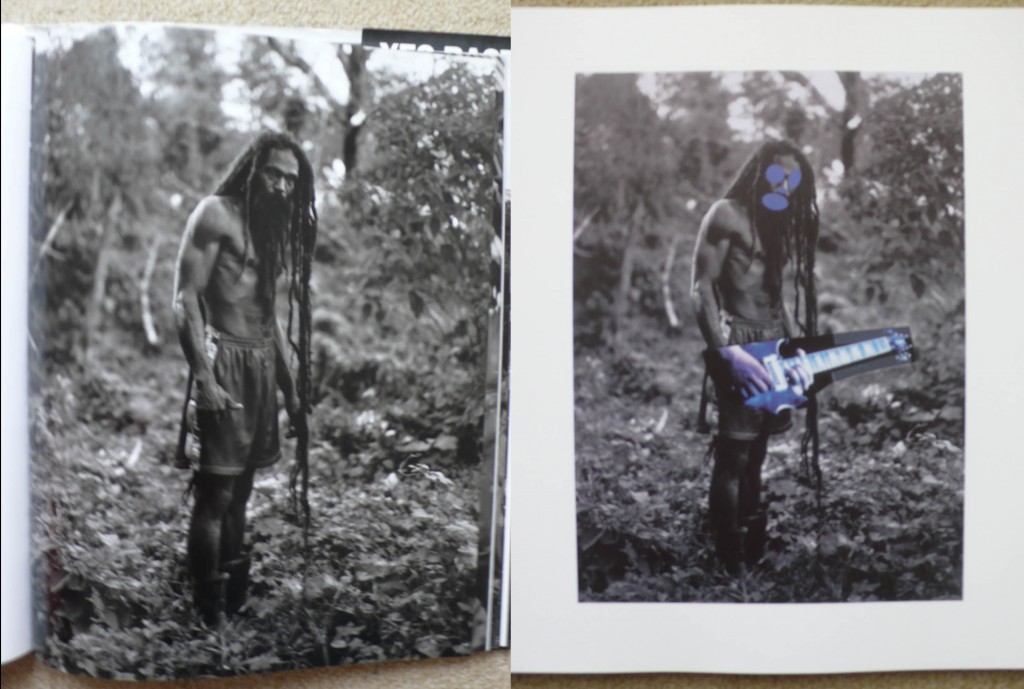
Second case of recent memory is the case involving the photographer Patrick Cariou suing Ricard Prince (artist), Gagosian Gallery, Lawrence Gagosian and Rizzoli International Publications.
Orig Ricard Prince’s piece and fair use claim to the right
Per the below linked article:
“Defendants Richard Prince, Gagosian Gallery, Inc., and Lawrence Gagosian seek a determination that their use of Plaintiff’s copyrighted photographs was a fair use under the relevant section of the Copyright Act, 17 U.S.C. §§ 107(1)-(4), and that Plaintiff’s claim for conspiracy to violate his rights under the Copyright Act is barred by law. Plaintiff seeks summary judgment in his favor on the issue of liability for copyright infringement.
She found that the use by Prince was not Fair Use, the conspiracy claim was found to be barred by law and Patrick’s issue of liability for copyright infringement was granted in its entirety. In other words, Patrick won.”
Article
http://www.aphotoeditor.com/2011/03/19/richard-prince-loses-fair-use-argument
Last, one of the most famous of all recent cases is the Obama Hope poster that Shepard Fairey used with out the AP’s consent. The AP and Fairey subsequently settled.
Article
http://articles.boston.com/2011-01-15/ae/29335296_1_shepard-fairey-obama-hope-obama-image
I guess all I am saying, is that this isn’t black and white all the time. There are protections in some instances, especially when $ is being made, and I still believe if one made that McDonalds Restaurant coffee table book that I described earlier, the McDonalds could come knocking on the door for a cut of the pie (baked apple pie...he he). Especially if the book were defamatory in any manner. I am not a lawyer and could be wrong, but based on the fair use claims I have seen in street art and other art circles, I think my example of McDonalds not allowing a coffee table book of their stores to be allowed due to the logo and term McDonalds being trademarked. Last when you shoot a motion picture, you cant put your actor in a Gap logo shirt without Gap's consent. My example was specific to 'for profit'.